Most adults on tirzepatide can have an occasional drink, but it is safest to drink lightly or not at all, especially in the first weeks and after every dose increase. There is no known direct interaction between alcohol and tirzepatide. The two have simply never been studied together. The real trouble is indirect: alcohol can pile onto the nausea, vomiting, diarrhea and dehydration the medication already causes, and it can make blood sugar less predictable.
This guide covers what the evidence says, why a drink can hit differently on tirzepatide, how to handle diarrhea, and who should skip alcohol altogether.
The honest starting point is that the data is thin. Eli Lilly states it has not evaluated tirzepatide with concomitant alcohol use, so no manufacturer-verified guidance sets a safe number of drinks. Any advice you get, including ours, rests on how alcohol and the drug’s known side effects behave, plus your own health history.
What we do know:
So the question is not whether a glass of wine is toxic with tirzepatide. It is whether a drink will make a medication that already unsettles your stomach harder to tolerate. For many people, at certain moments, the answer is yes.
Tirzepatide delays gastric emptying. Researchers writing in a 2024 review of GLP-1 and GIP drugs note that this delay can make the intoxicating effects of alcohol feel more sudden or intense. Practically, you may feel a drink sooner and harder than you expected, or feel overly full and queasy after only a few sips.
When you eat very little, alcohol is absorbed with nothing to buffer it. On a reduced-calorie diet, a cocktail that once felt like nothing can land hard. Eat a real meal with protein first, and sip slowly.
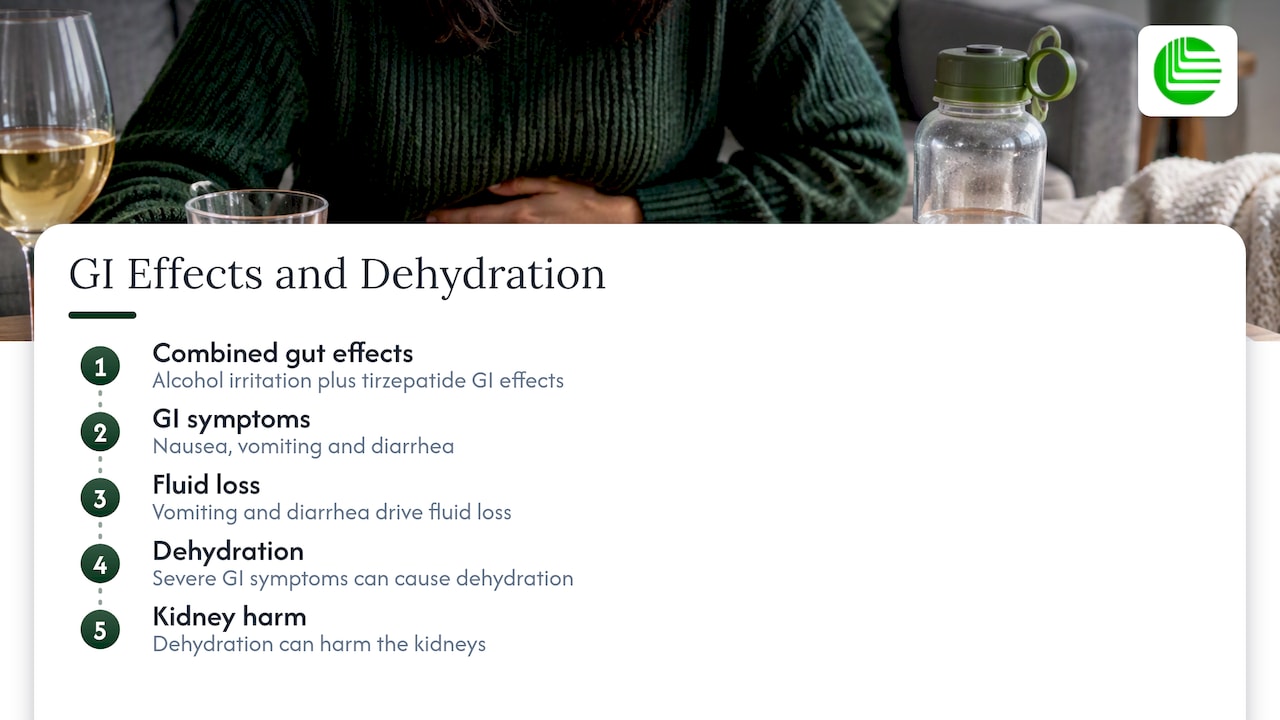
Alcohol can irritate the stomach lining and loosen stools. Stack that on tirzepatide’s own GI effects and you get the classic bad night: nausea, vomiting, diarrhea and a rough next day. Vomiting and diarrhea together drive fluid loss. The Mounjaro safety information warns that severe GI symptoms can lead to dehydration, which in turn can harm the kidneys.
For people with type 2 diabetes, alcohol can cause low blood sugar, especially on an empty stomach, because it interferes with the liver’s production of glucose. The risk is higher with insulin or sulfonylureas, according to the Drugs.com professional interaction notes. If you have diabetes, talk to your prescriber before drinking at all. The general guidance on diabetes medications and alcohol shows how varied these interactions can be.
Diarrhea is one of the most commonly reported tirzepatide side effects, and it often shows up when you start or step up a dose. Alcohol is a well-known gut irritant, so drinking during a diarrhea-prone stretch is asking for trouble.
What tends to help, in practical terms:
There is more on handling common effects in our guide to tirzepatide side effects and on tirzepatide fatigue, which also gets worse when you are dehydrated or hungover.
For some people the answer is simply no, or only with a doctor’s explicit approval.
| Situation | Why alcohol is a problem | What to do |
|---|---|---|
| History of pancreatitis | Alcohol is a known pancreatitis trigger, and Zepbound labeling reports acute pancreatitis in 0.2% of trial patients | Avoid alcohol; discuss with your prescriber whether tirzepatide is right for you |
| Gallbladder disease or gallstones | The same label reports cholelithiasis in 1.1% of patients in weight-reduction trials | Ask your doctor about alcohol and symptoms to watch for |
| Fatty liver or liver disease | Alcohol remains an independent risk factor for liver inflammation and fibrosis | Avoid or strictly limit; follow your hepatologist’s advice |
| Diabetes on insulin or a sulfonylurea | Risk of low blood sugar rises with alcohol | Get an individual plan from your prescriber before any drinking |
| Dose escalation weeks | GI symptoms peak and dehydration risk is highest | Consider skipping alcohol until you know how the new dose feels |
| Persistent vomiting or diarrhea | Alcohol adds fluid loss and irritation | Skip alcohol and contact your clinician |
The NIAAA notes that among people with alcohol-related fatty liver who keep drinking, 10 to 35 percent progress to steatohepatitis, and that stopping drinking is needed for the liver to heal. Tirzepatide is increasingly used for metabolic liver disease, but it cannot cancel out ongoing heavy drinking.
Alcohol does not block tirzepatide from working. It works against your goal in quieter ways. Drinks carry calories that do not fill you up. Alcohol lowers inhibition and can send you toward late-night food. Poor sleep and a hangover make it harder to train and cook. And on a calorie deficit, you lose the room for those calories, so a few drinks can take up a real share of your daily budget.
If you are trying to preserve muscle while you lose fat, which matters on any GLP-1 or GIP medication, heavy drinking is a poor trade. Our tirzepatide diet plan walks through protein targets and meal structure that make the medication easier to live with.

A frequent report among people on tirzepatide and semaglutide is a drop in the urge to drink. A 2024 review by O’Keefe and colleagues describes GLP-1 and GIP agonists as acting on the brain’s reward pathways, possibly leading to nonvolitional reductions in addictive behaviors, including alcohol use. In plain terms, you may not feel like you are resisting. The craving just gets quieter.
Two caveats. First, this is an area of active research, and results so far come largely from observational data and early studies, not proven treatment claims. Tirzepatide is not approved to treat alcohol use disorder. Second, if you drink heavily or have trouble stopping, do not stop abruptly on your own. Alcohol withdrawal can be dangerous. Talk to a physician, or call the SAMHSA National Helpline at 1-800-662-4357, before cutting back sharply.
If your doctor has no objection and you decide to have a drink, a few habits lower the odds of a bad night:
The Jane Plan overview of alcohol and weight-loss medications reaches a similar conclusion: alcohol may worsen nausea and vomiting, so moderation is the sensible default.
Patients ask us about alcohol constantly, and we would rather give a straight answer than a scare. There is no rule that says one glass of wine at dinner ruins your treatment. But a medication that slows digestion, suppresses appetite and can cause nausea is not a forgiving partner for a night of cocktails.
Here is how we think about it. Tirzepatide is a tool for metabolic health, and the point of this program is to lose fat while protecting lean muscle and feeling well, not just to see a lower number on the scale. Alcohol gets in the way of nearly every part of that: sleep, protein intake, hydration, training and consistency. So we encourage a simple approach. Make the first weeks and every dose change alcohol-free if you can, see how your body responds, then decide what moderate looks like for you.
Also, be honest with your prescriber. Whether you drink a little, a lot, or have noticed that your cravings changed, that information shapes safe dosing. Our model is physician-reviewed, with support available when something feels off, and we would rather hear about a rough night than have you quietly stop treatment. If you want to understand how the dose steps work, our tirzepatide dosage schedule guide explains each stage.
— Eric
If you are considering tirzepatide, our compounded tirzepatide program starts from $185 per month. You complete an online health questionnaire, a licensed physician reviews it, and approved prescriptions are shipped to your door. Tell the physician how much you drink on the questionnaire, along with any history of pancreatitis, gallbladder or liver problems, and any diabetes medications. Those answers matter for your safety. You can also read about the safety of compounded tirzepatide before you decide.
Often, in small amounts, yes, but it is safest to drink lightly or not at all. No direct interaction is known, yet the combination has never been formally studied. Avoid it entirely if you have pancreatitis, gallbladder or liver problems, or take insulin or a sulfonylurea, unless your prescriber says otherwise.
The medication slows gastric emptying and reduces how much you eat. Researchers note that delayed emptying can make alcohol’s effects feel more sudden or intense. Eat beforehand, drink less than usual and go slowly.
Skip alcohol, drink plenty of fluids and choose bland, lower-fat meals while it settles. Diarrhea is one of the most common side effects and often follows a dose increase. Contact your prescriber if it lasts more than a few days, if there is blood, or if you feel dizzy or cannot keep fluids down.
It does not block the drug, but it can undermine results through extra calories, poorer food choices and worse sleep. It can also worsen side effects enough that you skip doses or stop treatment, which hurts progress more than the drinks themselves.
The cautions are very similar, since both medications affect digestion and appetite. For a closer look, see our piece on the semaglutide and alcohol interaction.