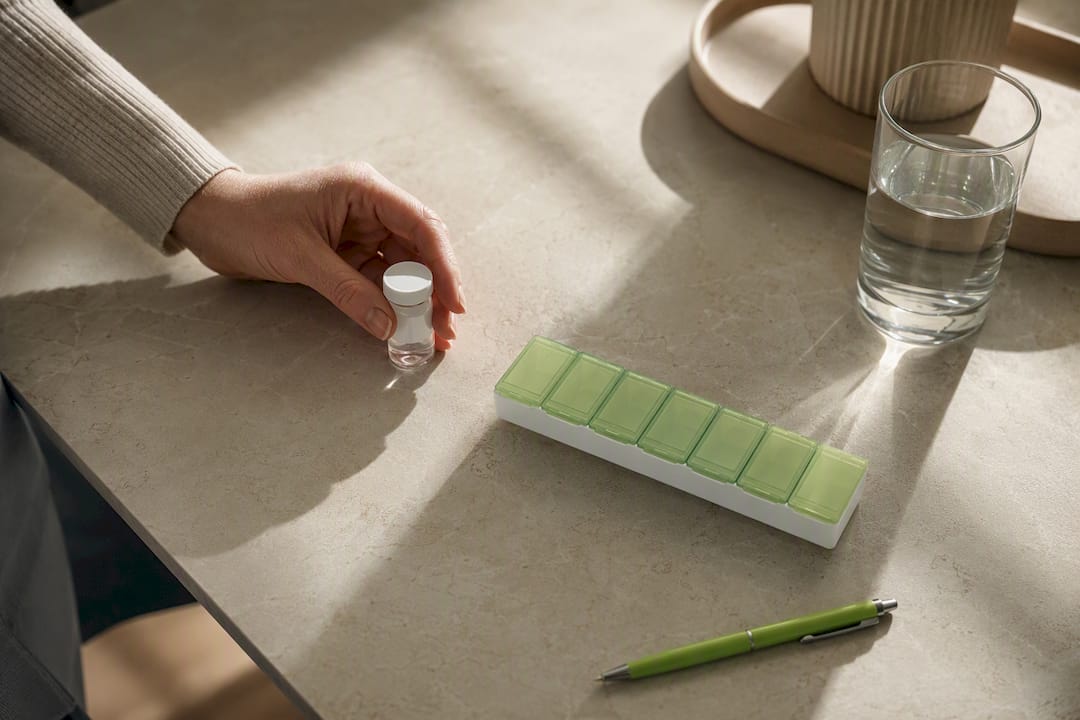
Tirzepatide starts at 2.5 mg injected under the skin once weekly for four weeks, a dose meant to introduce the drug rather than drive weight loss. From there, the dose typically climbs by 2.5 mg every four weeks until reaching a maintenance level of 5 mg, 10 mg, or 15 mg once weekly. Most prescribers aim for the highest dose a patient tolerates well, as higher doses tend to produce greater long-term results.
TL;DR:
- Patients can expect dose escalations to pause if severe gastrointestinal side effects or dehydration occur, with flexible adjustments based on individual tolerance.
- The standard titration schedule increases doses every four weeks in four-week blocks, consistent with clinical trial protocols, to reduce nausea risk.
- Consistent weekly injection timing and setting reminders help prevent missed doses, with guidance to skip doses if more than four days late.
- Long-term maintenance typically involves staying at 10 mg or 15 mg doses, as staying at the highest tolerated dose yields better sustained weight loss.
- Telehealth support offers personalized, ongoing management, with frequent check-ins and timely adjustments aligned with each patient’s titration progress.
The standard tirzepatide titration schedule moves in fixed four-week blocks, each one a small test of tolerance before the next step up. This isn’t arbitrary. The phase 3 SURMOUNT trial used this same escalation pattern, and it’s now the backbone of the official prescribing schedule.
Here’s the full sequence most patients follow:
Four weeks per step helps minimize gastrointestinal side effects during dose increases by allowing the body time to adjust. Rushing this process is one of the more common mistakes patients push for and clinicians push back on, since faster escalation tends to trigger nausea and vomiting severe enough to force a dose reduction anyway.
Clinicians don’t always follow the schedule to the letter. Escalation gets paused, not skipped, when a patient hits any of these markers:
This is the maximum tolerated dose concept in practice: the goal isn’t necessarily 15 mg for everyone. It’s the highest dose a given patient can sustain without their side effects outweighing the benefit. Some people plateau comfortably at 10 mg. Others tolerate 15 mg with minimal issues. Both outcomes are considered normal, not a failure of the protocol.
Pick one day of the week and stick to it. Tirzepatide doesn’t care about time of day or whether your stomach is full, so you can inject it in the morning before coffee or at night before bed, with or without food. What matters is consistency, since keeping the same day each week keeps drug levels steady and makes it easier to track your titration timeline.
Life happens, though, and doses get missed. The rule from Mayo Clinic’s dosing guidance is straightforward:
For telehealth patients getting pens delivered by mail, a few habits prevent gaps. Set a recurring phone reminder for injection day, not just a one-time alert. Keep a spare pen at a second location if you travel often. And time your refill requests so a new pen arrives a few days before you’re due to move up a dose, not the morning of.
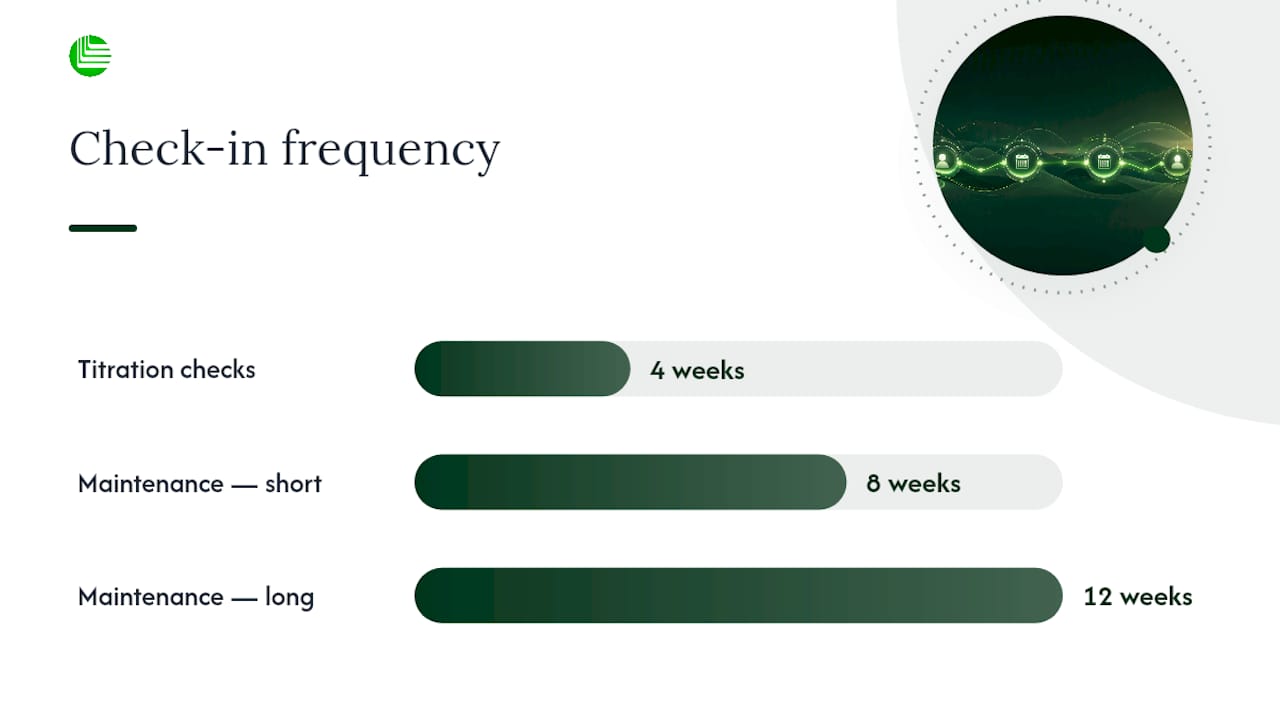
Expect a follow-up roughly every four weeks while your dose is climbing, which lines up with each titration step. Once you land on a stable maintenance dose, most clinicians stretch that cadence out to every 8 to 12 weeks, though the exact interval depends on how you’re responding and whether you have other conditions being monitored.
Each check-in usually covers the same core items:
Telehealth changes the mechanics of this without changing the substance. Instead of a waiting room, you get asynchronous messaging with your care team, photo or video check-ins when something needs a closer look, delivery scheduling tied to your titration step, and on-demand triage if side effects flare up between visits. The Oak Longevity telehealth model runs on exactly this kind of structure, pairing physician review with ongoing contact rather than a single prescription and silence.
Pro Tip: Keep a simple symptom log on your phone, even three or four words per day. “Mild nausea, morning” is enough. It turns a vague “I’ve felt off” into specific data your clinician can actually use to decide whether to hold your dose or push forward.
The decision at each check-in comes down to two paths: if you’re tolerating the current dose and showing progress, escalation continues. If side effects are becoming a real problem, the dose holds steady or drops back a step.
Gastrointestinal symptoms, nausea, vomiting, and diarrhea are the most common tirzepatide side effects, and they show up most often right after a dose increase rather than during a stable maintenance period. The SURMOUNT-MAINTAIN trial found these adverse events cluster heavily during escalation, with a modest but real percentage of patients discontinuing because of them.
If side effects are difficult to manage, dose escalation is paused until symptoms improve; if persistent, clinicians may reduce the dose by 2.5 mg before considering further increases. This isn’t a setback. It’s the schedule working as intended, since forcing an intolerant patient up the ladder usually backfires.
Some symptoms need more than patience. Get urgent medical attention for:
For everyday GI discomfort, clinicians typically recommend smaller, lower-fat meals, steady hydration, and sometimes a short course of anti-nausea medication. Slowing the titration pace, stretching a step from four weeks to six or eight, often solves the problem without abandoning a dose increase altogether. More detail on managing these effects is available in Oak Longevity’s guide to tirzepatide side effects.
Pro Tip: If nausea hits hardest in the first 48 hours after your injection, try moving your dose day to the start of a lighter workweek instead of right before something demanding. Timing around your schedule, not just the calendar, makes a real difference.
After titration, patients typically maintain doses of 10 mg or 15 mg weekly, with 5 mg used for those who cannot tolerate higher doses or when deemed appropriate by clinicians. There’s no universal “right” maintenance dose. It’s whatever dose delivers meaningful results without side effects that outweigh the benefit.
The evidence on staying at your highest tolerated dose is fairly clear. Maintenance-phase trial data found that patients who continued their maximum tolerated dose kept more of their weight loss than those who reduced to 5 mg or switched to placebo. That gap didn’t close over time. It held throughout the maintenance period studied.
That doesn’t mean everyone stays on tirzepatide forever without reassessment. The standard checkpoint comes at six months on the highest tolerated dose:
Anyone weighing discontinuation should have a plan for what comes next, since medication alone was never meant to carry the whole effort. Pairing treatment with sustainable nutrition changes, covered in Oak Longevity’s tirzepatide diet plan, gives the maintenance dose something to work alongside instead of something to work against.
Patients who do best on this medication treat titration as a process, not a hurdle to clear as fast as possible. Slower escalation almost always beats a rushed one. The people who push for 15 mg in six weeks usually end up back at a lower dose anyway, just with more nausea behind them.
Tirzepatide works best as part of an ongoing plan, not a standalone fix, paired with real changes to diet and activity and revisited regularly with a clinician. That’s exactly what structured telehealth follow-up, physician-reviewed dosing decisions, and consistent delivery timing are built to support.
— Eric
The program offers physician-reviewed dosing decisions and mail-delivered prescriptions aimed at minimizing scheduling friction and gaps in care, providing consults reviewed by licensed physicians and plans tailored around individual escalation timelines.

The workflow is built around the same four-week rhythm this guide walks through. Your care team can track where you are in the schedule, flag side effects early through asynchronous messaging, and time refill shipments so your next pen arrives before you’re due to step up. If persistent nausea shows up at week nine, you don’t wait for a callback. You message your clinician and get a same-week answer on whether to hold or adjust. Oak Longevity’s tirzepatide program starts from $185 per month, with ongoing support built into every step rather than tacked on after the prescription ships. Start your online consultation today and get a titration plan that adjusts with you, not around you.
This article is general information, not a substitute for advice from a qualified doctor. Consult a qualified healthcare professional about your own circumstances before acting on anything here.
The standard starting dose is 2.5 mg injected once weekly for the first four weeks. This dose is meant to let your body adjust to the medication and is not expected to produce significant weight loss on its own, according to the official prescribing information.
The dose typically increases by 2.5 mg every four weeks until reaching a maintenance dose of 5 mg, 10 mg, or 15 mg. Clinicians pause this schedule if side effects become difficult to manage, following the same four-week escalation pattern used in the NEJM phase 3 trial.
If less than 96 hours (4 days) have passed since your scheduled dose, take it as soon as you remember. If more than 96 hours have passed, skip that dose and resume your regular weekly schedule, per Mayo Clinic’s dosing guidance.
The maximum recommended dose is 15 mg once weekly. Many patients maintain at 10 mg or 15 mg long term, since maintenance trial data shows staying at the highest tolerated dose preserves more weight loss than reducing it.
Yes. Oak Longevity pairs physician-reviewed prescriptions with ongoing support, including check-ins timed to your titration schedule and delivery coordinated around each dose step. Pricing for the tirzepatide program starts from $185 per month.