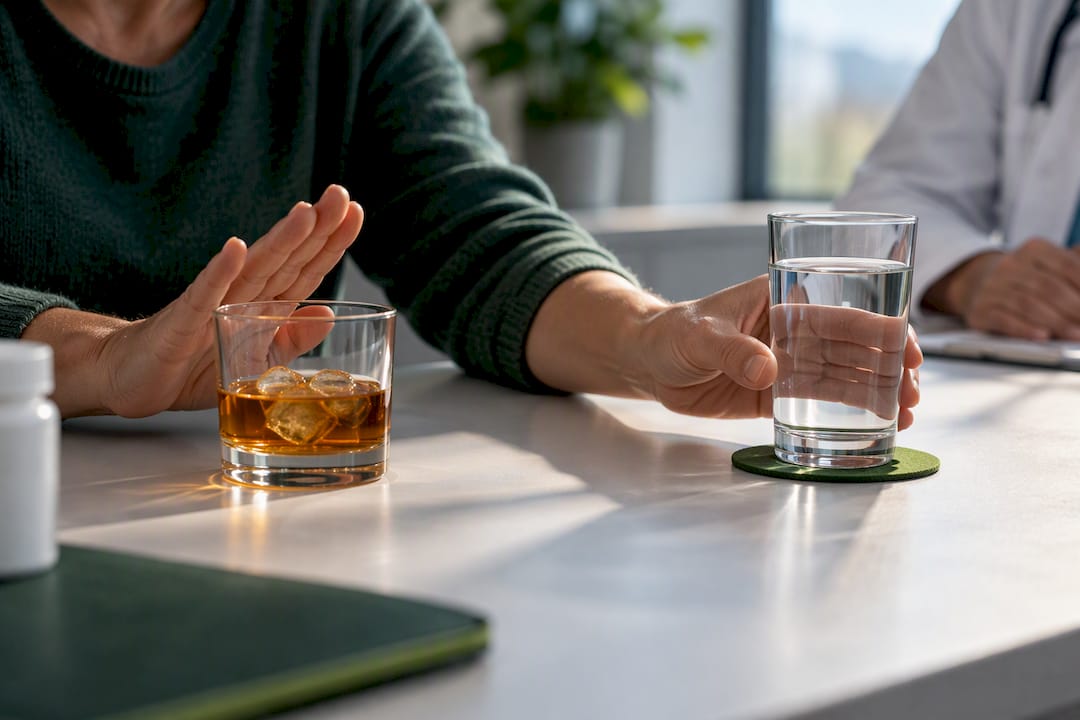
There is no proven direct drug interaction between semaglutide and alcohol, but overlapping risks mean you should still take precautions. If you have diabetes or take insulin or a sulfonylurea, alcohol raises your risk of dangerously low blood sugar. If you’re already dealing with nausea, vomiting, or signs of pancreatitis, skip alcohol until your clinician clears you.
TL;DR:
- Alcohol absorption may slow due to semaglutide’s effect on gastric emptying, but the overall impact on intoxication varies and may lead to stronger effects at lower doses.
- Combining semaglutide with insulin or sulfonylureas increases the risk of delayed hypoglycemia, especially hours after drinking, requiring careful monitoring.
- Alcohol worsens common gastrointestinal side effects of semaglutide, such as nausea and vomiting, and heavy drinking raises the risk of pancreatitis.
- Evidence suggests semaglutide may reduce heavy drinking days and craving, though it is not an approved treatment for alcohol use disorder.
- Key safety steps include planning alcohol consumption carefully, checking blood glucose regularly, and avoiding drinking during dose increases or active nausea.
Semaglutide does not chemically bind with alcohol or block its metabolism, but it changes the environment alcohol enters. The medication slows gastric emptying, meaning food and liquids sit in your stomach longer before moving into the small intestine. Because alcohol is absorbed mainly in the small intestine, this delay can change how quickly it hits your bloodstream, though it does not eliminate the effect.
There’s also a brain component. GLP-1 receptors sit in areas involved in reward and craving, and researchers are studying whether activating them dampens the pull toward drinking. This is still an emerging mechanism, not a settled one, but it may explain why some patients report drinking less without trying to.
A third factor is simpler: you’re probably eating less. Weight loss and reduced appetite are the point of semaglutide, but a lighter stomach means alcohol hits harder and faster than it used to.
Together, these effects mean your usual tolerance may not apply anymore.
None of this is dangerous by itself. It just means the drink that used to feel moderate might not anymore, and that’s worth knowing before your next glass of wine.
For most people, this is the risk that matters most. Alcohol interferes with gluconeogenesis, the liver’s process for releasing stored glucose into the bloodstream. According to the American Diabetes Association, this can trigger hypoglycemia hours after your last drink, not just while you’re actively drinking.
A blood sugar crash from alcohol can strike many hours after drinking, according to the American Diabetes Association, often overnight while you’re asleep and unable to notice symptoms.
Semaglutide already lowers blood sugar. The FDA prescribing information notes that hypoglycemia risk climbs further when semaglutide is combined with insulin or insulin secretagogues like sulfonylureas. Layer alcohol on top of that combination and the risk compounds. This doesn’t mean you can’t drink, but it means the margin for error shrinks.
A few steps make a real difference:
None of these steps require giving up alcohol entirely for most people with well-managed diabetes. They just require treating a night out as something to plan around instead of something to wing.
Semaglutide’s most common side effects are nausea, vomiting, diarrhea, and decreased appetite, and alcohol tends to make all four worse. Alcohol irritates the stomach lining and can slow digestion further on top of what semaglutide already does, which is a rough combination if you’re newly on the medication or mid dose escalation.
Heavy alcohol use also carries its own pancreatitis risk, and semaglutide’s label already flags pancreatitis as a rare but serious concern. Combining a GLP-1 medication with heavy drinking doesn’t create a proven new interaction, but it does stack two separate risk factors for the same organ. If you already manage semaglutide’s GI side effects, alcohol is rarely the ingredient that helps.
Severe or persistent abdominal pain, especially pain that radiates to your back, along with continuous vomiting, needs same-day medical attention rather than a wait-and-see approach.
Pro Tip: Skip alcohol entirely during the first few weeks after a dose increase, when nausea is most likely to spike.
The most notable evidence comes from a 26-week randomized, double-blind, placebo-controlled trial published in The Lancet, which tested once-weekly semaglutide 2.4 mg in treatment-seeking patients with alcohol use disorder and obesity.
Semaglutide reduced heavy drinking days compared with placebo in that trial population, according to The Lancet, one of the strongest signals yet that GLP-1 receptor agonists affect drinking behavior, not just appetite.
Smaller pilot studies add texture to that finding:
None of this means semaglutide is an approved treatment for alcohol use disorder. It isn’t, and no clinician should prescribe it for that purpose today. What it does mean is that the relationship between GLP-1 medications and drinking behavior is more than a side note.
The safest approach treats alcohol as something to plan around rather than something to eliminate outright, unless your clinician has told you otherwise.
Drug interaction references, including Drugs, generally recommend standard moderation limits for people with well-controlled diabetes: up to one drink a day for women and up to two for men, never on an empty stomach. Those limits aren’t unique to semaglutide, but they’re a reasonable baseline if your prescriber hasn’t given you a different target.
If you’re pregnant or trying to conceive, alcohol and semaglutide both carry separate reasons to avoid them, and that guidance doesn’t change based on how your body has responded to the medication so far.
Pro Tip: Keep a simple log for the first month of drinking on semaglutide, noting what you drank, how much you ate, and how you felt the next morning. Patterns show up fast.
Understanding your dosage timeline helps you predict which weeks call for extra caution and which ones are likely calmer.
Most people can navigate semaglutide and alcohol with basic precautions, but a few signs mean it’s time to get medical input, sometimes urgently.
If you take insulin or a sulfonylurea, talk to your prescriber before you plan to drink regularly, not after a scary night. And if you’re thinking about cutting back on alcohol entirely or adjusting your semaglutide dose, schedule a follow-up rather than making both changes at once. Your prescriber needs a clear picture of what changed and when.
Every patient’s risk here looks a little different, which is why blanket rules matter less than an honest conversation with whoever manages your prescription. Someone on insulin needs a different plan than someone managing weight alone with diet and semaglutide.
One recurring pattern: patients report that a glass of wine that once went down easily now triggers nausea, or that the desire for a second drink simply isn’t there anymore. Some adjust by drinking less, others by eating more beforehand. Neither response is wrong.
This article is meant to prepare you for that conversation, not replace it.
— Eric
Questions about alcohol, side effects, and dose timing come up constantly once you’re actually on treatment, which is why ongoing access to a prescriber matters as much as the first approval. Oak Longevity’s telehealth model keeps that access open for less than many clinic visits cost.
If you want to talk through your own risk factors, drinking habits, or diabetes medications before starting or adjusting treatment, you can review semaglutide and tirzepatide options and start with a consult built around your specific health history.
This article draws on the FDA prescribing information for semaglutide, American Diabetes Association guidance on hypoglycemia, and the 2026 Lancet randomized trial on semaglutide and heavy drinking, along with clinical summaries from WebMD.
This article is general information, not a substitute for advice from a qualified doctor. Consult a qualified healthcare professional about your own circumstances before acting on anything here.
The 20 minute rule is general drinking advice, not a semaglutide-specific guideline: it suggests waiting between drinks to let your body process alcohol before adding more. It can help anyone drink more slowly, which is useful if semaglutide has changed how quickly you feel alcohol’s effects.
There’s no medically endorsed “best” alcohol for people on semaglutide, but lower-calorie, lower-sugar options like a dry wine or a spirit with a zero-calorie mixer put less strain on blood sugar and weight goals than sugary cocktails or beer. People with diabetes should still pair any drink with food and monitor glucose, as advised by the American Diabetes Association.
No GLP-1 medication is FDA-approved specifically for reducing alcohol use, so there isn’t an official “best” choice for that purpose. The strongest current evidence for reduced heavy drinking days comes from a Lancet trial testing semaglutide in people with alcohol use disorder and obesity, but this remains research, not approved treatment.
Some patients report feeling less intoxicated or less interested in drinking on semaglutide, which may relate to delayed gastric emptying or changes in brain reward pathways under study. This effect varies widely between people and isn’t guaranteed, so it shouldn’t be treated as a reason to drink more than usual.