
Yes, tirzepatide can cause fatigue, but for most people it’s an indirect effect, not a direct sedative one. It tends to track with reduced food intake, GI symptoms, dehydration, or blood sugar swings, and it usually eases within weeks. Hydration, small protein-rich meals, glucose monitoring if you’re on insulin, and a quick call to your prescriber if symptoms persist will handle most cases.
TL;DR:
- Most tirzepatide-related fatigue occurs during dose escalation and typically improves within weeks as gastrointestinal symptoms and appetite suppression stabilize.
- Fatigue mainly results from reduced food or fluid intake, dehydration, blood sugar swings, or GI symptoms, rather than a direct sedative effect.
- Proper management includes maintaining hydration, eating protein-rich small meals, monitoring glucose especially when combining with insulin or sulfonylureas, and consulting a clinician if symptoms persist or worsen.
- Severe symptoms like persistent vomiting, confusion, or unexplained fainting require urgent medical attention and should be reported to a healthcare professional immediately.
- Telehealth support with daily logs for nutrition, hydration, and fatigue timing can help clinicians tailor dose adjustments and lifestyle advice effectively.
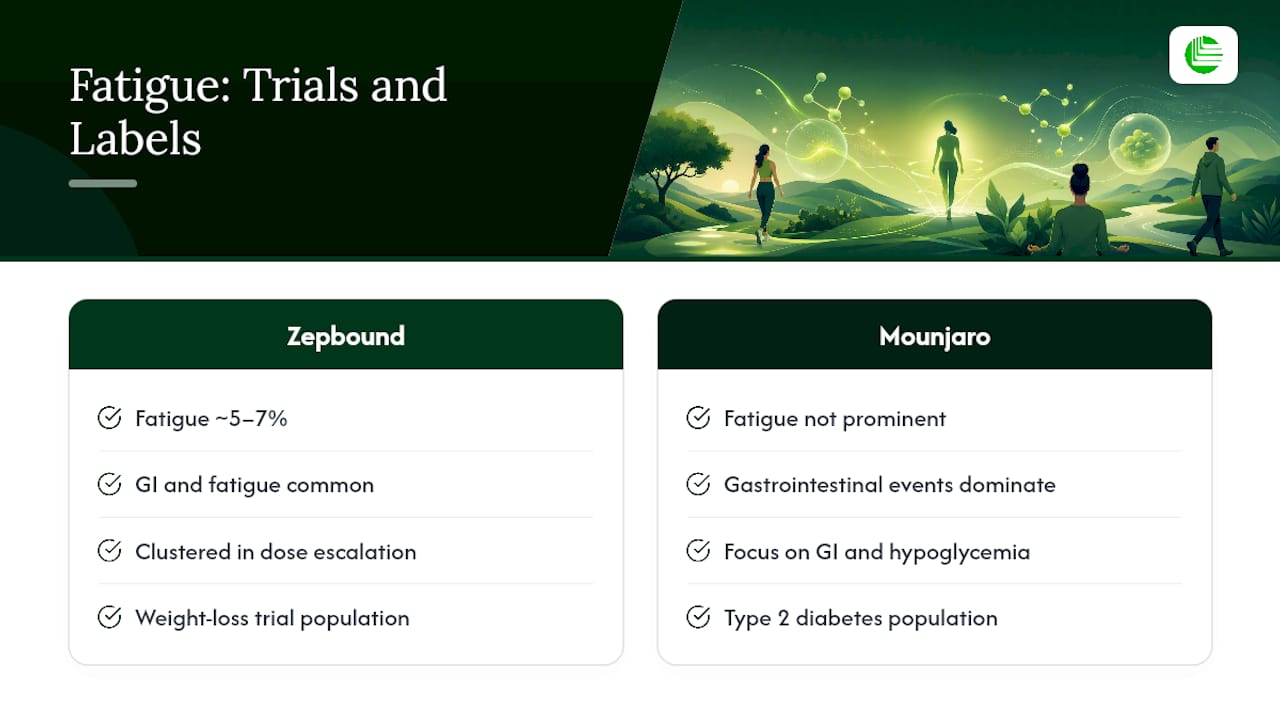
Fatigue shows up differently depending on which version of the drug you’re looking at and why you’re taking it. The Zepbound (tirzepatide for weight management) prescribing information lists fatigue among common adverse reactions. Mounjaro, the same molecule prescribed for type 2 diabetes, tells a different story in its trial tables, where gastrointestinal effects dominate and fatigue doesn’t get flagged as a standout complaint in the same way.
That gap isn’t a contradiction. It reflects who’s in each trial and what gets tracked. Weight-loss trial populations eat less by design, which sets up more opportunities for low-energy days. Diabetes trial populations are often already managing blood sugar with other medications, so investigators watch GI symptoms and hypoglycemia more closely than generic tiredness.
Fatigue by the numbers: Zepbound’s label puts fatigue at roughly 5% to 7% in some trials, clustered mainly during dose increases. The SURMOUNT-2 trial found gastrointestinal events were the most frequent adverse events overall, with fatigue appearing among treatment-emergent side effects, more often during escalation than during maintenance dosing.
The FDA’s prescribing information for tirzepatide confirms this pattern across formulations. It lists fatigue among documented adverse reactions and recommends the kind of monitoring that catches problems early rather than after they’ve become severe.
Reporting thresholds matter too. A symptom has to hit a certain frequency before it makes a formal adverse-event table, and mild tiredness that a patient shrugs off in a diary doesn’t always get coded the same way a nurse coordinator would code it during a structured trial visit. That’s one reason online forums sometimes make fatigue sound more universal than the label numbers suggest. It’s real for a meaningful subset of patients. It’s not universal.
Tirzepatide doesn’t cross into the brain and switch off your energy the way a sedative would. MedlinePlus frames its mechanism around appetite suppression, slowed gastric emptying, and glucose-dependent insulin release, three effects that can add up to fatigue without ever directly touching the nervous system. Understanding which pathway is driving your tiredness helps you and your prescriber pick the right fix instead of guessing.
Under-eating without realizing it. Tirzepatide is effective at killing appetite, which is the point for weight management. The catch is that people often stop eating enough calories, protein, or carbohydrates before they consciously notice they’re hungry. Low blood sugar and low energy availability both produce fatigue, and the fix (eating more, not less) runs counter to what your appetite is telling you.
GI symptoms disrupting intake and sleep. Nausea, vomiting, and diarrhea reduce how much food and fluid you actually absorb, and they also interrupt sleep. A person who’s up twice a night with stomach discomfort is going to feel drained the next day regardless of what the medication is doing metabolically.
Dehydration and electrolyte loss. Vomiting and diarrhea don’t just cost you calories. They cost you sodium, potassium, and fluid volume, and mild dehydration is one of the most common, most overlooked causes of daytime tiredness in general medicine, let alone on a GLP-1/GIP medication.
Hypoglycemia when combined with insulin or a sulfonylurea. This is the mechanism that needs the most respect. MedlinePlus is specific about this risk: tirzepatide’s effect on insulin release, layered on top of insulin or a sulfonylurea you’re already taking, can push blood sugar low enough to cause real fatigue plus other symptoms.
Watch for this cluster if you’re on either of those drug classes alongside tirzepatide:
Sleep disruption from any of the above. GI discomfort, nighttime hypoglycemia, or simple anxiety about a new medication can all fragment sleep, and fragmented sleep produces fatigue that has nothing to do with the drug’s core mechanism and everything to do with what it’s doing to your nights.
The diagnostic clues that separate these causes: timing relative to your last dose and last meal, whether GI symptoms are present, and a glucose reading if you have access to one. A tirzepatide diet plan that keeps protein and fluid intake steady during escalation addresses three of these four mechanisms at once.
Most people who notice fatigue on tirzepatide notice it in a fairly predictable window, and most people also notice it fade.
If your fatigue doesn’t follow this arc, that’s worth flagging. Write down when it hit relative to your last dose, whether you’d eaten recently, and whether you had any GI symptoms alongside it. That timeline is exactly what a clinician needs to tell an expected adjustment reaction from something that needs a dose change or a different plan.
Most fatigue on tirzepatide responds to boring, unglamorous fixes: eat enough, drink enough, sleep enough, and keep an eye on glucose if that applies to you. None of this requires stopping the medication.
Nutrition. The core problem is usually calorie and protein intake dropping faster than your appetite tells you it should. Aim for small, frequent meals rather than three big ones your shrunken appetite can’t handle. Prioritize protein at each sitting, whether that’s Greek yogurt, eggs, a protein shake, or a piece of chicken you can manage in a few bites. A tirzepatide diet plan built around nutrient-dense, low-volume foods solves the under-eating problem directly instead of fighting it.
Hydration and electrolytes. Don’t wait until you’re thirsty. Sip water on a schedule, especially in the days after a dose increase, and ask your clinician about an electrolyte solution if you’re dealing with any diarrhea or vomiting. Dehydration is one of the fastest, most reversible causes of tiredness on this medication.
Glucose safety. If you’re on insulin or a sulfonylurea alongside tirzepatide, follow the individualized hypoglycemia plan your clinician sets up, and check glucose when fatigue hits unexpectedly. Patient-facing drug summaries are direct on this point: don’t adjust your diabetes medications on your own in response to fatigue. That decision belongs to your prescriber.
Activity and sleep. You don’t need to push through a hard workout while you’re adjusting. Gentle movement, walking, and consistent sleep and wake times do more for energy right now than intensity. If GI symptoms are keeping you up at night, treating those (smaller dinners, more time before lying down) often fixes the sleep problem and the fatigue that follows it.
Medication-safety steps. If fatigue is severe or intake has dropped for more than a few days, that’s a reason to pause the next dose increase and call your clinician rather than push forward on schedule. Bring specifics to that conversation: when the fatigue started, what you’ve been eating, any GI symptoms, and glucose readings if relevant. Reviewing tirzepatide side effects before your appointment helps you describe what’s happening with more precision than “I’ve just been tired.”
Pro Tip: Keep a simple three-line daily log for two weeks: what you ate, how much water you drank, and when fatigue hit. That single habit turns a vague complaint into a pattern your clinician can actually act on.
Most fatigue on this medication is manageable at home. Some symptom combinations are not, and they need a call to your prescriber or a trip to urgent care rather than a wait-and-see approach.
Before you call, gather what you can: when the fatigue or other symptoms started, your most recent glucose readings if you check them, what you’ve eaten and drunk over the past 24 hours, and whether you’ve recently increased your dose. That information turns a five-minute phone call into an accurate diagnosis instead of a guessing game.
If you’re on insulin or a sulfonylurea, don’t stop or change those medications on your own because you’re tired. Low blood sugar from stopping insulin cold can be more dangerous than the fatigue you’re trying to fix. Let your prescriber make that call.
A telehealth model works for fatigue management because most of the fixes (nutrition, hydration, dose timing) live in daily habits, not in-office procedures. The process starts with an online health questionnaire reviewed by a licensed physician, followed by medication delivery and ongoing physician-led support rather than a one-time prescription and silence.
That structure matters most during dose escalation, the exact window when fatigue is most likely to show up. The follow-up support is built around tracking that helps clinicians sort out what’s driving your tiredness:
When a patient reports fatigue, the typical clinical response isn’t to abandon the medication. It’s a conservative dose hold, targeted counseling on intake and hydration, or, if red flags appear, a referral for further evaluation. That measured approach reflects what the trial data actually shows: early tolerability issues usually resolve with support, not with quitting.
Fatigue in the first few weeks on tirzepatide is a legitimate complaint, not something to wave off as “just adjusting.” If you’re feeling drained and frustrated, that’s a valid response to a real physiological shift, not a sign you’re doing something wrong.
What the longer-term data adds is context, not dismissal. Patients in trials who reported early GI symptoms and fatigue often showed improved vitality and physical function by later checkpoints, months down the line. That doesn’t mean everyone should just wait it out. It means the smart move is a conversation with your clinician about what’s driving the fatigue now, not a unilateral decision to stop the medication or push through a hypoglycemia risk you haven’t checked. Shared decision-making beats guessing every time.
— Eric
Managing fatigue on tirzepatide often comes down to fast access to a prescriber who can review your dose, your intake, and your glucose numbers instead of leaving you to guess. A telehealth model can provide access without waiting weeks for an in-person appointment: an online consultation, physician review, and medication delivery, backed by ongoing support if side effects like fatigue appear during escalation.

If you’re already on tirzepatide and managing fatigue or other side effects, Oak’s follow-up support can help you sort out whether it’s a nutrition issue, a hydration issue, or something that needs a dose adjustment. If you’re considering treatment and want a program built around Semaglutide or Tirzepatide with physician oversight from day one, that same consultation process applies. Start with the online questionnaire, get a physician’s review, and get medication shipped directly rather than juggling in-person pharmacy visits on top of everything else you’re managing.
This article is general information, not a substitute for advice from a qualified doctor. Consult a qualified healthcare professional about your own circumstances before acting on anything here.
Eat small, protein-containing meals on a schedule instead of waiting for hunger cues, since appetite suppression can mask real calorie needs. Stay ahead of hydration, especially during dose increases, and check glucose if you’re on insulin or a sulfonylurea, since low blood sugar can mimic general tiredness.
For most people, fatigue tied to dose escalation improves within a few weeks as GI symptoms settle and intake stabilizes. Longer-term data from the SURMOUNT-2 trial even showed improved vitality and physical functioning by week 72, well past the early adjustment period.
It can, but usually indirectly, through reduced food and fluid intake, GI symptoms, or blood sugar changes rather than a direct sedative effect on the brain. The Zepbound label lists fatigue among adverse reactions occurring in at least 5% of patients, most often during dose escalation.
Symptoms can include severe nausea, vomiting, abdominal pain, and, if combined with insulin or a sulfonylurea, signs of dangerously low blood sugar such as confusion or fainting. Persistent vomiting, inability to keep fluids down, or severe abdominal pain warrants an urgent call to your prescriber rather than waiting it out at home.
Yes. Oak Longevity’s physician-led follow-up support helps patients sort out whether fatigue is tied to intake, hydration, or dosing, and can adjust care through the same telehealth consultation process used to start treatment.