Semaglutide can produce meaningful weight loss and metabolic improvement in people with PCOS, but it is not FDA-approved for PCOS, so any use is off-label. The 2023 PCOS guideline advises effective contraception while taking it because pregnancy safety data are lacking. Talk through benefits, side effects, and your long-term plans with a clinician before you start.
TL;DR:
- Small PCOS studies link semaglutide and related drugs with improved insulin resistance and smaller waist measurements, but short follow up and mixed treatments limit certainty.
- Pooled PCOS trials found more regular menstrual cycles, but evidence on IVF outcomes and long term safety for children exposed before birth remains limited.
- A 2025 PCOS trial found the semaglutide and metformin combination outperformed metformin alone for weight loss and natural pregnancy rates in women with higher weight.
- Dose increases should be gradual to limit digestive effects; avoid semaglutide with a personal or family history of medullary thyroid cancer or MEN 2.
- Insurance often denies PCOS prescriptions, though coverage may be possible when you meet approved criteria, such as having type 2 diabetes, with prior authorization.
The evidence base is encouraging but young. A meta-analysis and systematic review of GLP-1 receptor agonists in women with PCOS found improvements in HOMA-IR (a measure of insulin resistance), BMI, waist circumference, and some hormonal indices. Semaglutide is one member of that drug class, and reviews of GLP-1 analogs in PCOS suggest the longer-acting agents tend to produce greater weight loss with less GI discomfort than shorter-acting ones, as this review of GLP-1 analogs describes.
Here is what the research generally covers:
A clinical report on semaglutide in obese PCOS patients described significant weight loss in many patients treated with low-dose semaglutide, which fits the broader pattern but comes from a small clinical series rather than a large trial.
The numbers vary because the studies are not uniform. Sample sizes are small, follow-up is often short, doses differ, and many participants also received metformin or lifestyle coaching, which makes it hard to isolate semaglutide’s own effect. A network meta-analysis of weight-loss drugs in PCOS also noted that evidence for anti-obesity drugs specifically in PCOS remains limited and that these agents belong alongside lifestyle measures, not in place of them.
If you want background on how these drugs work and how the agents differ, our overview of GLP-1 medications is a good starting point.
Weight is only part of the PCOS picture. Many people care just as much about irregular periods and fertility. In the pooled randomized trials, GLP-1 receptor agonists were associated with a better natural pregnancy rate and more regular menstrual cycles in women with PCOS.
Key points to keep in mind:
Better cycles do not mean you can skip contraception. As ovulation returns, the chance of an unplanned pregnancy can return with it, and the safety data for pregnancy on this drug class are insufficient. Our guidance on semaglutide and pregnancy walks through planning around that.
The most common side effects are gastrointestinal. Expect some mix of these, especially in the first weeks and after each dose increase:
Clinicians reduce these effects by starting low and increasing the dose in steps, rather than jumping to a full dose. Eating smaller meals and stopping when you feel full also helps many people. We cover practical management in our guide to semaglutide side effects.
The Wegovy prescribing information carries a boxed warning about thyroid C-cell tumors seen in rodents. It contraindicates use if you or a family member has had medullary thyroid carcinoma, or if you have multiple endocrine neoplasia syndrome type 2 (MEN 2). It also warns against using more than one semaglutide product at a time.
On pregnancy, the 2023 international evidence-based guideline for PCOS advises effective contraception while on GLP-1 agonists because safety data in pregnancy are lacking. If you hope to conceive, plan the stopping point and the washout interval with your clinician before you try.
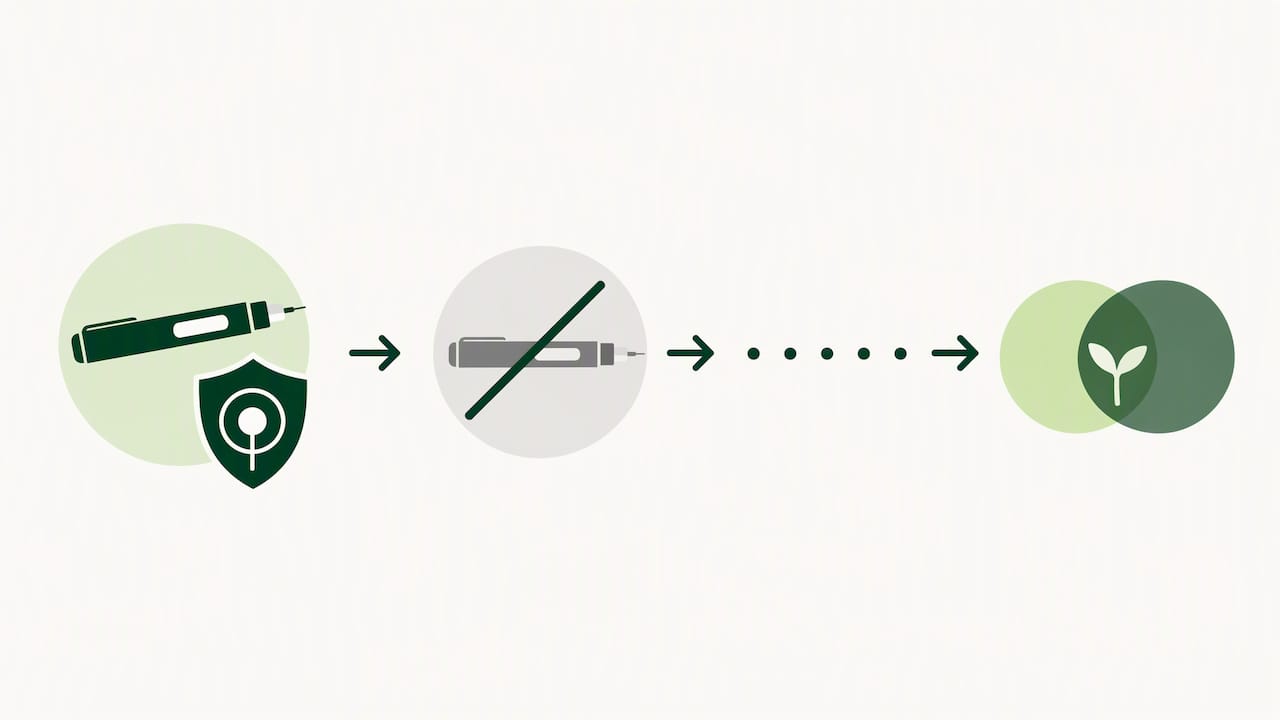
Pro Tip: Tell your clinician about any thyroid history, including a family history, before your first dose, and agree on a contraception method and a conception timeline at the same visit.
Semaglutide’s approved uses are chronic weight management (Wegovy) and type 2 diabetes (Ozempic). Per Drugs, no semaglutide product is FDA-approved for PCOS, so clinicians may prescribe it off-label. Experts there also caution that it is not a first-line PCOS treatment and that decisions should weigh benefits against GI side effects and the likely need for long-term therapy. Clinical guidance summarized in a review of PCOS drug treatment supports considering anti-obesity medications for adults with PCOS who carry higher weight, alongside lifestyle intervention.
A typical path looks like this:
Insurance is the common obstacle. Because PCOS is an off-label indication, plans often decline to cover it. Coverage may be easier when you also meet the approved criteria, such as a qualifying weight-related diagnosis or type 2 diabetes, and your clinician documents it through prior authorization. Ask your plan about its criteria before you assume any outcome.
Metformin and semaglutide act on different problems. Metformin and semaglutide may be considered for different treatment goals. Discuss their potential benefits and risks with a clinician. Together they can plausibly help restore ovulation, and the 2025 randomized trial found the combination reduced body weight more and produced higher natural pregnancy rates than metformin alone in overweight and obese women with PCOS.
Medication helps you get traction, and daily habits help you keep it.
Early on, GI effects tend to show up during initiation and dose increases. Weight loss, metabolic markers, and cycle regularity can change over time, but the timing varies. Our semaglutide weight loss timeline lays out what patients typically see.
Experts emphasize that weight regain after stopping GLP-1 therapy is a real risk, which is why many clinicians frame semaglutide as a long-term management option rather than a short course.
Pro Tip: Build strength training and a protein-forward eating pattern while you are still on treatment, so the habits are in place if you ever taper off.
We start with a licensed clinician reviewing your history, and we treat contraception and fertility goals as part of the first conversation, not an afterthought. Your medication is delivered to your door, and we stay available to adjust dosing and manage side effects as you go. Decisions are shared, and monitoring is individual. If pregnancy is on your horizon, tell us early so the plan fits your timeline.
— Eric
If you have PCOS and are weighing semaglutide, we offer clinician-reviewed telehealth consultations and prescription fulfillment for GLP-1 therapies, with ongoing support for dosing and side effects. Current prices are on our site.
Start your evaluation at Oaklovesyou and tell us your fertility goals from the first visit.
This article is general information, not a substitute for advice from a qualified doctor. Consult a qualified healthcare professional about your own circumstances before acting on anything here.
Often not, because PCOS is an off-label use and plans usually cover semaglutide only for its approved indications. Coverage can be more likely when you also have an approved diagnosis such as type 2 diabetes, documented through prior authorization. Check your plan’s criteria first.
They do different jobs. In a 2025 trial, adding semaglutide to metformin produced greater weight loss and higher natural pregnancy rates than metformin alone. Whether one is right for you depends on your goals and health history.
No. The PCOS guideline advises effective contraception during GLP-1 therapy because pregnancy safety data are lacking. Ask your clinician how long to stop before trying to conceive.
No single agent has been proven best for PCOS. Reviews suggest longer-acting agents such as semaglutide tend to produce more weight loss with less GI discomfort than shorter-acting ones, per this review. Your clinician can match the drug to your needs.