The current recommendation is clear: stop semaglutide once pregnancy is planned or discovered. The evidence so far shows no consistent rise in major birth defects, but several studies flag neonatal complications such as preterm birth and low blood sugar, and overall certainty remains low. If you’re in either situation, contact your clinician now and ask about enrolling in a pregnancy exposure registry.
TL;DR:
- Semaglutide exposure during pregnancy shows no significant increase in major birth defects, but neonatal complications like preterm birth and low blood sugar are common.
- Most data are observational, with small sample sizes and confounding factors such as maternal obesity or diabetes making it hard to determine drug-specific risks.
- Exposure during pregnancy warrants closer neonatal monitoring, especially for glucose regulation and growth, regardless of the absence of congenital malformations.
- Women on semaglutide should stop at least two months before attempting conception, considering the drug’s seven-day half-life and the need to avoid early pregnancy risks.
- Breastfeeding appears safe, with no measurable transfer of semaglutide into breast milk in small studies, though oral formulations may carry theoretical concerns.
The largest systematic review to date pooled data on more than 40,000 pregnancies exposed to GLP-1 receptor agonists, the drug class that includes semaglutide, and found no statistically significant increase in major congenital malformations. The pooled data showed no clear signal of increased risk of major congenital malformations, meaning the true effect could range from slightly protective to modestly elevated. That range is wide enough to keep the certainty rated as low, not because the drug looks dangerous, but because the underlying data is thin.
A narrower, semaglutide-specific review looked at a group of five studies covering semaglutide-exposed pregnancies and found similarly mixed results: no clear signal for structural birth defects, but real inconsistency in study quality and reported neonatal outcomes.
A few things limit how far this evidence can be trusted:
Weighing this evidence means holding two facts at once: the malformation signal isn’t there, but the sample sizes still aren’t large enough to rule out a smaller effect.
Congenital malformations aren’t the main worry doctors carry into these conversations anymore. It’s the neonatal period right after birth.
A cohort analysis by Kolding and colleagues found higher rates of several outcomes in semaglutide-exposed pregnancies compared to unexposed pregnancies with similar maternal profiles:
Statistic Callout: The systematic review pooling 1,128 semaglutide-exposed pregnancies found no consistent structural malformation signal, yet still reported these same neonatal complications across multiple included studies, a pattern that shows up even when major birth defects don’t.
Biologic plausibility cuts both ways here. Semaglutide slows gastric emptying and shifts maternal glucose metabolism, and abrupt maternal weight loss or altered glucose handling during pregnancy could independently affect fetal growth and neonatal glucose regulation. But mothers on semaglutide are also more likely to have preexisting metabolic disease, which raises the same risks on its own. Separating the drug’s effect from the underlying condition it was treating is the central unsolved problem in this literature.
Practically, if exposure happened during pregnancy, expect closer neonatal surveillance after delivery, including glucose monitoring in the first hours and growth assessment through the third trimester.
Semaglutide’s relationship with fertility runs in two directions, and the evidence doesn’t point cleanly one way.
On one side, weight loss and improved insulin sensitivity from semaglutide can restore ovulation in people with PCOS or obesity-related infertility. Metabolic improvement is often the single biggest lever for irregular cycles, so some patients on semaglutide actually become more fertile than they were before treatment. That’s a genuine clinical upside, and it’s also why contraception counseling matters even for patients who weren’t trying to conceive.
On the other side, a recent study following a large cohort of women found something less encouraging: those pretreated with semaglutide showed lower cumulative probabilities of pregnancy and live birth compared with matched controls who weren’t on the drug.
A few takeaways for anyone trying to conceive:
Semaglutide has a half-life of about seven days, which means it takes roughly five to seven half-lives, somewhere around five to seven weeks, for levels to drop to a small fraction of their original concentration.
Clinical guidance generally recommends stopping semaglutide at least two months before actively trying to conceive. That built-in buffer accounts for the drug’s long tail and covers the earliest, most sensitive weeks of organogenesis, when a pregnancy might not be confirmed yet.
Pro Tip: Don’t wait for a positive pregnancy test to think about washout. Build the two-month stop into your conception timeline the same way you’d plan a vacation around a work deadline, backward from the date you want to start trying.
Data here is more reassuring than the pregnancy findings, though it’s still based on a small sample.
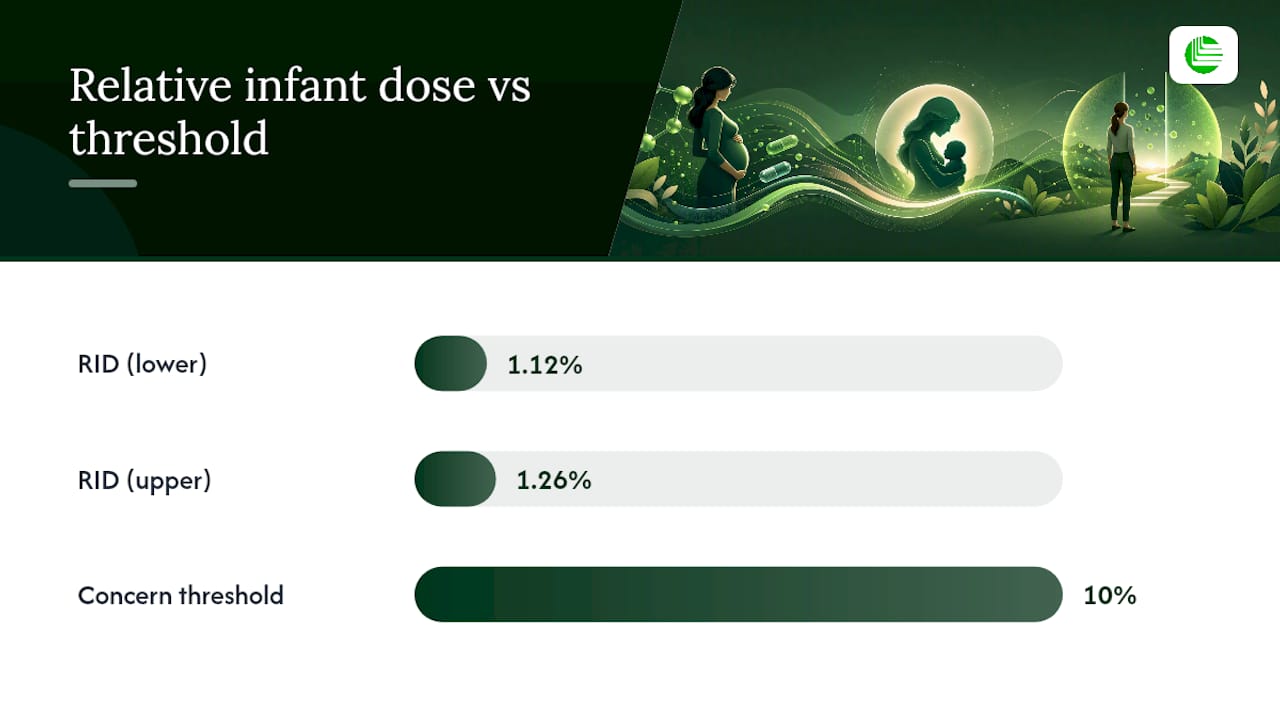
A 2024 study measured milk from eight nursing mothers using injectable semaglutide and found the drug undetectable, below 1.7 nanograms per liter, in every sample tested. Researchers calculated a worst-case relative infant dose (RID) of about 1.12 to 1.26%, far under the 10% threshold generally used to flag concern for breastfed infants.
None of this is cause for panic. It’s a checklist, not a crisis response, and most of these steps happen in a single conversation with your care team.
The Wegovy Pregnancy Registry collects outcome data from people exposed to semaglutide during pregnancy, and reporting your case directly strengthens the evidence base future patients will rely on.
The gaps are real:
More cohort data is expected as registries mature, but multidisciplinary care, not waiting for perfect evidence, is what protects patients right now.
The semaglutide-pregnancy conversation gets stuck on one question: is it dangerous? That’s the wrong frame. The better question is whether patients and clinicians are planning the transition off the drug with enough lead time, and most aren’t.
A structured preconception planning approach usually includes supervised tapering, a timely conversation about contraception when weight loss restores ovulation, and a documented transition plan for managing weight or glucose without medication support during the washout window. Registry reporting isn’t paperwork, it’s how the next patient gets better guidance than you have today. If you’re on semaglutide and pregnancy is even a possibility, this is a conversation to have with your prescriber now, not after a positive test. Explore Oak Longevity’s consultation process to start that planning with physician guidance.
— Eric
This article is general information, not a substitute for advice from a qualified doctor. Consult a qualified healthcare professional about your own circumstances before acting on anything here.