
Stopping a GLP-1 medication is often safe when you work with your prescriber, but some situations call for immediate discontinuation: suspected pancreatitis, a positive pregnancy test, or signs of a severe allergic reaction. Everyone else has real choices, including a gradual taper, a switch to a lower maintenance dose, or stopping outright under supervision. Whatever path you take, expect the months after your last dose to carry the highest risk of regaining weight, so plan for that window rather than being surprised by it.
TL;DR:
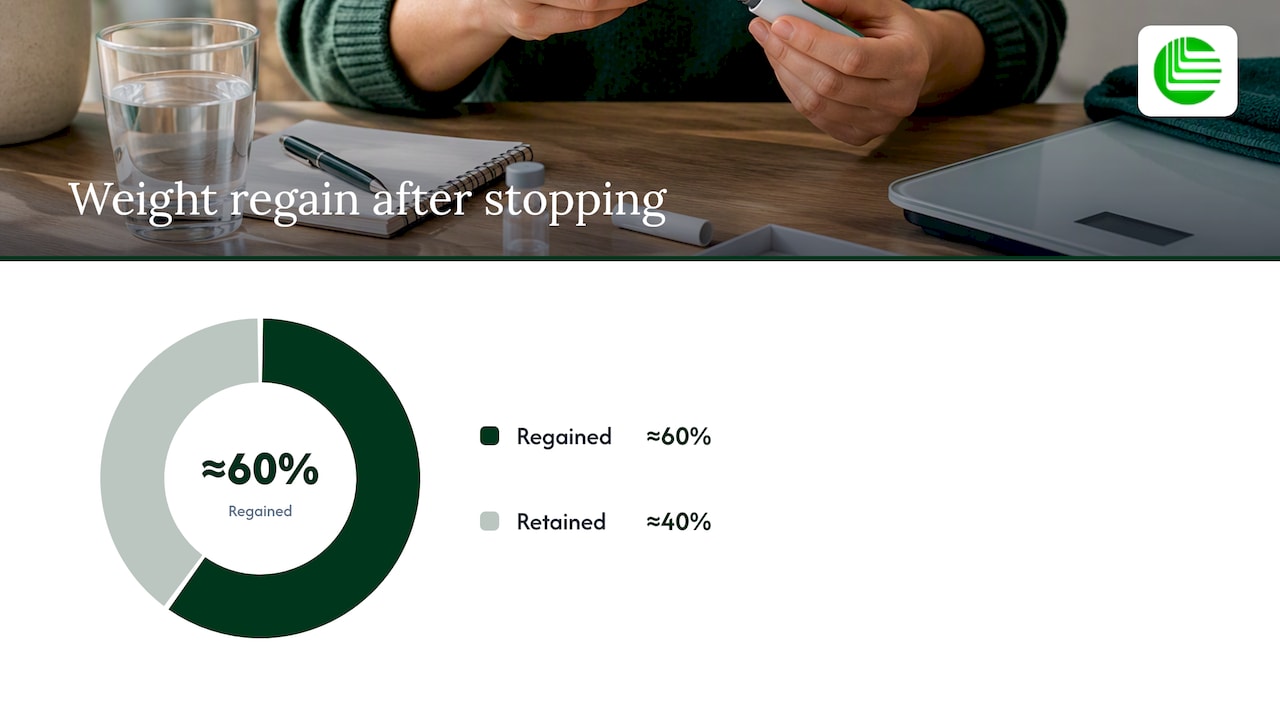
- Nearly 60% of weight loss from GLP-1 treatments typically returns within a year after stopping the medication, highlighting the importance of maintenance strategies.
- Immediate discontinuation is necessary if pancreatitis, severe allergic reactions, pregnancy, or intolerable gastrointestinal symptoms occur, requiring prompt medical attention.
- Tapering has not been proven to produce better long-term outcomes than abrupt stops, but individual factors like tolerability and treatment goals can influence the approach.
- Avoid self-adjusting insulin or other diabetes medications after stopping a GLP-1, and increase blood sugar monitoring during the first few days to prevent safety issues.
- Building habits such as high protein intake, resistance training, and consistent sleep during the months after stopping can significantly reduce the risk of weight regain.
Some symptoms mean you stop the medication now and call your prescriber or go to urgent care, not next week. The prescribing information for semaglutide requires immediate discontinuation if acute pancreatitis is suspected or if you become pregnant, and the same label warns of severe hypersensitivity reactions that need urgent attention.
Watch for these red flags:
Label warnings for GLP-1 medications include pancreatitis, severe gastrointestinal reactions, hypersensitivity, and pregnancy-related precautions, according to FDA prescribing information. These are the scenarios where stopping is not optional and waiting is not a reasonable plan.
If you manage diabetes with insulin or a sulfonylurea, do not adjust or stop those medications on your own just because you are stopping a GLP-1. Appetite and blood sugar can shift quickly once the GLP-1 clears your system, and insulin doses that were safe last week can become too high this week. Check your glucose more often during the first several days, log the readings, and contact your prescriber before making any insulin changes.
For the first 24 to 72 hours after stopping, keep it simple: call your prescriber’s office if you notice new abdominal pain, unusual blood sugar readings, or symptoms that worry you, log what you eat and how you feel, and go to the emergency room for severe pain, breathing trouble, or fainting rather than waiting for a callback.
There is no single approved way to come off a GLP-1 medication, and that gap between common practice and proven protocol is worth understanding before you choose a path.
A cold stop means discontinuing the medication entirely at your current dose, with no step-down. A dose step-down lowers the amount injected at each visit, often working backward through the same titration schedule used to start the drug. Reduced-frequency dosing keeps the same dose but spaces injections farther apart. A low maintenance dose settles on the smallest dose that still provides meaningful appetite or glycemic benefit, taken indefinitely rather than stopped. None of these have a standardized protocol behind them, and clinicians generally individualize the approach based on how a patient responds.
Most of the randomized evidence we have covers cold stops, not tapers. The STEP trial off-treatment extension found that participants regained a majority of their prior weight loss within a year of stopping semaglutide outright, along with reversion of some cardiometabolic improvements. A broader systematic review and meta-analysis pooling data across GLP-1 receptor agonist withdrawal studies estimates that roughly 60% of treatment-related weight loss returns within the first year after stopping, with the pace of regain slowing and leveling off over time.
That blockquote matters because it cuts against a common assumption. Tapering feels intuitively gentler, and it is widely used in clinics, but it has not been proven in randomized trials to produce better long-term outcomes than stopping outright. The practice is reasonable and may help some patients, it just is not yet backed by the same quality of evidence as the cold-stop withdrawal data.
A few factors should drive the decision with your prescriber:
The American Diabetes Association’s standards on deintensification recommend person-centered decisions based on efficacy, tolerability, cost, and changing goals rather than a fixed timeline. That framing applies directly here: there is no universal “right” number of weeks to taper, only the approach that fits your specific situation. If you are considering a different medication entirely rather than stopping, it’s worth reading about switching from semaglutide to tirzepatide before making a final call.
The three to six months after your last dose are when appetite tends to come back the strongest, and the habits you build during this window do more work than anything else to limit regain.
Harvard Health Publishing’s guidance on weaning off a GLP-1 points out that stopping commonly brings back what patients describe as “food noise,” the intrusive mental chatter around food that the medication had quieted. Building these habits while still on therapy, rather than waiting until after you stop, gives you a head start before that appetite signal returns.
Pro Tip: Weigh yourself on the same day and time each week rather than daily, since day-to-day fluctuations can be discouraging and don’t reflect real trends.
Some patients benefit from discussing adjunct options with their prescriber rather than stopping cold. For diabetes management, metformin or an SGLT2 inhibitor might fill part of the gap left by a GLP-1. For weight maintenance specifically, a low maintenance dose of the original medication is sometimes the simplest bridge. These are prescriber-led decisions, not self-directed ones, and they depend on whether your primary goal was glycemic control or weight management in the first place.
A registered dietitian or structured behavioral program can also help translate general advice into a specific meal plan, and our guide on muscle protein synthesis while on GLP-1 therapy and exercise recommendations for GLP-1 patients go deeper into the specifics of protein targets and training progression.
A short monitoring routine catches problems early and gives your prescriber the information needed to adjust your plan quickly.
Contact your prescriber promptly if your glucose readings trend consistently high or low, if weight regain accelerates faster than expected, or if gastrointestinal symptoms persist beyond a few days. Reach out sooner rather than later. Most adjustments, like reducing an insulin or sulfonylurea dose, are easier to make early than after weeks of drift.
Some situations call for a referral to an endocrinologist or obesity-medicine specialist, particularly when glucose control becomes difficult to manage, when weight regain is rapid and significant, or when your primary care prescriber is not comfortable adjusting multiple medications at once. That referral is not a failure of the original plan, it’s a normal part of individualized care when the situation gets more complex than a single prescriber’s routine toolkit covers.
A few circumstances override the usual taper-versus-cold-stop decision because the medical stakes are different.
Each of these scenarios needs a specific, planned conversation with the relevant specialist well before you make a change. It is not a decision to make alone the week you decide to stop.
Coming off a GLP-1 safely works best with continuity of care rather than a one-time prescription and silence afterward. Our platform connects you with a physician through an online consultation, and if a taper or maintenance-dose plan fits your situation, that prescription ships directly to you with ongoing physician-led support built in rather than a single appointment and no follow-up.
For patients who want to understand the medications themselves before deciding on a next step, our overview of how GLP-1 medications work and our guide to getting a GLP-1 prescription online cover the practical side of staying connected to a prescriber through a transition. These resources support the decisions you make with your physician. They do not replace that conversation, particularly around dosing changes or red-flag symptoms covered earlier in this guide.
Weight regain after stopping a GLP-1 is not a personal failure, it’s predictable biology. Appetite-regulating hormones that the medication suppressed come back once the drug clears, and your body’s counter-regulatory systems push toward the weight it was defending before treatment started. That framing matters because the shame many patients feel around regain doesn’t match what is actually happening physiologically.
The more useful question isn’t whether you’ll experience some pull back toward your starting point. It’s whether you planned for it. A maintenance dose, a thoughtful taper, resistance training started early, and a prescriber who treats this as an ongoing relationship rather than a single prescription all change the outcome more than willpower ever will. Partner with a clinician who treats discontinuation as a planned phase of care, not an afterthought.
— Eric
This article is general information, not a substitute for advice from a qualified doctor. Consult a qualified healthcare professional about your own circumstances before acting on anything here.
Weaning typically means stepping down your dose gradually, sometimes following the same schedule used to start the medication in reverse, or spacing doses farther apart under your prescriber’s guidance. There is no single approved taper schedule, so the right approach depends on your goals, tolerability, and whether you’re managing diabetes or weight.
For most people, stopping abruptly under medical supervision is reasonably safe, though it is the approach most studied in randomized trials like the STEP extension analyses. Stopping on your own without telling your prescriber is riskier, especially if you manage diabetes with insulin, since your medication doses may need adjustment once the GLP-1 clears your system.
Some people maintain a portion of their weight loss, particularly when they build strong nutrition and exercise habits before stopping, but pooled trial data show that roughly 60% of lost weight typically returns within a year of discontinuation. Maintenance strategies like resistance training and a low continued dose can help preserve more of the result.
Weaning is not mandatory for everyone, since much of the randomized evidence on stopping semaglutide comes from studies where participants stopped abruptly rather than tapering. That said, many clinicians use a gradual step-down in practice, and the right choice depends on your individual goals and how your body responds, which is a conversation to have directly with your prescriber.