
Telehealth GLP-1 costs vary depending on whether you take a compounded or branded drug and whether labs, shipping, and medication are included. Insurance and the new Medicare GLP-1 Bridge can push your number much lower if you qualify, with the Bridge setting a $50 copay for eligible beneficiaries. For everyone else, medication choice decides almost everything.
TL;DR:
- Ask for the maintenance dose price in writing, then add visit fees, labs, shipping, supplies, and any prepaid commitment to calculate your true monthly cost.
- Compounded medication bills can rise as doses increase because pricing often tracks milligrams dispensed; branded pens usually cost the same per box across dose levels.
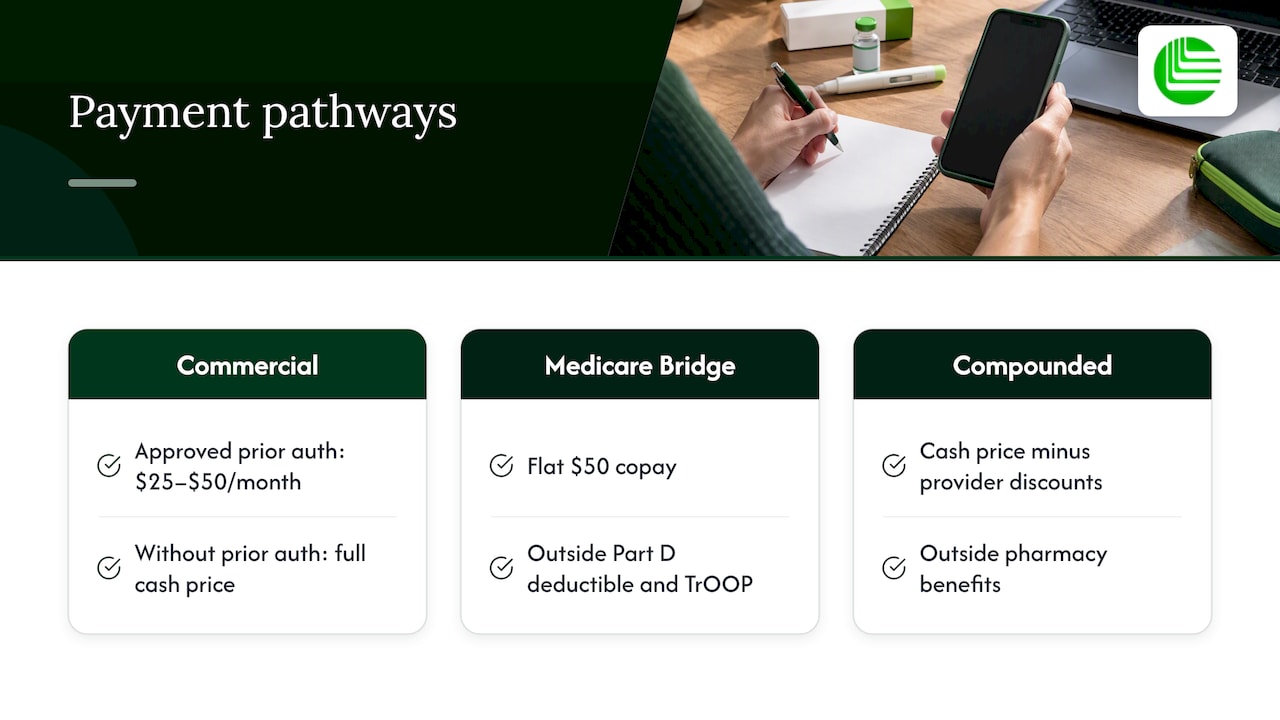
- Commercial coverage for branded drugs may require prior authorization; approved copays commonly run $25 to $50 monthly, while compounded programs generally remain cash pay.
- Eligible Medicare beneficiaries pay a flat $50 copay through the Bridge, but it does not count toward the Part D deductible or out of pocket totals.
- Because FDA decisions may change compounded drug availability, confirm which pharmacy prepares the medication, its license, and how regulatory changes could affect ongoing supply before enrolling.
Before comparing programs, it helps to see where the floor and ceiling actually sit. Compounded semaglutide programs tend to advertise the lowest entry prices, while branded drugs like Wegovy or Zepbound sit at the top once insurance isn’t covering them.
The catch is that a headline number rarely tells you what you’ll pay after reaching a maintenance dose. Many programs bundle the first month’s medication into a low “starter” fee, then switch you to a separate line-item charge once you reach a maintenance dose. Others fold everything into one flat subscription, which is easier to budget but can look more expensive on the surface even when the total is similar. Before you commit, check whether the advertised price includes the drug itself or just the consultation, because that single detail explains most of the sticker shock people report after their second or third shipment.
Teaser pricing is the most common source of confusion. A program might advertise a low price for your first month, which sounds unbeatable until you realize that figure reflects a starter dose, not the higher maintenance dose you may eventually need. Always ask what the price looks like at the dose your prescriber expects you to land on, not the dose you’ll start with.
Your all-in cost is really a sum of several separate line items, and understanding each one helps you spot where a program is padding its price or hiding a future increase.
Compounded medications cost less than branded versions largely because they’re prepared by compounding pharmacies rather than manufactured at commercial scale, but that landscape is shifting. The FDA has proposed excluding semaglutide, tirzepatide, and liraglutide from the 503B bulk list, which means the legal availability of compounded versions depends on ongoing FDA determinations and can change without much notice.
Dose escalation is another quiet cost driver. GLP-1 protocols may start low and increase over time, and since compounded pricing is often tied to milligram quantity, your bill can climb even if the advertised “starting price” never changes.
Pro Tip: Ask for the maintenance-dose price in writing before you enroll, not just the starter-dose price shown on the landing page.
Once you move past the headline numbers, the real spread across U.S. telehealth GLP-1 programs becomes clearer. Compounded semaglutide maintenance pricing varies depending on dose and provider, while branded maintenance pricing can climb once coupons expire.
| Program type | Typical maintenance range | What it usually includes |
|---|---|---|
| Compounded semaglutide | Varies by dose and provider | Medication, often bundled visit fee |
| Compounded tirzepatide | $167 per month | Medication, sometimes separate visit fee |
| Branded GLP-1 (no insurance) | Varies by drug and provider | Medication only; visit billed separately |
A useful way to see the teaser gap in action: a program might advertise a low introductory price, then charge more once you reach a therapeutic dose. If you prepay for a block, calculate the effective monthly cost by dividing the total by the number of months it covers.
A few patterns show up repeatedly across these programs:
If you want a closer look at how branded and compounded cash prices compare side by side, our breakdown of semaglutide costs without insurance walks through the math in more detail.
Insurance coverage for GLP-1s is inconsistent, and understanding the gaps matters as much as understanding the coverage itself.
The Medicare GLP-1 Bridge sets a flat $50 copay for eligible beneficiaries, a structure that CMS confirms operates separately from standard Part D cost-sharing rules. Under this arrangement, participating manufacturers supply eligible GLP-1 drugs to a central processor at a set net price, and the $50 is what’s collected from the beneficiary at pickup.
The detail many people miss: that $50 copay does not count toward your Part D deductible or your true out-of-pocket (TrOOP) totals, because the Bridge program runs outside the normal Part D payment and coverage flow. If you’re a Medicare beneficiary weighing whether to pursue this path, that structural quirk is worth understanding before you assume the Bridge will help you reach catastrophic coverage faster.
A program’s advertised price is a starting point, not a final answer. Here’s how to turn it into the number you’ll actually pay.
Before paying anything, ask the program directly: What’s the price at my expected maintenance dose? Is shipping included every month? Are labs required, and if so, who bills for them? What happens if I need to cancel mid-contract? And does my insurance plan require prior authorization before this medication is covered? Getting these answers in writing before you enroll can help prevent billing surprises during treatment.
GLP-1 protocols are built around gradual dose increases, and that escalation directly affects what you pay. Semaglutide protocols typically start at a low introductory dose and increase over time until reaching a maintenance level, while tirzepatide follows a similar stepped pattern.
Because compounded pricing is often tied to total milligrams dispensed, your monthly cost can rise before it stabilizes, even if your provider’s “starting price” never changes on paper. Branded medications are usually priced per pen or per box regardless of dose, which means your monthly price stays flatter but starts higher.
This is exactly why the price you see on a landing page may not match what you pay after reaching a maintenance dose. If a program quotes a price “per month,” ask whether that figure reflects the starting dose or the maintenance dose your prescriber expects you to reach, since those two numbers can differ depending on the drug and provider.
For patients with commercial insurance and an approved prior authorization, a realistic copay scenario runs $25 to $50 a month for a branded GLP-1, assuming your plan’s formulary places the drug in a favorable tier. Without prior authorization, or if your plan excludes weight-loss indications entirely, you’re typically responsible for the full cash price.
Medicare beneficiaries face a different structure entirely. Rather than standard Part D cost-sharing, eligible patients under the Medicare GLP-1 Bridge pay a flat $50 copay, collected outside the usual deductible and true out-of-pocket tracking. That means the Bridge can lower your immediate cost without moving you closer to catastrophic coverage the way a standard Part D copay would.
Compounded GLP-1 programs sit outside both of these systems. Since they aren’t processed through pharmacy insurance benefits, your “reimbursement scenario” is really just the cash price minus whatever discount a provider applies for prepaying or bundling services.
Telehealth GLP-1 programs may bundle extras like physician-guided lifestyle coaching and messaging support into their monthly fee rather than charging for them separately. Whether that raises your total cost depends on how the program structures its pricing.
Some providers fold coaching and support into the base membership fee, so you’re paying for it whether you use it or not. Others treat it as a genuine value-add with no separate charge, using it as a differentiator rather than a revenue line. The practical question to ask is whether the coaching and support are included in the number you’re already comparing, or whether they show up as a separate charge once you’re enrolled.
Clinical oversight varies more than marketing pages suggest. Some telehealth providers prescribe after a questionnaire with minimal lab work, while others require baseline labs and ongoing monitoring before adjusting your dose. That difference in rigor often explains why two programs with similar sticker prices can feel very different once you’re actually using them, and it’s worth weighing against the raw price when you’re comparing options.
We built our program around a straightforward structure: an online health questionnaire reviewed by a licensed physician, medication delivered to your door, and ongoing physician-led support to manage your dose over time. We offer Semaglutide from $119 a month and Tirzepatide from $185 a month, along with Compounded Injectable Semaglutide from $167 a month.
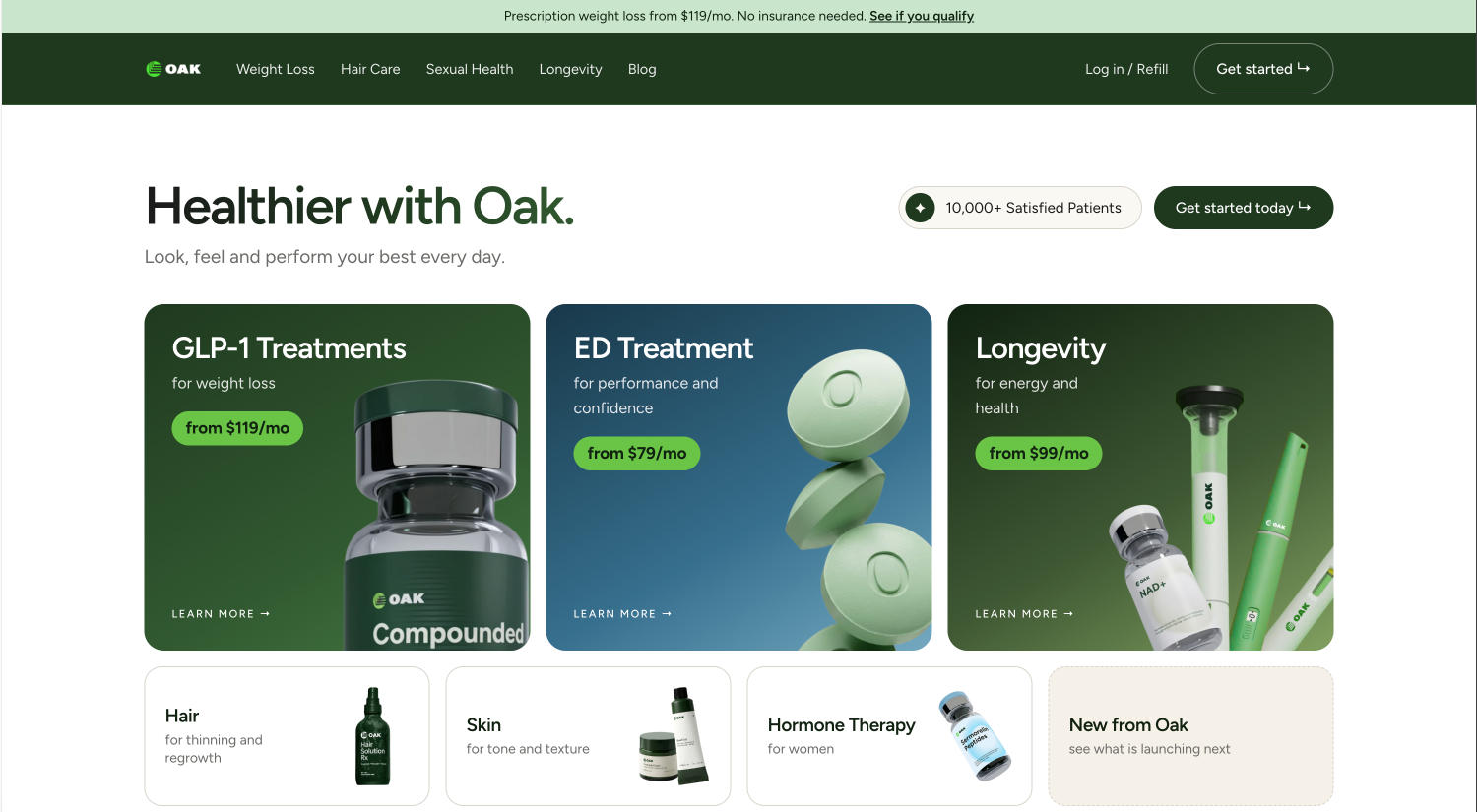
Our pricing is built around no hidden membership fees, free shipping, and free health coaching, and our compounded and brand medications stay in stock without requiring a video call for approval. Even with straightforward pricing, it’s worth confirming a few details at signup: the maintenance-dose price for your specific prescription, whether shipping stays free every month, whether labs are included or billed separately, and whether there’s any minimum commitment period. We lay out what’s bundled versus billed separately on our weight loss program page, so you can map it directly against the cost framework above.
If you’ve already calculated your target monthly budget using the steps earlier in this piece, check our current semaglutide pricing to see how it compares before you commit to a program.

If I were choosing a telehealth GLP-1 program today, I’d treat the lowest advertised price as a starting question, not a final answer. Programs that skip baseline labs and ongoing monitoring can look cheaper upfront, but that gap often reflects less clinical oversight, not just leaner overhead. Given that the FDA’s compounding rules for GLP-1 drugs are still shifting, I’d also want a provider that’s explicit about which pharmacy prepares its medication and under what license, since that detail affects both safety and whether your access stays stable month to month.
— Eric
This article is general information, not a substitute for advice from a qualified doctor. Consult a qualified healthcare professional about your own circumstances before acting on anything here.
Compounded semaglutide may be a lower-cost option without insurance, with maintenance pricing varying by provider and dose. Branded GLP-1s without insurance can be costly, even with manufacturer discounts applied.
Telehealth providers may offer GLP-1 prescriptions after reviewing your health information, and some ship medication directly to your door. Ask a provider about its process and whether it is appropriate for you. Clinical rigor varies by provider, so it’s worth confirming whether baseline labs and ongoing monitoring are part of the program before you enroll.
The right fit depends on your budget, whether you need compounded or branded medication, and how much clinical monitoring you want included. Programs like ours at Oak Longevity offer options, including Semaglutide from $119 a month, alongside physician-led monitoring. It’s worth comparing maintenance pricing and what’s bundled before choosing.
Most people combine strategies: choosing compounded medication over branded, using manufacturer savings cards when eligible, or qualifying for programs like the Medicare GLP-1 Bridge, which sets a $50 copay for eligible beneficiaries. Others simply budget for the full cash price once they’ve calculated their true maintenance-dose cost.