If you’re losing weight on a GLP-1 medication, aim for about 1.2 to 1.6 grams of protein per kilogram of body weight daily, split evenly across meals with moderate amounts each, and pair that intake with regular resistance training. Protein alone will not protect your muscle. Older adults, anyone losing weight quickly, or anyone noticing new weakness should individualize this target with a clinician.
TL;DR:
- Evenly splitting intake across meals raised muscle protein synthesis by about 25% versus dinner heavy eating; try three meals of 30 to 35 grams each.
- Higher body fat can make actual weight overstate needs; clinicians may calculate from adjusted or fat free mass, or use 80 to 120 grams daily.
- A trial lasting 16 weeks found 3.2 g/kg offered no added lean mass or strength benefit over 1.6 g/kg, while some biochemical markers rose.
- When nausea limits intake, choose small protein rich foods, sip shakes slowly, and eat before injection day; persistent symptoms warrant a prescriber call.
- New weakness, falls, or difficulty climbing stairs or rising from a chair calls for urgent clinical review, even before scale changes appear.
A 2025 joint advisory from leading obesity and nutrition organizations recommends 1.2 to 1.6 grams of protein per kilogram of body weight daily for people actively losing weight on GLP-1 therapies, well above the standard RDA of 0.8 g/kg/day for sedentary adults. That gap matters because rapid, medication-assisted weight loss pulls from both fat and lean tissue, and inadequate protein accelerates the muscle side of that equation.
The math is straightforward using actual body weight. Someone weighing 80 kilograms would target 96 to 128 grams of protein a day. Someone at 100 kilograms would aim for 120 to 160 grams. For people with higher body fat percentages, using actual weight can overestimate true need, so some clinicians calculate from adjusted or fat-free body mass instead, which usually lands closer to the lower end of the range.
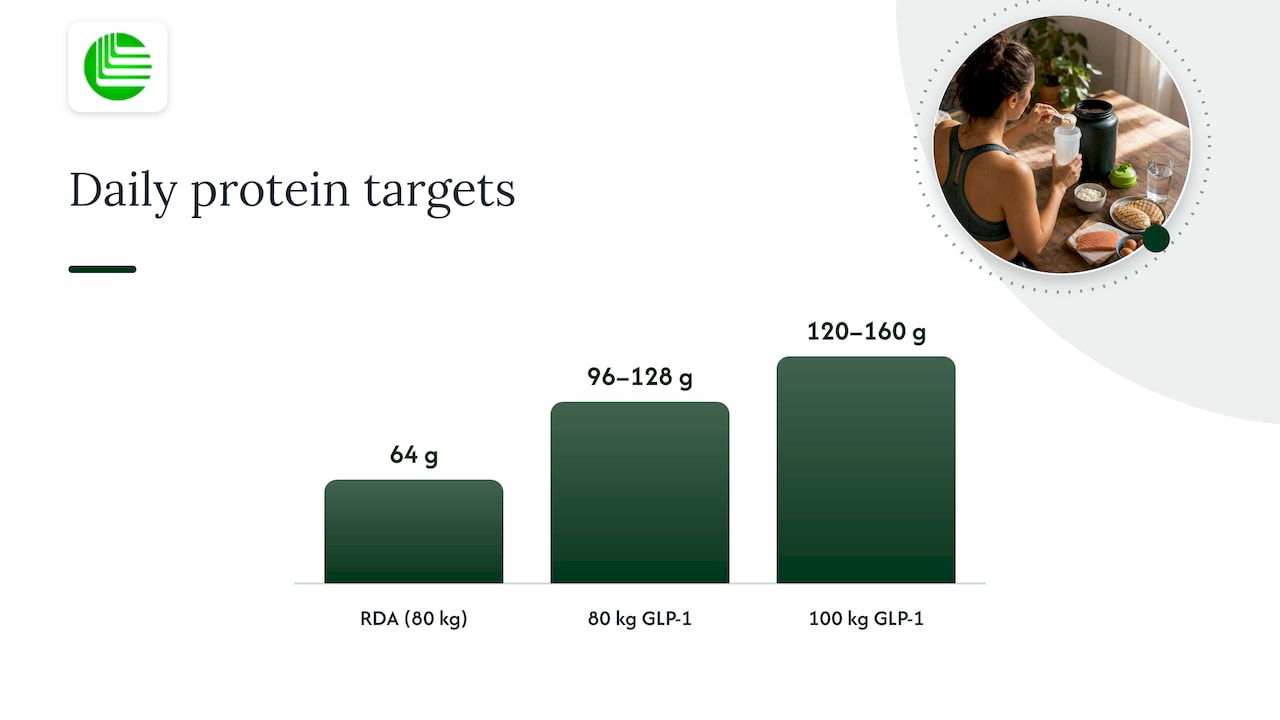
When body composition data are not available, a pragmatic absolute target of 80 to 120 grams per day works well as a simpler adherence tool, since it avoids the need for precise weight-based math while still covering most adults in a typical weight range.
More is not automatically better. Sustained protein intakes above about twice the standard RDA are not supported by current evidence for additional muscle benefit, and very high intakes warrant caution, particularly for anyone with reduced kidney function. The goal is a sufficient, sustainable range, not a maximum.
Total daily protein matters less than most people assume if it all lands in one meal. Research summarized in a review on optimizing GLP-1 therapies found that distributing protein evenly across meals, with moderate amounts per meal, increased muscle protein synthesis by about 25% compared with a skewed pattern where most protein is eaten at dinner. Since appetite on GLP-1 medications is often lower earlier in the day, this is a real adjustment for many patients, not a minor tweak.
Three meal patterns work for most schedules:
Eating protein first at each meal, before vegetables or starches, helps you hit the target before fullness sets in. Fortifying foods, such as stirring unflavored protein powder into oatmeal or yogurt, adds grams without adding volume. For more on structuring meals around training days, see our guide to muscle protein synthesis best practices on GLP-1.
Not all protein sources work equally well when your stomach empties slowly and portions feel heavy fast. Protein quality, measured by indicators like DIAAS and essential amino acid content, reflects how well a given source supports muscle repair. Leucine in particular acts as a trigger for muscle protein synthesis, so sources rich in it do more work per gram.
Reliable, low-volume options that deliver 20 to 30 grams per serving include:
Pro Tip: Keep a ready-to-drink shake or single-serve protein packet on hand for days when solid food feels unappealing, since liquid protein is often tolerated better than dense meals.
Powders and essential amino acid supplements work best as adjuncts, not replacements, when whole food alone cannot close the gap. For a deeper look at shakes, amino acids, and other additions, see our guide to supplements that complement GLP-1 therapy.
Protein intake without resistance training does not reliably preserve lean mass. A 2023 randomized trial comparing 1.6 g/kg/day against 3.2 g/kg/day in resistance-trained adults found that the lower, more moderate intake was already sufficient to maximize lean-mass and strength gains over 16 weeks, while the much higher intake offered no added benefit and raised some biochemical markers. The training stimulus, not extra protein, was what drove the outcome.
A simple, progressive template for two to four sessions per week:
Anyone with joint issues, cardiovascular conditions, or no recent exercise history should get clearance before starting, and working with a trainer or supervised program for the first few weeks reduces injury risk. Our exercise on GLP-1 guide walks through modified templates for beginners.
Nausea, early fullness, and occasional diarrhea are common, dose-related side effects of GLP-1 medications that can make hitting protein targets genuinely hard, especially in the days right after a dose increase. The goal on those days is calories and protein in the smallest possible volume.
Pro Tip: Keep a simple log of which foods and times work best in your first few weeks on a new dose, since patterns repeat with each titration step.
If nausea or diarrhea persists beyond a few days or starts blocking adequate intake consistently, tell your prescriber. Dose adjustments, slower titration, or antiemetic strategies are standard tools, and our GLP-1 medications explained guide covers how side effects typically evolve over a treatment course.
Actual body weight can overstate protein needs for people carrying significant fat mass, which is why some clinicians calculate from fat-free mass instead when that data is available. A 2026 narrative review on optimizing nutrition in GLP-1 therapy recommends this approach alongside practical monitoring: handgrip strength, sit-to-stand tests, and routine checks on actual intake, with body impedance analysis or similar tools used where accessible rather than assumed necessary for everyone. Reassessing every four to eight weeks, especially around dose increases, catches problems early.
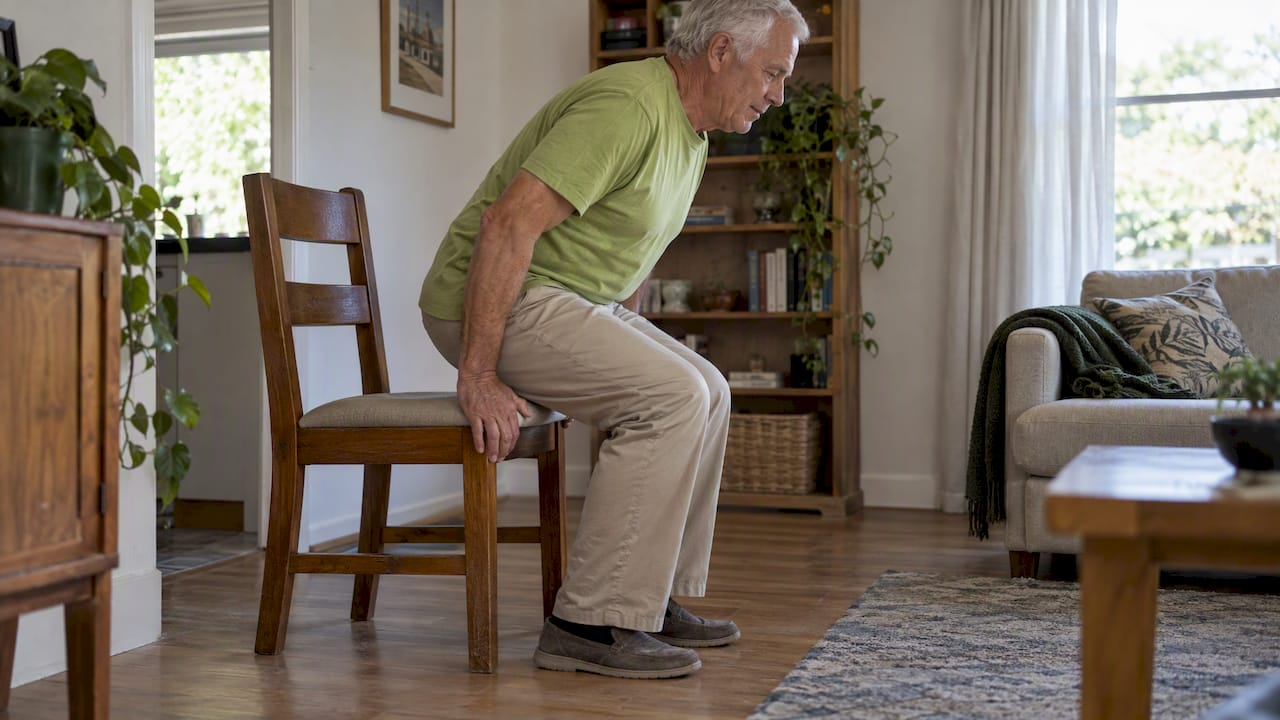
Watch for red flags that warrant urgent clinical review: progressive weakness, new difficulty with stairs or rising from a chair, unexplained falls, or several consecutive days of poor intake. These signs matter more than the number on a scale, since functional decline can precede visible weight changes and is harder to reverse once established.
We pair the online consultation and medication delivery process with physician-led guidance on setting realistic protein targets, pairing them with strength protocols, and adjusting titration when GI side effects interfere with intake. When patients report nausea limiting food volume, clinicians can slow a dose increase or suggest tolerability strategies rather than leaving patients to guess. Strength and lifestyle protocols are incorporated into the program rather than treated as optional extras.
Weight loss on these medications will always include some loss of lean tissue. The real question is whether that loss stays proportional or starts eroding function, and that outcome is shaped far more by what patients do with protein and resistance training than by the drug itself. Evidence-informed, individualized plans beat one-size-fits-all targets, and research on this specific population is still young. Expect practice to keep evolving as more trials focus on body composition outcomes rather than weight loss alone.
— Eric
We provide direct telehealth access to GLP-1 and GIP medications, including Semaglutide and Tirzepatide, with prescriptions reviewed by physicians and delivered to your door. Beyond the medication itself, our program is built around the same priorities covered above:
If you want a program that treats muscle preservation as part of the plan rather than an afterthought, you can review options on our personalized weight loss page and start a consultation when you’re ready.
This article is general information, not a substitute for advice from a qualified doctor. Consult a qualified healthcare professional about your own circumstances before acting on anything here.
GLP-1 medications slow stomach emptying and act on appetite centers in the brain, which reduces how much you eat and leads to fat loss over time. Some lean tissue is typically lost alongside fat unless protein intake and resistance training are used to help preserve muscle.
A 2025 joint advisory recommends 1.2 to 1.6 grams of protein per kilogram of body weight daily for people actively losing weight on GLP-1 therapy, distributed as roughly 25 to 30 grams per meal. When body composition data isn’t available, an absolute target of 80 to 120 grams per day is a reasonable alternative.
The 30-30-30 rule is a popular routine involving 30 grams of protein within 30 minutes of waking, followed by 30 minutes of low-intensity exercise, though it is not a clinically established GLP-1 protocol. The underlying principle, protein early in the day plus movement, lines up with the broader goal of even protein distribution and regular activity covered in this guide.
Good options are low-volume and protein-dense: Greek yogurt with added protein powder, scrambled eggs with cottage cheese, or a smoothie built on whey or plant protein and milk. These deliver 20 to 30 grams of protein per serving without requiring large portions, which helps on days when appetite is low.