
Weight loss improves longevity markers by directly enhancing metabolic function, reducing chronic inflammation, and slowing biological aging at the cellular level. These are not side effects of getting thinner. They are the primary mechanisms through which losing even a modest amount of body weight extends healthspan. Clinical evidence now shows that a 5–10% reduction in body weight triggers measurable improvements in blood pressure, cholesterol, blood sugar, and inflammatory markers, all before you reach any ideal weight target. Understanding why weight loss improves longevity markers gives you a biological roadmap, not just a number on a scale.
Longevity biomarkers are measurable biological signals that predict how long and how well you will live. Weight loss directly shifts several of the most important ones.
Losing 5–10% of body weight produces clinically significant improvements in blood pressure, HDL and LDL cholesterol, triglycerides, and HbA1c. Each of these markers independently predicts cardiovascular disease risk and all-cause mortality. Improving all of them together compounds the benefit dramatically.

A large population study of more than 226,000 individuals found that meeting five key biomarker targets including blood pressure below 140/90, HbA1c below 48 mmol/mol, and LDL below 2.5 mmol/L lowered all-cause mortality by 47% and cardiovascular mortality by 63%. That is not a marginal gain. It is the difference between a life cut short and one extended by decades.
Biological age is the most telling longevity marker of all. Unlike chronological age, biological age reflects how fast your organs are actually aging. A randomized clinical trial found that caloric restriction reduced whole-body biological age by 1.27 years after 24 months. That means your body can literally run younger than your birth certificate suggests.
| Biomarker | What improves | Why it matters for longevity |
|---|---|---|
| Blood pressure | Drops with 5–10% weight loss | High blood pressure accelerates vascular aging and stroke risk |
| LDL cholesterol | Decreases with fat loss | Elevated LDL drives arterial plaque and heart disease |
| HbA1c | Improves with reduced adiposity | High HbA1c signals insulin resistance and diabetes risk |
| Inflammatory cytokines | Reduced as visceral fat shrinks | Chronic inflammation accelerates cellular aging |
| Biological age | Falls with caloric restriction | Lower biological age directly predicts longer healthspan |
The mechanism is not mysterious. Excess body fat, particularly visceral fat stored around the organs, functions as an active inflammatory tissue. It secretes pro-inflammatory cytokines including TNF-alpha and interleukin-6 that circulate through the bloodstream and damage blood vessels, organs, and DNA over time. Reducing that fat mass lowers the inflammatory load your body carries every single day.
Weight loss also restores endothelial function. The endothelium is the thin inner lining of your blood vessels, and it controls blood flow, clotting, and vascular tone. Chronic inflammation stiffens and damages it. As visceral fat decreases, endothelial function improves, blood vessels become more flexible, and the risk of atherosclerosis drops.
Organ-specific aging slows as well. The caloric restriction trial referenced above showed that biological age of cardiovascular and metabolic systems00052-X/abstract) fell by approximately one year after two years of sustained caloric reduction. That is a measurable reversal of organ aging, not just a cosmetic change.
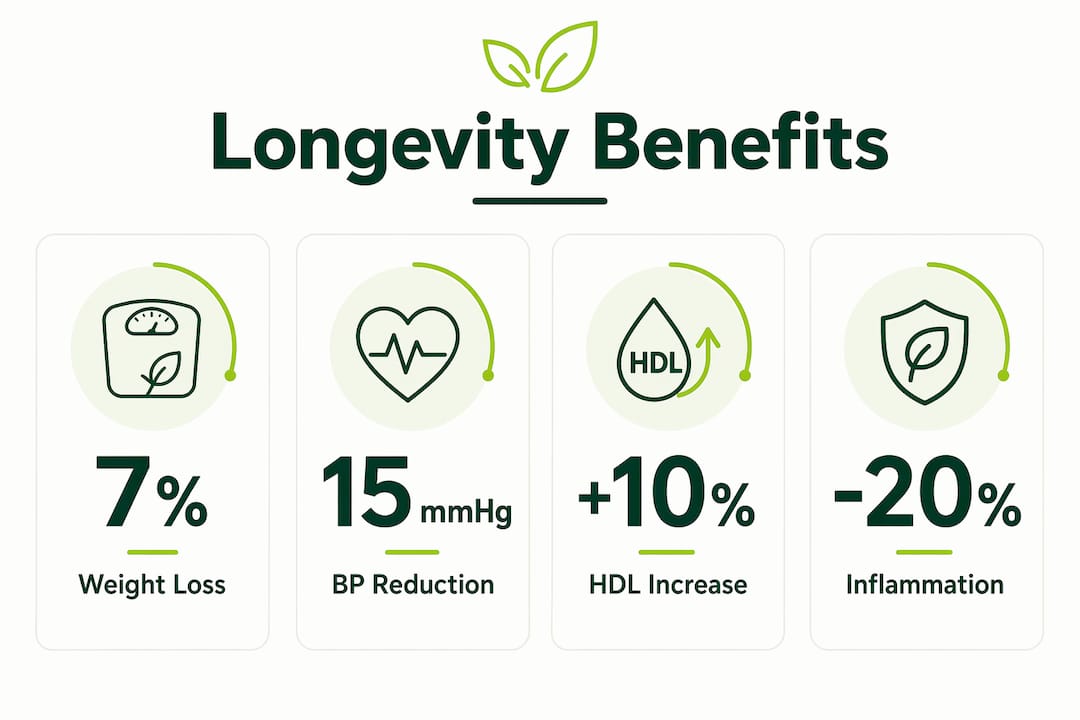
Bariatric surgery offers the most dramatic example of this effect. Patients who underwent surgery showed a biological age reduction of 3.32 years at 12 months post-operation, with a 40–50% reduction in mortality risk. Critically, some of these benefits appeared independent of BMI changes, pointing to systemic metabolic rejuvenation rather than weight loss alone.
Here is what makes this especially compelling: metabolic improvements begin within 5 weeks of starting a weight loss intervention, well before the scale shows significant change. Insulin sensitivity rises, blood pressure drops, and inflammatory markers fall early. The biology moves faster than the mirror.
Pro Tip: Track your HbA1c, fasting insulin, and C-reactive protein at baseline and again at 8–12 weeks into a weight loss program. These numbers will shift before your weight does, and they tell a more complete story about your longevity trajectory.
Key mechanisms at work during weight loss:
Weight loss alone does not maximize longevity gains. Physical activity adds a separate and synergistic layer of benefit that weight reduction cannot replicate on its own.
A clinical study examining the combined effects of exercise and GLP-1 receptor agonist therapy found that exercise reduced pro-inflammatory markers including sICAM-1 and sVCAM-1 more effectively than medication alone. Exercise also improved carotid intima-media thickness, a direct measure of arterial wall health and cardiovascular aging. These are vascular benefits that go beyond what weight loss produces by itself.
Muscle preservation is the other critical variable. When people lose weight without resistance training, they often lose lean muscle mass alongside fat. This leads to sarcopenia, the age-related loss of muscle that reduces metabolic rate, increases fall risk, and shortens healthspan. Preserving muscle during weight loss requires intentional strength training combined with adequate protein intake.
Pro Tip: Aim for at least two resistance training sessions per week during any weight loss program. Muscle is metabolically active tissue. Keeping it protects your resting metabolic rate and your long-term independence.
The benefits of exercise on metabolic health continue even when weight loss plateaus. Patients’ metabolic markers improve even when weight loss stalls, which means the number on the scale is not the full picture. Sustained physical activity keeps improving insulin sensitivity, vascular function, and inflammation levels regardless of further weight change.
Key physical activity benefits for longevity:
The evidence points to a clear starting target: aim for a 5–10% reduction in current body weight. That range is where the most significant biomarker improvements occur. You do not need to reach an ideal body weight to start gaining longevity benefits.
A practical framework for sustainable weight loss with longevity as the goal:
Understanding metabolic health as the true goal reframes the entire process. Weight loss becomes a means to an end, not the end itself.
Weight loss improves longevity markers primarily by reducing chronic inflammation, restoring vascular function, and slowing biological aging, with measurable benefits beginning at just 5–10% body weight reduction.
| Point | Details |
|---|---|
| 5–10% weight loss threshold | This modest reduction produces clinically significant improvements in blood pressure, cholesterol, and HbA1c. |
| Biological age reversal | Caloric restriction reduced whole-body biological age by 1.27 years in a randomized clinical trial. |
| Exercise amplifies benefits | Physical activity reduces inflammatory markers and improves vascular health beyond what weight loss alone achieves. |
| Metabolic markers move first | Insulin sensitivity and inflammation improve within 5 weeks, before visible weight changes occur. |
| Muscle preservation matters | Maintaining lean mass during weight loss prevents sarcopenia and sustains long-term metabolic health. |
The most common mistake I see is treating weight loss as the finish line. Patients celebrate hitting a target weight while their C-reactive protein remains elevated and their fasting insulin is still high. The scale moved. The biology did not fully follow.
What actually predicts how long you will live is the state of your vascular system, your inflammatory load, and your biological age. These are the metrics that longevity medicine now centers on, and they respond to metabolic intervention faster than most people expect. I have seen patients whose blood pressure normalized and whose inflammatory markers dropped significantly within weeks of starting a structured program, well before they lost meaningful weight.
The shift I encourage is this: stop asking “how much weight did I lose?” and start asking “what did my biomarkers do?” That reframe changes everything about how you approach the process. It makes the early weeks feel like progress instead of waiting. It keeps you motivated through plateaus. And it aligns your daily choices with the biology that actually drives a longer, healthier life. For a deeper look at what this approach involves, the longevity medicine guide at Oaklovesyou is worth your time.
— Eric
Oaklovesyou is an online telehealth platform built around the idea that weight management and metabolic health are inseparable goals. Through physician-reviewed consultations, access to GLP-1 and GIP medications including semaglutide and tirzepatide, and 24/7 clinical support, Oaklovesyou gives you a medically grounded path to the biomarker improvements this article covers.

The program pairs prescription weight management with strength and lifestyle protocols specifically designed to preserve lean muscle and protect metabolic function. If you are ready to move beyond the scale and start tracking the markers that actually predict longevity, visit Oaklovesyou to see how a physician-led program can support your goals from day one.
Weight loss reduces visceral fat, which lowers chronic inflammation and improves blood pressure, cholesterol, and insulin sensitivity. These changes directly reduce the biological processes that accelerate aging and increase mortality risk.
A 5–10% reduction in body weight produces measurable improvements in key longevity biomarkers including HbA1c, LDL cholesterol, and blood pressure. You do not need to reach an ideal body weight to gain significant health benefits.
Yes. A randomized clinical trial showed that caloric restriction reduced whole-body biological age by 1.27 years over 24 months. Bariatric surgery produced a biological age reduction of 3.32 years at 12 months post-operation.
Metabolic markers including insulin sensitivity and inflammatory cytokines continue to improve even when weight loss plateaus, particularly when physical activity is maintained. This means non-scale progress is real and clinically meaningful.
Sustaining weight loss requires more than 300 minutes of moderate physical activity per week combined with ongoing calorie awareness. Medically supervised programs that include GLP-1 therapies and strength training protocols offer the most evidence-backed approach to long-term maintenance.