
Doctors prescribe weight loss injections when a patient’s degree of excess weight and related health risks make medication plus structured lifestyle changes the most evidence-based path to reducing long-term harm. The clinical reasoning comes down to three things:
The tradeoff is real. These medications are more effective than older weight-loss drugs, but they require clinical monitoring, carry gastrointestinal side effects during dose titration, and cost significantly more. Coverage is inconsistent. And for most patients, stopping the medication means the weight comes back.
Clinically, overweight is defined as a BMI of 25–29.9, and obesity as a BMI of 30 or higher. These cutoffs aren’t arbitrary aesthetics. BMI is used as a population-level screening tool because it correlates with metabolic risk at scale, even though it has real limits: it doesn’t distinguish muscle from fat, and it can underestimate risk in certain ethnic groups (South Asian adults, for example, face elevated cardiometabolic risk at lower BMI values than the standard thresholds suggest).
What matters clinically isn’t the number alone. It’s what that number predicts. Excess adipose tissue drives chronic low-grade inflammation, insulin resistance, and mechanical stress on joints and airways. The conditions that commonly co-occur with obesity and shift the prescribing threshold down to BMI ≥27 include:
When one or more of these conditions is present, the risk-benefit calculation for medication changes. A patient with a BMI of 28 and poorly controlled type 2 diabetes has a stronger clinical case for prescription treatment than a patient with a BMI of 32 and no comorbidities.
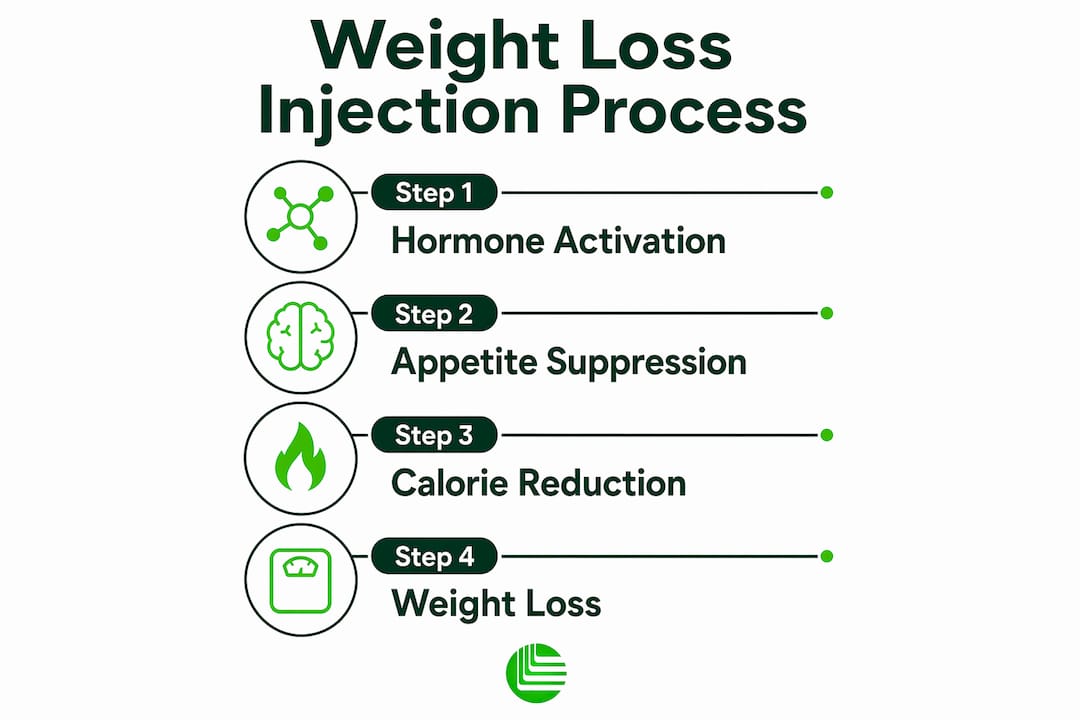

These injections work by mimicking or amplifying gut-derived hormones that reduce hunger, slow digestion, and increase the sense of fullness after eating. The result is a meaningful reduction in caloric intake that’s driven by biology, not willpower alone.
The core mechanisms, as described in PMC clinical reviews:
Think of it as a three-step chain: gut hormone activation → appetite center suppression in the brain → reduced caloric intake. The behavioral change becomes easier because the biological drive to overeat is quieted.
Pro Tip: Understanding this mechanism matters practically. If you experience nausea early on, it’s a direct sign the drug is slowing gastric emptying. That’s the mechanism working, not a sign something is wrong. Slow titration is how clinicians manage it.
The guideline standard in the U.S. is straightforward: adults with a BMI of 30 or higher, or a BMI of 27 or higher with at least one weight-related condition, are typical candidates when lifestyle changes alone haven’t been sufficient.
BMI Eligibility at a Glance BMI ≥30: eligible regardless of comorbidities BMI ≥27: eligible with at least one weight-related condition (diabetes, hypertension, sleep apnea, dyslipidemia, cardiovascular disease)
Beyond the BMI threshold, a prescribing clinician will typically assess:
For a deeper look at treating obesity as a chronic condition, Oak Longevity’s chronic weight management guide covers the long-term clinical framework in detail.

Modern GLP-1 and dual incretin agents deliver clinically significant weight loss and measurable improvements in cardiometabolic risk. The trial data through 2025–2026 is the strongest this class of medication has ever produced.
Trial Efficacy: Randomized trials and pooled analyses show average body weight reductions of roughly 13.7%–20.2% over approximately 72 weeks with semaglutide and tirzepatide. Tirzepatide consistently produces higher average losses in head-to-head comparisons.
Cardiovascular outcomes data adds another layer. Observational cohort analyses report approximately 22% lower risk of cardiac arrest and approximately 9% lower risk of heart attack after multi-year follow-up in treated patients. The SELECT trial, which enrolled more than 17,000 patients with obesity and established cardiovascular disease, found that semaglutide cut the rate of major cardiac events by 20%.
What do these percentages mean for an individual patient? A 5%–10% reduction in body weight typically improves blood pressure, fasting glucose, and lipid panels in people with metabolic disease. Losses above 10% tend to produce larger and more durable improvements. At 15%–20%, some patients see near-normalization of blood sugar without additional diabetes medication.
Real-world persistence is lower than trial retention, though. PMC reviews consistently show that average effectiveness in routine practice falls below clinical trial results when lifestyle support and follow-up are less structured. The medication works. Whether it keeps working depends heavily on the clinical support around it.
NIDDK guidance notes that prescription medications help people lose and maintain a few percentage points more weight at one year compared to lifestyle programs alone, which frames these drugs as amplifiers of behavioral change rather than replacements for it.
Most side effects are gastrointestinal and occur during the titration period when doses are being increased. They are generally manageable and tend to lessen over time for most patients.
Common side effects:
Red-flag symptoms requiring prompt medical attention:
Contraindications clinicians screen for:
Muscle and bone health deserve mention. Mayo Clinic community health guidance flags potential lean mass loss and bone density impacts as concerns with long-term use, particularly in patients who aren’t doing resistance exercise. The muscle loss seen with GLP-1 medications is broadly similar to what occurs with diet-only weight loss, but it’s not trivial at higher doses over longer periods.
Pro Tip: Never source these medications from unauthorized online vendors. Professional monitoring is needed to catch contraindications like gastroparesis or early pancreatitis before they become serious. A licensed prescriber isn’t optional overhead; it’s the safety layer the medication requires.
Clinicians favor agents with the strongest efficacy and safety data unless a contraindication or access issue points elsewhere. The FDA-approved options for chronic weight management in the U.S. include a short list of well-studied agents.
Commonly prescribed options, with notes on approval status and dosing:
Off-label prescribing is common in practice. When Wegovy is out of stock or not covered by insurance, a clinician may prescribe Ozempic (the diabetes-approved semaglutide dose) off-label for weight loss. Compounded versions of semaglutide and tirzepatide have also been widely used during shortage periods, though the FDA has signaled tightening oversight of compounded GLP-1 products.
For a detailed breakdown of how these agents differ mechanistically, Oak Longevity’s GLP-1 medications guide covers the clinical distinctions clearly.
Most weight loss occurs in the first 6–12 months. A more complete plateau typically arrives between 12 and 18 months for most patients, though some continue losing weight for up to two years. For most people, long-term use is required to maintain results.
Typical treatment milestones:
What happens when you stop? Weight regain is the norm. PMC clinical discussion is consistent: discontinuation commonly leads to partial or complete weight regain unless a maintenance plan covering nutrition, resistance training, and behavioral support is in place.
Pro Tip: Before stopping medication, have a concrete maintenance plan. That means a resistance training routine already established, protein intake tracked, and a follow-up appointment scheduled. Stopping without that infrastructure in place is the most common reason patients regain everything they lost.
Cost is the most common practical barrier. Monthly drug costs for brand-name GLP-1 medications are often in the high hundreds to low thousands of dollars without insurance, and coverage is inconsistent. StatPearls/NCBI analyses repeatedly identify cost and variable payer coverage as the primary access barriers for patients who are otherwise good candidates.
Key cost drivers:
Practical talking points for patients navigating coverage:
A prescribing visit covers more ground than most patients expect. It includes a full medical history review, a medication reconciliation, targeted labs, and a detailed counseling session on titration, side effects, and what to do if problems arise.
| Timepoint | Weight & Vitals | Labs | Side-Effect Review | Notes |
|---|---|---|---|---|
| Baseline | Yes | Metabolic panel, A1c (if diabetic), lipids, renal/liver function | N/A | Establish starting metrics |
| 2–6 weeks | Yes | None unless symptomatic | Yes | Early tolerability check; adjust dose if needed |
| 12 weeks | Yes | A1c if diabetic | Yes | First efficacy assessment; consider dose change |
| Every 3–6 months | Yes | Renal/liver function, lipids, A1c | Yes | Ongoing safety and efficacy monitoring |
| Annually | Yes | Full metabolic panel; bone/muscle if indicated | Yes | Long-term health assessment |
The 12-week check is the most important early milestone. Clinicians use it to determine whether the patient is responding. Non-response at the maximum tolerated dose is a signal to reassess the treatment plan, not simply continue indefinitely.
Going into a prescribing appointment prepared makes a real difference. Here’s what to bring and what to ask:
Before your appointment, track your baseline metrics: current weight, waist circumference, blood pressure if you have a home cuff, and a list of every medication and supplement you take. Arrange follow-up support for nutrition and strength training before you start, not after.
Pro Tip: Managing GI side effects during titration comes down to three things: eat smaller, lower-fat meals; stay well hydrated; and never rush a dose increase. If nausea is significant at a given dose, ask your clinician to hold the current dose for an extra week or two before going higher. Slow titration improves persistence more than any other single factor.
Doctors prescribe weight loss injections when BMI thresholds and weight-related health conditions make medication plus lifestyle change the evidence-based route to meaningful, sustained risk reduction.
| Point | Details |
|---|---|
| Who qualifies | Adults with BMI ≥30, or BMI ≥27 with a weight-related condition like diabetes or hypertension. |
| How they work | GLP-1 and dual GIP/GLP-1 agents reduce hunger and slow digestion by mimicking gut hormones that signal fullness. |
| What trials show | Average weight reductions of roughly 13.7%–20.2% over ~72 weeks in trial settings, with real-world results lower without strong lifestyle support. |
| Key risks to monitor | GI side effects during titration, lean mass loss, pancreatitis, gallbladder disease, and contraindications including thyroid cancer history. |
| Oak Longevity | Oak Longevity offers clinician-led telehealth consults, prescription eligibility screening, and medication delivery for qualified adults in the U.S. |
The conversation around GLP-1 medications has a tendency to split into two camps: breathless enthusiasm and reflexive skepticism. Neither serves patients well.
What the evidence actually shows is more nuanced. These are genuinely effective drugs, with trial data that puts them in a different category from anything that came before in obesity pharmacotherapy. The cardiovascular outcome data from the SELECT trial alone would have been considered remarkable five years ago. The fact that some patients are now achieving 20%+ body weight loss with a weekly injection is not hype; it’s what the trials found.
But the framing of these medications as a permanent solution to a temporary problem gets the biology backwards. Obesity is a chronic, multifactorial condition. The medications work while you take them. Stop, and the biology that drove the weight gain reasserts itself. That’s not a failure of the drug; it’s how chronic disease management works. We don’t expect blood pressure medication to cure hypertension after a year of use.
What I think gets underappreciated is the role of the clinical support structure. Real-world persistence data is consistently lower than trial retention, and the gap isn’t random. Patients in trials have structured follow-up, dietitian support, and regular monitoring. Patients in routine practice often don’t. The medication is the same. The outcomes aren’t. That gap is where the clinical relationship, the monitoring schedule, and the lifestyle integration actually live.
The patients who do best long-term are the ones who treat the medication as a tool that makes behavioral change easier, not as a substitute for it. That framing is worth holding onto before, during, and especially after treatment.
Getting a clinician to evaluate you for GLP-1 therapy used to mean scheduling an in-person appointment, waiting weeks, and navigating a system that wasn’t designed with weight management as a priority. Oak Longevity is built specifically to close that gap.

The process is straightforward. You complete an online health questionnaire that a licensed physician reviews. If you’re clinically eligible, a prescription is issued and your medication is delivered directly to your door. Ongoing physician-led guidance covers dose titration, side-effect management, and refills, with 24/7 support available throughout. The program pairs medication with strength and lifestyle protocols designed to preserve lean muscle mass, which is the piece most weight-loss programs skip entirely.
If you’ve read this far and you meet the BMI criteria or have a weight-related condition your doctor has flagged, the next step is a clinical evaluation, not more research. Start your consultation with Oak Longevity to find out whether you’re a candidate for prescription weight management.
Treatment is based on clinical eligibility determined by a licensed physician. This article is general health information, not medical advice. Confirm your individual situation with a qualified clinician before starting any prescription therapy.