Longevity medicine is defined as a proactive, personalized clinical discipline that targets the biological mechanisms’ of aging to extend healthspan, not just lifespan. Where traditional medicine waits for symptoms, longevity medicine intervenes years or even decades earlier. The Healthy Longevity Medicine Society describes it as advanced preventive medicine powered by deep biomarkers tailored to the individual. If you want to understand what is longevity medicine and whether it belongs in your health plan, this guide covers the science, the treatments, the real costs, and the honest limitations.
Longevity medicine is a clinical field that integrates biogerontology and geroscience to address the root causes of aging before disease appears. Biogerontology is the study of how and why organisms age at a biological level. Geroscience connects that aging research directly to human disease prevention. Together, they form the scientific backbone of this field.
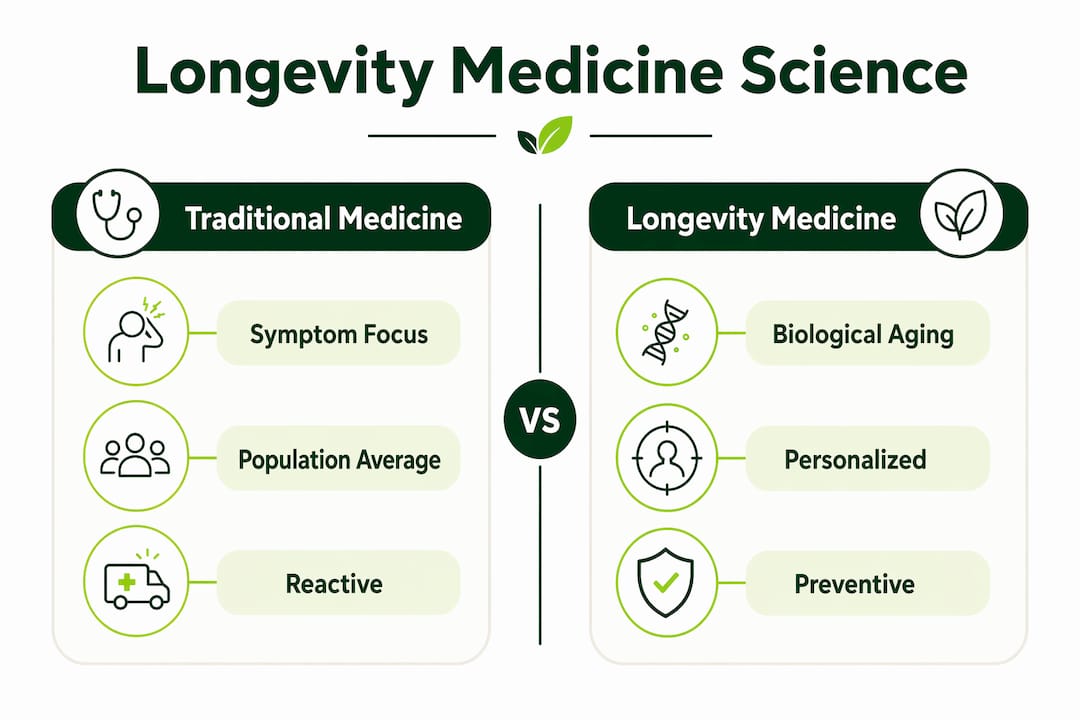
Traditional medicine uses population-average lab ranges to flag problems. Longevity medicine uses optimal, personalized benchmarks and advanced biomarker panels to track your health trajectory over time. That distinction matters because a result that looks “normal” on a standard panel may still signal early biological decline when measured against your personal baseline.

The field also treats aging itself as a modifiable biological process, not an inevitable decline. That mindset shift, from reactive sick care to iterative, data-driven health management, is what separates longevity medicine from annual checkups and symptom-driven visits.
The biological targets in longevity medicine come directly from aging research. Understanding them helps you evaluate whether a provider is working from real science or marketing language.
The key mechanisms longevity medicine addresses include:
These are not theoretical targets. Epigenetic clocks, telomere length, and inflammatory markers now form the diagnostic backbone of longevity medicine. They measure biological age, which can differ significantly from your chronological age, and they give clinicians a data-driven starting point for intervention.
Longevity medicine also represents what researchers call a translational bridge between basic aging research and proactive clinical care. That means the field demands new physician competencies, not just a repackaging of existing preventive medicine.
A longevity medicine evaluation typically starts with advanced diagnostics. Standard bloodwork is a floor, not a ceiling. Clinicians add epigenetic age clocks, comprehensive metabolic panels, inflammatory markers like high-sensitivity C-reactive protein, hormonal profiles, and sometimes genetic sequencing. The goal is to build a detailed picture of where your biology stands today and where it is heading.
From that data, a personalized protocol is built. Longevity medicine protocols typically combine four pillars: nutrition optimization, structured exercise programming, sleep and stress management, and targeted pharmaceutical or regenerative therapies.
The pharmaceutical side is where longevity medicine gets both interesting and controversial. FDA-approved drugs like metformin and rapamycin are prescribed off-label for their potential effects on aging mechanisms. GLP-1 receptor agonists, originally developed for diabetes and weight management, show systemic benefits beyond their primary uses, including cardiovascular protection and metabolic improvement. These are not fringe treatments. They are FDA-approved medications being studied in new contexts.
Pro Tip: Ask any longevity provider to distinguish between interventions backed by human clinical trials and those based only on animal or observational data. That one question reveals a lot about their scientific rigor.
The table below shows how longevity medicine compares to traditional care across key dimensions:
| Category | Traditional medicine | Longevity medicine |
|---|---|---|
| Timing of intervention | After symptoms appear | Years before symptoms |
| Diagnostic benchmarks | Population-average ranges | Personalized optimal ranges |
| Primary goal | Treat disease | Prevent disease, extend healthspan |
| Pharmaceutical use | On-label, symptom-driven | On-label and off-label, mechanism-driven |
| Monitoring frequency | Annual or as needed | Iterative, data-driven check-ins |
The potential benefits of longevity medicine are real and grounded in biology. Protocols targeting inflammation, metabolic health, and cellular repair aim to delay or prevent cardiovascular disease, type 2 diabetes, Alzheimer’s disease, and other age-related conditions. The goal is compressing morbidity, meaning you stay healthy longer and decline faster and later, rather than spending decades in slow deterioration.
The benefits most patients report include:
The risks, however, deserve equal attention.
“Longevity medicine blends evidence-based medicine with emerging science that lacks definitive long-term trials. Balancing innovative approaches with cautious, informed decisions is essential for both providers and patients.” — Pharmacy Times
The field currently lacks standardized medical board certification. That gap creates wide variation in provider quality. Anyone can market themselves as a longevity specialist without formal credentials in the field. Patients need to verify a provider’s underlying medical training, not just their branding.
Cost is the other major barrier. Diagnostics and off-label pharmaceuticals can reach several hundred dollars per month, and Medicare coverage is frequently unavailable for preventive longevity uses. Most longevity medicine diagnostics and off-label therapies are not covered by insurance, making out-of-pocket costs a real planning consideration.
One more distinction worth making: longevity medicine is not anti-aging aesthetics. Botox, skin treatments, and cosmetic procedures target appearance. Longevity medicine targets biology. Confusing the two leads to poor provider choices and misaligned expectations.
Longevity medicine suits health-conscious adults who want to manage aging proactively rather than reactively. You do not need to be sick to benefit. The field is specifically designed for people who feel fine but want data on where their biology is heading.
Getting started involves a few clear steps:
Pro Tip: Before committing to a full protocol, ask for a single comprehensive diagnostic panel first. The data from that panel tells you which interventions are actually relevant to your biology, rather than starting with a one-size-fits-all program.
The right starting point is not the most expensive program. It is the one built on your specific data, reviewed by a physician with genuine training in aging biology.
Longevity medicine is the most evidence-grounded approach available for preventing age-related disease before symptoms appear, but it requires qualified providers, realistic budgets, and informed skepticism.
| Point | Details |
|---|---|
| Definition and scope | Longevity medicine targets biological aging mechanisms to extend healthspan, not just lifespan. |
| Diagnostic foundation | Epigenetic clocks, telomere length, and inflammatory markers measure biological age more accurately than standard panels. |
| Treatment approach | Protocols combine lifestyle optimization with off-label pharmaceuticals like metformin and GLP-1 receptor agonists. |
| Key risks | No standardized board certification exists; provider quality varies widely, and costs are largely out-of-pocket. |
| Getting started | Begin with a comprehensive baseline evaluation from a board-certified physician with verified aging-biology training. |
The shift from reactive to preventive medicine has been talked about for decades. Longevity medicine is the first clinical framework that operationalizes it with real diagnostic tools and measurable biological targets. That is genuinely significant.
What concerns me is the certification gap. The field is growing faster than its credentialing infrastructure. Patients who cannot distinguish a trained longevity physician from a wellness entrepreneur with a podcast are at real risk of spending significant money on protocols that are not grounded in their actual biology. The “guru aura” around longevity medicine is real, and it attracts both brilliant clinicians and opportunists.
The pharmaceutical side is where I see the most promise and the most caution warranted simultaneously. GLP-1 receptor agonists, for example, are showing cardiovascular and metabolic benefits that go well beyond weight management. That is exciting. But prescribing them as longevity interventions without proper monitoring is a different matter entirely.
My honest view: longevity medicine will reshape preventive healthcare over the next decade. The science is sound at its core. The clinical application is still maturing. The right approach is to engage with it critically, demand data-driven protocols, and work with physicians who can separate what is proven from what is promising.
— Eric
Preventive health and weight management are closely linked in longevity medicine. Excess weight accelerates many of the same biological aging mechanisms that longevity protocols target, including chronic inflammation, metabolic dysfunction, and cardiovascular risk.

Oaklovesyou is an online telehealth platform that provides physician-reviewed access to GLP-1 and GIP medications, including semaglutide and tirzepatide, without requiring in-person clinic visits. Prescriptions are delivered directly to your door, and the program pairs medication with strength and lifestyle protocols to preserve lean muscle mass and support metabolic health. If you are ready to take a data-driven step toward better long-term health, visit Oaklovesyou to learn how their physician-led program works.
Longevity medicine is a clinical discipline that uses personalized biomarker data and targeted interventions to prevent age-related disease and extend the years of healthy living, not just total lifespan.
Standard checkups use population-average lab ranges and address symptoms after they appear. Longevity medicine uses personalized optimal benchmarks and intervenes on biological aging mechanisms years before symptoms develop.
The core interventions, including lifestyle optimization, metabolic management, and targeted pharmaceuticals like GLP-1s, are backed by clinical evidence. Long-term trials specifically on longevity outcomes are still maturing, so informed skepticism remains appropriate.
Protocols typically include epigenetic and biomarker testing, structured nutrition and exercise programs, sleep and stress management, and off-label pharmaceuticals such as metformin, GLP-1 receptor agonists, and in some cases rapamycin.
Costs vary by provider and protocol. Diagnostics and off-label medications can reach several hundred dollars per month, and most interventions are not covered by standard insurance or Medicare for preventive longevity purposes.