
Holistic weight management is defined as a whole-person approach to sustainable weight loss that addresses body, mind, and lifestyle together rather than targeting calories alone. Unlike conventional dieting, this method treats the individual as an integrated system where nutrition, movement, sleep, stress, gut health, and hormonal balance all influence the outcome. Participants in well-structured programs lose an average of 5% of body weight in three months, with steady progress of 1–2 pounds per week. That rate reflects real metabolic change, not water loss or muscle depletion. Oaklovesyou builds its physician-led programs on exactly this foundation.
Holistic weight management rests on six core pillars: nutrition quality, strength-focused movement, sleep consistency, stress regulation, gut health, and hormonal and metabolic support. Each pillar affects the others. Poor sleep raises hunger hormones. Chronic stress elevates cortisol and blocks fat metabolism. Addressing only one factor while ignoring the rest produces short-term results at best.

Conventional plans treat the body mechanistically. They count calories and prescribe cardio, but they ignore the emotional, hormonal, and metabolic complexity that drives weight gain in the first place. A whole-person approach recognizes that joy, rest, and connection are biological needs, not luxuries. When those needs go unmet, the body resists weight loss regardless of how strict the diet is.
Sustainable weight loss also requires shifting focus away from the scale. Health markers like energy levels, sleep quality, and blood sugar stabilization often improve before visible weight change appears. That shift in focus keeps people consistent during the weeks when the scale does not move.
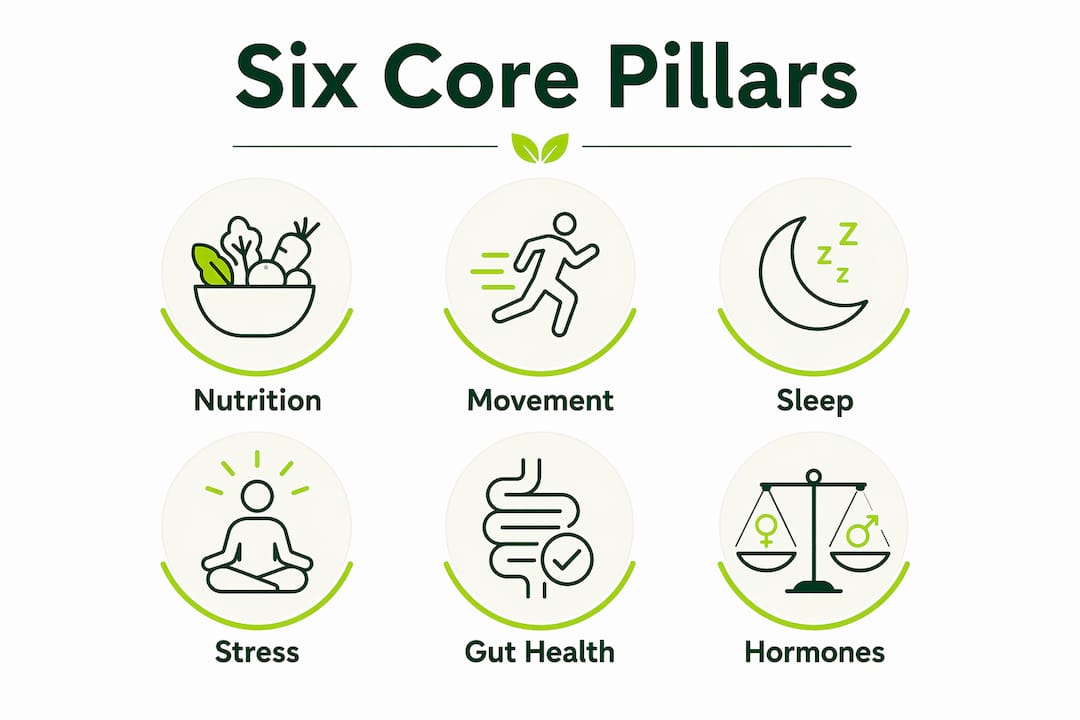
Each pillar targets a different root cause of weight gain. Together, they create conditions where the body can release stored fat without triggering survival responses.
Pro Tip: Track your sleep duration for two weeks before changing your diet. You may find that poor sleep is driving cravings more than food choices are.
Conventional dieting focuses on a single variable: calorie deficit. That model fails most people because it ignores the biological and psychological complexity underneath weight gain.
Pro Tip: Ask your doctor for a fasting insulin test alongside standard bloodwork. Insulin resistance is one of the most common hidden barriers to weight loss and rarely appears on routine panels.
Putting these principles into practice requires a structured approach. The following framework gives you a starting point.
| Strategy | Primary benefit | Time to see results |
|---|---|---|
| Functional lab testing | Identifies root cause barriers | Immediate (one session) |
| Strength training | Preserves muscle, raises resting metabolism | 4–8 weeks |
| Sleep optimization | Regulates hunger hormones | 2–3 weeks |
| Stress regulation practices | Lowers cortisol, restores fat metabolism | 2–6 weeks |
| Personalized nutrition | Reduces cravings, stabilizes blood sugar | 1–4 weeks |
Even people who understand the principles run into predictable obstacles. Knowing them in advance makes them easier to navigate.
“The goal is not to lose weight as fast as possible. The goal is to create conditions where your body feels safe enough to let go of stored fat. That requires nourishment, rest, and nervous system calm, not punishment.”
Self-compassion is not a soft concept. Research consistently links self-critical thinking to higher cortisol levels and worse long-term weight outcomes. Building a support network, whether through a physician, coach, or community, significantly improves adherence and resilience during difficult stretches. You can also explore medically supervised approaches that combine clinical oversight with lifestyle support for stronger long-term results.
Sustainable weight management requires addressing nutrition, sleep, stress, gut health, and hormonal balance together, not in isolation.
| Point | Details |
|---|---|
| Six-pillar framework | Nutrition, movement, sleep, stress, gut health, and hormonal support all drive weight outcomes. |
| Diagnostics first | Functional labs identify thyroid, insulin, and hormonal barriers that lifestyle changes alone cannot fix. |
| Metabolic flexibility | Building the body’s ability to switch fuel sources beats calorie counting for long-term results. |
| Mindset is clinical | Emotional eating and cortisol-driven survival mode require direct behavioral and nervous system work. |
| Progress markers matter | Energy, sleep quality, and blood sugar stabilization signal real progress before the scale moves. |
The most common mistake I see is treating weight as the problem rather than the symptom. People spend years restricting food and pushing through exhausting workouts, and they wonder why the results never last. The answer is almost always that the root cause, whether it is elevated cortisol, insulin resistance, or disrupted sleep, was never addressed.
The patients who achieve lasting change are not the ones with the most willpower. They are the ones who stopped fighting their bodies and started working with them. That shift requires real data. It requires knowing what is actually happening hormonally and metabolically before deciding what to change. It also requires patience with a process that does not always show up on the scale in week two.
What I find most encouraging is that the body wants to find balance. When you remove the obstacles, whether that is chronic stress, nutrient deficiency, or poor sleep, the body responds. The connection between weight loss and longevity becomes clear when you stop chasing a number and start building actual health. That is when the results become permanent.
— Eric
Oaklovesyou is a physician-led telehealth platform built for people who want real, lasting results without the guesswork of generic programs.

Every Oaklovesyou program begins with a thorough health questionnaire reviewed by a licensed physician. Approved patients receive access to GLP-1 and GIP medications, including semaglutide and tirzepatide, delivered directly to their door. The program pairs medication with strength and lifestyle protocols designed to preserve lean muscle and support metabolic health over the long term. Physician guidance and 24/7 support keep patients on track through every stage of the process. If you are ready to address the root causes of weight gain with a plan built around your biology, start with Oaklovesyou today.
Holistic weight management is an approach that addresses the whole person, including nutrition, sleep, stress, gut health, and hormones, rather than focusing only on calories or exercise. It treats weight as a symptom of underlying imbalances rather than the problem itself.
Participants in structured programs typically lose an average of 5% of body weight within three months, with progress of 1–2 pounds per week. Improvements in energy, sleep, and blood sugar often appear within the first two to four weeks.
Yes. Chronic stress elevates cortisol, which signals the body to store fat and can block weight loss even when calories are restricted. Nervous system regulation techniques like paced breathing and mindfulness are a clinical component of effective weight management, not optional extras.
Functional diagnostics are strongly recommended because hidden barriers like thyroid dysfunction or insulin resistance will not respond to lifestyle changes alone. A single blood panel can reveal root causes that explain years of failed attempts.
By building metabolic flexibility, correcting nutrient deficiencies, and addressing behavioral patterns, the whole-person approach creates conditions for lasting weight maintenance rather than repeated cycles of loss and regain.