
A GLP-1 receptor agonist is a synthetic medication that mimics glucagon-like peptide-1, a natural gut hormone that regulates blood sugar and appetite after eating. These drugs stimulate insulin secretion, inhibit glucagon, slow gastric emptying, and signal satiety, making them effective for both type 2 diabetes and obesity management. FDA-approved medications in this class include semaglutide and tirzepatide. Clinical evidence now confirms benefits well beyond blood sugar control, including cardiovascular and kidney protection. Understanding how these medications work is the first step toward using them effectively.
GLP-1 receptor agonists bind to the same receptor as the body’s natural GLP-1 hormone, which is released from the gut after a meal. The receptor itself is a Gs protein-coupled receptor that produces cAMP, a chemical messenger that drives a cascade of metabolic effects inside cells. What makes this receptor unusual is that it resists rapid desensitization. Most receptors dial down their response after repeated stimulation, but the GLP-1 receptor maintains sustained activity, which explains why these medications stay effective over months of use.
The pancreas is the first major target. When GLP-1 receptors in the pancreas activate, beta cells release more insulin in direct response to rising blood glucose. At the same time, alpha cells produce less glucagon, the hormone that tells the liver to release stored sugar. The result is tighter blood sugar control without the hypoglycemia risk that comes with older diabetes drugs.

The brain is the second major target. GLP-1 receptors in the hypothalamus and brainstem receive satiety signals that reduce hunger and slow the drive to eat. This central effect is a large part of why patients on these medications report eating less without feeling deprived. The stomach also empties more slowly, which extends the feeling of fullness after meals and blunts post-meal blood sugar spikes.
Recent research shows that GLP-1 receptors operate within organized nanodomains called signalosomes. These structures influence how different GLP-1 medications produce slightly different effects on insulin secretion versus weight loss. This explains why two drugs in the same class can have meaningfully different clinical profiles.
Pro Tip: Ask your prescribing physician specifically whether your GLP-1 medication is dosed for glycemic control, weight loss, or both. The target indication shapes the dose escalation schedule and what outcomes to track.
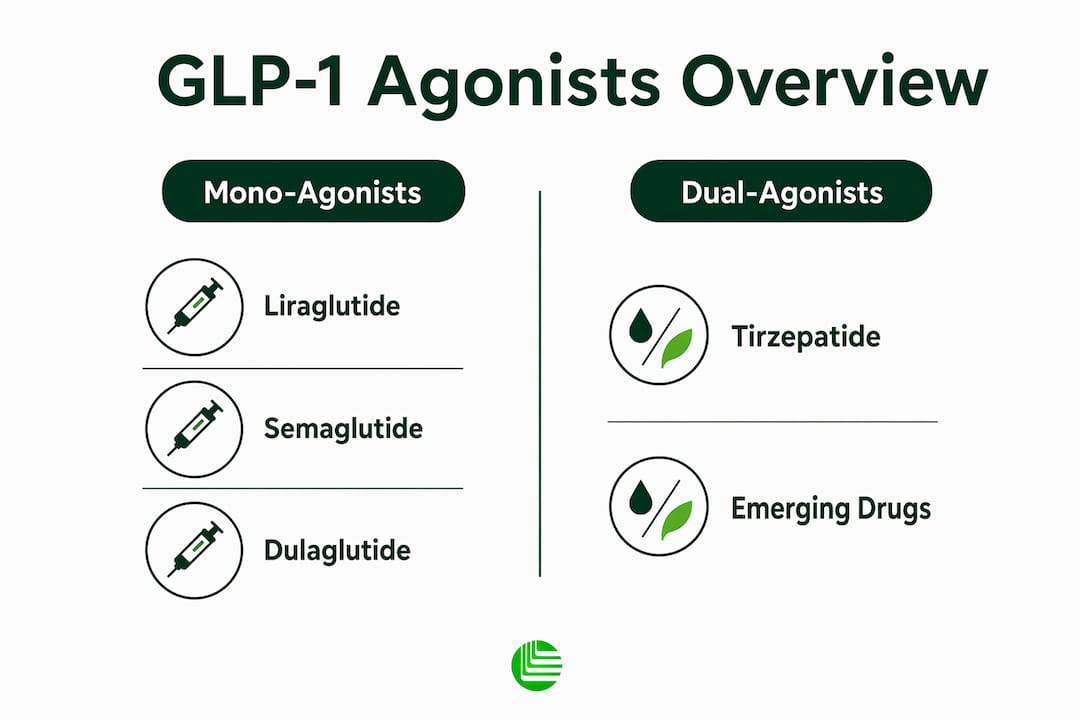
The GLP-1 agonist class has expanded well beyond its original single-receptor design. Mono-agonists like liraglutide and semaglutide act exclusively on the GLP-1 receptor. Dual and triple agonists like tirzepatide and retatrutide target multiple receptors simultaneously, producing greater weight loss and metabolic improvement than mono-agonists alone. Tirzepatide activates both GLP-1 and GIP receptors. Retatrutide adds glucagon receptor activation to that combination, representing the leading edge of current development.
Administration routes vary by medication. Most approved options are subcutaneous injections given daily or weekly. Oral semaglutide is the first approved oral GLP-1 agonist, though it requires specific dosing conditions to absorb properly. Oral formulations in development aim to improve bioavailability and patient adherence.
The table below summarizes the key approved and emerging agents in this class.
| Medication | Receptor targets | Primary indication | Administration |
|---|---|---|---|
| Liraglutide | GLP-1 | Type 2 diabetes, obesity | Daily injection |
| Semaglutide | GLP-1 | Type 2 diabetes, obesity | Weekly injection or oral |
| Tirzepatide | GLP-1 + GIP | Type 2 diabetes, obesity | Weekly injection |
| Retatrutide | GLP-1 + GIP + glucagon | Obesity (investigational) | Weekly injection |
Clinical indications now extend beyond diabetes and obesity. GLP-1 therapy shows benefit in metabolic-associated fatty liver disease, cardiovascular risk reduction, and slowing chronic kidney disease progression. Emerging research points to potential roles in neurodegenerative conditions and substance use disorders, though these applications remain investigational.
Pro Tip: Not all GLP-1 medications are interchangeable. Each carries specific FDA approvals and dosing protocols. A physician-led program ensures you receive the right agent for your specific metabolic profile, not just the most widely marketed one.
GLP-1 receptor agonists deliver a range of benefits that extend well beyond the scale. The most documented advantages include:
Side effects are real and predictable. Nausea, vomiting, diarrhea, and constipation are the most commonly reported, particularly during the early weeks of treatment. Gradual dose escalation reduces the severity of these gastrointestinal symptoms for most patients. Starting at a low dose and increasing over weeks or months is standard protocol, not optional.
One underappreciated risk is lean mass loss. Rapid weight loss from any cause, including GLP-1 therapy, can reduce muscle and bone mass alongside fat. This matters because muscle mass drives metabolic rate and physical function. Patients who do not actively counter this risk through resistance training and adequate protein intake may lose functional capacity even as their weight drops. Monitoring body composition, not just body weight, is a clinical priority that many programs overlook.
GLP-1 therapy works best as a long-term tool within a broader health plan, not as a short-term fix. The following framework reflects how physician-led programs structure treatment for lasting results.
Start with clinical assessment. A licensed physician reviews your metabolic health, current medications, and goals before selecting the right GLP-1 agent and starting dose. This step prevents mismatched prescriptions and sets realistic outcome benchmarks.
Follow a structured dose escalation. Most protocols increase the dose every four weeks. Skipping escalation steps to accelerate weight loss increases side effect severity without improving long-term outcomes.
Pair medication with dietary changes. GLP-1 therapy reduces appetite, but it does not dictate food quality. A protein-focused diet supports lean mass retention and metabolic health during weight loss. Supplements that complement GLP-1 therapy can also help fill nutritional gaps that emerge during caloric restriction.
Add resistance training. Strength training is the most effective strategy for preserving muscle mass during GLP-1-driven weight loss. Two to three sessions per week is a practical minimum for most patients.
Monitor and adjust over time. Treatment plateaus are normal. A physician can adjust dosing, switch agents, or modify lifestyle components when progress stalls. Self-adjusting doses without guidance increases risk.
Plan for long-term use. Stopping GLP-1 therapy typically leads to weight regain because the underlying hormonal drivers of appetite and fat storage return. Patients who view these medications as chronic disease management tools, rather than a temporary course, sustain better outcomes. Long-term weight maintenance requires ongoing strategy, not just medication.
Work with a physician-led program. Supervised programs track side effects, adjust protocols, and integrate lifestyle support in ways that self-directed use cannot replicate. The clinical advantages of physician-led weight loss are well-documented and directly relevant to GLP-1 outcomes.
GLP-1 receptor agonists are chronic disease management tools that require physician oversight, lifestyle integration, and long-term commitment to deliver lasting metabolic benefits.
| Point | Details |
|---|---|
| Mechanism is multi-target | GLP-1 agonists act on the pancreas, brain, and gut simultaneously to control blood sugar and appetite. |
| Benefits extend beyond weight | Cardiovascular and kidney protection are clinically proven benefits, not secondary effects. |
| Side effects are manageable | Gradual dose escalation reduces nausea and GI symptoms for most patients. |
| Lean mass loss is a real risk | Resistance training and protein intake are non-negotiable during GLP-1 therapy. |
| Stopping causes weight regain | These medications treat a chronic condition and work best as long-term tools. |
The most common mistake I see is treating GLP-1 therapy as a standalone solution. Patients start a medication, lose weight quickly, and assume the work is done. Then they plateau, or they stop the medication and regain the weight, and they conclude the drug “stopped working.” The drug did not stop working. The plan around it was incomplete.
What actually works is using the medication as a metabolic lever while building the habits that sustain results. That means resistance training from week one, not after you hit a goal weight. It means tracking protein intake, not just calories. It means staying in contact with a physician who can adjust your dose before a plateau becomes a setback.
The science on multi-receptor agonists is genuinely exciting. Tirzepatide’s dual mechanism already outperforms older mono-agonists in head-to-head data. Triple agonists in development may push efficacy further. But better drugs do not replace better habits. The patients who get the most from GLP-1 therapy are the ones who treat the medication as a tool, not a treatment.
My honest advice: find a program with real physician oversight, not just a prescription delivery service. The difference in outcomes is significant.
— Eric
Adults who want physician-led GLP-1 therapy without the friction of in-person clinic visits have a clear option in Oak Longevity.

Oak Longevity connects patients with licensed physicians who review health history, select the right GLP-1 medication (including semaglutide and tirzepatide), and manage dose escalation over time. Approved prescriptions ship directly to your door. The program pairs medication with strength and nutrition protocols designed to protect lean muscle mass during weight loss. Patients also get 24/7 support to manage side effects and stay on track. If you are ready to start with a program built around long-term metabolic health, visit Oak Longevity to learn more.
A GLP-1 receptor agonist mimics the natural GLP-1 hormone to stimulate insulin release, suppress glucagon, slow digestion, and reduce appetite. These combined effects lower blood sugar and promote weight loss.
Semaglutide activates only the GLP-1 receptor, while tirzepatide activates both GLP-1 and GIP receptors. The dual mechanism of tirzepatide produces greater average weight loss in clinical trials.
Nausea, vomiting, diarrhea, and constipation are the most frequently reported side effects. Starting at a low dose and increasing gradually reduces the severity of these symptoms for most patients.
Yes. Stopping GLP-1 therapy typically leads to weight regain because the hormonal drivers of appetite and fat storage return. These medications are designed for long-term use as part of chronic metabolic management.
Yes. Telehealth platforms like Oak Longevity allow patients to complete a health questionnaire online, receive physician review, and have approved prescriptions delivered to their home. Learn more about getting a GLP-1 prescription online through a licensed provider.