
Weight loss with hypothyroidism is achievable, but the sequence matters more than the diet or the workout plan. Get your thyroid medication dose right first. Everything else, from protein targets to strength training, only works once your hormone levels are actually corrected.
Here’s what that looks like in practice:
Correcting your hormone levels restores your body’s normal metabolic capacity. It doesn’t trigger fast fat loss on its own. Think of medication optimization as removing a roadblock, not as the engine that drives the weight down. The engine is still diet, movement, sleep, and time.
Weight loss with hypothyroidism depends on optimizing thyroid medication first, then layering whole-food nutrition, resistance training, and sleep and stress management on top of it.
| Point | Details |
|---|---|
| Get full labs first | Request TSH, Free T4, Free T3, and thyroid antibodies before changing diet or exercise. |
| Expect modest initial change | Early weight shifts are often due to fluid loss rather than fat. |
| Prioritize protein and strength training | Aim for roughly 0.7 to 1 gram of protein per pound of body weight and lift 2 to 3 times weekly. |
| Watch medication timing | Separate levothyroxine from calcium, iron, soy, and fiber by several hours. |
| Consider medical support if stalled | Oak Longevity offers physician-reviewed telehealth consults and prescription options like semaglutide for eligible patients. |
Before you touch your grocery list or your gym schedule, get a full thyroid panel. Not just TSH.
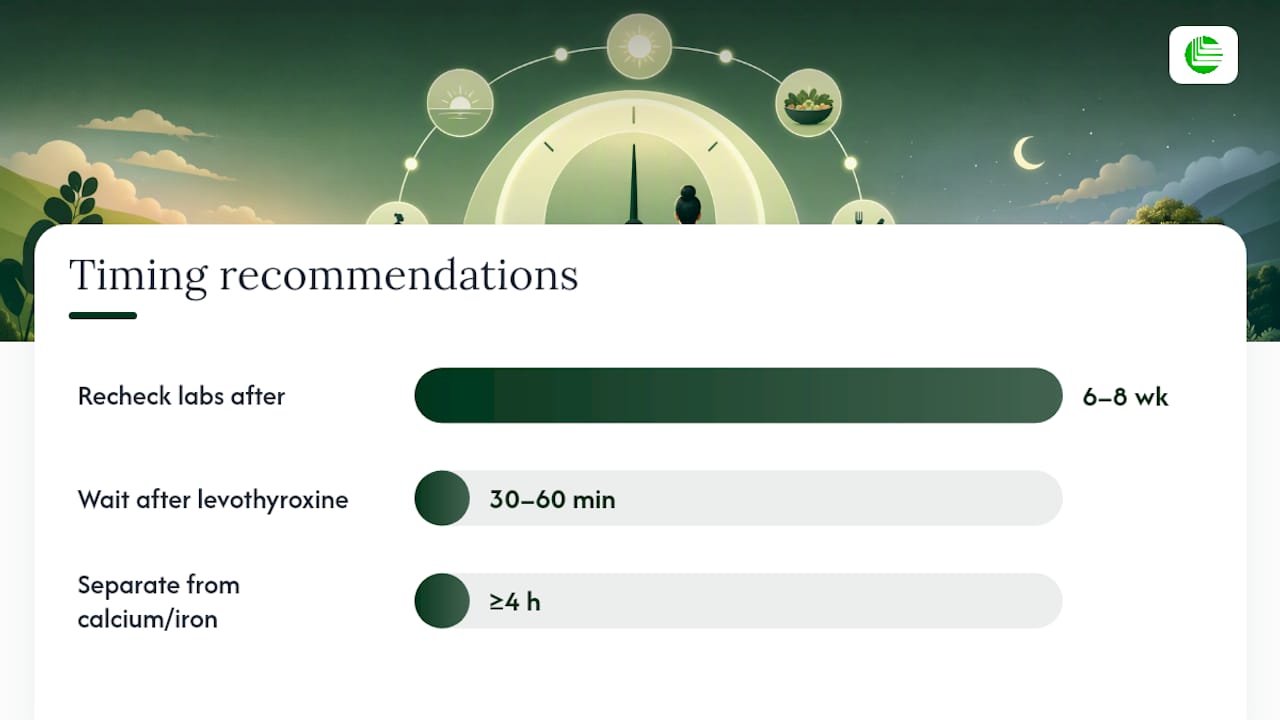
UCLA Health recommends this comprehensive panel before major lifestyle changes, because an underdosed medication is often the real reason weight isn’t moving, no matter how clean your diet looks. If you’ve adjusted your dose recently, most clinicians wait 6 to 8 weeks before rechecking labs and drawing conclusions about weight trends. Biochemistry shifts faster than the scale does.
Once you’re in range, something specific happens: retained fluid tends to clear, and your resting metabolic rate moves closer to what it would be without thyroid disease. That’s the restoration of metabolic capacity that makes fat loss possible again, not automatic, but possible.
Pro Tip: Take levothyroxine on an empty stomach, then wait at least 30 to 60 minutes before eating. Separate it from calcium and iron supplements by at least four hours. Both minerals bind to the medication and blunt absorption, which quietly undermines everything else you’re doing.
There’s no such thing as a proven “thyroid diet.” What actually helps is a whole-food, anti-inflammatory eating pattern, the kind Cleveland Clinic describes as Mediterranean-style: vegetables, fish, olive oil, nuts, and minimal ultra-processed food.
Protein deserves special attention. Aim for roughly 0.7 to 1 gram per pound of body weight daily, spread across meals. This isn’t arbitrary. Adequate protein intake protects lean muscle during weight loss, which matters more for hypothyroid patients because a sluggish metabolism already makes muscle easier to lose and harder to rebuild.
Cut back on simple carbs and added sugar, not by starving yourself, but by trading refined grains for fiber-rich vegetables, legumes, and whole grains. Extreme calorie deficits backfire here specifically: severe restriction can suppress the conversion of T4 into active T3, which works against the exact hormone balance you’re trying to protect.
Medication timing around food is where most people slip up:
| Food or Nutrient | Timing Relative to Thyroid Medication | Why It Matters |
|---|---|---|
| Calcium supplements | 4+ hours apart | Binds medication, reduces absorption |
| Iron supplements | 4+ hours apart | Same binding effect as calcium |
| Soy products | Several hours apart | Can interfere with hormone uptake |
| High-fiber meals | Several hours apart | Slows and reduces absorption |
| Coffee | Wait 30 to 60 minutes after dose | Can reduce absorption if too close |
Pro Tip: If your morning routine is coffee, breakfast, and vitamins all within ten minutes of your thyroid pill, that’s likely costing you real absorption. Push your dose to the moment you wake up and delay everything else by half an hour.
Resistance training isn’t optional here. It’s the single most protective thing you can do against the muscle loss that hypothyroidism, and aggressive dieting, both threaten.
Intensity is where hypothyroid patients need to be more careful than the average gym-goer. Pushing too hard, too often, can actually work against you: overtraining raises cortisol and stresses a system that’s already managing a slower T4-to-T3 conversion rate. Watch for the signs. Persistent fatigue that doesn’t improve with a rest day, worsening joint pain, or a sudden drop in workout performance usually means it’s time to scale back, not push through. Preserving lean mass through moderate, consistent training beats sporadic, exhausting sessions every time.
Sleep, stress, and gut function all move the needle on thyroid-related weight loss, often more than people expect.

Aim for 7 to 9 hours of sleep. Hypothyroidism already disrupts sleep architecture, so a consistent bedtime and a dark, cool room matter more here than for someone without thyroid disease. Chronic stress raises cortisol, and elevated cortisol can interfere with thyroid hormone conversion and drive water retention that masks real progress on the scale.
Practical starting points:
None of this replaces medication optimization. It just removes the friction that keeps otherwise correct treatment from showing results.
Certain micronutrients matter for thyroid function, but “more is better” is the wrong instinct here. Excess iodine, in particular, can worsen thyroid dysfunction rather than fix it, according to NIH Office of Dietary Supplements intake guidance.
| Nutrient | Role | Caution |
|---|---|---|
| Iodine | Required for hormone synthesis | Excess can worsen thyroid dysfunction; avoid high-dose supplements without guidance |
| Selenium | Supports hormone conversion | Generally safe in food form (Brazil nuts, seafood); avoid megadosing |
| Iron | Needed for thyroid enzyme function | Common deficiency; separate timing from medication by 4+ hours |
| Vitamin D | Linked to autoimmune thyroid activity | Test levels before supplementing at high doses |
| Vitamin B12 | Often low in autoimmune thyroid disease | Test before supplementing |
Skip unmonitored L-tyrosine and “thyroid support” blends sold without oversight. They can interact unpredictably with your medication or push hormone levels out of range. Most clinicians recheck thyroid labs every 6 to 12 weeks during active weight-loss efforts, tightening that window if you’ve changed your dose or your supplement routine recently.
If you’ve optimized your thyroid medication, cleaned up nutrition, added resistance training, and the scale still won’t move after several months, that’s the point to talk to a clinician about medically supervised options.
A typical program follows a clear sequence:
GLP-1 and GIP medications, such as semaglutide and tirzepatide, are among the prescription options clinicians may discuss for eligible patients. They’re not a fit for everyone, and eligibility depends on your full medical picture, not just your thyroid status.
Oak Longevity operates on exactly this model: an online consultation reviewed by a licensed physician, prescription medication delivered to your door if approved, and ongoing physician-led support to manage dosage. The approach also pairs any prescription therapy with strength and lifestyle guidance aimed at preserving lean muscle mass.
Telehealth has made this kind of oversight far more accessible than it used to be. It still requires a real conversation with a clinician about whether prescription therapy fits your situation.
Here’s a sequence you can actually follow, and review with your doctor as you go.
Daily checklist:
Track weight trends weekly, not daily, and flag persistent fatigue or no movement after 8 weeks for a clinical review.
Pace yourself. The people who stick with this treat the first month as data collection, not a race. Celebrate the non-scale wins, better sleep, steadier energy, a strength number going up, because those show up before the scale does.
Get your medication dose right before you touch anything else. Lifestyle changes layered onto an undercorrected thyroid rarely produce the results people expect, and that mismatch is what causes most of the frustration I see in this space.
If your thyroid is optimized and the scale still isn’t cooperating, a structured, physician-guided program is one legitimate next step, not a shortcut around the fundamentals covered above.

Oak Longevity runs entirely online: fill out a health questionnaire, a licensed physician reviews it, and if approved, your prescription, potentially a GLP-1 or GIP medication like semaglutide or tirzepatide, ships directly to your door. You get 24/7 support and physician-led guidance on dosing, paired with strength and lifestyle protocols built to protect lean muscle rather than just chase a lower number on the scale. This isn’t a replacement for the thyroid optimization and habits covered in this guide. It’s a path worth discussing with a clinician if those steps haven’t gotten you where you need to be. Check your eligibility and options to see whether it fits your situation.
For deeper reading beyond this guide, these sources cover the medical basics in more depth:
This article is general information, not a substitute for advice from a qualified doctor. Consult a qualified healthcare professional about your own circumstances before acting on anything here.