
Apps work well if you’re self-motivated, want low-cost behavioral support, and don’t need prescription medication. Clinics, including telehealth options, make more sense if you may qualify for GLP-1 or GIP medications, need lab monitoring, or manage a condition like diabetes alongside your weight. Many people get the best results blending both: daily habit tracking through an app paired with medical oversight from a clinician.
TL;DR:
- NIDDK defines high intensity as at least 14 sessions over six months and sets an initial target of losing 5% to 10% of starting weight.
- A 2026 trial found digital programs within a 3% margin of intensive clinic care over six months, while app outcomes still depend on engagement.
- A BMI of 30 or higher, or 27 with a condition tied to weight, may qualify someone for medication requiring clinician oversight.
- Apps usually charge subscriptions, while clinics bill for intake, visits, and medication; insurance coverage for medication depends on plan criteria.
- Before choosing a clinic, check clinician credentials, lab plans, follow up frequency, and cancellation terms.
Weight loss apps and clinics solve different parts of the same problem, and the gap between them is bigger than most people expect.
A typical app gives you a food and activity log, some form of automated coaching or lessons, and often a community feature where users encourage each other. Pricing tiers usually separate the basic self-service version from one that includes a human coach. Some apps sync with wearables like fitness trackers or smart scales, which adds a layer of passive tracking on top of what you log manually.
Clinics work differently from the ground up. A visit, whether in person or through telehealth, usually starts with an intake questionnaire and a review of your medical history. From there, many clinics order labs, assess eligibility for prescription medication, and set a titration schedule if a GLP-1 or GIP drug is appropriate. Ongoing care includes monitoring for side effects and adjusting the plan as your body responds.
Within each category, there’s a lot of range:
Knowing which version of each model you’re actually comparing matters more than the app-versus-clinic label itself.
The honest answer to “which works better” depends on what you’re measuring and how intensely you engage with either option.
A 3-country randomized trial found that a commercial weight management program produced greater weight loss at both 3 and 12 months, and a higher likelihood of losing at least 5% of body weight, compared with a self-directed approach. That gap illustrates why structure, whether from an app’s coaching layer or a clinic’s clinical protocol, tends to outperform going it alone.
Medication changes the calculation further. For people who are eligible, GLP-1 and GIP drugs can produce weight loss beyond what behavioral tools alone typically achieve, but that path runs exclusively through a clinician willing to prescribe and monitor the treatment.
The NIDDK sets a practical benchmark: a reasonable initial goal is losing 5% to 10% of starting weight within six months, and programs that deliver 14 or more sessions over that period are classified as high-intensity. That threshold matters because it’s the dividing line researchers use when comparing program types.
A few findings stand out:
A 2026 non-inferiority trial found digital programs stayed within a 3 percent margin of intensive in-person care over six months, a meaningful result for anyone assuming clinic visits are always the superior option.
On the medication side, FDA labeling for semaglutide documents specific dosing schedules, escalation steps, and the clinical trial endpoints that supported approval. These medications are indicated for adults with obesity or for adults with overweight who have at least one weight-related comorbidity, and the labeling exists precisely because dosing and monitoring require a clinician’s judgment, not an app’s algorithm.
Apps and clinics ask for your money in different shapes, which makes a head-to-head price comparison tricky unless you line up what you’re actually paying for.
Insurance coverage adds another layer of unpredictability. Some plans cover GLP-1 medications only when specific BMI or comorbidity criteria are met, while most behavioral apps are paid entirely out of pocket regardless of insurance status.
Picking between an app, a clinic, or a hybrid comes down to four honest questions about your own situation.
Before committing to either, ask any program these questions: Who reviews my information, and what are their credentials? Will labs be ordered, and how often? What’s the follow-up cadence? What happens if I want to cancel or change my prescription? How is my health data stored?
Pro Tip: If you’re unsure whether you qualify for medication, a quick intake questionnaire with a telehealth clinic usually answers that question faster than months of trial and error with an app alone.
As a general rule, choose an app if your goal is modest and you’re self-motivated, choose a clinic if medication or lab monitoring is likely necessary, and choose a hybrid if you want the structure of daily tracking alongside a clinician managing anything medication-related.
Hybrid approaches work because they split the job between tools built for different strengths. Self-regulation research points to apps excelling at daily tracking and accessibility, while clinics excel at prescribing, lab review, and managing comorbidities.
A practical hybrid workflow looks like this:
Starting a hybrid plan usually just means picking one app you’ll actually use consistently, then layering clinic-level care on top once eligibility for medication or closer monitoring becomes relevant.
We built our telehealth platform for people who want structured weight loss and need medical oversight an app can’t provide. Our process starts with an online health questionnaire reviewed by a licensed physician, and approved prescriptions for weight loss medications ship directly to your door. We pair that with support and physician-led guidance on dosage, plus a broader focus on preserving lean muscle and metabolic health alongside the weight loss itself. This model fits readers who’ve determined they may be eligible for medication and want ongoing clinical support without scheduling in-person visits.
If this comparison has pointed you toward needing medical oversight rather than an app alone, starting is simpler than scheduling an in-person clinic visit. Our semaglutide program starts from $119 a month, and our tirzepatide program starts from $185 a month, both reviewed and approved by a licensed physician before anything ships.
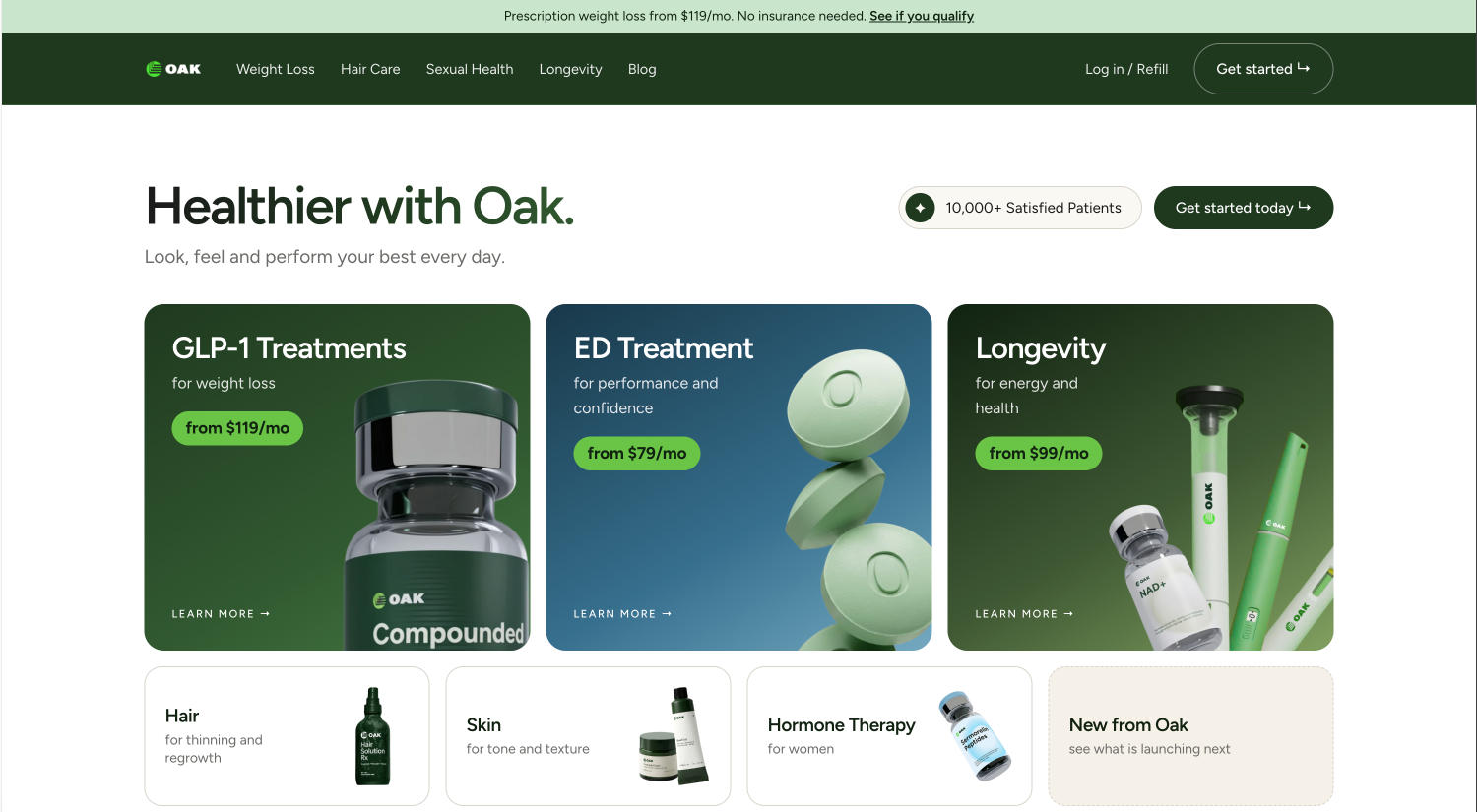
Every plan includes physician review of your intake, ongoing monitoring as your dosage adjusts, and direct delivery so you’re never managing titration guesswork alone. Visit our weight loss program page to see which option fits your goals, or head straight to the semaglutide page to start your intake questionnaire today.
This article is general information, not a substitute for advice from a qualified doctor. Consult a qualified healthcare professional about your own circumstances before acting on anything here.
Ratings shift often and vary by platform, so there’s no single universally agreed answer. What matters more than a star rating is whether an app includes coaching or hybrid elements, since research shows those features correlate with better outcomes than app-only minimal interventions.
A trustworthy clinic reviews your medical history, orders labs when appropriate, and has a licensed clinician overseeing prescriptions and monitoring for side effects. Checking credentials, follow-up cadence, and cancellation policies before starting is the most reliable way to evaluate any clinic, telehealth or in-person.
This is an informal social-media concept rather than a clinical guideline, and definitions vary depending on the source. The NIDDK’s own benchmark, losing 5% to 10% of body weight within six months, is the guidance supported by authoritative sources.
No single program works best for everyone, but NIDDK guidance defines high-intensity programs, 14 or more sessions over six months, as the category most associated with meaningful weight loss. Adding appropriate prescription medication under medical supervision can increase results further for eligible patients.