
GLP-1 receptor agonists and GLP-1/GIP dual agonists are the strongest evidence-backed options for fat loss, with clinical trials showing mean weight reductions of roughly 15–20% of body weight over 68 weeks. Performance-focused peptides — GH secretagogues, tesamorelin, and mitochondrial peptides like MOTS-c — serve a different goal: body recomposition, visceral fat reduction, and metabolic flexibility rather than raw scale weight.
Here is the short version before the full breakdown:
None of these compounds work well in isolation. The clinical evidence consistently points to a supervised protocol — baseline labs, dose titration, resistance training, and adequate protein — as the difference between modest and lasting results.
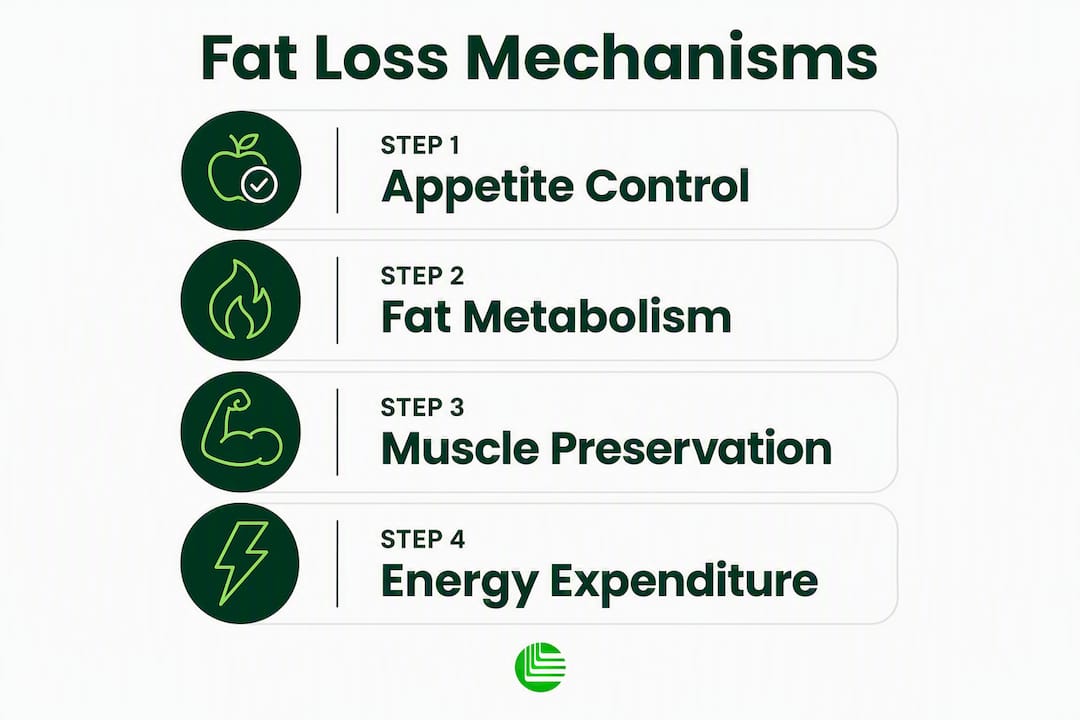
The core chain is simple: appetite suppression → lower caloric intake → fat loss. But different peptide classes reach that outcome through distinct biological pathways, and knowing which pathway a compound targets tells you what to realistically expect from it.
Principal mechanisms and their clinical implications:
Mechanism snapshot: GLP-1/GIP → appetite + glycemia → fat loss. GH axis → visceral fat + lean mass. Mitochondrial peptides → metabolic flexibility. Lipolytic fragments → direct lipolysis (weak human evidence).
Pro Tip: When evaluating any peptide for fat loss, ask which mechanism it uses and whether that mechanism has been validated in human randomized controlled trials. Animal data and in-vitro results do not reliably translate to clinical outcomes.
Three peptide-based medications are FDA-approved for weight management in the U.S., and they differ meaningfully in efficacy, mechanism, and who they are approved for. Tirzepatide leads on average trial weight loss, semaglutide has the broader prescribing history, and liraglutide is the oldest option with the most modest results.

| Medication | FDA approval / indication | Typical trial weight loss | Primary mechanism | Route & titration | Common side effects | Availability |
|---|---|---|---|---|---|---|
| Semaglutide (Wegovy) | FDA-approved for chronic weight management with specific BMI criteria | ~14.9% (STEP-1, 68 weeks) | GLP-1 receptor agonist; appetite suppression, gastric emptying | Weekly SC injection; titrate over 16–20 weeks to 2.4 mg | Nausea, vomiting, diarrhea, constipation | Prescription; brand + compounded options |
| Tirzepatide (Zepbound) | FDA-approved for chronic weight management (same BMI criteria) | ~20%+ (SURMOUNT-1, highest dose) | GLP-1/GIP dual agonist; appetite + glycemic control | Weekly SC injection; titrate over 20 weeks to 15 mg | Nausea, diarrhea, decreased appetite, fatigue | Prescription; brand + compounded options |
| Liraglutide (Saxenda) | FDA-approved for chronic weight management | ~5–8% (SCALE trials) | GLP-1 receptor agonist | Daily SC injection; titrate over 5 weeks to 3 mg | Nausea, vomiting, diarrhea, headache | Prescription; brand only |
| Tesamorelin (Egrifta) | FDA-approved for HIV-associated lipodystrophy (visceral fat) | Significant visceral fat reduction in approved population | GHRH analog; GH axis stimulation | Daily SC injection | Fluid retention, arthralgia, glucose changes | Prescription; specialist-prescribed |
The STEP-1 trial reported 14.9% mean weight loss at 68 weeks with 2.4 mg weekly semaglutide versus 2.4% for placebo. That gap is clinically significant. Ozempic carries a lower approved dose (1 mg or 2 mg) for type 2 diabetes; Wegovy is the weight-management formulation. Patients who stop semaglutide without lifestyle changes tend to regain weight, which is why ongoing maintenance dosing and behavioral support matter.
SURMOUNT-1 data show average weight reductions around 20% at the highest studied dose, and follow-up head-to-head analyses confirm tirzepatide outperforms semaglutide for average percentage weight loss. The GIP component appears to be the differentiator. Zepbound is the weight-management brand; Mounjaro is the diabetes formulation. For patients whose primary goal is maximum fat loss, tirzepatide currently has the strongest trial evidence of any approved option.
The oldest of the three, liraglutide requires a daily injection rather than weekly, which affects adherence. Trial results from the SCALE program are more modest than newer agents. It remains a valid option for patients who cannot access or tolerate semaglutide or tirzepatide, but most clinicians now start with the newer weekly options when available.
Tesamorelin is FDA-approved specifically for reducing visceral adipose tissue in adults with HIV-associated lipodystrophy. It is not a first-line general weight-loss drug for the broader population. Its mechanism — stimulating growth hormone release via the GH-releasing hormone (GHRH) receptor — makes it uniquely effective at targeting visceral fat in the approved population. Clinicians sometimes use it off-label for visceral fat reduction in metabolic contexts, but that use sits outside its approved indication.
Prescription pathway and cost: All four medications require a licensed prescriber. Brand-name GLP-1 medications can run $900–$1,300/month without insurance; compounded versions through telehealth platforms are typically lower cost. Insurance coverage varies widely. The FDA has authorized compounding of semaglutide and tirzepatide during shortage periods, though that status can change.
The honest ranking: retatrutide and survodutide are the most promising near-term candidates; VK2735 is close behind; MOTS-c is early experimental; AOD-9604 is low-confidence for clinical fat loss.
Retatrutide: A triple agonist targeting GLP-1, GIP, and glucagon receptors simultaneously. Phase 2 data published in 2023 showed substantial weight loss signals that exceeded tirzepatide in some analyses. Phase 3 trials are underway. The glucagon component adds direct lipolytic activity on top of the appetite-suppression pathway, which is why researchers are watching it closely.
Survodutide: A GLP-1/glucagon dual agonist in Phase 2/3 development. Early data show meaningful weight loss with a metabolic profile that may benefit patients with metabolic-associated steatohepatitis (MASH) alongside obesity. Clinical trial activity is ongoing.
VK2735: A GLP-1/GIP dual agonist in development with both subcutaneous and oral formulations being studied. Phase 2 results have been encouraging. An oral option, if it reaches approval, would change the accessibility picture significantly for patients who prefer to avoid injections.
MOTS-c: A mitochondria-derived peptide with preclinical data suggesting improvements in insulin sensitivity and metabolic flexibility. Early human research is promising but limited. It is not available as a prescription medication and should be considered investigational. Anyone using it outside a clinical trial is operating in grey-market territory.
AOD-9604: A synthetic fragment of human growth hormone designed to stimulate lipolysis. Animal studies showed fat reduction; human Phase II results were modest and the compound did not progress robustly to Phase III. The evidence gap between animal and human data is a recurring theme with lipolytic fragments. AOD-9604 is not FDA-approved for any indication and is widely sold through research-chemical suppliers, which carries its own risks.
Trial status summary: Retatrutide and survodutide are in active Phase 3 programs. VK2735 is in Phase 2. MOTS-c and AOD-9604 have no approved indication and limited human trial data.
The single most important safety principle: peptide therapy requires clinician supervision. Grey-market research-grade peptides commonly lack FDA-level batch testing, and clinical guidance is clear that pharmacy-grade, prescription products are the standard for consistency and safety.

Before starting any peptide therapy:
Follow-up monitoring schedule:
| Timepoint | Labs / checks |
|---|---|
| 4–8 weeks | Weight, blood pressure, GI symptom review, glucose if diabetic |
| 12 weeks | CMP, HbA1c, lipid panel, weight, dose review |
| 6 months | Full panel repeat, IGF-1 if on GH-axis agent, body composition if available |
| 12 months | Full panel, thyroid if indicated, reassess goals and continuation |
Pro Tip: Before ordering any peptide online, request a Certificate of Analysis (COA) from an independent third-party lab. If a supplier cannot provide one, that is a hard stop. Pharmacy-grade compounded medications from licensed U.S. compounding pharmacies are the minimum standard for supervised use.
Grey-market peptides sold as “research chemicals” are not intended for human use, are not subject to FDA manufacturing standards, and have no consistent dosing verification. The risk is not theoretical — contamination, incorrect concentration, and bacterial endotoxins are documented problems with unregulated suppliers.
The compound is only one variable. Practitioners consistently report that outcomes depend as much on the surrounding clinical program as on the peptide itself. A well-designed protocol covers assessment, medication selection, titration, lifestyle integration, and monitoring.
Pro Tip: Bring your baseline labs to the first telehealth visit. Many platforms can order them for you, but having results in hand before the consultation shortens the time to your first prescription.
Realistic sample protocol (hypothetical): A 38-year-old with BMI 32 and no contraindications starts tirzepatide at 2.5 mg weekly. Labs at baseline include CMP, HbA1c, lipid panel, and TSH. Dose escalates every 4 weeks. At week 12, labs repeat and weight is reviewed. Resistance training 3x/week begins at week 1; protein target is 130 g/day. At 6 months, body composition is assessed and the clinician decides whether to continue current dose or adjust.
GLP-1 appetite effects typically begin within 2–4 weeks, with measurable weight changes by 8–12 weeks and peak effects appearing at 40–70 weeks in trials. Setting those expectations upfront prevents early dropout.
Tirzepatide and semaglutide have the strongest human clinical evidence for fat loss, and their results are maximized within a supervised protocol that includes baseline labs, dose titration, resistance training, and adequate protein intake.
| Point | Details |
|---|---|
| Top choice for maximum fat loss | semaglutide (Wegovy) has strong trial evidence showing about 14.9% weight loss (STEP-1, 68 weeks); tirzepatide (Zepbound) has trial evidence showing around 20%+ weight loss at the highest studied dose (SURMOUNT-1). |
| Visceral fat and recomposition | Tesamorelin targets visceral fat in its approved population; GH secretagogues support lean mass preservation alongside GLP-1 therapy. |
| Baseline labs before starting | Request CMP, HbA1c, lipid panel, TSH, and IGF-1 (if GH-axis agents are planned) before your first dose. |
| Investigational options | Retatrutide and survodutide are in Phase 3 trials; MOTS-c and AOD-9604 lack sufficient human evidence for clinical use outside trials. |
| Oak Longevity | Oak Longevity provides clinician-supervised access to semaglutide and tirzepatide via telehealth, with mail delivery and ongoing support built into the program. |
The conversation around peptide therapy for fat loss has a tendency to focus on the compound itself — which molecule, which dose, which stack. That framing misses the more important variable.
The clinical data on GLP-1 agents is genuinely impressive. A 15–20% reduction in body weight over roughly a year is a result that no lifestyle intervention alone reliably produces at scale. But the trials that generated those numbers were conducted under controlled conditions with regular monitoring, dose titration, and behavioral support built in. The patients who do worst on these medications in real-world settings are typically the ones who got a prescription without the surrounding protocol.
What I find underappreciated is how much the resistance training component matters specifically for people who care about performance, not just weight. GLP-1-driven weight loss is not selective. Without deliberate effort to preserve muscle, a meaningful portion of the weight lost is lean mass. For someone who trains, that is a real cost. The peptides that support the GH axis — tesamorelin, CJC-1295/Ipamorelin — are not going to produce the fat loss numbers that tirzepatide does, but they serve a different purpose. Combining a GLP-1 for appetite control with a structured resistance program and, where clinically appropriate, GH-axis support is the approach that makes sense for performance-focused patients. That combination is not exotic; it is what the evidence points toward when the goal is body recomposition rather than just a lower number on the scale.
The grey-market question is simpler than people make it. Pharmacy-grade, prescription-verified medications with documented COAs are the standard. Everything else is a variable you cannot control, and in a domain where dosing precision matters, uncontrolled variables are not a calculated risk — they are just a risk.
Prescription GLP-1 and GIP medications work. Getting access to them through a process that includes real clinical oversight, proper baseline labs, and ongoing dose management is what separates a safe, effective course of treatment from a guesswork experiment.

Oak Longevity is a U.S. telehealth platform built specifically for this. The process starts with an online health questionnaire reviewed by a licensed physician. If you qualify, your prescription is fulfilled through a licensed pharmacy and delivered to your door. The program includes physician-led dose titration, 24/7 support, and follow-up guidance designed to keep you on track without requiring in-person clinic visits. Semaglutide and tirzepatide are the core offerings, and the program pairs medication with strength and lifestyle protocols to preserve lean mass — not just drop weight.
Not everyone who applies will be approved. Clinician review is required, and eligibility depends on your health history and goals. Pricing is transparent at sign-up. To see whether you qualify and review current medication options, start your consultation at Oak Longevity.
The sources below informed this article and are worth bookmarking if you want to go deeper on trial data, safety guidance, or clinical protocols.
This article is general health information, not medical advice. Consult a licensed clinician and verify current FDA guidance before starting any prescription peptide therapy.