Yes, you can get a legitimate tirzepatide online prescription, but only after a licensed clinician evaluates your health history and confirms it’s medically appropriate for you. There’s no way around that step, and any site that skips it is one to avoid.
Once you clear that evaluation, four real pathways exist: routing a prescription through your insurance and a participating pharmacy, buying self-pay vials through LillyDirect, using a telehealth platform that prescribes the brand medication directly, or, in narrower cases, a compounded version from a properly licensed pharmacy. Tirzepatide sells under two FDA-approved brand names: Mounjaro for type 2 diabetes and Zepbound for chronic weight management.
Here’s what to know before you start:
Legitimate online tirzepatide access always starts with a licensed clinical evaluation, and the safest route depends on your insurance, budget, and how urgently you need medication.
| Point | Details |
|---|---|
| Prescription requires evaluation | No legitimate pathway skips a licensed clinician reviewing your health history first. |
| Four real pathways exist | Insurance-covered, LillyDirect self-pay vials, telehealth brand prescribing, or licensed compounded options. |
| Contraindications matter | Personal or family history of medullary thyroid carcinoma and pregnancy are absolute red flags to screen for. |
| Cost varies widely by route | Insurance copays, self-pay vials, and compounded options carry different 2026 price ranges. |
| Oak Longevity offers a vetted path | The platform pairs licensed physician review with medication delivery and ongoing titration support. |
The process runs through a handful of predictable stages, whether you go through your primary care doctor’s portal or a dedicated telehealth platform.
A real clinical screening should always cover your BMI and weight history, any personal or family history of medullary thyroid carcinoma or MEN2 syndrome, prior pancreatitis, pregnancy status, and every medication you’re currently taking. If a platform never asks about these, that’s a problem, not a convenience.
Pro Tip: Have your current medication list, your most recent labs (if you have them), and your insurance card open before your visit. Clinicians can approve faster when they don’t have to chase down basic information, and incomplete intake forms are a common reason for delays or denials.
Tirzepatide is FDA-approved for two distinct uses: Mounjaro treats type 2 diabetes, while Zepbound treats chronic weight management in adults who meet specific BMI and comorbidity criteria. Prescribers generally look for a BMI of 30 or higher, or 27 or higher with a weight-related condition like hypertension or sleep apnea, when evaluating candidates for the weight-management indication.
Certain people should not take it at all. A licensed clinician will screen for these before writing anything:
Beyond the absolute red flags, expect your clinician to ask about kidney function, diabetic retinopathy if you have diabetes, gallbladder history, and any other medications that affect blood sugar. Patient-facing summaries from Mayo Clinic outline these monitoring points in detail, and they’re worth reading before your appointment so nothing catches you off guard.
By the numbers: Zepbound and Mounjaro share the same active ingredient but carry separate FDA indications, meaning a prescriber legally can’t write one brand for the other’s approved use without documenting the appropriate off-label rationale.
Only two brand names carry FDA approval for tirzepatide, and the distinction matters for how a telehealth visit gets handled.
| Brand | FDA-Approved Indication | What the Visit Should Confirm |
|---|---|---|
| Mounjaro | Type 2 diabetes management | HbA1c levels, diabetes diagnosis, current diabetes medications |
| Zepbound | Chronic weight management | BMI threshold, weight-related comorbidities, prior weight-loss attempts |
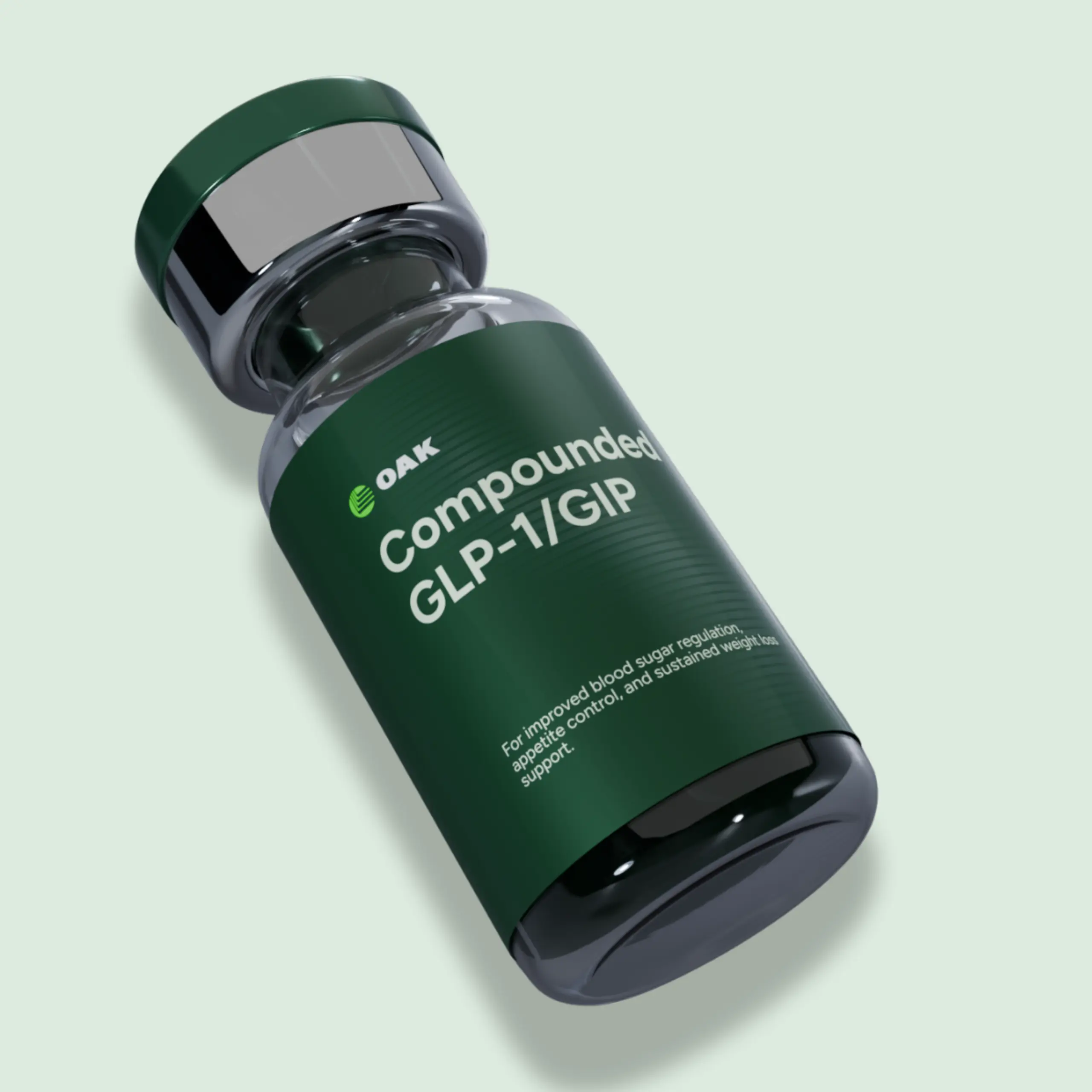
The FDA’s own announcement describes tirzepatide as a novel dual-targeted therapy, meaning it activates both GIP and GLP-1 receptors rather than GLP-1 alone. Older drugs like semaglutide (sold as Ozempic for diabetes and Wegovy for weight management) work through the GLP-1 pathway only. Clinical trials published in the New England Journal of Medicine found this dual mechanism tends to produce larger average weight loss than GLP-1-only agents, though comparative outcome data still calls for ongoing real-world monitoring as more people use these drugs long-term.
Nobody starts at a full dose. Tirzepatide follows a slow titration schedule, starting low and increasing every four weeks, largely to let your gut adjust and cut down on nausea. Jumping ahead of that schedule is one of the most common reasons people quit treatment early.
During titration, expect a few consistent check-ins:
Titration isn’t a race. If nausea or fatigue hits hard after a dose increase, staying at that dose longer is often the right call rather than pushing forward on schedule. Dose titration for peptide therapies generally follows this same logic across GLP-1 and GIP medications.
Pro Tip: Tell your prescriber about side effects as soon as they show up, even mild ones. Clinicians can often adjust your titration pace instead of stopping treatment entirely, but only if they know what’s happening.
Most people experience gastrointestinal symptoms first, and most of them fade as your body adjusts.
Rare but serious risks exist too. Pancreatitis, gallbladder disease, and severe hypoglycemia (particularly when combined with insulin or sulfonylureas) all show up in the safety data reviewed by Cleveland Clinic and in primary literature on PubMed.
Severe, persistent abdominal pain, especially if it radiates to your back, along with vomiting that won’t stop, warrants immediate medical attention. So does any sign of an allergic reaction, like swelling of the face or difficulty breathing. Don’t wait out these symptoms at home.
If you’re pregnant, planning pregnancy, or taking other medications that affect blood sugar, tell your prescriber during intake rather than after you’ve already started the medication.
Cost depends entirely on which pathway you use, and the differences are significant enough to shape which route makes sense for you.
| Pathway | Approximate 2026 Price Range | Key Consideration |
|---|---|---|
| Insurance-covered with savings card | Variable copay typically on the lower side for commercially insured patients | Prior authorization can delay approval by days to weeks |
| LillyDirect self-pay vials | Genuine brand vials priced below typical retail pen rates | Requires a valid prescription; no insurance billing |
| Telehealth or retail brand pen, self-pay | Generally higher monthly cost when paying out-of-pocket | Convenient but usually the most expensive self-pay option without insurance coverage |
| Compounded tirzepatide | Typically lower cost but lacks FDA approval | Requires verified 503A/503B pharmacy licensure |
These 2026 price bands and pathway breakdowns reflect a market still adjusting after supply shortages eased. Manufacturer savings cards can meaningfully reduce copays for commercially insured patients, but they typically exclude anyone on Medicare or Medicaid, so check eligibility before counting on that discount.
Before committing to any route, ask your provider three things: what the total monthly cost will be after insurance or savings cards, whether delivery fees apply, and how far in advance refills need to be requested to avoid a gap in treatment.
Run through this checklist before you hand over your health information or your payment card.
Red flags are usually obvious once you know to look for them: no intake questions, medication offered without any evaluation, vague or missing pharmacy licensing details, or pricing that seems too good to be true relative to the market ranges above. A clear walkthrough of how legitimate online clinics operate can help you compare what you’re seeing against what a real process looks like.
Pro Tip: Save a copy of your visit summary and prescription record after every telehealth appointment. You’ll need it if your pharmacy requests verification or if your insurer asks for documentation during a coverage review.
Fulfillment depends on which pathway you chose during your visit. Insurance-covered prescriptions typically route to a retail pharmacy for pickup or a mail-order pharmacy for delivery. LillyDirect ships single-dose vials directly, often faster since it bypasses standard retail pharmacy queues. Compounded prescriptions ship from the compounding pharmacy itself, assuming it holds proper 503A or 503B licensure.
Refills usually require a brief clinician check-in confirming continued appropriateness, and prior authorization renewals can add a few days if your insurer requires updated documentation. If a pharmacy asks for more clinical information before refilling, that’s a normal part of the process, not a denial.
On compounded tirzepatide specifically: the FDA’s clarified compounding policy narrowed the circumstances under which compounding is appropriate now that national supply has stabilized. Always verify a compounding pharmacy’s license before ordering. And skip anything advertised as imported from overseas. Medications shipped from outside the United States bypass FDA oversight entirely, and there’s no reliable way to confirm what’s actually in the vial.
Here’s roughly what to expect once you start the process:
Keep a simple log of your weight, any side effects, and, if you’re diabetic, your glucose readings. Bring that log to every follow-up. It gives your clinician real data instead of a vague memory of “some nausea last week.”
Telehealth gets criticized sometimes as a shortcut around real medical care, and I understand where that skepticism comes from. Plenty of sketchy operators have made that reputation earned. But the criticism misses something: the format itself isn’t the problem. A video visit with a licensed prescriber who screens for medullary thyroid carcinoma history, checks your medication list, and schedules real follow-up is not meaningfully different from an in-person visit that does the same things faster and with less friction.
What matters is whether the platform actually does the work. Does it employ licensed prescribers who can practice in your state? Does it route brand prescriptions to real, licensed pharmacies? Does it schedule dose increases based on how you’re actually responding, rather than a fixed calendar? Those questions separate a legitimate telehealth pathway from a rubber-stamp operation, and they’re worth asking of any platform, including ours.
Oak Longevity was built around that distinction. The platform pairs a licensed physician review with medication delivery and ongoing support rather than treating the prescription as a one-time transaction. That’s the model I’d want if I were the patient: someone tracking my progress, not just approving my first order.
If you’ve made it this far, you already know the safest path to tirzepatide runs through a licensed clinician who actually reviews your history, not a checkout page. Oak Longevity’s advantage over piecing this together yourself is simple: one platform handles the evaluation, the prescription, and the medication delivery, with physician-led titration support built into every dose increase instead of leaving you to figure out timing on your own.

Oak Longevity’s process starts with an online health questionnaire reviewed by a licensed physician, and approved plans ship directly to your door with 24/7 support available if side effects or questions come up between check-ins. The program also pairs medication with strength and lifestyle guidance aimed at preserving lean muscle, something a bare prescription alone won’t give you.
If you’re ready to see whether you qualify, start with the Oak Longevity product page to review current plans and begin your intake.
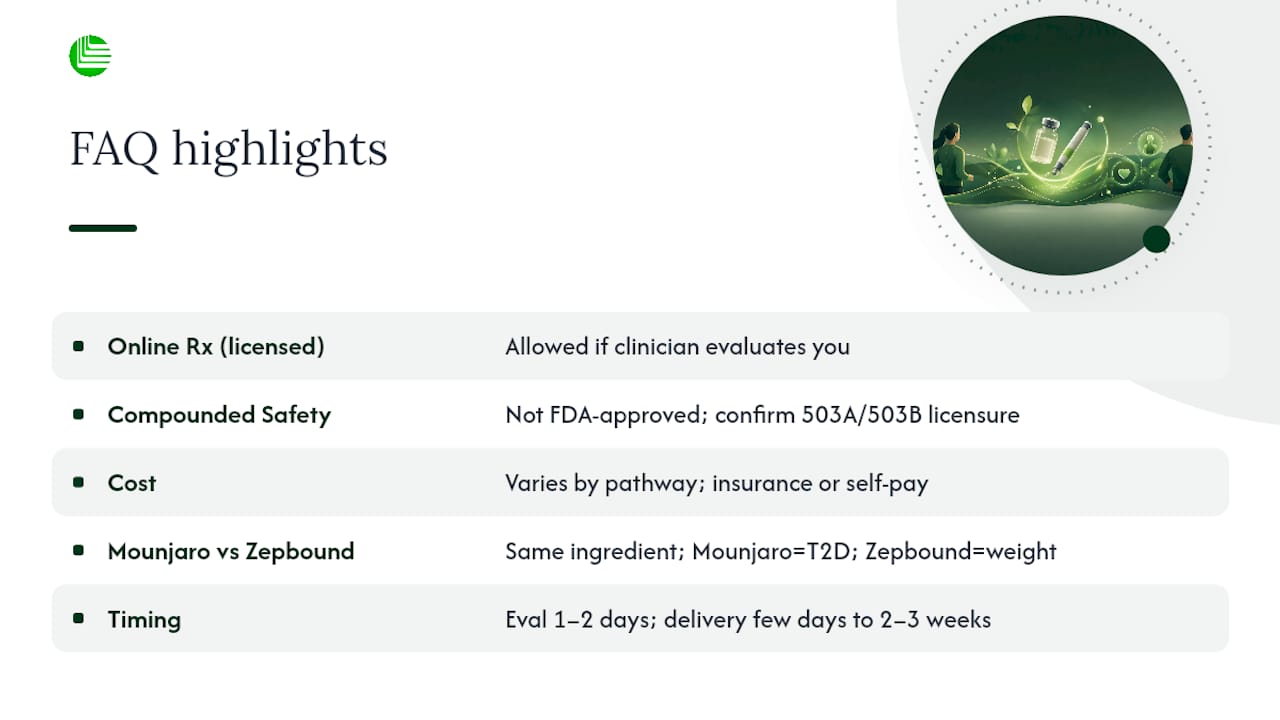
Can I really get a tirzepatide online prescription without an in-person visit? Yes, as long as a licensed clinician conducts a genuine clinical evaluation, whether by video or a thorough asynchronous review. State licensing rules apply, so the prescriber must be licensed in your state.
Is compounded tirzepatide as safe as the brand-name version? Compounded versions aren’t FDA-approved, and the FDA has tightened oversight of compounders now that national supply has stabilized. If you consider this route, confirm the pharmacy holds valid 503A or 503B licensure.
How much does tirzepatide cost through an online prescription? It depends heavily on the pathway. Insurance with a savings card can bring copays down substantially, while self-pay vials through LillyDirect or compounded options offer lower cash prices than retail self-pay pens.
What’s the difference between Mounjaro and Zepbound? Same active ingredient, different FDA-approved indications. Mounjaro is approved for type 2 diabetes, and Zepbound is approved for chronic weight management.
How long does it take to get tirzepatide after an online evaluation? Evaluation typically takes a day or two. Delivery ranges from a few days for self-pay routes to two or three weeks for insurance pathways requiring prior authorization.
This article is general information, not a substitute for advice from a qualified doctor. Consult a qualified healthcare professional about your own circumstances before acting on anything here.