
Most people paying out of pocket for tirzepatide in 2026 will land somewhere between $25 and $650 a month, and the gap between those numbers has almost nothing to do with the drug itself. It comes down to one variable: which payment route you use.
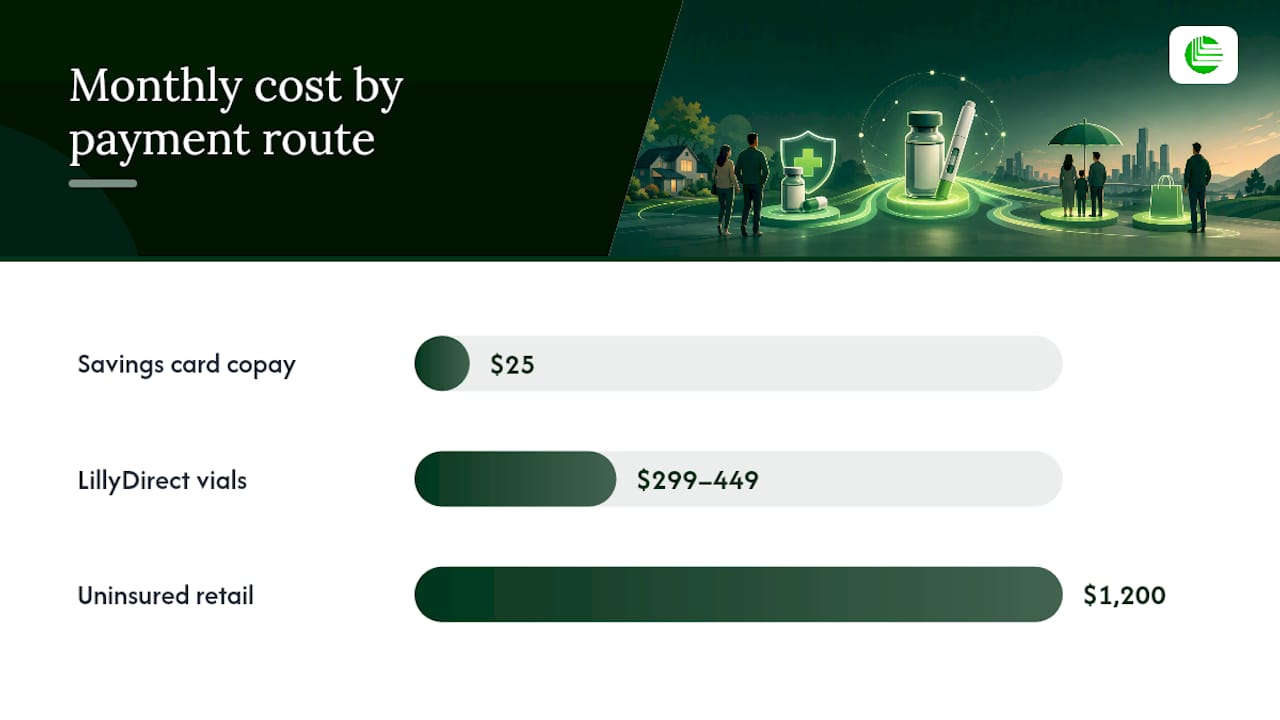
Commercially insured patients with a manufacturer savings card can pay as little as $25 for a Zepbound pen supply. Patients paying cash through LillyDirect’s Self Pay Journey Program pay $299 to $449 monthly, by dose. Retail cash buyers without any discount face pen prices closer to $1,079–$1,086 a month, according to pricing trackers. Medicare and Medicaid patients generally can’t touch the savings card at all.
Here’s the quick breakdown by route:
List price is a starting number, not a real one. Lilly’s own pricing pages distinguish between the wholesale acquisition cost (WAC) and the LillyDirect direct-to-patient price, and that gap is the whole story for 2026 buyers.
If you have commercial insurance that covers Zepbound or Mounjaro for an approved indication, your insurer negotiates a rate, and the savings card can shave that down to a flat copay as low as $25 for a short supply. If you don’t have coverage, or your plan excludes GLP-1s for weight loss, you fall into cash territory. That’s where the vial program matters. Lilly cut vial prices on December 1, 2025, specifically to give uninsured and underinsured patients a lower regulated option than retail pharmacy pricing.
Mounjaro, tirzepatide’s diabetes-labeled twin, runs a similar structure. Its pricing page confirms savings cards exclude government program beneficiaries, and that indication (diabetes versus weight loss) often decides whether insurance pays anything at all.
We’ve watched patients on the exact same molecule report wildly different monthly bills, and it’s rarely the pharmacy’s fault. Prior authorization delays, step therapy requirements, and the difference between a flat copay and a coinsurance percentage can turn a $25 month into a $400 one overnight.
The LillyDirect vial program adds another wrinkle: refill timing. Miss the 45-day reorder window and you can lose your discounted tier, landing back at the higher regular price for that dose. Government-insured patients (Medicare, Medicaid, TRICARE) don’t get access to the savings card regardless of income or need, which is a policy detail that catches a lot of people off guard.
A predictable telehealth model helps because refill scheduling and dose management get handled proactively instead of reactively.
Oak Longevity runs an online consult, licensed prescriber review, and direct-to-door prescription delivery, with recurring refills managed so you’re not scrambling near a program deadline. That structure supports patients using LillyDirect vials, retail fills, or insurance-covered prescriptions alike.

A consistent prescriber relationship also helps with benefit checks and documentation, which matters more than most people realize.
Pro Tip: If your prescription needs to reflect a diabetes diagnosis versus weight-loss-only, make sure that’s documented accurately. It often decides whether your insurer pays anything toward tirzepatide.
Prescriptions are issued based on clinical appropriateness, never guaranteed, and manufacturer program eligibility for commercial savings cards is outside any telehealth provider’s control. If you want to see whether you qualify, start with an eligibility check on Oak Longevity’s product page, or read more on the Oak Journal first.
Payment route, not list price, determines whether tirzepatide costs $25 or $1,200 a month for a given U.S. patient in 2026.
Run through this checklist before assuming you know your number: check savings-card eligibility with your insurer, compare LillyDirect vial pricing at your maintenance dose, ask about prior authorization or step therapy, and keep a pharmacy discount coupon as backup.
Annualized, the cost spread is large. Savings-card patients may pay relatively low annual amounts. LillyDirect self-pay vial users pay a moderate annual cost. Uninsured retail buyers without discounts face substantially higher annual expenses. Compounded alternatives, once a common workaround, are no longer a reliable universal option since regulatory narrowing in 2024 and 2025, which makes manufacturer self-pay the realistic cash route now.
| Point | Details |
|---|---|
| Savings card is cheapest | Commercially insured patients can pay as little as $25 with a Zepbound Savings Card. |
| LillyDirect vials fill the gap | Self-pay vial pricing runs $299 to $449 monthly depending on dose. |
| Refill timing matters | Missing the 45-day reorder window can bump you off the discounted vial price. |
| Government insurance excluded | Medicare, Medicaid, and TRICARE patients can’t use manufacturer savings cards. |
| Oak Longevity supports refill consistency | Its telehealth model manages prescription delivery and refill timing across payment routes. |
Prices and program rules shift often, so check primary sources before making a financial decision. Lilly’s investor announcement confirms current vial prices and refill conditions. The Zepbound pricing page lays out WAC versus direct-to-patient pricing and card eligibility. The Mounjaro pricing page covers government-program exclusions. Medically reviewed cost breakdowns like this one offer a second-opinion check on real patient costs.
These figures reflect pricing as of early 2026 and can change with future manufacturer announcements.
This article is general information, not a substitute for advice from a qualified doctor. Consult a qualified healthcare professional about your own circumstances before acting on anything here.