
Yes, men with clinically confirmed low testosterone and obesity can generally take semaglutide and testosterone replacement therapy together, provided each treatment is independently indicated and monitored. Semaglutide targets appetite and metabolic weight loss; testosterone replacement therapy (TRT) addresses documented hypogonadism symptoms and helps preserve lean mass during weight loss. Neither drug’s label warns against the other, but combining them still calls for baseline labs and regular physician follow-up.
TL;DR:
- Semaglutide may modestly increase total testosterone levels by reducing visceral fat and improving insulin sensitivity, but free testosterone often remains unchanged due to elevated SHBG.
- Combining semaglutide and testosterone therapy is safe when each is properly indicated, monitored through baseline labs, serial testing, and regular follow-up with a healthcare provider.
- Starting semaglutide first can help clarify how much weight loss influences testosterone levels, while initiating TRT may be appropriate if hypogonadism symptoms are severe.
- Labs should include two morning testosterone measurements, SHBG, estradiol, hematocrit, lipids, glucose, and PSA, with repeat testing scheduled at least annually.
- Combined treatment is unsuitable for men with active prostate cancer, uncontrolled cardiovascular disease, or those planning pregnancy, requiring specialist consultation before proceeding.
Semaglutide doesn’t touch the testicles or the pituitary directly. It works by mimicking GLP-1, a gut hormone that slows stomach emptying, curbs appetite, and improves insulin sensitivity. The testosterone changes that follow are a downstream effect of weight loss, not a direct hormonal action.
Here’s the mechanism worth understanding before you look at your lab report. Fat tissue, especially visceral fat, converts testosterone into estrogen through an enzyme called aromatase and also suppresses the signaling that tells your testes to produce testosterone. Drop the fat, and that suppression eases. At the same time, improved insulin sensitivity raises sex hormone binding globulin (SHBG), the protein that ferries testosterone through the bloodstream.
That SHBG shift matters more than most men realize. A systematic review and meta-analysis found that men on GLP-1 receptor agonists commonly show a modest rise in total testosterone, largely mediated by weight loss and better insulin sensitivity. But the same review noted real heterogeneity: free testosterone, the biologically active fraction, doesn’t move as predictably. Rising SHBG can bind more testosterone even as the total number climbs, which sometimes makes a calculated free testosterone look flat or even lower.
Practically, this means:
Clinicians who understand this dynamic rely on serial labs and how a patient actually feels, rather than reacting to a single test drawn three weeks after starting semaglutide.
No major guideline lists a pharmacologic contraindication between GLP-1 receptor agonists and testosterone replacement therapy. Clinical reviews describe co-prescribing in practice for men with obesity and confirmed low testosterone, when each condition independently meets treatment criteria. That’s a meaningfully different situation from a healthy-weight man asking for testosterone to feel younger. The evidence base for combined therapy specifically covers men who need both.
The evidence in numbers: Systematic reviews report modest total testosterone increases in men on GLP-1 receptor agonists, primarily explained by weight loss and improved insulin sensitivity, with variable and less predictable effects on free testosterone and SHBG.
On the TRT side, the evidence is more mature. A synthesis of randomized trials and pooled data on testosterone replacement therapy shows consistent improvement in sexual function and some quality-of-life measures. The same body of evidence hasn’t shown a clear increase in cardiovascular events over short-to-medium follow-up periods, though the authors are careful to note that uncertainty remains, especially over longer timeframes.
Where the evidence gets thinner:
The AAFP’s review of testosterone replacement therapy reinforces a theme that runs through nearly every serious paper on this topic: shared decision-making and the smallest effective dose. That’s not a hedge. It’s the practical answer to a genuinely incomplete evidence picture. Co-prescribing semaglutide and TRT is defensible and common in appropriate candidates, but it works best inside a structured monitoring plan rather than a set-and-forget prescription.
Semaglutide and TRT do different jobs, and understanding that division helps set realistic expectations. Semaglutide drives the metabolic side: appetite control, fat loss, better glucose and lipid numbers. TRT addresses the symptoms of confirmed hypogonadism (low energy, reduced libido, mood changes, muscle loss) and helps protect lean mass while the scale moves down. Neither one substitutes for the other.
Three patient profiles tend to see the most benefit from combining them:
None of this works without the basics. Adequate dietary protein (generally cited around 0.7 to 1 gram per pound of goal body weight, though individual targets vary), resistance training at least twice a week, and consistent sleep all determine how much lean mass you keep. Skip those, and neither drug will fully deliver on its promise.
Pro Tip: If fertility is on your radar in the next year or two, talk to your physician before starting TRT. Exogenous testosterone suppresses natural sperm production, and that conversation is far easier before you start than after.
One more point worth saying plainly: TRT is not a shortcut for a man whose testosterone is within normal range. It’s a treatment for confirmed hypogonadism, diagnosed with repeat morning labs and matching symptoms, not a general energy booster.
Before starting either medication, or before adding the second one to an existing prescription, a solid baseline lab panel removes a lot of guesswork later. Most clinicians managing combined therapy check:
Guidelines from the AAFP’s clinical review call for repeating serum testosterone, hematocrit, and PSA at baseline and at least annually during TRT, with more frequent checks in the first year.
| Monitoring stage | What gets checked | Typical timing |
|---|---|---|
| Baseline | Testosterone x2, SHBG, estradiol, CBC, CMP, A1c, lipids, PSA | Before starting either drug |
| Early follow-up | Testosterone, hematocrit, symptom review | a few weeks after starting or adjusting dose |
| Ongoing | Testosterone, hematocrit, PSA, lipids, A1c | At least annually, more often in year one |
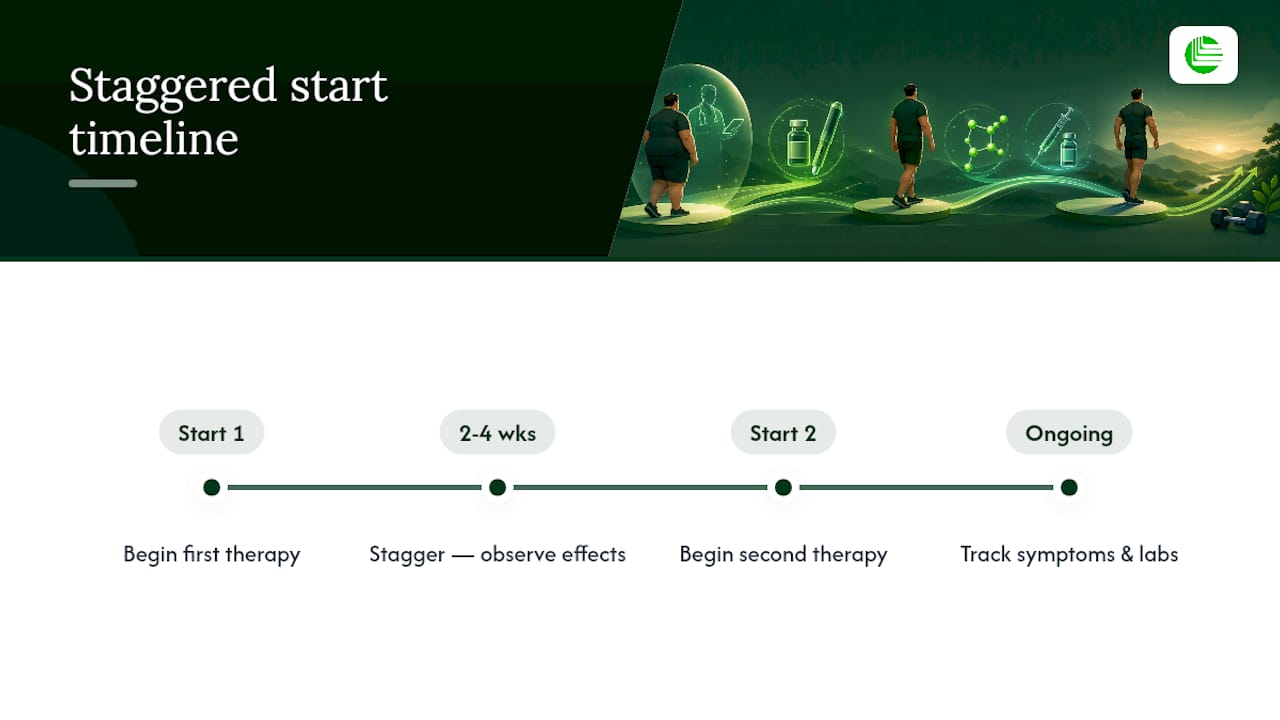
Sequencing is a real decision, not a formality. Starting semaglutide first gives you a metabolic signal (weight, A1c, lipids) before you introduce a second variable, and it can clarify how much of a testosterone improvement is coming from weight loss alone. Starting TRT first makes sense when hypogonadism symptoms are severe and disabling, and waiting months for weight loss to help isn’t acceptable to the patient. There’s no universal right answer, but starting both on the same day makes it far harder to know which drug is causing which side effect.
The AAFP review and related clinical commentary both land on the same principle: use the lowest effective dose of each medication, titrate slowly, and avoid stacking dose increases in both drugs at the same visit.
Some findings on labs or symptoms should stop the conversation about combining these treatments and redirect it toward a specialist.
Any of these should trigger a referral to endocrinology, urology, or hematology before combined therapy moves forward.
Here’s the reality most articles on this topic skip: knowing the science is one thing, actually coordinating two prescriptions, a lab panel, and follow-up visits is another. A lot of men either give up on TRT because their primary care visit felt rushed, or they get a testosterone prescription without ever getting the metabolic workup that would have caught the real cause.
A workable checklist to bring to any visit, virtual or in person, looks like this: current symptoms and how long they’ve lasted, two recent morning testosterone results if you have them, the baseline lab panel above, a realistic protein and resistance-training plan, and a monitoring schedule you’ll actually stick to. Showing up with that list turns a 15-minute appointment into a real treatment plan instead of a guess.
This is where a coordinated telehealth model earns its keep. The process can include an intake questionnaire reviewed by a licensed physician, home lab ordering to simplify testing, medication delivered directly to your door, and ongoing physician-led support to adjust dosing based on evolving labs and symptoms, without requiring multiple in-person office visits.
Pro Tip: Don’t start semaglutide and TRT on the same calendar day unless you have easy access to labs and a clinician who’s actively tracking both. Staggering the start by a few weeks makes it far easier to tell which medication is behind a given side effect.
If either therapy is new to you, understanding common semaglutide side effects before you start helps you separate a normal adjustment period from something worth calling your doctor about.

Ready to start the process? Oak Longevity’s semaglutide and tirzepatide plans begin with an online consultation reviewed by a licensed physician, and prescriptions ship directly to you with ongoing coaching support built in.
Combined semaglutide and TRT can be safe and effective for men with confirmed hypogonadism and obesity, under real clinician oversight. Your next moves: get two morning testosterone draws, complete the full baseline lab panel, schedule a shared-decision visit with your physician, and lock in a protein and resistance-training plan alongside your medication. Don’t self-prescribe either drug. This combination works when it’s monitored, not when it’s guessed at.
— Eric
This article is general information, not a substitute for advice from a qualified doctor. Consult a qualified healthcare professional about your own circumstances before acting on anything here.
It can be safe for men with independently confirmed low testosterone and obesity, as long as baseline labs are done and a physician monitors both treatments. There’s no known pharmacologic contraindication between the two, but combining them without monitoring isn’t advisable.
Semaglutide’s own side-effect profile (nausea, early satiety, constipation, and rare risks like gallbladder disease or pancreatitis) means clinicians watch other medications that share those risks, alcohol included, more closely. Reviewing your full medication list with a prescriber before starting is the safest step, and understanding the full semaglutide dosage schedule helps you spot what’s a normal side effect versus a red flag.
TRT can support lean-mass preservation and modest changes in body composition in men with confirmed hypogonadism, but it isn’t a primary weight-loss treatment. GLP-1 medications like semaglutide are the more direct tool for reducing visceral fat.
Yes, for men whose hormone therapy is independently indicated, semaglutide is generally compatible, though estrogen-based hormone therapies and other regimens carry their own monitoring needs your prescriber should factor in. The right approach depends on which hormone therapy you’re on and what your baseline labs show.