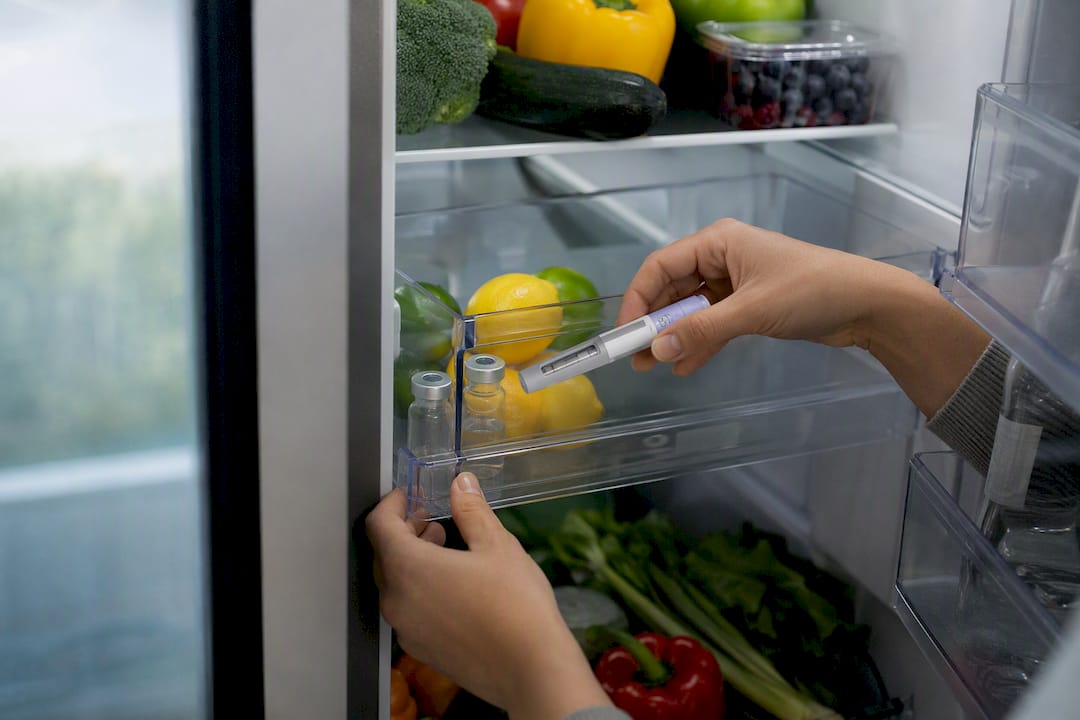
Yes, injectable semaglutide pens must be refrigerated before you open them, and no, you should never let them freeze. That’s the whole rule in one sentence. Once you start using a pen, the picture changes: Ozempic can sit at room temperature for up to 56 days, while Wegovy tops out at 28 days. Miss those windows or expose a pen to freezing temperatures, and the medication likely loses potency even if it looks fine.
Here’s what to remember before anything else:
Always check your specific product label and ask your pharmacist if you’re not sure which rule applies to your pen. Storage instructions vary by brand and even by dosage strength, so guessing costs you money and possibly a wasted dose.
Semaglutide pens require refrigeration at 36°F to 46°F before first use, tolerate limited room-temperature windows afterward, and must never be frozen or checked as luggage.
| Point | Details |
|---|---|
| Refrigerate before opening | Store unopened pens at 36°F to 46°F (2°C to 8°C), away from the cooling element. |
| Know your in-use window | Ozempic allows up to 56 days at room temperature; Wegovy allows up to 28 days. |
| Never freeze it | Freezing damages the protein structure and ruins potency even if it still looks fine. |
| Travel in carry-on only | Checked baggage can freeze in cargo holds; use an insulated case instead. |
| Compounded semaglutide differs | Ask your compounding pharmacy for exact temperature range and beyond-use date. |
| When in doubt, call | Contact your pharmacist before injecting a pen with an uncertain temperature history. |
Not every semaglutide product follows the same storage rule, and mixing them up is an easy mistake. There are three categories worth knowing.
Injectable pens (Ozempic, Wegovy, and most compounded semaglutide) are biologic drugs, meaning they’re built from proteins that break down under the wrong conditions. These need refrigeration at 36°F to 46°F (2°C to 8°C) before first use, full stop.
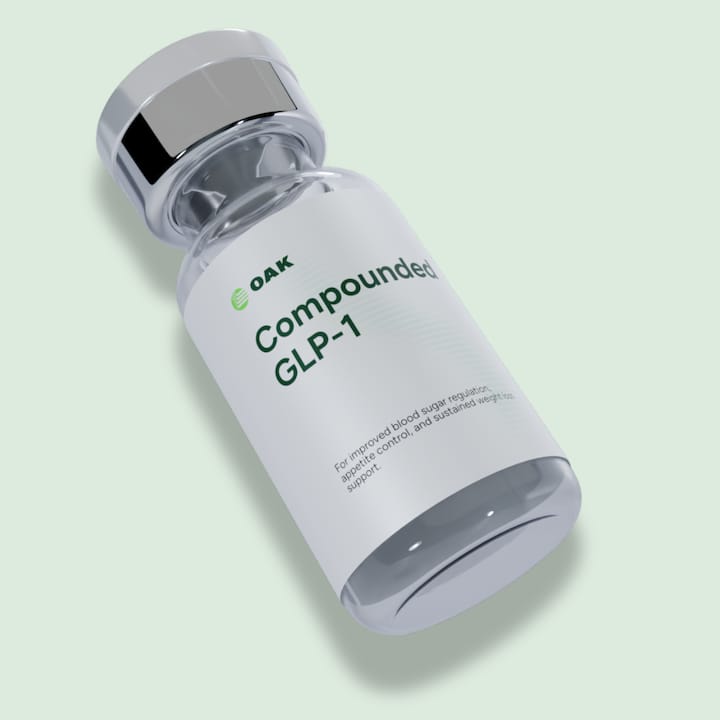
Oral semaglutide (Rybelsus) is a tablet, not an injection, and tablets don’t carry the same cold-chain requirements. Rybelsus is stored at controlled room temperature, generally in the 68°F to 77°F range, in its original blister packaging with the desiccant intact.
Compounded semaglutide vials often follow injectable-pen rules but can have pharmacy-specific instructions that are stricter, not looser. More on that shortly.
Across all injectable forms, one instruction never changes: do not freeze. Semaglutide is a protein-based compound, and freezing causes those proteins to aggregate and lose effectiveness, the same way freezing curdles certain foods at a molecular level. That’s also why pens shouldn’t sit directly against the refrigerator’s back wall or cooling element, where local temperatures can dip below the safe range even if the shelf itself reads normal.
Pro Tip: Keep the original carton. It usually states the exact storage temperature and any in-use time limit right on the box, so you don’t have to hunt for a leaflet or call the pharmacy every time you forget.
Unopened, sealed pens are good until the expiration date printed on the carton as long as they’ve stayed properly refrigerated the whole time. Once you take a pen out of the fridge for regular use, the clock changes.
| Product | Refrigerated (unopened) | In-use room temperature | Freeze-sensitive |
|---|---|---|---|
| Ozempic | Until printed expiry date | Up to 56 days | Yes, do not freeze |
| Wegovy | Until printed expiry date | Up to 28 days | Yes, do not freeze |
| Rybelsus (tablets) | Not refrigerated; room temperature | Not applicable | Not applicable |
| Compounded semaglutide | Varies by pharmacy | Varies, often shorter | Yes, do not freeze |
Before every injection, take five seconds to look at the solution. It should be clear and colorless. Cloudiness, visible particles, or a yellow tint mean discard it, no exceptions.
Temperature “excursions,” brief periods where a pen warms above 46°F or gets left in a hot car for an hour, don’t automatically ruin the medication. But they add up. A conservative rule of thumb: if a pen has had multiple short excursions, or one extended exposure to heat above 86°F, treat it as compromised rather than gambling on effectiveness.
If a pen exceeds its allowable room-temperature days:
Compounded semaglutide comes from a compounding pharmacy rather than a manufacturer like Novo Nordisk, and that changes the storage math. Because compounded formulations aren’t standardized the way FDA-approved products are, they often require continuous refrigeration with no in-use room-temperature grace period at all. Some compounding pharmacies assign a shorter beyond-use date than the multi-year shelf life you’d see on a branded pen carton.
If you’re using a compounded product, don’t assume Ozempic’s 56-day window or Wegovy’s 28-day window applies to you. It usually doesn’t. Ask your compounding pharmacy directly:
Pro Tip: Request written storage instructions and a disposal or return policy from your compounding pharmacy before your first dose arrives. Verbal instructions get forgotten; a printed sheet taped inside your medicine cabinet doesn’t.
If you suspect a pen froze, even briefly, don’t use it. There’s no visual test reliable enough to confirm the proteins are still intact, and clinical guidance is consistent on this point: when in doubt, replace it.
Short warm exposures are more forgiving, but only within the label’s stated limits. A pen that spent an afternoon on the counter is likely still fine if it’s within its allowable in-use window; a pen left in a hot car overnight is not, regardless of what the calendar says.
Before injecting anything questionable, inspect it closely. Hold the pen up to the light and check for:
If anything looks off, snap a photo before you toss it. Pharmacists can often make a faster call when they can see what you saw.
Contact your pharmacist or prescriber right away if you suspect freezing, notice any visual change, or aren’t sure whether a pen exceeded its allowable time at room temperature. Then:
Pro Tip: When traveling, a pen that briefly warms but stays within its labeled in-use window can usually go back in the fridge. Just keep a running count of total days spent unrefrigerated, since that number, not any single event, determines when it’s time to discard.
Airports and hot car trunks are where most storage mistakes happen, and they’re entirely preventable with a little planning.
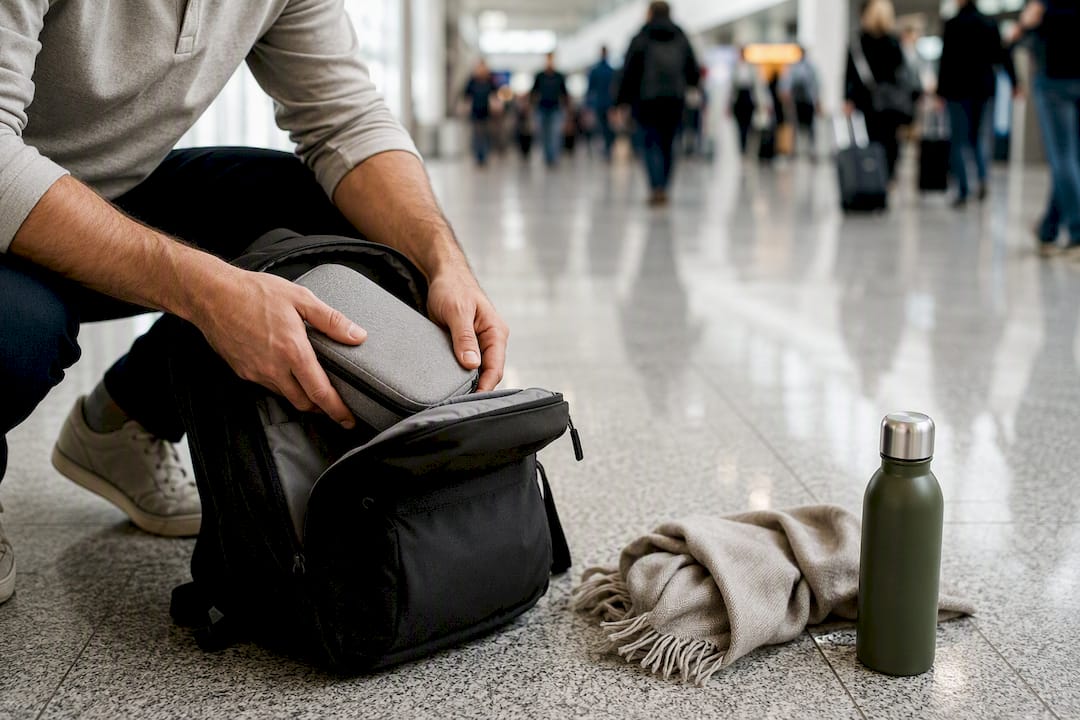
The single most important rule: keep your pens in your carry-on, never in checked luggage. Cargo holds aren’t temperature-controlled the way cabins are, and can swing well below freezing at altitude. TSA permits injectable medications and sharps in carry-on bags and exempts them from the standard 3.4-ounce liquid limit, so there’s no reason to risk checked baggage.
For keeping pens cool in transit, your options include:
Whatever you choose, never let the pen touch an ice pack or dry ice directly. Direct contact can freeze the solution locally even when the case as a whole reads within range, which defeats the entire purpose of the cooler.
Before you leave home, pack:
Pro Tip: Staying in a hotel? Call ahead and ask for in-room refrigerator access, or request that the front desk store your medication in a staff fridge overnight. Most hotels accommodate this without hesitation once you explain it’s prescription medication.
At home, the routine is simple once it’s a habit. Store pens in their original carton on a middle shelf, not the door, where temperature stays most consistent. Keep the cap on between uses, keep the carton out of direct light, and store it somewhere out of reach of kids and pets.
For disposal, follow FDA guidance directly:
If you keep multiple pens on hand, label each one with its open date so you’re not guessing which one is closest to its room-temperature limit. A dedicated shelf or bin in the fridge, separate from food, keeps things organized and reduces the odds you’ll grab the wrong pen by mistake.
Some situations call for a phone call before your next dose, not after. Reach out if:
When you call, have the lot number from the carton, the approximate dates and duration of any temperature exposure, and photos of the pen if something looks visibly wrong. The more specific you are, the faster your pharmacist can make a call.
If there’s any doubt at all, don’t inject. A wasted pen costs less than a dose that doesn’t work, or worse, one that causes an unpredictable reaction because the formulation degraded unevenly.
Patients ask us about storage more than almost anything else, and it’s usually a quick fix. If a pen arrives warm, looks off, or you’re not sure it survived a trip, the answer is always the same: don’t guess, reach out. Our physician-led support team reviews storage concerns and helps determine whether a replacement makes sense before you inject anything questionable.
Oak Longevity ships medication directly to your door with clear handling instructions included, and our support line stays available for exactly these situations. If you’ve had a delivery delay, a shipment sit on a porch in the heat, or a pen you’re second-guessing, that’s what the team is there for. Better to ask a quick question than to risk a dose that won’t do what it’s supposed to.
Ready to start a program with clear medication delivery and real support behind it? Oak Longevity’s telehealth platform connects you with licensed physicians, ships your prescription with proper handling, and gives you a direct line to ask storage questions before they become a problem. If you’re weighing costs first, our breakdown of what semaglutide runs without insurance covers what to expect.
Does semaglutide need refrigeration the entire time you’re using it? Only before first use. Once you start using a pen, most brand-name products allow a limited number of days at room temperature, specific to that product’s label.
How long can semaglutide be unrefrigerated before it goes bad? It depends on the product. Ozempic allows up to 56 days at room temperature after first use, while Wegovy allows up to 28 days. Compounded semaglutide often has a shorter, pharmacy-specific window.
Can you travel with semaglutide on a plane? Yes. Keep it in your carry-on with an insulated case, never in checked luggage, and bring your original prescription packaging in case security asks questions.
What happens if semaglutide freezes accidentally? Discard it. Freezing can permanently damage the protein structure, and there’s no reliable way to visually confirm it’s still safe to use.
Is Rybelsus stored differently than injectable semaglutide? Yes. Rybelsus tablets are stored at room temperature, not refrigerated, while injectable pens require refrigeration before opening.
What if I’m not sure how long my pen has been at room temperature? Contact your pharmacist before your next dose. It’s a quick conversation, and replacing a pen is far simpler than dealing with a dose that may not work.
This article is general information, not a substitute for advice from a qualified doctor. Consult a qualified healthcare professional about your own circumstances before acting on anything here.
For label-level precision beyond what’s covered here, these sources are worth bookmarking: