Semaglutide carries a pancreatitis warning on its FDA label, but the best trial data so far does not show that it raises the odds of acute pancreatitis in a meaningful way. The risk looks very low for most people. It is not zero, and a few situations (gallstones, very high triglycerides, heavy drinking, dosing mistakes with compounded vials) deserve real attention. This guide covers what the label says, what the research found, who should be more careful, and which symptoms mean you should stop injecting and get care.
The warning is real, and it is worth reading in its own words rather than through headlines. The Ozempic prescribing information states under Warnings and Precautions that acute pancreatitis has been observed in patients treated with GLP-1 receptor agonists, and that the drug should be discontinued if pancreatitis is suspected. The label also says the medication should not be restarted if pancreatitis is confirmed. The Wegovy label carries the same warning in section 5.2.
Two points matter for how you read this:
An older version of the Ozempic label also noted that the drug had not been studied in people with a history of pancreatitis, and suggested considering another therapy in that group. That is why the history question comes up so often. We cover it below.
Early trials suggested a slightly higher rate of pancreatitis in people on GLP-1 drugs. According to the Cleveland Clinic Journal of Medicine, that signal led many clinicians to avoid these drugs in patients with a pancreatitis history. Larger and newer analyses have pushed the picture in a calmer direction.
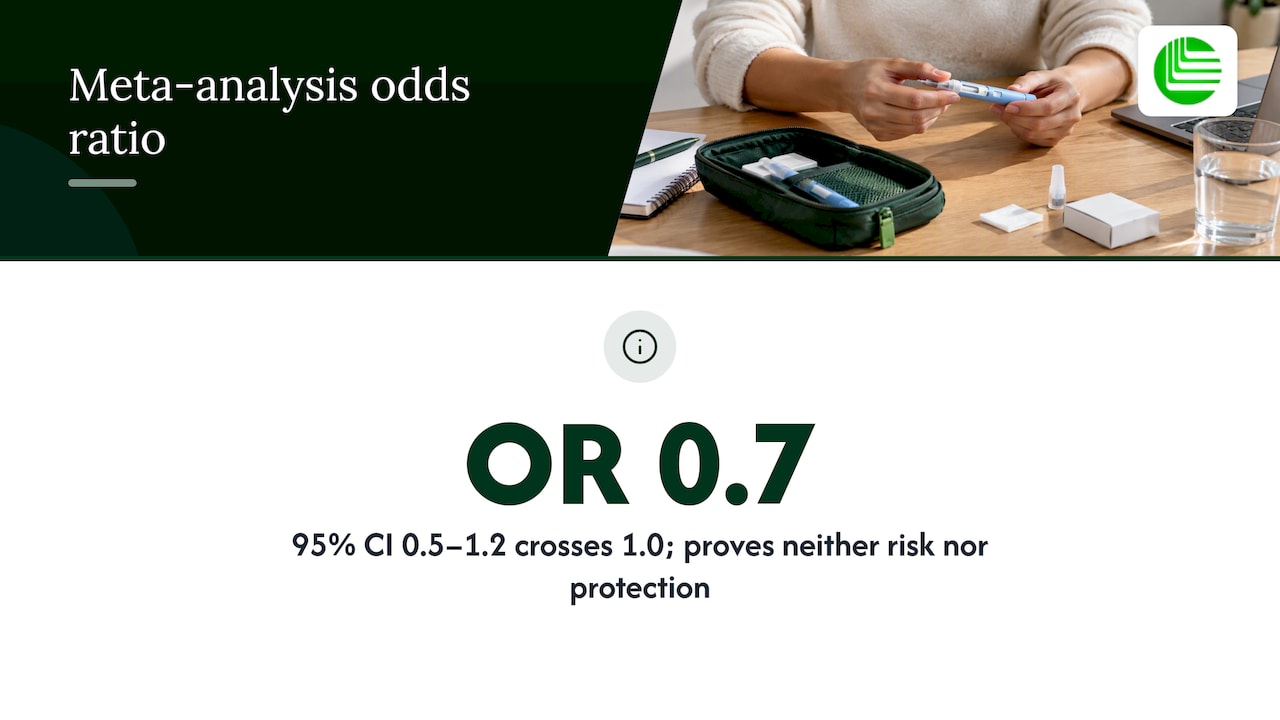
An updated meta-analysis on semaglutide regimens pooled randomized trials and found that overall semaglutide therapy was not statistically associated with a higher risk of acute pancreatitis than placebo. The odds ratio was 0.7, with a 95% confidence interval of 0.5 to 1.2. An interval that spans 1.0 means the data cannot distinguish the drug from placebo. It does not prove the risk is nil, and it does not prove the drug protects anyone.
Most semaglutide users who come to a telehealth program are treating obesity, not type 2 diabetes. That matters because diabetes itself is tied to pancreatitis risk, and the trials in diabetes populations are not a perfect mirror of the weight-loss population. A study of patients on GLP-1 drugs for weight management looked at who developed acute pancreatitis after starting treatment, precisely because researchers noted a lack of data on which obesity patients are most at risk. In its sample of 2,245 participants, 52 developed acute pancreatitis after starting. That is an observational sample without a comparison group, so it tells you about predictors, not about whether the drug caused the cases.
Headlines about hundreds of adverse event reports can sound alarming. Spontaneous reports are useful for spotting signals, but they cannot tell you the rate, because nobody knows how many people took the drug without a problem. Reports are also shaped by media attention and lawsuits. When you see a number of reports, ask what the denominator is.
As a BMJ Evidence-Based Medicine commentary notes, there is a gap between the regulatory warning and the clinical evidence: the warning stays on the label, while the absolute risk appears very low. Major diabetes and endocrine bodies do not treat a prior pancreatitis history as an absolute contraindication. They favor an individualized risk-benefit discussion. Keeping the warning in place is the conservative choice, and it is the right one for a drug used by millions of people.
If the drug itself is not clearly the driver, what causes pancreatitis in people who take it? Several known causes sit around the edges of GLP-1 treatment.
Gallstones are a leading cause of acute pancreatitis. Clinicians writing in the Cleveland Clinic Journal of Medicine point out that fast, significant weight loss can itself raise the risk of gallstone formation. Some pancreatitis cases attributed to GLP-1 drugs may therefore be secondary to the weight loss rather than a direct drug effect. That is a hypothesis, not a settled finding, but it fits what we know about gallbladder physiology. If you want to read more on this overlap, see our guide to the gallbladder risk with GLP-1 medications.
A patient charity guide to acute pancreatitis says roughly 8 in 10 adult cases come from gallstones or excess alcohol. Those two causes dominate the whole condition, with or without medication.
Very high triglycerides are a known cause of pancreatitis. If your blood work shows markedly elevated triglycerides, say so in your health questionnaire and ask your physician how it should shape your plan. Some commentary suggests semaglutide tends to lower triglycerides over time, but treat that as a possible benefit, not a promise, and do not use it to skip a lipid check.
Heavy drinking is the other major cause. Nausea and reduced appetite on semaglutide can change how people drink, and the combination of alcohol and a medication that slows digestion is worth thinking through. We wrote about this in semaglutide and alcohol.
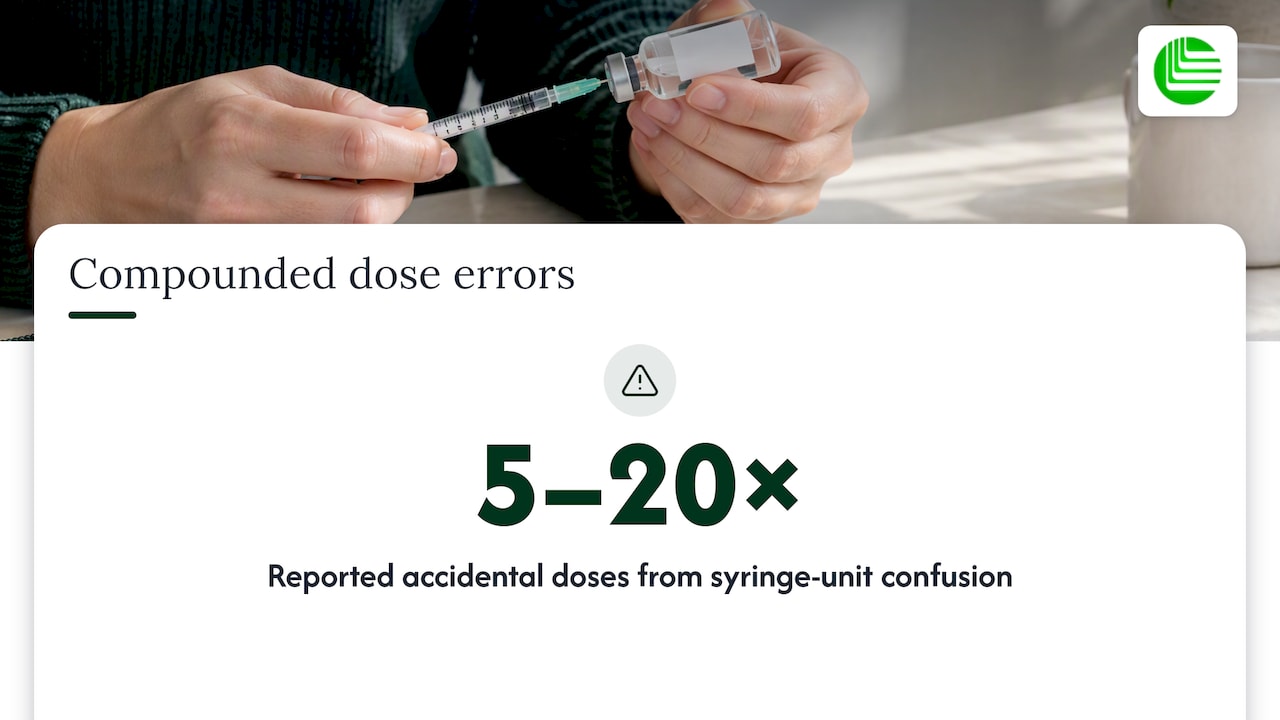
This is the one most patients do not hear about. The FDA has warned health care providers, compounders and patients about dosing errors with compounded injectable semaglutide sold in multiple-dose vials. Some patients sought medical attention or were hospitalized. The root issue is unit confusion: a dose written in milligrams has to be converted into the units or milliliters on a syringe, and a mistake in that conversion can lead to a large overdose. The FDA reports describe patients who inadvertently took five to twenty times the intended dose. Overdoses bring severe nausea, vomiting and dehydration, and an oversized dose is not something you want to test your pancreas with. The Seattle Times reported on the same pattern in poison center calls, where most callers had simply taken too much.
What this means for you: whichever product you use, confirm the dose in both milligrams and syringe units, and ask for it in writing. If anything is unclear, pause and ask before injecting.
Acute pancreatitis typically shows up as sudden, persistent, severe abdominal pain, often in the upper abdomen and frequently radiating to the back, according to the same charity guide. Nausea, vomiting, fever or a fast heart rate may come with it. Doctors usually confirm it with blood tests for lipase or amylase, or with imaging such as a CT scan.
How do you tell it from ordinary semaglutide side effects? Mild nausea, fullness or loose stools are common when you start or raise a dose, and they tend to come and go. Pancreatitis pain is different: it is severe, it does not ease, and it may worsen after eating.
| Symptom pattern | More likely | What to do |
|---|---|---|
| Mild nausea, early fullness, occasional loose stools | Usual dose-related side effects | Follow your provider’s guidance; see our side effects guide |
| Diarrhea that lingers | GI side effect, may need adjustment | Hydrate and contact your provider; see diarrhea management |
| Severe, constant upper belly pain, spreading to the back, with vomiting | Possible pancreatitis or gallbladder problem | Do not take another dose. Go to urgent care or the ER, or call 911 |
| Pain under the right ribs after meals, fever, yellowing of skin or eyes | Possible gallbladder or bile duct issue | Seek same-day medical care |
If you suspect pancreatitis, do not wait for a scheduled check-in and do not take the next dose. The label itself says to discontinue the drug if pancreatitis is suspected. Tell the emergency team which medication you take, the dose, and when you last injected.
The following groups should raise their situation with a physician before starting semaglutide, not after:
If none of these apply, your baseline risk is on the low side. That is not a guarantee, and every patient should know the warning signs.
We see this question from patients all the time, and we think it deserves a plain answer. The warning on the label is real, and we take it seriously. The trial data do not show that semaglutide drives pancreatitis in most people, and we do not think either extreme helps you: the claim that it is dangerous for everyone, or the claim that it is risk-free.
What we would rather talk about is the set of things we can actually control. Screening comes first: the health questionnaire asks about pancreatitis, gallbladder disease and triglycerides because those answers change the plan, and a licensed physician reviews them. Dosing comes second. Compounded injectables put more of the arithmetic on the patient, which is exactly where the FDA has seen errors, so we want every patient to know their dose in milligrams and in syringe units before the first injection. Pace comes third: a slow titration is gentler on the gut and gives you time to notice when something is off.
We also think weight loss should not come at the expense of muscle or metabolic health. That is why our approach pairs medication with strength and lifestyle guidance, and why support is available when a symptom worries you. If you ever have severe belly pain, skip the message to us and go to the ER first. We would much rather hear about it afterward.
— Eric
If you have read this far and want to explore treatment, our online process starts with a health questionnaire that a licensed physician reviews, with no video call required. Semaglutide is available from $119 per month, and compounded injectable semaglutide is listed from $167 per month. Tirzepatide and other options are on our main treatment page. Be upfront about any pancreatitis, gallbladder or triglyceride history in the questionnaire. That information is what lets the physician choose a safe plan, or tell you that GLP-1 treatment is not the right fit.
For a wider look at how these drugs work, see our overview of GLP-1 medications, and our dedicated post on pancreatitis risk with GLP-1s.
There is no solid evidence that semaglutide damages the pancreas in most people. A meta-analysis of randomized trials found no statistically significant increase in acute pancreatitis compared with placebo. The FDA label still lists pancreatitis as a warning, so know the symptoms and report them quickly.
The classic sign is severe, persistent pain in the upper abdomen that may spread to your back, often with nausea or vomiting. Fever and a fast heartbeat can also occur. Mild queasiness after a dose is common and different. Pain that is intense and does not ease needs emergency care, and you should not take another dose.
Possibly, but only after a physician reviews your history. A past episode is not an absolute contraindication, and the Cleveland Clinic Journal of Medicine describes the choice as an individual risk-benefit judgment, particularly if the cause has been resolved. Your clinician may want labs first, and may decide another approach is safer.
There is no head-to-head proof of that. The documented problem is dosing errors: the FDA has reported patients taking far more than intended from multiple-dose vials after unit confusion. Overdoses cause serious gastrointestinal effects, so verifying your dose in milligrams and syringe units is essential.
It can. Pancreatitis can damage the cells that make insulin, and in some cases this leads to diabetes of the pancreatic type. If you have had pancreatitis, ask your physician about blood glucose monitoring as well as managing triglycerides and alcohol.