
Semaglutide works the same way in men as in women: it mimics a gut hormone called GLP-1 to reduce appetite, and in the main trial adults lost an average of 14.9% of body weight over 68 weeks. What changes for men is the plan around it: protecting lean muscle, watching safety signals and getting the dose right. At Oak Longevity, you complete a health questionnaire online, a licensed physician reviews it, and approved prescriptions are delivered to your door, with no video call needed.
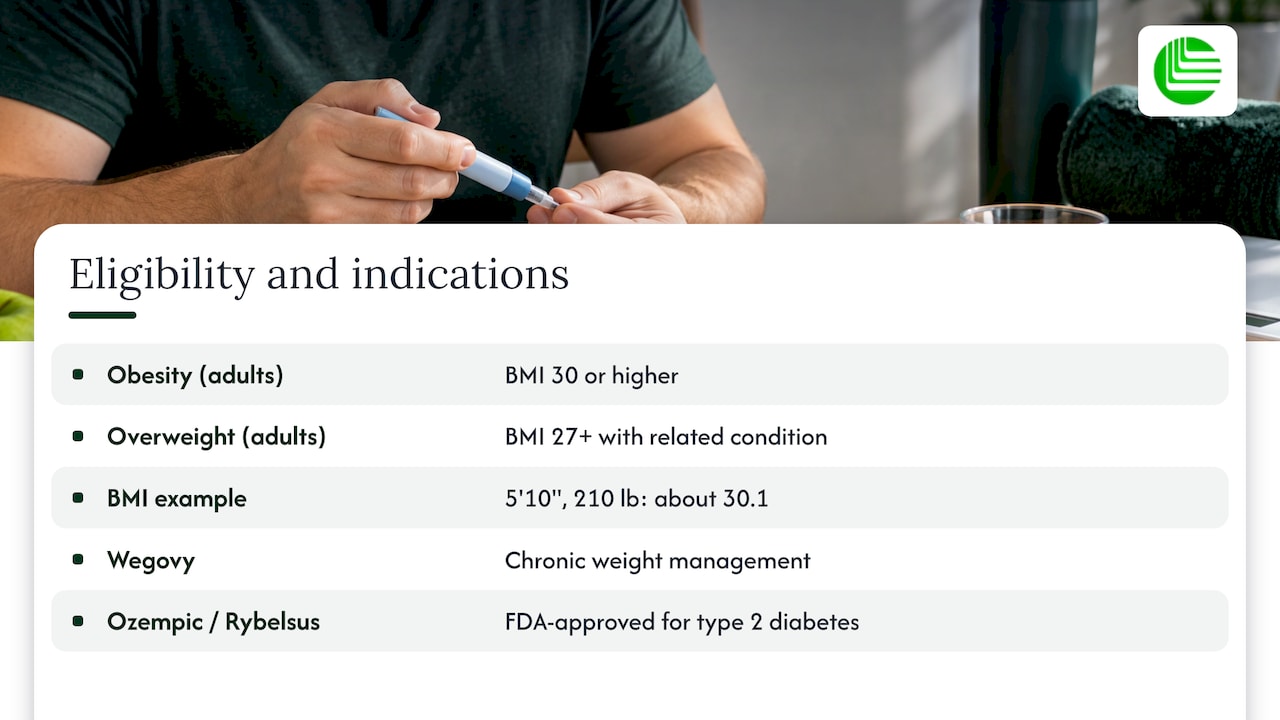
Men come to semaglutide for the same reason anyone does: excess weight that diet and exercise alone have not shifted, often alongside blood pressure, blood sugar or cholesterol concerns. The FDA’s June 2026 Wegovy label says semaglutide is indicated, together with a reduced-calorie diet and more physical activity, for adults with obesity, or adults with overweight plus at least one weight-related condition.
In practical terms, the National Institute of Diabetes and Digestive and Kidney Diseases (NIDDK) gives the usual thresholds as a body mass index (BMI) of 30 or higher, or 27 or higher with a related health problem. BMI is weight in kilograms divided by height in meters squared. A man who is 5’10" and 210 lb has a BMI of about 30.1, for example.
Two other semaglutide brands, Ozempic and Rybelsus, are FDA-approved for type 2 diabetes. Wegovy is the semaglutide product labeled for chronic weight management. That distinction is one reason a physician review matters: it decides which medication and which pathway fit your health history.
The label also makes clear that this is not a crash diet in a syringe. Medication is meant to sit on top of nutrition, activity and follow-up. NIDDK says weight-management medicines can generally be continued as long as you benefit and do not have serious side effects, which frames treatment as ongoing care rather than a fixed short course.
Semaglutide is a long-acting GLP-1 analogue. Reviews of its mechanism describe reduced appetite and greater fullness through GLP-1 pathways in the brain, along with glucose-dependent insulin release, suppressed glucagon and slower stomach emptying.
For you, that translates into three everyday effects:
The drug is injected once a week. Doses start low and step up gradually. The FDA label recommends this escalation to reduce gastrointestinal reactions and says it may be delayed if a dose is not tolerated. That is a tolerability tool, not a male-specific rule, and it is a conversation to have with your prescriber rather than something to adjust on your own.
The landmark trial is STEP 1: 1,961 adults without diabetes took semaglutide 2.4 mg weekly alongside a lifestyle program for 68 weeks. Average weight loss was 14.9%, against 2.4% with placebo. The same paper reports the share of people reaching each milestone at week 68:
| Weight lost | Semaglutide | Placebo |
|---|---|---|
| At least 5% | 86.4% | 31.5% |
| At least 10% | 69.1% | 12.0% |
| At least 15% | 50.5% | 4.9% |
For a 240 lb man, a 14.9% loss works out to about 36 lb. That is an average, not a promise: your result depends on dose, consistency, sleep, training and how your body responds. Many men find the first months are about adjusting to the dose, and visible change builds over time. Our guide to the semaglutide weight loss timeline walks through what typically happens month by month.
What the number does not show is what kind of weight came off. That is where men who care about strength, performance or long-term metabolic health should pay attention.
When you lose a lot of weight quickly, some of it is lean mass. In the STEP 1 body-composition group, participants on semaglutide lost an average of 17.32 kg of body weight and 6.92 kg of total lean mass over 68 weeks. Lean mass is not identical to skeletal muscle, since it also includes water and organ tissue, but it is the reason a smart plan protects muscle from day one.
Professional guidance gives a clear playbook. The 2025 joint advisory summarized by The Obesity Society recommends a baseline check of strength and body composition, structured resistance training two to three times weekly, and protein of about 1.2 to 1.6 g/kg per day during active weight loss.
A 2025 nutrition review reports that resistance training two to three times a week for at least eight weeks improves body composition, muscle mass, strength and gait speed in relevant groups. Guidelines call for muscle-strengthening exercise at least twice weekly during weight reduction.
A simple structure for most men:
Our semaglutide workout plan and our guide to how to build muscle on GLP-1 lay out the sessions in more detail.
The hard part is eating enough when you are not hungry. The same nutrition review reports a commonly recommended range of 1.0 to 1.5 g/kg per day during obesity pharmacotherapy, with 1.2 to 1.5 g/kg suggested for older adults or people with several health conditions, calculated individually with kidney function monitored.
A worked example: a man weighing 100 kg (220 lb) aiming for 1.2 to 1.6 g/kg needs roughly 120 to 160 g of protein a day. Spread over three meals and a snack, that is 30 to 40 g each: Greek yogurt and eggs at breakfast, chicken or fish at lunch and dinner, a protein shake when a full plate feels like too much. If you have kidney disease, ask your physician for your individual target before raising protein. Our semaglutide diet plan shows how to build these meals when appetite is low.
The guidance also suggests checking strength and body composition at the start and again at follow-up where practical. Even without a body-composition scan, you can track your main lifts, waist measurement and weekly weight. If your lifts drop sharply while the scale falls, that is a signal to raise protein, adjust training or talk to your physician about the pace of loss.
The FDA’s Wegovy label lists the common reactions: nausea, diarrhea, vomiting, constipation, abdominal pain, headache and fatigue. Most are tied to dose increases, which is why escalation is gradual. Our guides on semaglutide side effects and managing diarrhea cover practical ways through the first weeks.
The same label carries the safety points every man should know before starting:
That last one is practical: tell every clinician and anesthesia team that you take semaglutide before any planned surgery or procedure. Report severe or persistent stomach pain, repeated vomiting or signs of an allergic reaction to a physician or emergency services right away.
Men often ask whether semaglutide affects testosterone or erections. The evidence so far is observational. A 2024 study of 3,094 non-diabetic men aged 18 to 50 with obesity found a new erectile dysfunction diagnosis or PDE-5 inhibitor use in 1.47% of semaglutide users versus 0.32% of matched nonusers, and a testosterone-deficiency diagnosis in 1.53% versus 0.80%. Because it was a database study, it does not show that semaglutide caused either outcome, and obesity itself is linked with both. A male-focused review describes earlier GLP-1 research as showing modest testosterone effects and possible improvement in sexual symptoms. If you notice changes in libido, energy or erections, tell your physician so they can look at the whole picture.
A good treatment plan has checkpoints. Between visits, keep a simple weekly log:
Bring that log to your prescriber. The FDA label supports delaying dose escalation when adverse reactions occur, so a rough week is a reason to talk, not to push through. Faster or higher starting doses for men have been suggested in one review but are an opinion, not established U.S. guidance, so dose changes belong with your physician.
If you wonder what happens after treatment, our article on semaglutide rebound weight gain explains why building training and eating habits during treatment is the best preparation for the long term.
Our process is built for men with busy schedules. You fill out a health questionnaire, a licensed physician reviews and approves it, and your medication ships to your door. Our consults are asynchronous, so there are no video calls. We offer free shipping, same-day shipping and free health coaching, with no hidden membership fees, plus 24/7 support and physician-led guidance on dosing. Our program pairs weight loss with strength and lifestyle protocols designed to help preserve lean muscle.
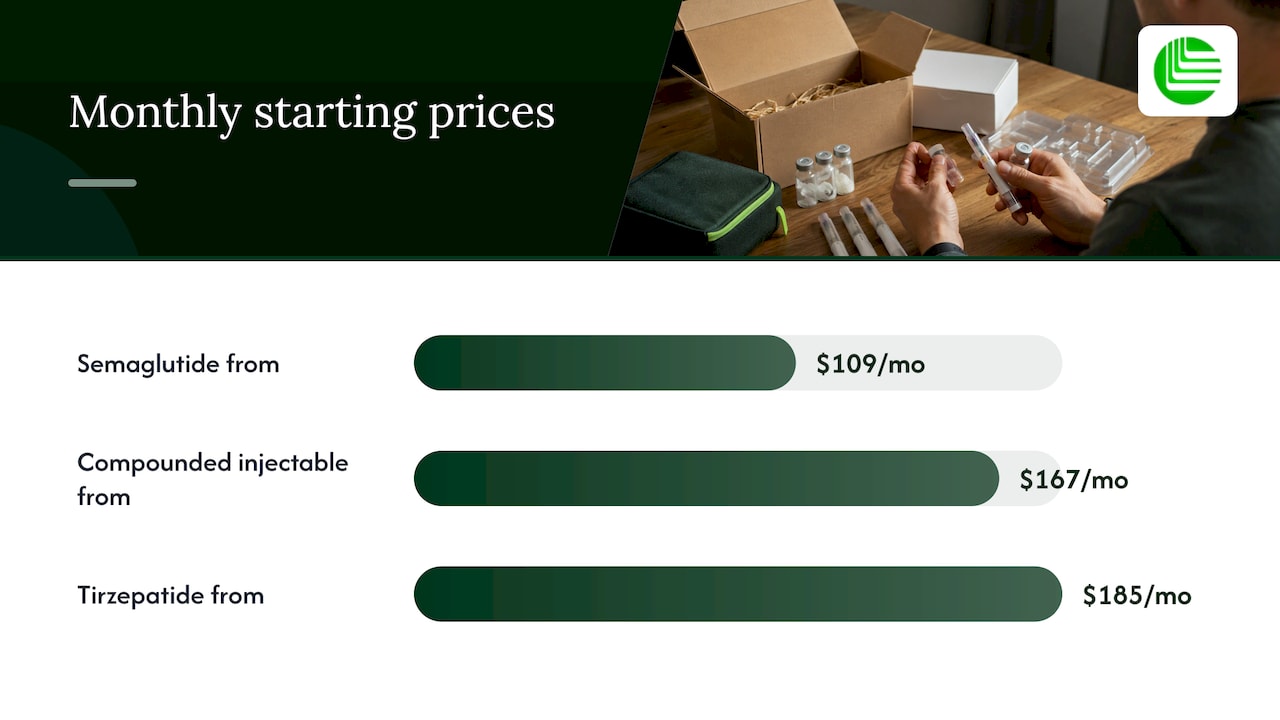
Pricing as published on our site: semaglutide starts from $109 per month, compounded injectable semaglutide from $167 per month, and tirzepatide from $185 per month. If you want to compare the pathways first, our compounded semaglutide safety guide explains how we approach it.

Ready to start? Begin your online consultation and a licensed physician will review your answers.
Men tend to treat weight loss as a scale problem. We treat it as a body-composition problem. The goal is less fat, with strength, energy and metabolic health intact.
That is why our program pairs medication with strength and lifestyle protocols, and why we back it with free health coaching and 24/7 support. A weekly injection does the heavy lifting on appetite. Training and protein decide what your body keeps.
We also believe good care should be easy to reach. A questionnaire reviewed by a licensed physician, medication delivered to your door and no video calls mean you can start without rearranging your week. Treatment is ongoing care, so we stay with you through dose changes, side effects and the maintenance phase.
Oak Longevity
Yes. Adults with obesity, or with overweight and at least one weight-related condition such as high blood pressure, are the group the FDA-labeled weight-loss product is indicated for. A licensed physician reviews your health history to confirm treatment fits you.
Doses start low and increase gradually, so the first weeks are mostly about adjusting. In STEP 1, the average results were measured at 68 weeks. Appetite changes often come first, with weight change building over the following months.
Some lean mass is lost along with fat during any large weight loss. Resistance training two to three times a week and protein of roughly 1.2 to 1.6 g/kg per day are the guidance-backed ways to protect it, individualized for your kidney health.
Anyone with a personal or family history of medullary thyroid carcinoma or multiple endocrine neoplasia syndrome type 2 should not use it, per the FDA label. Share your full medical history, medications and any planned surgery with your physician.