
Most semaglutide-related diarrhea is temporary and manageable at home: protect your hydration, cut sugar alcohols and fatty meals, and use short-term loperamide if your prescriber has cleared it. Watch for red flags like bloody stools, high fever, or diarrhea lasting more than a few days despite self-care. If any of those show up, call your prescriber rather than waiting it out.
TL;DR:
- Most semaglutide-related diarrhea is temporary and can be managed effectively with early hydration, dietary adjustments, and over-the-counter loperamide if approved by your prescriber.
- Dehydration symptoms such as dark urine, dizziness, or rapid heartbeat require prompt medical attention, especially since semaglutide suppresses appetite and reduces fluid intake.
- Diarrhea usually begins within the first four weeks of treatment or dose increases and often improves as your body adjusts and doses stabilize; underlying causes include bile acid changes and diet-related microbiome shifts.
- Managing persistent diarrhea may involve slowing dose titration, switching formulations, adding probiotics, or, in severe cases, considering bile acid sequestrants prescribed by your doctor.
- Most side effects resolve without stopping treatment, but ongoing clinician support is vital for safe dose adjustments and to address severe or prolonged symptoms.
The first day matters most, mainly because dehydration sneaks up fast when you’re already eating less on a GLP-1 medication. Semaglutide suppresses appetite, so you’re likely drinking less fluid than usual even before diarrhea starts pulling water out of your system. That combination is why proactive rehydration should be your first move, not an afterthought.
Rehydrate early and often. Sip an oral rehydration solution or an electrolyte drink throughout the day rather than gulping a large glass at once. Large volumes taken quickly can worsen nausea or trigger more urgency. Products formulated with sodium, potassium, and glucose (like standard oral rehydration solutions sold at most pharmacies) replace what diarrhea strips out far more effectively than plain water alone, according to Cleveland Clinic’s guidance on managing GLP-1 side effects.
Cut the obvious dietary triggers immediately. Sugar alcohols (sorbitol, mannitol, xylitol, erythritol) show up in “sugar-free” protein bars, gum, and diet drinks. They pull water into the colon almost on contact. Removing them is often the single highest-yield change you can make, according to Cleveland Clinic. Pair that with a temporary switch to bland, low-fat foods. Fatty meals slow gastric emptying even further on top of what semaglutide already does, and that combination is a common trigger for cramping and loose stools.
Here’s a practical first-day checklist:
If you notice several of those dehydration signs together, that’s your cue to call your prescriber the same day, not wait for the weekend to pass.
Semaglutide slows gastric emptying, which is precisely why it curbs appetite. It’s counterintuitive that a drug known for slowing digestion also causes diarrhea in a meaningful share of patients, but the mechanism runs through more than one pathway at once.
One driver is altered bile acid handling. Semaglutide changes how the intestines recycle bile acids, and when more bile acid than usual reaches the colon, it acts as a secretagogue, pulling water into the bowel and speeding transit. This is the same mechanism behind bile acid diarrhea seen in other conditions entirely unrelated to GLP-1 drugs, and it’s part of why bile acid sequestrants sometimes help when diarrhea persists.
The second driver is behavioral and microbial. Most people starting semaglutide also change their diet at the same time, often abruptly, swapping in protein shakes, low-calorie bars, and “diet” products loaded with sugar alcohols. Add appetite suppression that shifts eating patterns and reduces fiber intake, and the gut microbiome shifts in response. That combination of new food triggers and a changing microbial environment often matters more than the drug’s direct pharmacology.
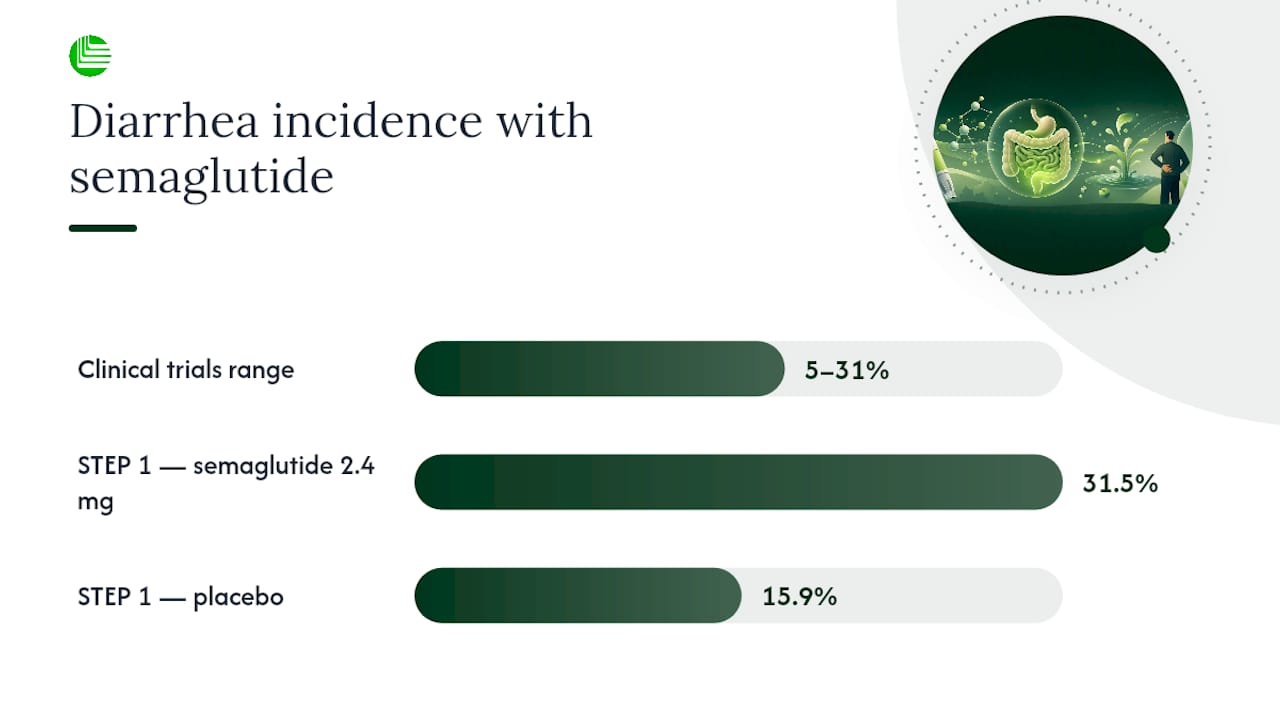
Timing follows a fairly predictable pattern. In clinical trials, diarrhea incidence has ranged from roughly 5% to 31%, depending on the agent and dose, with the STEP 1 trial reporting about 31.5% of semaglutide 2.4 mg patients experiencing diarrhea versus 15.9% on placebo. Onset usually happens within the first four weeks of starting or increasing a dose, and it often improves within days to a few weeks once your body adjusts and your dose stabilizes. If you just moved up a dose tier and diarrhea started within a week or two, that timing alone is a strong signal it’s dose-related rather than something else entirely.
Drug interactions can also raise your risk. Metformin, a common combination partner for people managing metabolic health, causes its own GI upset in a meaningful share of users, and stacking it with semaglutide can compound loose stools. Proton pump inhibitors (PPIs) alter stomach acid and gut flora in ways that can also contribute to diarrhea when combined with a GLP-1 drug. If you’re on either, mention it to your prescriber when discussing your symptoms. It changes the calculus on what to adjust first.
Effective semaglutide diarrhea management follows a logical order: start with the lowest-risk interventions, and escalate only if symptoms don’t settle within a reasonable window. Jumping straight to prescription-strength fixes when a dietary swap would have solved it just adds cost and complexity you don’t need.
Oral rehydration solutions with balanced sodium, potassium, and glucose work better than water or sports drinks alone because they match what your gut actually loses during diarrhea. Aim for small, frequent sips rather than large volumes, roughly every 15 to 20 minutes during an active flare. This matters even more for semaglutide users specifically, since reduced appetite already suppresses your natural drive to drink fluids, leaving many people behind on hydration before diarrhea even starts.
Three dietary levers matter most. First, eliminate sugar alcohols entirely during a flare, checking labels on anything marketed as “sugar-free” or “keto-friendly.” Second, reduce fat intake temporarily, since high-fat meals slow gastric emptying further and tend to worsen cramping when your gut is already irritated. Third, introduce soluble fiber like psyllium husk or oats, which can help firm stool consistency without the harsh effect insoluble fiber (think raw vegetable skins or bran) can have during an active episode.
Sample meals that tend to sit well during a flare include:
Pro Tip: Keep a simple symptom log for the first two weeks after any dose change: what you ate, when diarrhea hit, and how severe it was. Patterns show up fast, and that log becomes exactly the information your prescriber needs if you have to discuss a dose adjustment.
Probiotic supplementation is a reasonable add-on for semaglutide-related diarrhea, particularly since microbiome shifts appear to be part of the underlying mechanism. Strains like Lactobacillus rhamnosus and Saccharomyces boulardii have research behind them for diarrhea generally, though evidence specific to GLP-1 induced diarrhea is still thin. Give a probiotic two to four weeks before judging whether it’s helping, and don’t expect it to work as fast as dietary changes or loperamide. Prebiotic fiber (foods like oats, bananas, and cooked vegetables) can support the same goal by feeding beneficial bacteria without the cost of a supplement.
Loperamide remains the most common short-term option, and expert consensus supports stepwise use of hydration, dietary changes, and loperamide before escalating to prescription options. Follow label dosing, avoid it if you have a fever or bloody stool, and don’t use it for more than 48 hours without checking in with your prescriber. Bismuth subsalicylate (Pepto-Bismol) is another reasonable option for milder cases, though it can interact with certain blood thinners and isn’t ideal for people with kidney concerns.
If diarrhea drags on for weeks despite hydration, diet changes, and loperamide, your prescriber may discuss bile acid sequestrants like cholestyramine or colesevelam. These bind excess bile acid in the gut before it reaches the colon, addressing one of the actual mechanisms behind semaglutide-related diarrhea rather than just masking the symptom. The catch is timing: bile acid sequestrants can interfere with absorption of other oral medications, so they typically need to be taken several hours apart from anything else you’re on. This is a prescription-directed step, not a self-care one, and it’s exactly the kind of decision that benefits from a clinician who already knows your full medication list.
Most diarrhea on semaglutide resolves without ever needing a phone call. But certain signs mean self-care isn’t enough, and waiting can turn a manageable side effect into a genuine medical problem.
Dehydration is the biggest immediate risk, especially because appetite suppression already has you drinking less than usual. Watch for:
Any combination of those signs warrants same-day contact with your prescriber, and severe dehydration (confusion, fainting, inability to keep fluids down at all) needs urgent or emergency care, not a telehealth message.
Beyond dehydration, certain symptoms point to something other than a routine drug side effect. Bloody or black stools, a fever above 101°F, or severe abdominal pain, especially pain that radiates to your back, all warrant urgent evaluation. The FDA’s prescribing information for semaglutide specifically flags severe stomach or bowel problems as something to monitor for, and Mayo Clinic’s patient guidance echoes the same advice to contact a doctor if symptoms turn severe.
There’s a less obvious risk worth knowing about too: frequent diarrhea can reduce how well your body absorbs other oral medications. If you take hormonal contraceptives, thyroid medication, or other drugs that depend on steady gut absorption, prolonged diarrhea can lower their effectiveness without any obvious symptom telling you so. Mention this to your prescriber if you’re on any of these and diarrhea persists past a few days.
People with chronic kidney disease or older adults carry extra risk from dehydration and electrolyte loss, since both groups tolerate fluid shifts less well to begin with. If you fall into either category, don’t wait out a “wait and see” period. Reach out sooner rather than later.
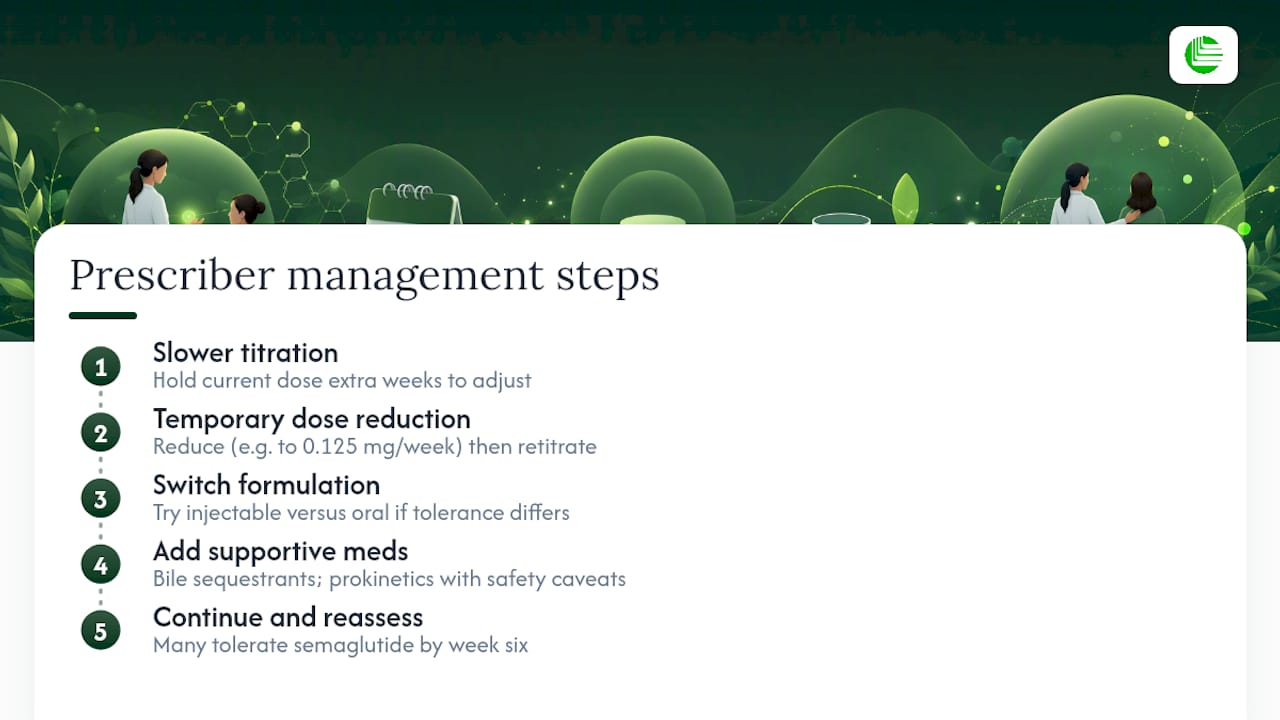
If diarrhea doesn’t settle with self-care, prescribers have several realistic paths, and none of them typically mean stopping semaglutide altogether. Expert consensus guidance lays out a fairly standard sequence for managing gastrointestinal adverse events in patients on GLP-1 receptor agonists, and knowing what’s coming can make the conversation with your prescriber a lot less stressful.
Slower titration is usually the first move. Instead of climbing to the next dose on schedule, your prescriber might hold you at your current dose for an extra few weeks, giving your gut more time to adjust before the next increase. This is often the simplest fix, since a lot of diarrhea cases are tied directly to the pace of dose increases rather than the drug itself.
A temporary dose reduction is the next step for tougher cases. Consensus guidance describes reducing to a lower dose, such as 0.125 mg per week, and then retitrating more gradually from there. This isn’t a failure or a step backward. It’s a recognized clinical strategy that lets you keep the metabolic benefits of the medication while giving your gut a slower runway to adapt. Our semaglutide dosage guide walks through how titration schedules typically work if you want to understand the mechanics before that conversation.
Switching formulations is another option. Some patients tolerate injectable semaglutide better than oral formulations, or vice versa, due to differences in absorption and peak concentration timing. If you’ve had a rough time on one form, ask whether switching is reasonable for your situation.
For more resistant cases, prescribers may add supportive medications. Prokinetic agents can help with the gastroparesis-like symptoms some patients experience, though availability and safety profiles vary. Domperidone, for instance, isn’t FDA-approved for general use in the United States and carries cardiac risk considerations, so it’s not a first-line option here the way it might be discussed in other countries. Bile acid sequestrants, covered earlier, are more commonly the next prescription-directed step for diarrhea specifically tied to bile acid malabsorption.
The reassuring part of all this: most patients who work through dose adjustments with their prescriber do end up continuing semaglutide successfully. Diarrhea that feels unmanageable in week two often looks completely different by week six, once titration slows down and dietary triggers are under control.
Managing a side effect like diarrhea is a lot easier when you’re not guessing alone. Their telehealth model is built around ongoing access to a licensed clinician, not a one-time prescription drop.
Here’s how the process typically works for someone already on treatment or just starting:
This kind of continuous access matters most in the exact window covered by expert consensus: the first few weeks after starting or increasing a dose, when GI side effects are most likely to appear and most responsive to quick adjustment. Our GLP-1 medications explained guide covers more on what to expect mechanically as your body adjusts to treatment.
Here’s the tension nobody frames clearly enough: diarrhea is genuinely disruptive, and it’s also, in most cases, a solvable problem rather than a reason to quit treatment. Both things are true at once, and treating them as contradictory is where people go wrong.
The instinct to stop semaglutide the moment diarrhea shows up is understandable. Nobody signed up for a medication that improves their metabolic health while wrecking their week. But stopping unilaterally, without talking to whoever prescribed it, throws away options that usually work: slower titration, a temporary dose hold, a dietary reset. Consensus guidance exists precisely because this side effect is common enough and manageable enough to have a standard playbook.
What gets underestimated is how much diet is doing the damage versus the drug itself. A lot of people start semaglutide and simultaneously overhaul their entire diet with protein bars, diet sodas, and sugar-free everything, then blame the medication when their gut revolts. Untangling those two variables takes a bit of trial and observation, not blind faith and not blind abandonment either.
The honest position is this: diarrhea is a real burden, and clinician partnership is what turns it from a reason to quit into a temporary hurdle. Don’t white-knuckle it alone, and don’t bail without a conversation first.
— Eric
This approach gives patients access to licensed clinicians who can adjust dose or titration pace without an urgent-care visit.

The process stays simple. Patients complete an online consultation, get reviewed by a physician, and can receive prescriptions by mail with ongoing support for dose adjustments if needed. This includes ongoing support and physician guidance, so side effects that arise can be addressed promptly. If you’re starting treatment or already managing a rough patch, explore semaglutide options through Oak Longevity and talk through a plan with a licensed clinician.
One caution worth repeating here: this kind of ongoing telehealth support is for management and adjustment, not emergencies. If you’re dealing with bloody stools, a high fever, or signs of severe dehydration, go to urgent care or the emergency room first.
The clinical guidance in this article draws on a small set of authoritative sources worth bookmarking if you want to dig deeper or bring information to your own prescriber:
This article is general information, not a substitute for advice from a qualified doctor. Consult a qualified healthcare professional about your own circumstances before acting on anything here.
Start with hydration using an oral rehydration solution, cut sugar alcohols and fatty foods, and add soluble fiber like psyllium; short-term loperamide can help if your prescriber has approved it and you don’t have fever or bloody stool.
Sugar alcohols (sorbitol, xylitol, erythritol) found in sugar-free snacks and drinks, high-fat meals, and heavy caffeine or alcohol intake are the most common dietary triggers, according to Cleveland Clinic.
Diarrhea affects a notable share of GLP-1 patients, up to about 31% in the STEP 1 semaglutide trial, but it’s usually temporary and improves within days to a few weeks; diarrhea lasting more than a few days despite self-care or worsening over time is not something to just ride out, and warrants a call to your prescriber.
Loperamide (Imodium) is commonly used alongside GLP-1 medications for short-term diarrhea relief, per expert consensus guidance, but avoid it if you have a fever or bloody stool, and check with your prescriber before regular use.
Oak Longevity provides ongoing clinician access after your initial consultation, so you can discuss dose adjustments, titration pace, or dietary strategy for side effects like diarrhea rather than managing them alone; explore current semaglutide plans for details.