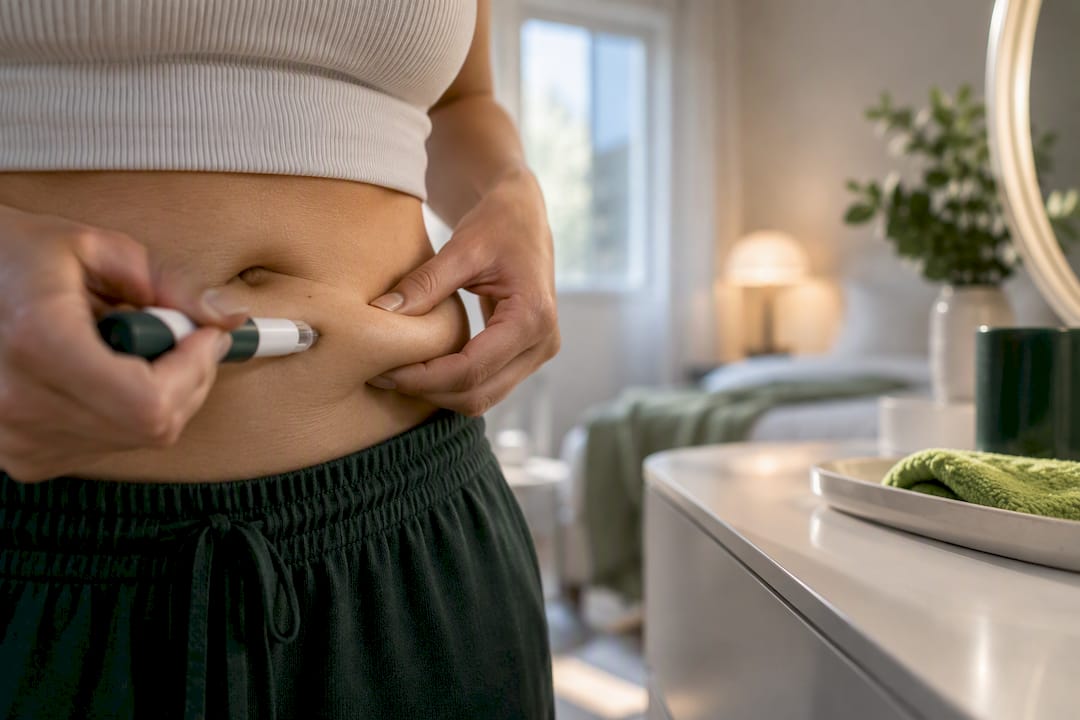
Safe semaglutide self-injection at home comes down to three things: use a licensed pharmacy source, inspect the medication before every dose, and match your technique to your device. Most patients use a prefilled pen once weekly; a vial-and-syringe setup demands more precision and carries a higher risk of dosing mistakes. Follow your prescriber’s instructions and the product label exactly, and never guess on volume or concentration.
TL;DR:
- Using a licensed pharmacy source is essential to avoid safety risks and ensure accurate dosing with semaglutide.
- Injecting in one of three recommended sites and rotating at least one inch apart prevents lipohypertrophy and maintains absorption.
- Prefilled pen users should always use a new needle, check the solution’s clarity, and hold the button for a full six seconds to ensure the dose is delivered.
- Correct syringe choice, precise dose measurement, and confirming injection site and angle are crucial to prevent dosing errors with vial-based semaglutide.
- Storing medication properly, inspecting liquid before each injection, and safely disposing of needles significantly reduce safety hazards and side effects.
What you need depends on whether your prescription came as a prefilled pen or a compounded vial.
Prefilled pen users need:
Vial-and-syringe users need:
Work on one clean, flat surface, and wash your hands before touching anything. If your pen has been refrigerated, pull it out 15 to 30 minutes before injecting so the medication warms slightly and stings less. Before any of this, confirm your prescription came from a state-licensed pharmacy or a verified telehealth provider. The FDA has repeatedly warned that unapproved GLP-1 products carry real safety risks, and a mislabeled or diluted product can throw off your entire dosing schedule.
WEGOVY’s own instructions call for subcutaneous injection in one of three spots: the abdomen (at least 2 inches from your navel), the front or outer thigh (midway between hip and knee), or the outer upper arm, per the Medication Guide. Pick whichever site you can comfortably reach and pinch without contorting.
Rotate sites so you never inject the same spot twice in a row.
Watch for small firm lumps under the skin, a condition called lipohypertrophy. If a site feels lumpy or numb for more than a few days, stop using that area and call your provider.
Pro Tip: Take a photo of your injection sites once a week. It sounds excessive, but a quick visual log makes it obvious when you’re favoring one spot too often, and it gives your provider something concrete to look at if a reaction shows up.
Pen devices like the ones used for OZEMPIC and WEGOVY are built for consistency, but skipping a step can shortchange your dose.
If the counter never reaches zero, don’t assume you got a full dose and don’t inject again to “make up” the difference. Note the time, cap the pen if possible, and call your prescriber or pharmacist. A partial dose is a conversation with your care team, not a do-over.
Pro Tip: Holding the button for a slow count of six, not a rushed one or two, is the single most common fix for people who feel like their pen “didn’t work.” The medication needs that extra second or two to fully clear the needle.
Vial-and-syringe administration, common with compounded semaglutide, is where most dosing errors happen. Before your first injection, confirm two things with your provider: the exact concentration of your vial and whether you should be using an insulin-unit syringe or a milliliter-marked one. Getting this wrong is not a small mistake.
The FDA has flagged multiple dosing errors tied to compounded injectable semaglutide, with some patients drawing far more than their intended dose because they confused unit markings with milliliter volumes. Some reported overdoses have involved patients drawing much more than the intended amount after mixing up syringe types. If you’re not completely confident you’re reading the syringe correctly, stop and call your provider before injecting. Learning more about compounded semaglutide safety before your first vial injection is worth the extra fifteen minutes.
Storage rules differ slightly by product, so the Medication Guide that came with your prescription is the final word, not a blog post or a pharmacy assistant’s memory.
Before every single injection, look at the liquid. It should be clear and colorless. If you see cloudiness, discoloration, or particles floating in it, throw it away and use a new pen or vial. Check the lot number and expiration date printed on the carton, and hold onto the Instructions for Use insert that comes with the product. A quick guide to semaglutide storage covers travel and temperature edge cases in more detail.
Every used needle is a sharps hazard, whether it came off a pen or a syringe. Recapping, bending, or breaking a needle to make it “safer” actually increases the odds of a needlestick injury.
Nausea, mild vomiting, and digestive upset are the most reported effects of semaglutide, especially during the first few weeks at each new dose. Gradual titration, exactly what the label schedule is built for, is designed to keep these effects manageable rather than eliminate them entirely.
If you miss your weekly dose, most labels allow you to take it within five days of the missed day; beyond that window, skip it and resume your normal schedule the following week rather than doubling up. If you’re unsure which rule applies to your specific prescription, call your prescriber before injecting.
Some symptoms are not “wait it out” symptoms. Severe, persistent abdominal pain that radiates to your back can signal pancreatitis. Signs of a serious allergic reaction, facial swelling, difficulty breathing, or a fast heartbeat, need emergency care immediately. If you take insulin alongside semaglutide, watch for shakiness, confusion, or sweating that could point to low blood sugar. And if you’re ever uncertain whether you drew or injected the correct dose from a vial, contacting your prescriber or dispensing pharmacy right away is always the correct move, never guesswork.
A lot of dosing mistakes trace back to one thing: nobody walked the patient through their specific device before the first injection. Oak Longevity’s model starts with an online health questionnaire reviewed by a licensed physician, followed by medication delivered to your door with physician-led guidance available afterward.
That kind of continuous access matters most in the exact moments this guide has flagged as highest risk: your first vial draw, a confusing dose counter, or a side effect that doesn’t feel normal.
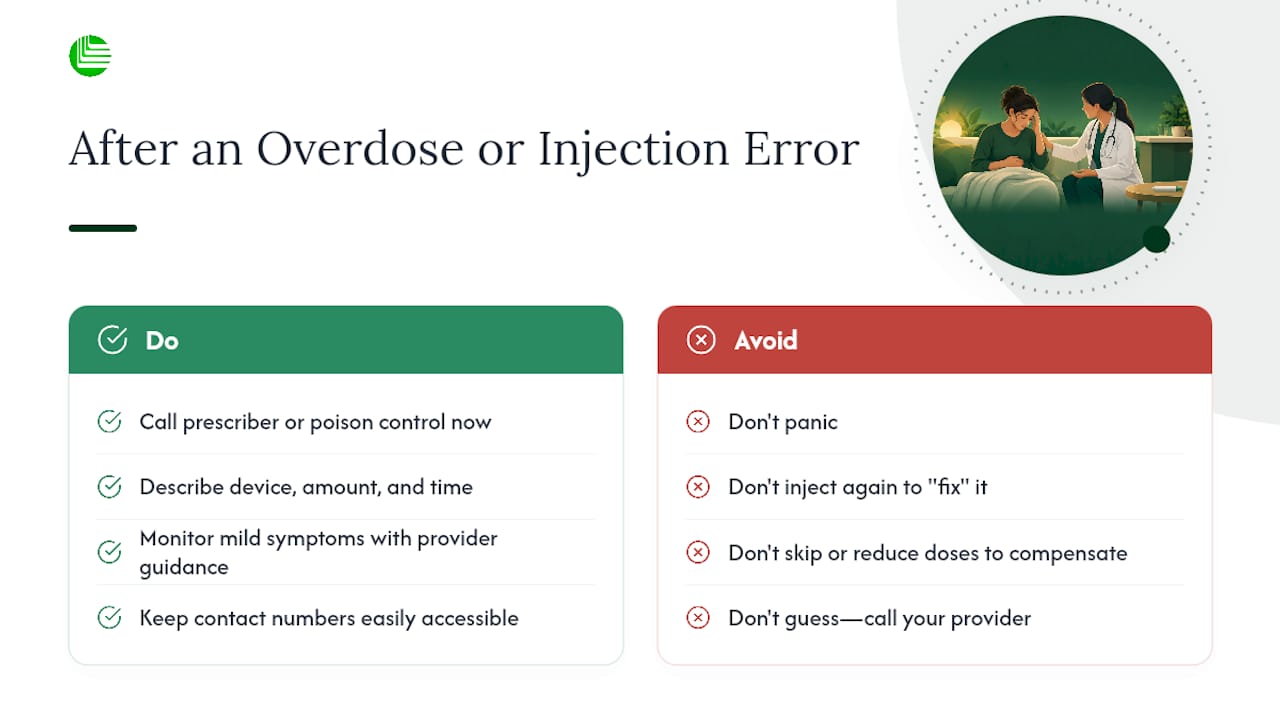
Don’t panic, and don’t try to “fix” the situation by injecting less next time or skipping doses to compensate. If you realize immediately after injecting that you drew too much medication, especially from a vial, call your prescriber or local poison control right away and describe exactly what happened: the device you used, the amount you believe you injected, and when.
Mild overdose symptoms typically show up as intensified versions of normal side effects: significant nausea, vomiting, or stomach pain. These can usually be monitored at home under your provider’s direction, but you need that direction, not a guess. More severe symptoms, ongoing vomiting that prevents you from keeping fluids down, signs of dehydration, or severe abdominal pain, warrant a call to emergency services or a trip to urgent care.
If you injected into the wrong site, say you missed the subcutaneous layer and went too deep, or injected into scar tissue, that alone usually isn’t an emergency. Watch the area for excessive swelling, redness spreading outward, or fever over the following day, and mention it at your next check-in. What you should never do is attempt a second injection to “correct” a suspected bad injection. If you’re not sure the first dose delivered properly, whether the pen’s counter didn’t reach zero or you lost some liquid drawing from a vial, treat it as a partial or uncertain dose and call your provider before doing anything else.
Keep your provider’s contact information and the number for poison control somewhere accessible, not buried in a drawer with your other paperwork. In a moment of genuine confusion about what just happened with a needle in your hand, you want that number in ten seconds, not ten minutes.
Most people are white knuckled before their first dose and completely relaxed by their third. Practicing with a demonstration device, or having your first injection supervised, closes that gap fast. Keep a simple log of injection dates, sites, and anything unusual, a photo takes ten seconds and saves a confusing phone call later. The needle pinch fades from memory within a week; what actually protects you long term is sourcing your medication properly, using the right syringe, and disposing of needles safely. Get those three right and the rest is just repetition.
— Eric
A telehealth service can provide a licensed physician’s review and ship prescriptions without requiring in-person appointments or video calls. That matters most in exactly the moments this guide covers: confirming which syringe matches your dose, sorting out a confusing pen counter, or just wanting a real clinician on the other end when something feels off. The platform pairs semaglutide and tirzepatide prescriptions, starting from $119 a month for semaglutide, with ongoing physician-led guidance and free shipping, so support doesn’t stop after your first delivery.
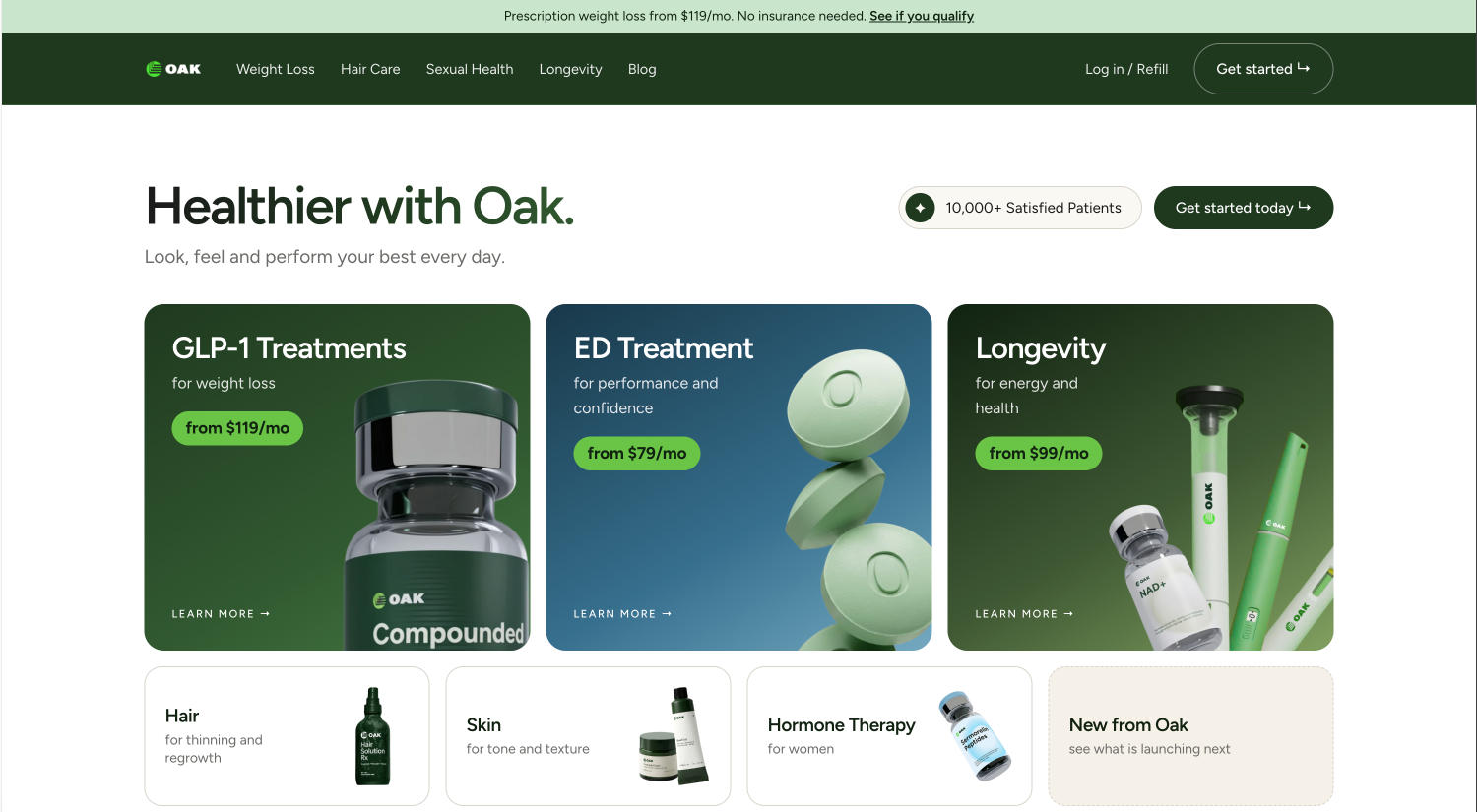
If you’re currently sourcing medication from anywhere other than a licensed pharmacy or verified telehealth provider, that’s the first thing to fix, and it’s also the easiest. Oak Longevity’s compounded injectable semaglutide program starts from $167 a month with same-day shipping and no membership lock-in. Your health questionnaire stays private and is reviewed only by the physician assigned to your case. Start an online consultation today and get clarity on your dosing schedule before your next injection is due.
This article is general information, not a substitute for advice from a qualified doctor. Consult a qualified healthcare professional about your own circumstances before acting on anything here.
There’s no fixed timeline since weight loss depends on starting weight, dose, and adherence to lifestyle changes. In a randomized clinical trial, participants on weekly semaglutide 2.4 mg lost an average of 16% of body weight over 68 weeks alongside behavioral therapy, which gives a rough sense of pacing rather than a guarantee.
Alcohol can worsen nausea and stomach upset, and combining semaglutide with insulin or sulfonylureas raises your risk of low blood sugar without close monitoring. Always tell your provider about every medication and supplement you take, since semaglutide can slow how your stomach absorbs other oral drugs.
Many patients report improved energy and reduced food-related anxiety once nausea settles, often linked to more stable blood sugar and steady weight loss. This isn’t universal, and if a side effect feels extreme in either direction, mention it to your provider rather than assuming it’s expected.
Semaglutide is injected once weekly, and results build gradually as your dose titrates upward over weeks to months per the label schedule. There’s no set number of shots tied to a specific weight-loss goal. Results depend on your titration pace, diet, and activity, which is why ongoing provider check-ins matter more than counting doses.
Oak Longevity lists semaglutide starting from $119 per month and compounded injectable semaglutide starting from $167 per month. Current pricing and available plans are listed directly on the Oak Longevity website.