For most adults enrolled in a prescription telehealth weight-management program, aiming for 1.2–1.6 g protein per kilogram of body weight per day and roughly 25–30 g protein per meal is the working clinical target. That range, supported by clinical reviews from 2023–2025, improves satiety, preserves lean mass during calorie restriction, and supports long-term weight-loss maintenance. General dietary guidelines set average adult protein needs at only 46–56 g/day, which is far below what most weight-management contexts require.
Here is what to bring to your next Oak Longevity check-in:
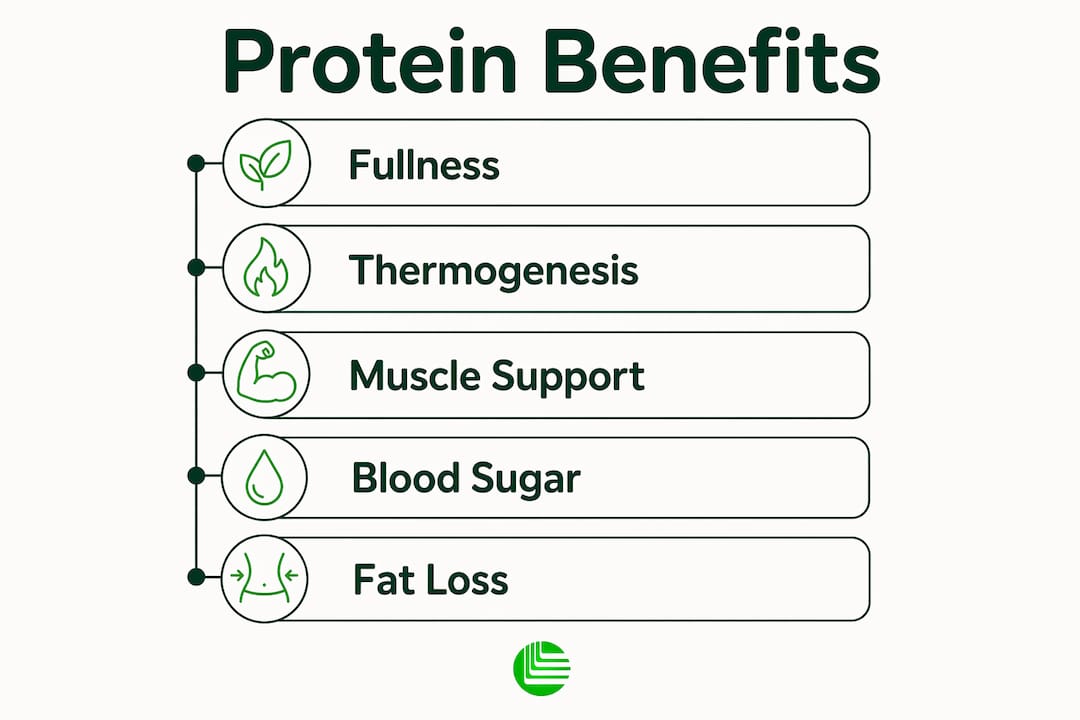
Protein supports weight management through four overlapping mechanisms: it increases post-meal fullness, raises the thermic effect of food (TEF), preserves fat-free mass during calorie restriction, and modulates appetite hormones. Each of these has a measurable effect on outcomes.
The thermic effect is real but modest. Protein requires more energy to digest than carbohydrates or fat, and higher-protein diets preserve resting energy expenditure during weight loss. One meta-analysis of 24 randomized controlled trials found that higher-protein energy-restriction diets preserved resting energy expenditure by a mean of +142 kcal/day compared with lower-protein diets, alongside greater fat mass loss and lean mass retention.
On the hormone side, protein raises circulating GLP-1 and suppresses ghrelin, the hunger hormone. That matters specifically for patients on prescription GLP-1 or GIP therapies: the medication and the diet are working the same satiety pathway, which can amplify fullness but also means you need to stay deliberate about hitting protein targets even when appetite is low.
“Protein can increase your feeling of fullness and reduce the number of calories you eat throughout the day.” — Annalise Pratt, RD, Cleveland Clinic
A large randomized trial (DiOGenes/NEJM) found that a modest increase in dietary protein, combined with a lower glycemic index, helped prevent weight regain after initial loss. That is the maintenance piece most patients underestimate.
Use 1.2–1.6 g/kg/day as your working range and target 25–30 g at each main meal. To convert pounds to kilograms, divide your weight in pounds by 2.2. Then multiply by 1.2 for the lower end and 1.6 for the upper end.
Three quick examples:
Favor the higher end (1.6 g/kg) if you are older, physically active, or actively trying to preserve lean mass during rapid weight loss. The lower end (1.2 g/kg) is a reasonable starting point during early medication titration when GI tolerability is limited.
| Weight (lb / kg) | Target at 1.2 g/kg (g/day) | Target at 1.6 g/kg (g/day) | Per-meal target (~25–30 g) |
|---|---|---|---|
| 132 lb / 60 kg | 72 g | 96 g | 24–32 g |
| 165 lb / 75 kg | 90 g | 120 g | 30–40 g |
| 198 lb / 90 kg | 108 g | 144 g | 36–48 g |
Share this table with your Oak Longevity clinician. They can adjust the target based on your current phase, activity level, and lab results.
Protein targets remain just as relevant on GLP-1 or dual-agonist therapy, but the medication changes how you get there. Semaglutide and tirzepatide slow gastric emptying, reduce appetite, and often cause nausea early in titration. Larger meals become harder to tolerate, which means hitting 30–40 g protein in one sitting may not be realistic at first.
The practical fix is to shift toward smaller, protein-forward meals and snacks rather than fewer, larger ones. During early dose titration, soft or liquid protein sources, Greek yogurt, cottage cheese, protein shakes, or blended soups with added protein powder, are easier to tolerate than dry meats. For guidance on managing GI symptoms while keeping protein intake up, Oak Longevity’s gut health support on weight medication resource covers this directly.
Patients on GLP-1/GIP therapy who skip protein because of nausea risk losing lean mass alongside fat. The goal is to protect muscle even when appetite is suppressed.
Because the medication amplifies satiety through the same GLP-1 pathway that dietary protein activates, some patients feel full well before reaching their protein target. Spreading intake across four to five smaller eating occasions often solves this. Your clinician should also monitor for signs of inadequate intake: fatigue, muscle weakness, or unexpectedly rapid weight loss without strength maintenance.
Pro Tip: During the first four to six weeks of dose titration, prioritize easily tolerated protein sources (Greek yogurt, smoothies with 20–25 g protein powder, soft-scrambled eggs) and hold off on large portions of dry chicken or steak until GI tolerability is established. Discuss this plan with your Oak Longevity clinician before your next dose increase.
Structured meal templates make hitting targets far easier than tracking every gram from scratch. The goal is protein at every main meal plus one or two protein-anchored snacks.
Simple protein swaps:
Sample day for a 75 kg patient (target: 90–120 g/day):
| Meal | Food | Approx. protein |
|---|---|---|
| Breakfast | 1 cup Greek yogurt + 1 scoop whey protein | 30–40 g |
| Lunch | 4 oz canned tuna + ½ cup white beans + greens | 30–40 g |
| Snack | 1 string cheese + 1 hard-boiled egg | 12 g |
| Dinner | 4 oz grilled chicken breast + ½ cup lentils | 30–40 g |
| Daily total | 90–120 g |

Meal prepping for weight loss can cut the daily decision-making that derails adherence. Batch-cook proteins on Sundays and portion them into containers so each meal is already assembled.
Pro Tip: Take a photo of each meal and log it in your telehealth app or send it to your Oak Longevity care team. Clinicians use meal photos to spot protein gaps and adjust dosing recommendations faster than any questionnaire.
Higher-protein plans are safe for most healthy adults, but kidney disease changes the calculation. Patients with renal impairment need individualized medical review and lab monitoring before increasing protein, because excess protein can accelerate kidney function decline.
Before increasing protein intake, patients with known kidney disease, unstable liver disease, uncontrolled gout, or a history of kidney stones should get a baseline eGFR and creatinine checked and discuss targets with their prescribing clinician.
Clinical red flags to report to your Oak Longevity team:
For higher-risk patients, baseline labs (eGFR, creatinine, comprehensive metabolic panel) before starting and periodic rechecks every three to six months are standard. Oak Longevity’s telehealth workflow makes ordering local labs straightforward through the patient portal.
This article is general health information, not medical advice. Confirm protein targets and lab monitoring plans with your prescribing clinician for your specific situation.
Use a simple, repeatable workflow: log intake, report symptoms and weight, and schedule periodic lab checks. Then review with your Oak Longevity clinician for adjustments. Long-term adherence is the primary driver of whether higher-protein diets produce lasting results, and telehealth tools make consistent tracking achievable.
Remote monitoring workflow:
The most useful metrics for remote clinicians are measured body weight, meal photos, a 24–48 hour protein recall, and any symptom changes tied to medication timing. For a broader look at how medically supervised weight loss programs structure these check-ins, Oak Longevity’s blog covers the workflow in detail.
A single formula covers most patients: lb ÷ 2.2 = kg; kg × 1.2–1.6 = g protein/day; aim for 25–30 g per meal.
Save this list or screenshot it for your next telehealth visit:
A practical heuristic from the literature: the 30-30-30 approach (at least 30 g protein per meal, 30 g fiber per day, 30 minutes of exercise per day) covers the main lifestyle levers for most adults in a weight-management program. Bring this sheet to your Oak Longevity visit and use it to confirm your current intake against your target.
Higher-protein intake at 1.2–1.6 g/kg/day, spread across meals of 25–30 g each, is the evidence-based foundation for satiety, lean-mass preservation, and weight-loss maintenance in prescription telehealth programs.
| Point | Details |
|---|---|
| Daily protein target | Aim for 1.2–1.6 g per kg of body weight per day; divide by meals to reach 25–30 g each. |
| Medication adjustment | On GLP-1/GIP therapy, use smaller meals and soft protein sources during dose titration to maintain intake. |
| Safety check first | Patients with kidney disease need baseline eGFR and clinician review before increasing protein. |
| Track and report | Log meals and weight weekly; share photos or recalls with your telehealth clinician for faster adjustments. |
| Oak Longevity support | Oak Longevity’s physician-led program pairs GLP-1/GIP access with clinician guidance on protein targets and lean-mass protocols. |
Most patients starting semaglutide or tirzepatide focus entirely on the medication and treat nutrition as secondary. That is understandable. The appetite suppression is dramatic, the weight moves fast, and it feels like the drug is doing the work. But what the drug cannot do is tell your body to lose fat instead of muscle. That distinction falls entirely on protein intake and resistance activity.
The other thing patients miss: the maintenance phase is harder than the loss phase, and protein is the main dietary lever for preventing regain. The DiOGenes trial showed this clearly. A modest increase in protein, not a dramatic dietary overhaul, was enough to shift maintenance outcomes. That is a low bar with a high payoff, and it is exactly the kind of targeted adjustment a telehealth clinician can help you dial in over time.
Prescription GLP-1 and GIP medications work best when paired with a clinical team that monitors your nutrition alongside your dosing. Oak Longevity does exactly that: a licensed physician reviews your health questionnaire, your medication is delivered to your door, and you get 24/7 clinician support to adjust protein targets, manage GI side effects, and protect lean mass throughout every phase of your program.

When your protein intake drops during titration or your weight loss plateaus, the Oak Longevity care team can order labs, review your meal logs, and recalibrate your plan without an in-person visit. That is the practical advantage of a physician-led telehealth program over self-managed dieting. Ready to start? View the Oak Longevity program and complete your online health questionnaire today.
Share these with your clinician when discussing protein targets and monitoring plans:

.svg)



Get wellness tips, offers, and updates
in your inbox.
Call the clinic: 435-244-7757
By providing your phone number & email, you expressly consent to receive SMS, email, or Meta messages from Oak Longevity Holdings Corp., Flow Longevity Holdings Corp., Mito Health Holdings Corp., including both transactional communications (such as appointment reminders, prescription updates, order and shipping notifications, and customer support) and marketing communications (including promotions, discounts, product offerings, and program updates) across their affiliated brands and services. Message and data rates may apply. Consent is not a condition of purchase.
© 2026 Oak Longevity - All rights reserved.