Prescription medication home delivery is the process of having your prescribed drugs shipped directly to your home, typically in 90-day supplies, without a single trip to a retail pharmacy. This service, formerly known as mail-order pharmacy, has become a standard benefit under major health plans including TRICARE and most commercial insurers. It cuts costs, reduces missed doses, and puts a licensed pharmacist one click away. If you have ever wondered how the process actually works, what qualifies, and what to realistically expect, this guide covers every step.
Mail-order pharmacy follows a clear sequence from the moment you submit your prescription to the moment a package lands at your door. Understanding each step prevents the frustration that comes from expecting your medication to ship the same day you order it.
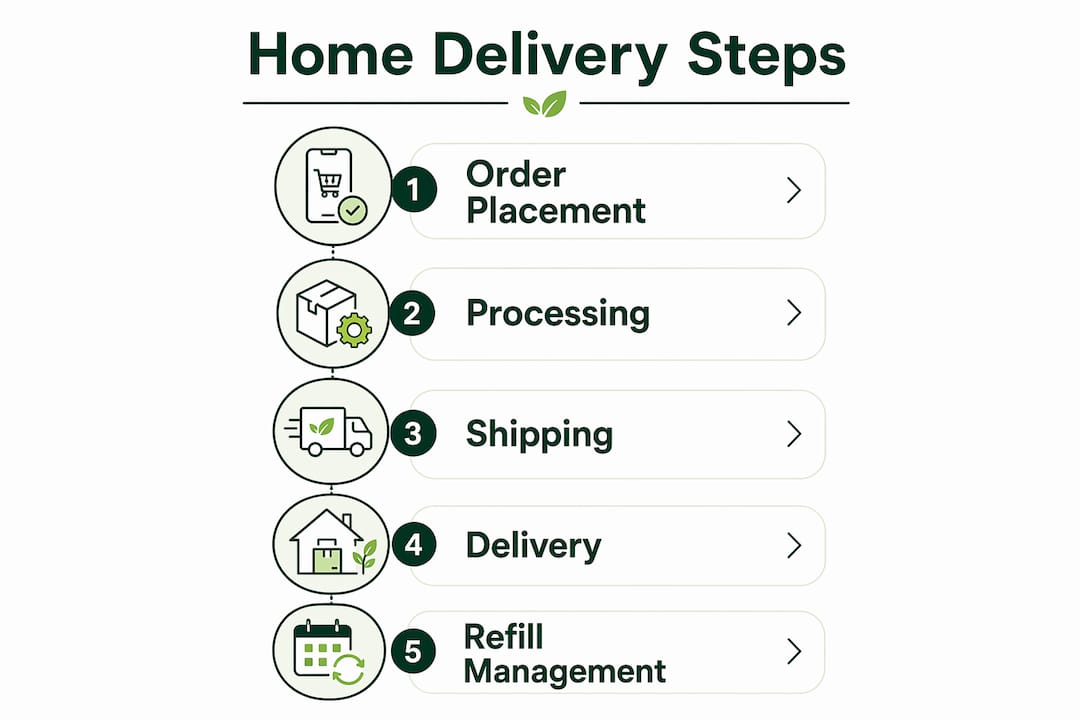
The end-to-end process works like this:
The most common misconception is that processing time equals shipping time. They are two separate clocks. Orders placed at the same time can arrive on different days if one requires prescriber clarification or insurance approval.
Pro Tip: Ask your pharmacy to separate processing status from shipping status in their notifications. Knowing your order is “in verification” versus “shipped” prevents unnecessary calls to customer service.

First shipments after switching to home delivery can take up to two weeks to arrive. Subsequent refills move faster because the verification steps are already complete.
Home delivery prescriptions do more than save you a drive. The advantages stack up in ways that directly affect your health outcomes and your wallet.
Pro Tip: If you take multiple maintenance medications, ask your pharmacy to sync all refill dates to one shipment. A single monthly or quarterly delivery is easier to manage than staggered packages arriving at different times.
The adherence benefit is the most underrated advantage. Missing doses of a maintenance medication, whether for blood pressure, thyroid function, or weight management, compounds over time. Consistent delivery removes the logistical barrier entirely.
Not every medication ships through mail-order, and knowing the rules upfront saves you time.
Maintenance medications are the core of home delivery pharmacy. These are drugs taken long-term for chronic conditions: statins, blood pressure medications, thyroid hormones, diabetes drugs, and GLP-1 weight-loss medications like semaglutide and tirzepatide. Most plans allow up to a 90-day supply for these categories.
| Medication Type | Typically Eligible | Common Restrictions |
|---|---|---|
| Maintenance medications (statins, thyroid, blood pressure) | Yes, up to 90-day supply | None in most plans |
| GLP-1 and GIP weight-loss medications | Yes, with valid prescription | Prior authorization often required |
| Oral contraceptives | Yes, but often limited to smaller pack sizes | Packaging constraints apply |
| Controlled substances (Schedule II-V) | Rarely | Special handling laws; most excluded |
| Compounded medications | Varies by plan | Requires licensed compounding pharmacy |
| Acute/short-term medications | No | Designed for immediate retail dispensing |
Controlled substances require special handling under federal law and are often excluded from standard mail-order programs. Some plans make exceptions for Schedule III-V medications with additional verification steps, but Schedule II drugs almost never qualify.
Health plan rules vary significantly. TRICARE members face specific formulary requirements that differ from commercial plans. Always confirm your medication’s eligibility with your insurer before transferring a prescription.
Setting realistic expectations is the difference between a smooth experience and unnecessary frustration.
Delivery windows are estimates, not guarantees. Carriers like USPS, FedEx, and UPS manage final delivery logistics based on route planning, weather, and demand. A pharmacy can tell you when your package left their facility. It cannot control what happens after that.
Here is what to expect at each stage:
Automatic refill programs require active participation. Patients need to confirm or decline refills when prompted, or the program pauses. Set a calendar reminder two weeks before your supply runs out to check your refill status.
Common delays include insurance authorization lapses, prescriber non-response, and address verification issues. Resolving any of these requires a phone call, so keep your pharmacy’s customer service number saved.
Switching to mail-order pharmacy takes less effort than most patients expect. Three paths get you there.
Once enrolled, register for the pharmacy’s patient portal or mobile app. These platforms let you track orders, message pharmacists, manage refill schedules, and update your delivery address without calling anyone.
Check your insurance coverage before transferring. Confirm the copayment for a 90-day mail-order supply versus a 30-day retail fill. For many maintenance medications, the math strongly favors mail-order. Also confirm whether your specific drug requires prior authorization, since that step adds time to your first shipment.
Pro Tip: Request a 90-day supply with at least three refills when your doctor writes the prescription. A 30-day mail-order prescription defeats the purpose and costs more per dose.
Home delivery pharmacy works best when patients understand the process, confirm eligibility upfront, and set realistic expectations about delivery timelines.
| Point | Details |
|---|---|
| 90-day supply is the standard | Most health plans allow up to a 90-day mail-order supply for maintenance medications at reduced cost. |
| Processing and shipping are separate | Pharmacy verification takes one to five days before a package ever reaches a carrier. |
| First shipments take longer | Initial deliveries can take up to two weeks; subsequent refills arrive faster. |
| Controlled substances rarely qualify | Federal handling laws exclude most Schedule II drugs from standard mail-order programs. |
| Active refill management prevents gaps | Patients must confirm automatic refills when prompted or risk a lapse in their medication supply. |
The single biggest mistake I see is treating mail-order pharmacy like a vending machine. Patients place an order and expect the medication at their door in two days. When it takes ten, they assume something went wrong. Nothing went wrong. The system is just slower than Amazon, and for good reason.
Pharmacy safety checks exist to catch dangerous drug interactions and billing errors before a medication ships. That review takes time, and it protects you. The frustration patients feel during that window is real, but it is misdirected.
The patients who get the most out of home delivery are the ones who treat it like a relationship rather than a transaction. They call their pharmacy when something changes, whether that is a new medication, a change in insurance, or a move. They confirm refills proactively instead of waiting for a reminder. They read the tracking updates instead of calling customer service every day.
Home delivery pharmacy also works best for medications you take every day without exception. If your adherence is already inconsistent, automatic refills will not fix the underlying habit. But if you are committed to a treatment plan, whether for blood pressure, thyroid health, or a GLP-1 weight management program, removing the pharmacy trip removes one more reason to skip a dose.
— Eric
For patients managing weight with GLP-1 or GIP medications like semaglutide or tirzepatide, the home delivery model is built into how Oaklovesyou works from day one.

Oaklovesyou operates as a fully online telehealth platform. You complete a health questionnaire, a licensed physician reviews and approves your prescription, and your medication ships directly to your door. There are no in-person clinic visits and no retail pharmacy lines. The program also includes 24/7 physician-led support to help you manage dosage and stay on track. If you are ready to see how prescription home delivery fits into a structured weight management plan, Oaklovesyou is built for exactly that.
First shipments typically take up to two weeks due to pharmacy verification, insurance adjudication, and prescriber approval steps. Subsequent refills arrive faster because those steps are already complete.
Most controlled substances, especially Schedule II drugs, are excluded from standard home delivery programs due to federal handling requirements. Some Schedule III-V medications may qualify with additional verification.
Many health plans charge lower copayments for a 90-day mail-order supply than for three separate 30-day retail fills. TRICARE and most commercial insurers structure their pharmacy benefits to favor mail-order for maintenance medications.
Yes. Once your pharmacy transfers the package to a carrier like USPS, UPS, or FedEx, you receive a tracking number. Delivery windows are estimates based on carrier routing and are not guaranteed arrival dates.
Inspect the packaging before opening it. If you notice tampering or damage, contact the pharmacy immediately before using the medication. Most mail-order pharmacies have a dedicated line for delivery issues and will arrange a replacement shipment.