
Safety depends entirely on which peptide you mean. FDA-approved medications like semaglutide, tirzepatide, and liraglutide carry safety data from multi-phase human clinical trials, and the FDA continues to track their real-world side effects. The injectable “research peptides” sold online without a prescription have none of that: no trials, no FDA review, and no guarantee of what’s actually in the vial. If you’re considering peptide therapy, the safest path runs through a prescription, a clinician who monitors your progress, and a pharmacy that isn’t shipping unmarked vials from overseas.
TL;DR:
- FDA-approved peptides like semaglutide and tirzepatide have substantial safety data from human trials, unlike unregulated research peptides or online “research” products.
- Most side effects are gastrointestinal and tend to resolve within weeks, with serious risks such as pancreatitis and dehydration requiring immediate medical attention.
- Long-term safety data beyond one to two years is limited, making ongoing medical monitoring essential during treatment.
- Unregulated peptides often arrive contaminated, mislabeled, or without proper storage, posing serious health risks compared to clinician-prescribed medications.
- A tailored, clinician-led approach with proper screening and follow-up significantly reduces risks associated with peptide therapy and ensures safe, monitored use.
Peptides are short chains of amino acids, smaller than proteins but built from the same building blocks. Some occur naturally in your body and regulate things like digestion, immune response, and hunger signaling. Others are synthesized in a lab to mimic or amplify those natural functions, which is exactly what happened with the class of drugs now dominating the weight-loss conversation: GLP-1 receptor agonists.
GLP-1 (glucagon-like peptide-1) is a hormone your gut releases after eating. It slows stomach emptying, signals fullness to your brain, and helps regulate insulin. Drugs like semaglutide copy that hormone’s action, which is why they curb appetite so effectively. Tirzepatide goes a step further, acting on both the GLP-1 receptor and a second receptor called GIP (glucose-dependent insulinotropic polypeptide), which appears to add extra metabolic benefit on top of appetite suppression.
Not all peptides sit at the same point on the evidence spectrum, and that gap is where most of the confusion, and most of the risk, lives.
The trial data for the approved category are substantial. Clinical trial summaries for GLP-1 and tirzepatide therapies report weight loss in the range of 15 to 20 percent of body weight over roughly a year in higher-dose trial arms, an outcome that reshaped how obesity medicine works. That number comes with an asterisk, though: it reflects trial populations under close medical supervision, with dose increases spaced out over weeks and side effects tracked in real time. Peptides and weight loss effectiveness go hand in hand only when the peptide in question has actually been tested on humans at scale, which brings the safety question back to a simple filter: is this a drug, or is it a compound someone is calling a drug?
Three molecules anchor the legitimate side of this market: semaglutide, tirzepatide, and liraglutide. All three are GLP-1 receptor agonists (tirzepatide adds the GIP mechanism), and all three reached the market only after completing the FDA’s standard multi-phase trial process, which typically spans years and thousands of participants before approval.
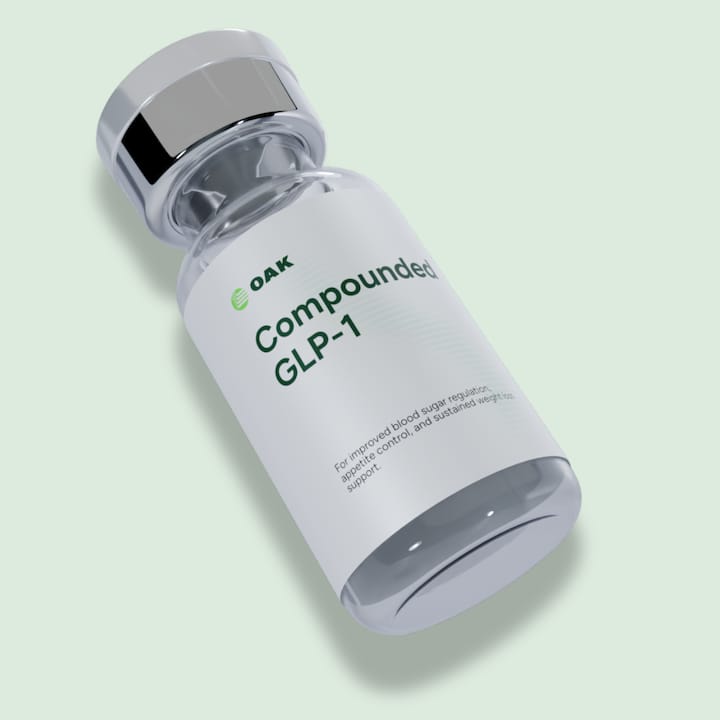
That process is exactly why we know so much about how these drugs behave in the body. Harvard Health notes that this is the core distinction in peptide safety: approved medications have trial-backed safety data, while many peptides sold as injectables online do not, and their long-term effects in humans remain unknown.
Trial data across this drug class points to a consistent pattern. Most side effects are gastrointestinal, most appear during the early dose-escalation phase, and most fade as the body adjusts.
Statistic Callout: Clinical trial summaries for GLP-1 and tirzepatide therapies report weight loss of roughly 15 to 20 percent of body weight in higher-dose arms over about 52 weeks, with gastrointestinal side effects concentrated in the early titration period rather than spread evenly across treatment.
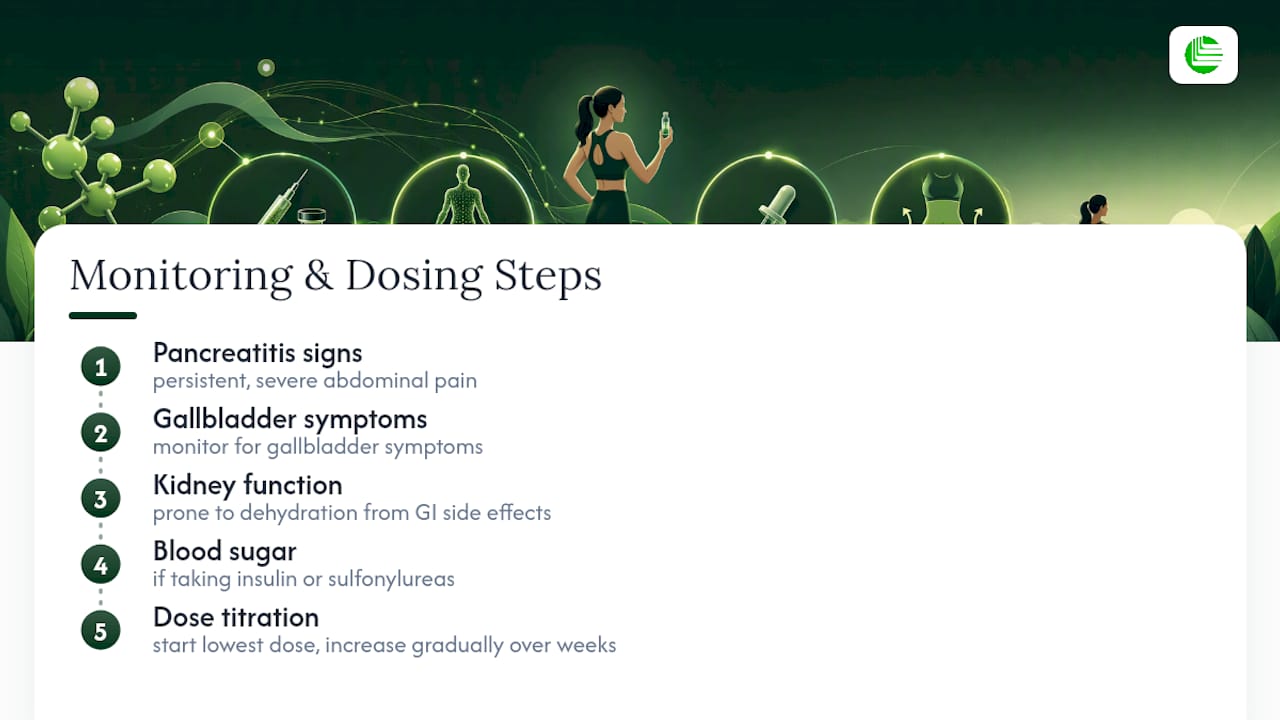
Prescribing information for this drug class typically flags a short list of monitoring priorities: signs of pancreatitis (persistent, severe abdominal pain), gallbladder symptoms, kidney function in patients prone to dehydration from GI side effects, and blood sugar levels in anyone also taking insulin or sulfonylureas. Physicians usually start at the lowest dose and increase gradually over a period of weeks specifically to reduce how harsh the GI side effects hit.
Trial populations don’t perfectly mirror the general public, and trial duration doesn’t answer every question a patient might have. Most pivotal trials for these drugs ran one to two years, which tells you a lot about short and medium-term safety but very little about what happens after five or ten years of continuous use. A peer-reviewed review of peptide-based obesity treatments points out that questions around sustained metabolic adaptation, muscle mass preservation, and other multi-year outcomes remain genuinely understudied, even for drugs with strong short-term trial data. That’s not a reason to dismiss the evidence. It’s a reason to stay under a clinician’s care for the duration of treatment, not just at the start.
Compounded and “research-grade” peptides operate in a different world entirely, one where nobody is verifying what’s actually in the vial before it reaches you.
The FDA has documented specific safety failures tied to unapproved and compounded versions of semaglutide and tirzepatide: contamination, mislabeled concentrations, dosing errors that sent patients to the emergency room, and shipping practices that left temperature-sensitive medication sitting warm in transit. Compounding pharmacies are legally allowed to prepare custom medications in specific circumstances, but that flexibility becomes a loophole when a product is marketed as a weight-loss shot without the oversight a real prescription requires.
The FDA has received reports of adverse events, including dosing errors and hospitalizations, tied to compounded and counterfeit GLP-1 products, along with complaints about products arriving without adequate refrigeration or with inaccurate ingredient labels.
Some peptides have even been formally flagged as ineligible for legitimate compounding due to safety concerns, which narrows the legal supply chain and pushes more of the gray-market product toward sources with no regulatory accountability at all. When you buy an injectable peptide labeled “for research purposes only,” you’re often buying from exactly that kind of source, regardless of how professional the website looks.
A few red flags tend to show up consistently in these offers:
The American Medical Association has urged patients to talk with a physician before using any injectable peptide, pointing specifically to how wellness clinics and social media influencers have blurred the line between medically supervised treatment and unverified self-experimentation. If you’re weighing a compounded semaglutide option specifically, it’s worth understanding the regulatory concerns around compounded semaglutide before assuming “compounded” means “the same drug, cheaper.”
Most people who start an FDA-approved peptide medication experience some gastrointestinal discomfort. That’s expected, and it’s usually manageable. A smaller set of side effects fall into a different category entirely, one where waiting it out is the wrong move.
Nausea, vomiting, diarrhea, and constipation dominate the early weeks of treatment, particularly right after each dose increase. Injection site reactions, mild fatigue, and occasional headaches round out the list of expected, low-severity effects. Clinicians typically address these by slowing the titration schedule rather than stopping treatment outright, since most patients adapt within a few weeks of each dose step.
Statistic Callout: Peer-reviewed analysis of peptide-based obesity treatments flags that long-term effects on cancer risk and sustained metabolic outcomes remain understudied remain understudied even in the approved drug class, which is a distinct issue from the well-documented short-term GI side effects.
Clinicians manage this risk profile with a fairly consistent playbook: baseline labs before starting, gradual dose titration instead of jumping straight to a therapeutic dose, and scheduled check-ins during the first few months when side effects are most likely to appear. Any symptom that looks like severe abdominal pain, signs of an allergic reaction, or an inability to keep fluids down for more than a day should trigger a call to your prescriber the same day, not a wait for the next scheduled appointment.
Not everyone is a candidate for GLP-1 or GIP-based weight-loss therapy, and that’s true even though these drugs have some of the strongest trial data in modern obesity medicine.
Standard contraindications include a personal or family history of medullary thyroid carcinoma and Multiple Endocrine Neoplasia syndrome type 2 (MEN 2), both flagged based on findings from animal studies during drug development. People with these histories are typically excluded from this drug class entirely, regardless of how much weight they’d like to lose.
Several populations require extra caution rather than an outright exclusion:
Before prescribing, clinicians typically review a patient’s full medication list, screen for the contraindications above, and check kidney and liver function when relevant to the patient’s history. A pregnancy test is standard when applicable. None of this is bureaucratic friction, it’s the exact screening process that catches the small percentage of patients for whom this treatment class carries disproportionate risk. If you’re weighing whether to switch between semaglutide and tirzepatide, that same individualized review applies, since the two drugs don’t carry identical side effect profiles or contraindications.
The honest gap in the evidence is long-term: multi-year data in adolescents, in patients using these drugs for five-plus years, and in people with complex comorbidities is still developing. That’s a reason for ongoing monitoring, not a reason to avoid treatment when you’re otherwise a good candidate.
Before starting any peptide-based weight-loss treatment, run through a short set of questions that separates a legitimate medical pathway from a gray-market shortcut.
Watch for the inverse of each of those answers: sellers offering injectables with no prescription, “research use only” labels next to weight-loss marketing, no refrigeration requirements for a product that needs it, or a flat refusal to connect you with clinical oversight. Any one of those is a reason to walk away.
Pro Tip: Ask your prescriber directly whether your baseline labs (kidney function, blood sugar, thyroid history) were reviewed before your first dose was calculated. A rushed “yes, you’re approved” with no lab review is a sign the process skipped a step that matters.
Once you’re cleared to start, the safest use pattern is unglamorous: follow the titration schedule exactly as written, report side effects the same day they appear rather than waiting for your next check-in, and keep your primary care provider looped in, especially if you’re managing diabetes, thyroid issues, or another condition alongside weight-loss treatment. Reading through a plain-language explainer on GLP-1 medications before your first appointment also means you walk in with better questions.
Some telehealth models address the risks of gray-market peptides by involving licensed clinicians to review patient history, calculate dosage, and provide support if issues arise.
A typical process includes an online health questionnaire reviewed by a licensed physician before medication shipping, with approved patients receiving GLP-1 and GIP medications delivered directly, along with physician-led dosing guidance and ongoing support rather than a one-time transaction. That structure addresses several of the specific risks covered above.
None of this replaces the individualized judgment a prescribing physician exercises with each patient. What it does is close the distance between “safe in a clinical trial” and “safe as you actually use it,” which is exactly where gray-market peptides fall short. You can see how the full Oak Longevity program structures that access before deciding if it fits your situation.
The evidence for GLP-1 and tirzepatide-based weight loss is genuinely strong, stronger than almost anything obesity medicine has produced in the last two decades. That’s not marketing spin. It’s a fair reading of trial data spanning thousands of patients. Where the evidence supports use, it supports it well: monitored dosing, expected side effects that mostly resolve, and weight loss outcomes that changed how doctors think about obesity as a treatable condition rather than a willpower problem.
Where it doesn’t hold up is anywhere someone tries to borrow that credibility for a different product. An experimental peptide with mouse data and a compelling Instagram post is not the same category of evidence as semaglutide, no matter how the marketing frames it. Stanford’s researchers put it plainly: social popularity and biological safety are not the same thing, and confusing them is how people end up self-injecting compounds nobody has tested in humans at any meaningful scale.
The other trend worth naming directly is stacking, combining multiple peptides based on forum advice or influencer routines with zero data on how those compounds interact. That’s polypharmacy without the pharmacology, and it’s a genuinely different risk profile than a single, monitored prescription.
If you’re weighing this decision for yourself, the calculus isn’t complicated: real benefit exists, and it’s attached to real medications with real trial data behind them, prescribed and monitored by someone with your full history in front of them. Everything outside that lane is a bet with incomplete information.
— Eric
A licensed physician reviewing health history before medication shipping offers an advantage over gray-market routes that skip medical oversight. An online consultation followed by clinical review by a licensed physician can result in prescription only when appropriate, with medication delivery and physician-led dosing guidance plus integrated follow-up support.

Not everyone is a candidate for GLP-1 or GIP-based treatment, and clinical review processes exist to make that determination based on patient history rather than marketing considerations. If chronic gastrointestinal issues, thyroid history, or other conditions apply to you, that’s exactly what the consultation is built to catch before a prescription is written. If you’re ready to find out where you stand, start your consultation with Oak Longevity and get a clinician’s read on your specific situation rather than another generic answer.
The clinical and regulatory claims in this article draw on a small set of primary sources worth reading in full if you want to dig deeper into the evidence yourself.
This article is general information, not a substitute for advice from a qualified doctor. Consult a qualified healthcare professional about your own circumstances before acting on anything here.
Among peptide-based options, FDA-approved GLP-1 medications like semaglutide, along with the dual-acting tirzepatide, have the strongest human safety data because both completed multi-phase clinical trials before approval. Unapproved injectable peptides sold as “research chemicals” carry unknown risk regardless of how they’re marketed.
There’s no credible, sourced confirmation tying any specific celebrity to peptide injections for weight loss, and celebrity speculation isn’t a safety signal either way. Whether a public figure uses a treatment says nothing about whether that treatment is appropriate for your health history.
The risk depends heavily on the source: FDA-approved medications carry documented, manageable side effects like nausea and rare but serious risks such as pancreatitis, while unregulated peptides add contamination, mislabeling, and unknown long-term effects on top of that same risk category.
Ozempic (semaglutide) is itself a GLP-1 peptide medication, so the comparison usually means “GLP-1 versus tirzepatide” or “approved medication versus unregulated peptide.” Among approved options, tirzepatide’s dual GLP-1/GIP action has shown somewhat greater average weight loss in trials, but the right choice depends on your individual health profile and should be made with a prescribing clinician.
Peptides purchased online without a prescription typically lack FDA review of purity, potency, and labeling accuracy, and the FDA has documented contamination and dosing errors tied to exactly this kind of product. A prescription-based pathway with clinician oversight, like the one Oak Longevity provides, removes most of that uncertainty.