Peptide therapy is the medically supervised use of short amino acid chains to signal and regulate specific biological processes in the body. These molecules act as messengers, binding to receptors and triggering responses like hormone release, tissue repair, or appetite suppression. FDA-approved peptide therapies like insulin and GLP-1 receptor agonists have decades of clinical evidence behind them. Many wellness peptides marketed for anti-aging or healing, however, lack that same validation. Understanding the difference is the most important thing you can do before pursuing any peptide protocol.
Peptide therapy works by introducing specific amino acid sequences that bind to cell-surface receptors and trigger a targeted biological response. Think of peptides as keys and receptors as locks. The right peptide opens a specific cellular door, whether that means releasing insulin, suppressing appetite, or stimulating tissue repair. This specificity is what makes peptides so medically useful and, at the same time, so easy to misuse when applied without clinical oversight.
Peptides function differently depending on their structure and target receptor. The main categories used in medicine include:
Synthetic peptides are designed to mimic or enhance naturally occurring sequences. They are engineered for stability and receptor affinity, which is why effective medical peptides like insulin and GLP-1 agonists are injected rather than swallowed. Stomach acid and digestive enzymes break down peptide chains before they reach the bloodstream, making oral delivery largely ineffective for therapeutic concentrations.
Pro Tip: If a peptide product claims full effectiveness in pill or powder form, treat that claim with skepticism. The biology of digestion works against oral peptide absorption at therapeutic doses.

The strongest evidence for peptide therapy benefits comes from FDA-approved compounds with large-scale clinical trial data. These are not experimental. They are established medical treatments used by millions of patients.
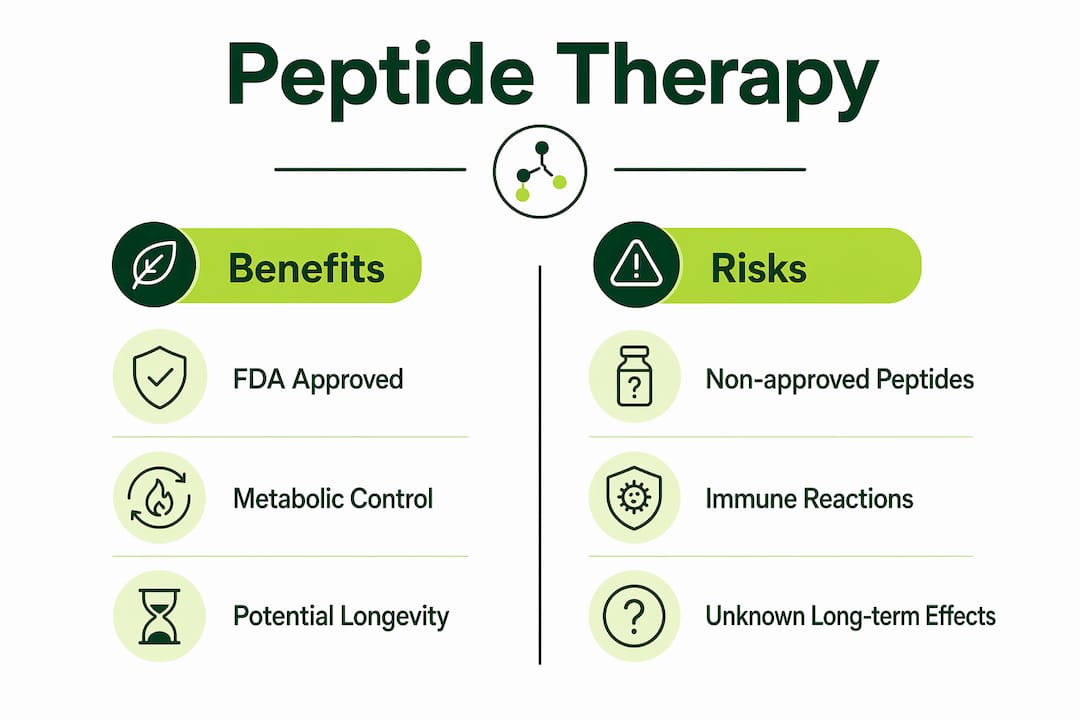
GLP-1 receptor agonists clinically demonstrate the ability to control blood sugar, reduce appetite, and protect against cardiovascular and liver disease. The SURMOUNT clinical trials showed meaningful weight loss and metabolic improvement in patients using tirzepatide. That level of evidence places GLP-1 peptides in a different category from most wellness peptides on the market.
Insulin is the oldest and most widely used therapeutic peptide. Insulin therapy has regulated blood sugar in people with diabetes for many decades. Its safety profile is well-documented, its dosing is standardized, and its manufacturing is tightly regulated. This is what evidence-based peptide therapy looks like in practice.
Beyond metabolic disease, emerging research points to peptide applications in:
The gerontology research is genuinely exciting. It is also genuinely early. Safety, dosing, and regulatory frameworks for anti-aging peptides remain unresolved. Patients who pursue these compounds today are, in effect, participating in an uncontrolled experiment.
The safety profile of peptide therapy depends almost entirely on which peptide you use and where it comes from. FDA-approved peptides carry standardized dosing, regulated manufacturing, and documented side effect profiles. Non-approved wellness peptides carry none of those protections.
Non-FDA-approved peptides carry risks including contamination, immune reactions, and unknown long-term effects. The grey market for wellness peptides lacks established manufacturing standards. A product labeled as BPC-157 or GHK-Cu may contain the wrong concentration, a different compound entirely, or bacterial contaminants from poor production conditions.
“Peptide” is an umbrella term that blends well-studied medications with unproven experimental substances. Patients who do not recognize this distinction risk treating a marketing claim as a medical treatment. The consequences range from wasted money to serious health complications.
Specific risks associated with unregulated peptide use include:
Many wellness peptides are classified as Category 2 bulk drug substances by the FDA. This classification legally restricts retail pharmacies from manufacturing them. Patients who want these compounds are pushed toward unregulated sources, which compounds the risk significantly.
Certain patient groups face additional danger. Patients with specific endocrine cancers should avoid GLP-1 receptor agonists entirely. Established clinical guidelines define candidacy for approved peptides precisely to minimize these risks.
Pro Tip: Before starting any peptide protocol, ask your doctor to confirm whether the compound is FDA-approved and whether your personal health history creates contraindications. This one conversation can prevent serious harm.
A practical approach to peptide therapy starts with one rule: prioritize compounds with FDA approval and clinical trial data. Everything else requires a much higher burden of proof before you put it in your body.
Pro Tip: Ask any peptide provider for the specific clinical trial data supporting their recommended compound. If they cannot name a trial or point to peer-reviewed research, that is a signal to pause.
Peptide therapy delivers real, documented benefits when it involves FDA-approved compounds like GLP-1 receptor agonists and insulin, and carries serious, underappreciated risks when it involves unregulated wellness peptides.
| Point | Details |
|---|---|
| FDA approval is the dividing line | Approved peptides like insulin and GLP-1 agonists have proven safety; wellness peptides often do not. |
| Injection is the effective delivery method | Oral peptides are degraded before absorption; therapeutic results require injectable administration. |
| Stacking is not a clinical practice | Combining multiple unproven peptides lacks interaction data and creates unpredictable health risks. |
| Anti-aging peptide research is early | Nine peptides are under evaluation for aging applications, but dosing and safety remain unresolved. |
| Medical supervision is non-negotiable | A licensed provider can confirm candidacy, monitor results, and prevent contraindicated use. |
The most important thing I have learned about peptide therapy is that the word “peptide” does almost no work on its own. Insulin is a peptide. So is a grey-market compound someone orders from an overseas supplier based on a fitness influencer’s recommendation. Treating those two things as equivalent is not just intellectually lazy. It is genuinely dangerous.
The public enthusiasm for anti-aging and healing peptides has outpaced the science by a wide margin. Patients are self-administering compounds with no human trial data, no standardized dosing, and no clinical monitoring. They are not doing this because they are reckless. They are doing it because the marketing is sophisticated and the hope is real. But hope is not a safety protocol.
What I find genuinely promising is the gerontology research. The idea that targeted peptide sequences could address hallmarks of aging at the cellular level is scientifically credible. The problem is that “credible” and “proven” are not the same thing. The researchers working in this space are careful to say so. The marketers selling peptide stacks are not.
My honest recommendation is this: if a peptide is FDA-approved and your physician confirms you are a candidate, the evidence supports its use. If it is not approved, the burden of proof falls on whoever is recommending it. Ask for the trial data. If there is none, that tells you everything you need to know.
— Eric
Navigating peptide therapy without clinical support is where most people go wrong.

Oaklovesyou is a telehealth platform built around physician-led access to GLP-1 and GIP medications, including semaglutide and tirzepatide. Every patient starts with a licensed physician review, not a questionnaire that auto-approves a supplement. Prescriptions are compounded to clinical standards and delivered directly to your door. The program pairs medication with strength and lifestyle protocols to protect lean muscle mass and support long-term metabolic health. If you are ready to pursue evidence-based weight management with real medical oversight, Oaklovesyou is built for exactly that.
Peptide therapy is used to treat metabolic conditions like type 2 diabetes and obesity through FDA-approved compounds like insulin and GLP-1 receptor agonists. Emerging research also explores peptides for tissue repair, immune modulation, and age-related conditions.
Peptides bind to specific cell-surface receptors and trigger targeted biological responses, such as releasing hormones, suppressing appetite, or signaling tissue repair. The specificity of this binding is what makes peptide therapy medically useful.
Non-FDA-approved wellness peptides carry significant risks including contamination, immune reactions, and unknown long-term effects due to lack of manufacturing standards and clinical oversight. Consulting a licensed physician before use is the only way to assess personal risk.
Stomach acid and digestive enzymes break down peptide chains before they reach therapeutic concentrations in the bloodstream. Injection bypasses this degradation and delivers the compound at effective levels.
FDA-approved peptides undergo rigorous clinical trials confirming safety and efficacy, while many wellness peptides are classified as Category 2 bulk drug substances with no standardized manufacturing or dosing guidelines. This regulatory gap is the core safety distinction between the two categories.