
To maximize fat oxidation during fasting, schedule 30–60 minutes of moderate-intensity aerobic or resistance exercise within a 12–18 hour fast, eat a protein-rich meal within 1–2 hours after training, and stay hydrated with electrolytes throughout the fast. That’s the core protocol. Everything below explains why it works, how to calibrate it to your body, and what the research actually supports.
Quick-start protocol:
Fasted moderate-intensity exercise reliably increases fat oxidation during the session. Combining it with structured training and adequate protein over at least 14 weeks produces meaningful body-composition improvements.
| Point | Details |
|---|---|
| Fast duration sweet spot | A 14–16 hour overnight fast before exercise optimizes fat availability without impairing work capacity for most adults. |
| Intensity determines fuel | Stay at 50–65% max heart rate to keep fat as the primary substrate; higher intensities shift reliance back to glycogen. |
| Protein is non-negotiable | Aim for 1.6–2.2 g protein per kg of body weight daily; prioritize 30–50 g within 1–2 hours post-workout. |
| Expect a timeline of weeks | Body-composition changes require at least 8–14 weeks of consistent EX+IF; acute fat oxidation improvements begin immediately. |
| Medication users need supervision | GLP-1 and GIP patients should coordinate fasting schedules with their clinician before starting to avoid under-fueling and side-effect amplification. |
After glycogen stores drop during a fast, your body triggers a metabolic switch: insulin falls, glucagon and catecholamines rise, and adipose tissue releases fatty acids into circulation at a higher rate. Johns Hopkins Medicine describes this shift as the transition from glucose to fat oxidation that occurs as liver glycogen is depleted, typically after 12 or more hours without food.
The respiratory exchange ratio (RER) is the most direct way to measure which fuel your body is burning. An RER near 1.0 signals heavy carbohydrate use; an RER near 0.7 indicates almost pure fat oxidation. During fasted exercise, RER readings consistently trend lower than in fed conditions, reflecting a genuine shift in substrate use rather than a subjective impression.
Intensity complicates the picture. Fat oxidation peaks at moderate intensities around half to two thirds of VO2max for most trained adults, and declines as effort climbs. This is the crossover concept: push hard enough and your muscles demand glycogen faster than fat can be mobilized and oxidized, so carbohydrate becomes the dominant fuel regardless of fasting status. Staying in that moderate zone keeps fat as the primary substrate.
Sex matters here too. Women tend to produce more ketones and have higher non-esterified fatty acid (NEFA) availability during fasting compared with men, according to research on sex differences in fasting metabolism. That means women may enter fat-dominant metabolism somewhat earlier in a fast and sustain it more readily, though individual variation within each sex is substantial.
Key insight: Fasting lowers insulin enough to unlock fat stores, but exercise is what actually drives those freed fatty acids into the mitochondria to be burned. The combination is more powerful than either alone.
Trials consistently show that fasted exercise produces higher acute fat oxidation than fed exercise. The mechanism is straightforward: carbohydrate ingestion before exercise shifts substrate use toward carbohydrate oxidation, suppressing the fat-burning signal that fasting creates. That effect is well-replicated across aerobic and resistance modalities.
For resistance training specifically, a controlled trial measuring RER across multiple exercises found lower RER during fasted resistance sessions compared with postprandial sessions, confirming that fasted lifting increases fat reliance during the bout. This matters because resistance training is often assumed to be carbohydrate-dependent, but the evidence shows meaningful fat use even during moderate-load fasted lifting.
The picture gets more complicated when you look at body composition over weeks rather than fuel use during a single session. A randomized trial found that combining intermittent fasting with structured exercise produced greater fat loss and increases in fat-free mass than IF alone, but the effect required both elements working together. IF without exercise showed smaller body-composition changes.
Study populations in this literature skew toward younger, moderately trained adults, often women with obesity. Findings in highly trained athletes or older adults may differ. Most trials also run 8–16 weeks, so long-term adaptation data beyond that window is limited.
| Study type | What was measured | Key finding | Limitation |
|---|---|---|---|
| Aerobic fasted vs. fed trials | RER, lipid oxidation rate | Higher fat oxidation in fasted state | Mostly acute; short duration |
| Fasted resistance trial (PMC) | RER per exercise | Lower RER (more fat) when fasted | Small sample; trained men |
| IF + HIIT randomized trial (Frontiers 2022) | Body fat, fat-free mass | Greater fat loss with IF + exercise vs. IF alone | Women with obesity; 8 weeks |
| EX + IF meta-analysis (Frontiers 2026) | Body composition, cardiometabolic markers | Modest consistent benefits at ≥14 weeks | Heterogeneous protocols |
For fat-focused sessions, prioritize 30–60 minutes of moderate-intensity aerobic work or a controlled resistance session performed within a 12–18 hour fast. A 2026 multilevel meta-analysis recommended approximately 45–60 minutes per session at roughly 4 sessions per week, sustained for at least 14 weeks, as a practical starting prescription for measurable body-composition and cardiometabolic benefits.
Beginner (0–6 months consistent training)
Intermediate (6+ months, some structured training)
Advanced (structured training, performance goals)
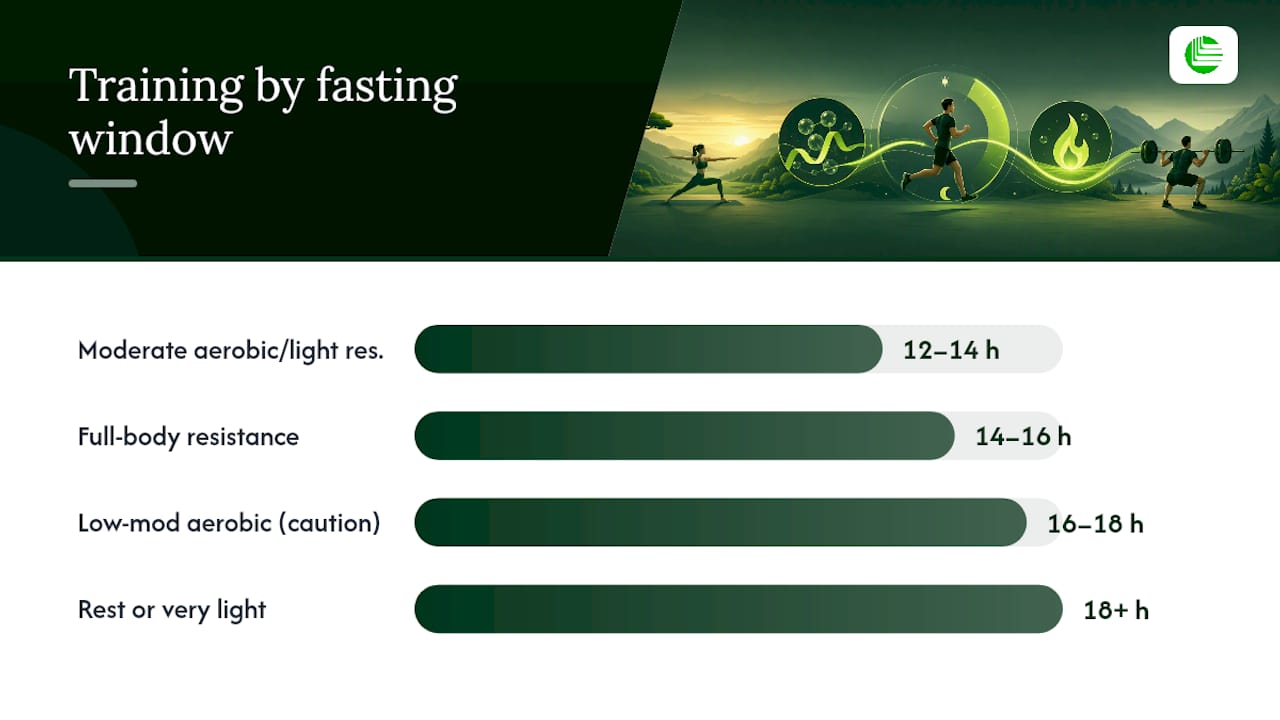
| Fast duration | Best session type | Notes |
|---|---|---|
| 12–14 hours | Moderate aerobic or light resistance | Accessible for most; good starting point |
| 14–16 hours | Moderate aerobic, full-body resistance | Optimal zone for most adults |
| 16–18 hours | Low-to-moderate aerobic only | Monitor symptoms; not for beginners |
| 18+ hours | Rest or very light movement | Work capacity typically declines; risk increases |
Morning training after an overnight fast is the most practical setup for most people. Evening fasted training is possible but requires careful feeding-window management to avoid going to bed without adequate protein.
Adequate daily protein, carbohydrates timed around training, and a feeding window that fits your schedule are the three levers that determine whether fasting builds or erodes lean mass. Get protein wrong and fasted training becomes catabolic over time.
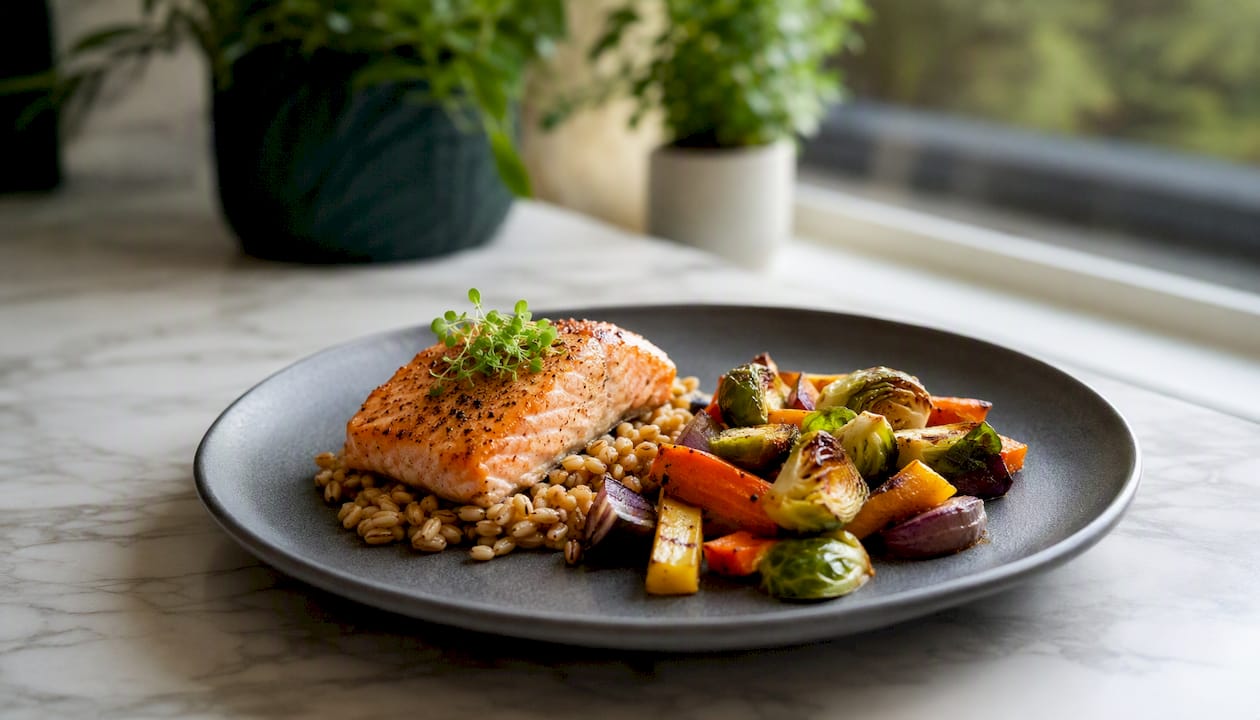
For adults combining fasting with regular exercise, preserving lean mass requires roughly 1.6–2.2 g of protein per kilogram of body weight per day, distributed across your eating window. The post-workout meal is the highest-priority protein hit: 30–50 g of high-quality protein (chicken, eggs, Greek yogurt, whey, or a plant-based equivalent) within 1–2 hours of finishing your session.
A 2026 systematic review found that 16:8 combined with exercise produced modest additional reductions in triglycerides and LDL compared with exercise alone, though glycemic effects were small.
Pro Tip: If hitting your protein target inside a compressed eating window feels difficult, prioritize protein at every meal before adding carbohydrates or fats. A meal-prep approach — pre-cooked chicken, hard-boiled eggs, Greek yogurt portioned in advance — removes the friction that causes people to undereat protein on busy days.
Carbohydrates in this meal restore glycogen and support muscle protein synthesis without blunting the fat-oxidation signal from the fasted session, which has already concluded.
During fasts longer than 14 hours, sodium and potassium losses accelerate. Drink at least 16–24 oz of water before training. If you feel muscle cramps or persistent fatigue, add a pinch of sea salt and a potassium-containing food (like a small piece of banana) to your first meal. Plain sparkling water, black coffee, and unsweetened tea are all fast-compatible during the fasting window.
Statistic: A randomized trial found IF combined with structured exercise produced greater fat loss and increases in fat-free mass than IF alone, reinforcing that nutrition structure inside the eating window determines whether fasting preserves or degrades body composition.
A small set of supplements has decent human evidence for increasing acute fat oxidation; most others are oversold. The honest summary: supplements augment the signal; they do not create it.
What has real evidence:
What lacks solid support:
Safety note for medication users: Some supplements interact with prescription weight-loss medications. Caffeine can amplify nausea in patients on GLP-1 agonists like semaglutide or tirzepatide. Green tea catechins may affect drug metabolism pathways. Always confirm supplement use with your prescribing clinician before adding them to a GLP-1 or GIP medication regimen.
Supplements also do not replace the fundamentals: training, protein, and energy management drive the majority of fat-oxidation improvements. A well-timed caffeine dose on top of a solid fasted training protocol is a reasonable addition; caffeine on top of a poor protocol changes little.
People with diabetes on glucose-lowering medications, those who are pregnant or breastfeeding, anyone with a history of eating disorders, and individuals with cardiovascular symptoms should not attempt aggressive fasted training without direct medical supervision. This is not a precautionary boilerplate. Hypoglycemia during fasted exercise is a real risk for anyone on insulin or sulfonylureas, and the consequences can be serious.
Red flags: stop the session immediately if you experience:
Practical mitigations:
Pro Tip: Patients on GLP-1 or GIP medications should coordinate fasting schedules with their prescribing clinician before starting. Appetite suppression from these medications can mask hunger signals that would otherwise prompt you to break a fast, increasing the risk of unintentional under-fueling during training.
Consult a healthcare provider before attempting extended fasts (beyond 18 hours) or combining intermittent fasting with any prescription weight-loss medication. For urgent symptoms, such as syncope, chest pain, or severe confusion, seek emergency care. For persistent but non-emergency concerns like recurring dizziness or inability to maintain protein intake, contact your prescribing clinician directly.
Use a combination of objective measures and functional checks: body composition trends, periodic ketone readings, training quality, and heart-rate data together give a clearer picture than any single metric.
Practical measurement options:
| Metric | Tool | What it tells you | When to check |
|---|---|---|---|
| Body composition | DXA scan, DEXA, or skinfold calipers | Fat mass vs. lean mass changes | Every 6–8 weeks |
| Ketone levels | Consumer blood ketone meter (e.g., Keto-Mojo) | Depth of metabolic switch | Morning, 2–3×/week |
| Heart-rate zones | Wearable (Garmin, Apple Watch, Polar) | Whether you’re training in fat-max zone | Every session |
| Waist circumference | Tape measure | Visceral fat proxy | Every 2–4 weeks |
| Training performance | Workout log (reps, pace, perceived exertion) | Whether fasting is impairing capacity | Every session |
What to expect and when:
Acute increases in fat oxidation during fasted sessions are measurable from the first workout. Body-composition shifts take longer. Meaningful changes in fat mass typically require at least 8–14 weeks of consistent training and appropriate nutrition, consistent with the timeline suggested by the 2026 meta-analysis on EX+IF programs. If your waist measurement and body-fat percentage are both trending down while your training performance holds steady, the protocol is working. If performance drops significantly over 2–3 weeks, revisit protein intake and fast duration before changing the exercise program.
A blood ketone reading of 0.5–3.0 mmol/L in the morning indicates nutritional ketosis, a useful proxy for fat-dominant metabolism. Readings above 3.0 mmol/L without medical supervision warrant a clinician check, particularly for anyone with diabetes.
Fasted training reliably increases fat use during the workout itself. Whether that translates into meaningful fat loss over months depends almost entirely on total energy balance, training consistency, and diet quality. The metabolic shift is real; the fat-loss guarantee is not.
What fasting and fasted exercise can do:
What they cannot do:
Johns Hopkins Medicine notes that longer fasts are not necessarily better and may carry additional risks, a point worth internalizing before extending fasting windows beyond 16–18 hours in pursuit of faster results.
Individual variability is substantial. Women tend to respond differently than men due to hormonal differences in fatty acid availability. Older adults may need higher protein targets to prevent muscle loss. People with insulin resistance often see stronger initial responses to IF than metabolically healthy individuals. Exploring metabolic health strategies that account for these differences produces better outcomes than a one-size-fits-all protocol.
Consistency beats intensity here. A 14:10 fast you maintain for 16 weeks outperforms a 20:4 fast you abandon after three. Sustainable weight loss comes from habits that fit your life, not from the most aggressive protocol you can tolerate for a month.
Fasting can be combined with prescription GLP-1 or GIP medications under clinician supervision, but it requires careful coordination. Dose adjustments, side-effect monitoring, and structured nutrition support are not optional additions; they are central to doing this safely.
GLP-1 agonists like semaglutide and tirzepatide suppress appetite significantly. That effect can make fasting feel effortless at first, which sounds like a benefit but carries a real risk: patients may extend fasts well beyond what their body can handle without recognizing the warning signs. Nausea, a common early side effect of GLP-1 medications, is also worsened by an empty stomach. Combining a 16+ hour fast with a GLP-1 dose on an empty stomach can intensify nausea to the point of interfering with protein intake and hydration.
When to pause fasting or modify your eating window:
When to contact your prescribing clinician:
Pro Tip: If you’re on a GLP-1 or GIP medication and want to add fasted training, start with a 12:12 window and a 30-minute moderate walk. Give yourself 2–3 weeks to assess tolerance before extending the fast or increasing session intensity. Coordinate every step with your Oak Longevity clinician.
Oak Longevity’s telehealth model is built for exactly this kind of coordination: physician-reviewed consultations, direct medication delivery, and ongoing virtual support to adjust protocols as your response evolves. For patients pairing GLP-1 or GIP therapy with exercise and fasting, preserving muscle protein synthesis while managing medication side effects is a clinical priority, not an afterthought.

If you’re considering a medically supervised approach that pairs prescription weight-loss medication with a structured fasting and exercise protocol, Oak Longevity’s weight-loss program connects you with a licensed physician online, delivers your prescription to your door, and provides ongoing clinical support to keep your protocol safe and effective.
Most articles on fasting and fat oxidation treat the metabolic switch as the destination. It isn’t. The switch is the mechanism; the destination is a body composition and metabolic health profile that you can sustain for years, not weeks. That distinction shapes every clinical decision worth making in this space.
The research is clear that fasted exercise increases acute fat oxidation. What the research is less clear about, and what most guides gloss over, is that this acute signal matters far less than the cumulative effect of consistent training, adequate protein, and a calorie environment that supports fat loss without sacrificing lean mass. Patients who chase the deepest possible fast often end up under-fueled, under-muscled, and frustrated when the scale stops moving.
The most durable outcomes come from protocols that are aggressive enough to produce a real metabolic signal but conservative enough to sustain for months. For most people, that means a 14:16 fast, moderate-intensity exercise 3–4 times per week, and protein targets that feel almost boring to hit every day. Add clinician oversight when medications are involved, and you have a framework that actually holds up over time.
This article is general information, not a substitute for advice from a qualified doctor. Consult a qualified healthcare professional about your own circumstances before acting on anything here.