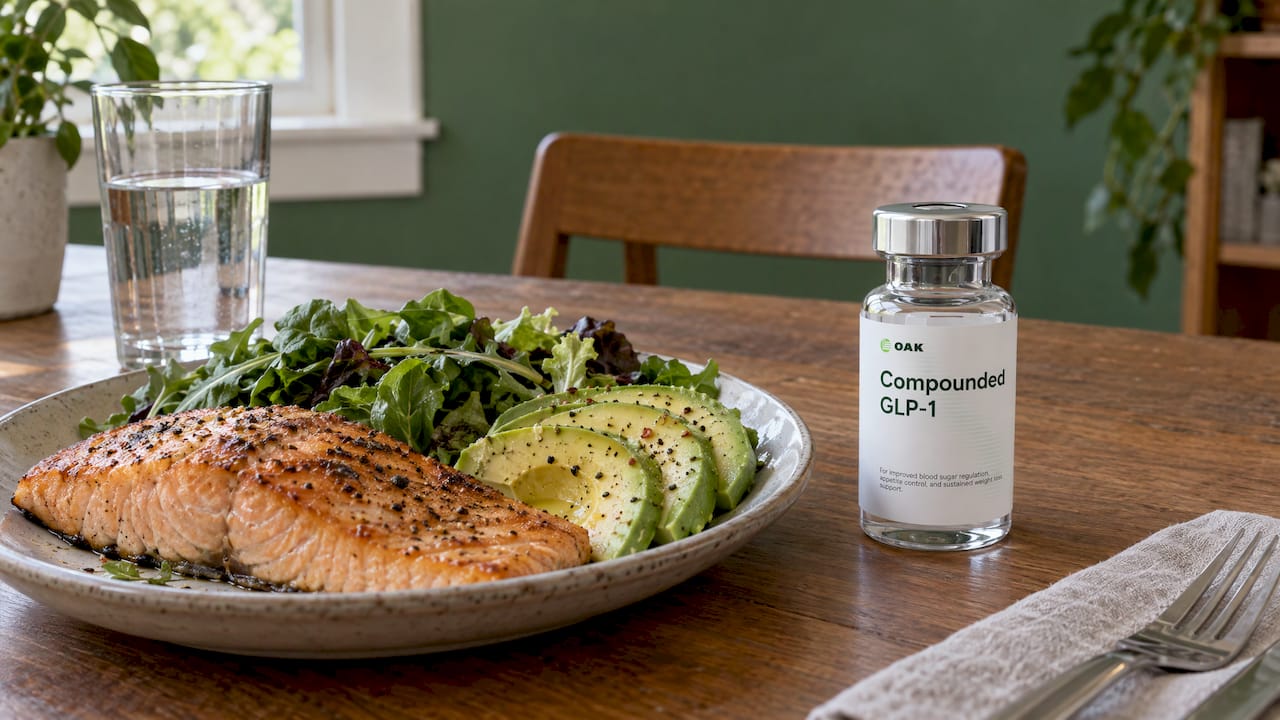
Yes, many adults eat keto while taking semaglutide or tirzepatide, and nothing in the research says the pairing is inherently unsafe. But keto is not required for these medications to work. Whether it suits you depends on your health history, your other medications, and whether you can still get enough protein, fluid and electrolytes while your appetite is low. This guide covers what the evidence shows, the risks, the timing, and a practical way to set it up.
In most healthy adults, yes. The FDA-approved prescribing information for Wegovy says the medication should be used with a reduced-calorie meal plan and increased physical activity. It does not specify a macronutrient split, and it does not forbid low-carb eating. Semaglutide reduces appetite and slows how fast food leaves your stomach. Keto limits carbohydrates, usually to somewhere under 50 g a day, and shifts you toward fat and protein. The two work through different mechanisms, so they do not cancel each other out.
But “allowed” is not the same as “necessary.” The large obesity trials of semaglutide and tirzepatide paired the drug with general lifestyle counseling, not a standardized ketogenic diet. That means any claim that keto and GLP-1 medication are synergistic is an extrapolation, not a proven result. A balanced, protein-forward pattern built on vegetables, fruit, legumes, whole grains, lean proteins, nuts and seeds also works well, and many people find it easier to keep up for years.
If you like the way low-carb eating feels, you can do it. If you do not, you are not missing a secret ingredient.
The evidence is early, so it helps to know exactly what each study did and did not test.
A retrospective case series followed seven adults who ate a personalized whole-food ketogenic diet while taking low-dose semaglutide (1.0 mg a week or less) for six months. They lost an average of 21.9 kg. About 92% of that was estimated fat mass, with a mean skeletal muscle loss of 1.2 kg and a mean drop in fasting insulin of 15.6 µIU/mL. The authors are clear that with no comparison groups, you cannot conclude the combination caused those results or that the two work synergistically. Seven people is a story, not a trial.
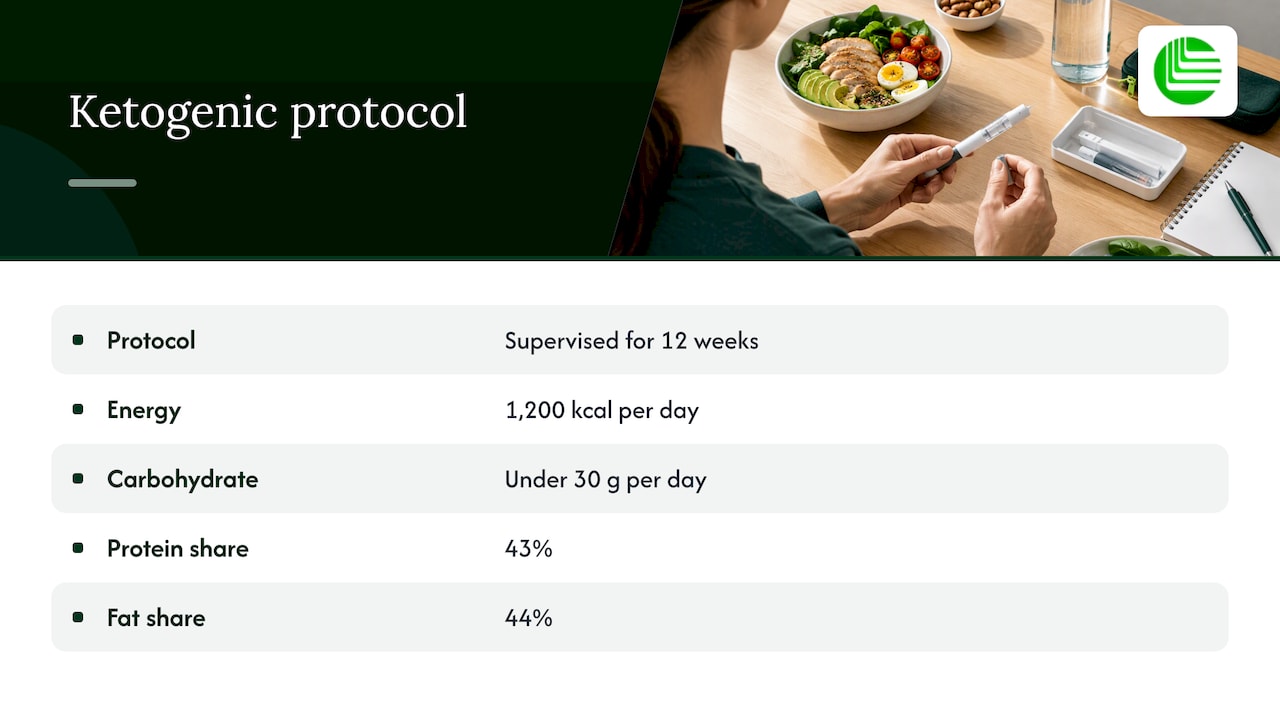
A 12-week preliminary study in Italy compared tirzepatide plus a low-energy ketogenic protocol with tirzepatide plus a standard low-calorie diet in people with obesity. The ketogenic protocol was about 1,200 kcal a day with under 30 g of carbohydrate, 43% protein and 44% fat. That group did better at preserving fat-free mass, muscle strength and resting metabolic rate. Note that this was a supervised, structured protocol, not casual low-carb eating, and it ran for only 12 weeks.
The fair reading: keto and GLP-1 medication can coexist and may help preserve lean mass when protein is handled carefully. Larger, longer trials are still needed.
Most of these risks come from the combination of low appetite and a restrictive diet, not from either one alone.
Keto itself increases fluid and sodium loss, especially in the first weeks. Semaglutide can cause nausea, vomiting and diarrhea. The Wegovy label warns that in people with kidney problems, these symptoms may cause dehydration that can make kidney problems worse, and stresses drinking fluids. A JAMA Internal Medicine patient guide adds that extreme calorie restriction with GLP-1 medication can worsen dehydration, fatigue and kidney problems, limit essential nutrients and lead to excessive weight loss.
This is the one that needs a clinician. The Wegovy label notes a higher risk of hypoglycemia in people with type 2 diabetes, especially those who also take sulfonylureas or insulin. A 2026 review of keto contraindications explains that keto is not off-limits in type 2 diabetes, but it lowers blood glucose so effectively that hypoglycemia can develop if medications dosed for a higher-carb diet stay the same. It also notes that SGLT2 inhibitors carry an added risk of diabetic ketoacidosis with a ketogenic diet, and that endocrinology guidance suggests stopping them before starting keto.
If you take any diabetes medication, do not change your carbs first and your meds later. Call your prescriber or endocrinologist before you start, and ask how they want you to monitor blood sugar.
A 2026 review in Current Obesity Reports recommends correcting common deficits such as vitamin D, iron and B vitamins during incretin therapy. Eat very little because of low appetite, and cut out whole food groups like fruit, legumes and grains on top of it, and the margin for nutrients gets thin. Non-starchy vegetables, nuts, seeds, fish, eggs and olive oil do a lot of the work on keto.
This applies to any rapid weight loss, with or without keto. In the STEP 1 semaglutide trial, a DXA subset showed lean mass accounted for about 39% of weight lost. A scoping review of 12 studies found energy intake fell by 24% to 39% on semaglutide or tirzepatide, and lean tissue loss reached up to 40% of total weight reduction. The authors recommend higher-protein, nutrient-dense eating, early dietitian involvement and routine nutritional monitoring.
The 2025 expert consensus statement says the most common adverse effects of GLP-1-based therapies are gastrointestinal: nausea, vomiting, diarrhea and constipation. Most appear during dose escalation and are usually mild to moderate and temporary. A sudden jump in dietary fat can make nausea and diarrhea worse. Keto’s initial fatigue, headache and “keto flu” can also be hard to tell apart from medication effects. That makes it harder to know what is causing what.
Changing two big things at once makes problems harder to untangle. If you start a GLP-1 and keto the same week and then feel dizzy, nauseated and exhausted, you will not know which one is responsible, and you may end up quitting both.
A more manageable order:
If you want a deeper read on the pancreas question, see our piece on semaglutide and pancreatitis risk.
This is where keto on a GLP-1 succeeds or fails. Low appetite makes it easy to under-eat protein, and keto makes it easy to lose water and salts.
Targets vary a little by source, but they cluster in the same range:
| Source | Protein recommendation |
|---|---|
| 2025 expert consensus | 1.2 to 1.5 g/kg actual body weight per day during weight loss |
| 2026 Current Obesity Reports review | 1.2 to 1.6 g/kg per day, spread across meals |
| 2024 nutrition protocol | 1.2 to 1.6 g/kg adjusted body weight |
| JAMA Internal Medicine | 20 to 30 g at the start of each meal; 1.0 to 1.5 g/kg daily if moderately active |
A quick example: someone who weighs 80 kg (about 176 lb) and follows the 1.2 to 1.5 g/kg range would aim for roughly 96 to 120 g of protein a day. Split over three meals, that is around 30 to 40 g each. Eggs, fish, poultry, Greek yogurt, cottage cheese, tofu and lean cuts of beef all fit keto. Eat the protein first at each meal, while your appetite is still there. Our GLP-1 protein target guide walks through the math in more detail.
The JAMA guide recommends 2 to 3 liters (8 to 12 cups) of fluid a day, mostly water, and limiting alcohol, caffeine and sweetened drinks. GLP-1 therapy has also been studied for blunting the thirst signal, so waiting until you feel thirsty can leave you behind. Sip steadily and keep a bottle in sight.
The same Nova Southeastern protocol suggests a blend of water with sodium, potassium, calcium, magnesium and chloride to help maintain hydration. In practice on keto, that usually means salting food to taste, eating potassium-rich foods like avocado, spinach and salmon, and choosing a sugar-free electrolyte mix if you get headaches or cramps. If you have kidney disease, heart failure or high blood pressure, ask your doctor before adding salt or supplements.
Constipation is common on both a GLP-1 and keto. The expert consensus notes it may need proactive management with fiber, hydration and sometimes a fiber supplement. The 2024 protocol suggests 14 g of fiber per 1,000 kcal. On keto, lean on leafy greens, broccoli, chia, flax, berries and nuts.
This is a template, not a prescription. Adjust portions to your appetite, size and doctor’s advice.
If full meals feel too heavy, move to smaller, protein-first mini meals. Heavy, greasy food is the most common trigger for nausea on these medications, so keep fat moderate rather than piling on butter and cream. For more ideas, see our semaglutide diet plan.
Whatever you eat, resistance training is what tells your body to hold on to muscle. The 2026 Current Obesity Reports review recommends structured, progressive resistance training alongside adequate protein to preserve function during incretin-based therapy. Two to three sessions a week of squats, rows, presses and carries is a solid start. Our guides on building muscle on GLP-1 medication, a semaglutide workout plan and muscle protein synthesis cover the details.

Contact your prescriber or primary care clinician if you notice:
If you have type 1 diabetes, type 2 diabetes on insulin, sulfonylureas or SGLT2 inhibitors, kidney disease, or a history of eating disorders, set up the diet plan with your care team first.
At Oak, we see keto as one tool, not a requirement. The medication does the heavy lifting on appetite. What you do around it decides whether the weight you lose is mostly fat, and whether you feel good while losing it.
Our approach pairs weight loss with strength and lifestyle protocols designed to preserve lean muscle and support metabolic health. For most people, that means a protein-first plate, steady hydration and regular lifting, with carbs set at whatever level you can keep up. If that is low-carb, great. If it is a Mediterranean-style plate, also great.
We built Oak so you can get a physician-reviewed prescription online, with ongoing support and free health coaching to help you adjust food and dosing as you go. Tell us how you eat, and we will help you build around it.
Eric
If you are ready to pair a GLP-1 with an eating style you can sustain, Oak offers online access to prescription weight-loss medication. You complete a health questionnaire, a licensed physician reviews it, and approved prescriptions are delivered to your door. Published pricing starts at $119 per month for semaglutide and $185 per month for tirzepatide, and compounded injectable semaglutide starts at $167 per month. Ongoing virtual support and health coaching are part of the program.

You can see every option on our weight loss page, and your physician will tell you which medication fits your history.
For most healthy adults, no specific interaction is known, and the drug label does not prohibit low-carb eating. The practical risks are dehydration, nutrient gaps and eating too little protein. Review your plan with your prescriber, especially if you have kidney, gallbladder or pancreas history.
The same considerations apply. A 12-week Italian study of tirzepatide plus a supervised low-energy ketogenic protocol found better preservation of fat-free mass, muscle strength and resting metabolic rate than tirzepatide with a standard low-calorie diet. It was small and short, so treat it as encouraging rather than conclusive.
Not necessarily. A small case series reported large losses, but its authors say no causal or synergistic conclusion can be drawn. Consistent protein, fluids, sleep and resistance training matter at least as much as carb level.
It is easier to start the medication first and let your dose and side effects settle. Then add low-carb eating in steps, with your prescriber’s input. That way you can tell what is causing any symptoms.
Aim for 2 to 3 liters of fluid a day, mostly water, and limit alcohol, caffeine and sweetened drinks, per JAMA Internal Medicine guidance. A sugar-free electrolyte mix can help if you get headaches or cramps, unless your doctor has told you to limit sodium or potassium.