
If you’re searching for joinvineyard.com alternatives, the short answer is this: evaluate every option across five dimensions before you sign up. Those dimensions are medication sourcing, clinical oversight, coaching depth, cost, and follow-up cadence. Oak Longevity is a direct, clinician-reviewed alternative worth putting at the top of your list.
Best-fit alternatives by use case:
The primary trade-off in this market: Lower price usually means compounded medication supply and lighter clinical follow-up. Higher price typically gets you FDA-approved drugs, named prescribers, and structured monitoring. Neither is automatically wrong — but you need to know which one you’re buying before you pay.
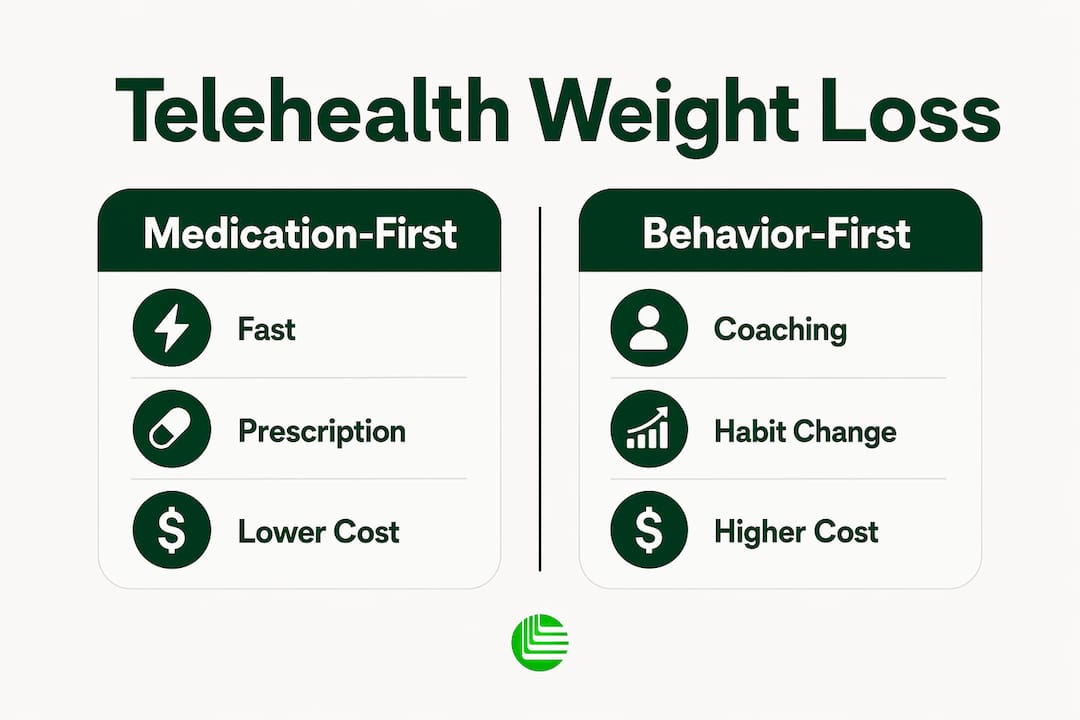
The telehealth weight-loss market divides into three recognizable types: medication-first GLP-1 platforms, behavior-first programs, and hybrid clinician-plus-coach services. Here’s how they stack up across the dimensions that actually matter.
| Dimension | Medication-First Platforms | Behavior-First Programs | Hybrid Clinician + Coach | Oak Longevity |
|---|---|---|---|---|
| Meds available | Semaglutide, tirzepatide | Varies; some GLP-1 access | Semaglutide, tirzepatide | Semaglutide, tirzepatide (GLP-1/GIP) |
| Care model | Async prescriber review | Coach-led, prescriber on call | Prescriber + dedicated coach | Physician review + 24/7 support |
| Clinical transparency | Varies widely | Often limited | Usually named clinicians | Clinician-reviewed intake |
| Medication sourcing | Often compounded | FDA-approved or compounded | Mixed | Compounded GLP-1 (disclosed) |
| Follow-up cadence | Monthly check-ins | Weekly coaching | Biweekly to monthly | Ongoing physician-led guidance |
| Pricing model | — | Program fees vary | Mid-to-high range | Transparent; D2D delivery included |
| Eligibility screening | Questionnaire-based | Full intake | Full medical history | Health questionnaire + physician review |
Provider profiles:
Medication-first platforms move fast. You fill out a form, a prescriber reviews it, and medication ships within days. The trade-off is thin follow-up and, often, compounded supply with no FDA quality review.
Behavior-first programs invest heavily in coaching and habit change. Some offer GLP-1 access; others don’t. Published telehealth comparisons consistently place year-long programs with registered dietitian and behavioral coaching among the top picks for durable outcomes.
Hybrid models sit in the middle: a prescriber handles medication, a coach handles accountability. Costs run higher, but so does clinical continuity.
Oak Longevity pairs physician-reviewed prescriptions with a strength and lifestyle protocol designed to preserve lean muscle alongside weight loss. Medication ships directly to your door, and 24/7 support is included. For a closer look at how online weight loss clinics structure their intake and monitoring, Oak Longevity’s process follows the clinical model.
Pro Tip: Before enrolling anywhere, ask the platform to name the prescriber who will review your case and confirm they hold a license in your state. If they can’t answer that question directly, treat it as a red flag.
Prioritize clinical transparency first, cost second. A program that saves you $100 a month but skips lab monitoring or uses an unlicensed prescriber is not a bargain.
Checklist before you enroll:
Obesity medicine society guidance is clear: a comprehensive medical history, medication review, and lab monitoring are standards of care, not optional extras. Questionnaire-only intake is a poor substitute.
Red flags to walk away from:
Questions to ask before signing up:
FDA-approved GLP-1 products carry regulatory quality guarantees and predictable dosing. Compounded alternatives carry higher practical risk and supply vulnerability. That’s the bottom line.

Compounded drugs are not reviewed by the FDA for safety, efficacy, or manufacturing quality before they reach patients. That means no independent verification of potency, sterility, or dose accuracy. Some compounding pharmacies are now marketing unproven delivery forms like sublingual drops and dissolvable tablets that have no clinical trial data behind them.
Key differences at a glance:
Regulatory note: The FDA issued dozens of warning letters in early 2026 targeting telehealth companies and compounding pharmacies selling unapproved GLP-1 products that made false equivalence claims. This enforcement wave is ongoing.
Public health analysts argue that mass-produced compounded GLP-1s pose real population-level risks and recommend preferring FDA-approved drugs when feasible. For patients who need to understand how GLP-1 medications differ by type and approval status, that distinction shapes every sourcing decision.
Pro Tip: Ask any compounded pharmacy for a certificate of analysis (COA) for your specific batch. A legitimate 503A or 503B facility will provide one. If they refuse or don’t know what you’re asking, find another pharmacy.
Out-of-pocket costs vary widely depending on medication type and program features, with compounded products generally costing less ($179–$350 per month) but carrying higher risk, and FDA-approved medications typically costing more ($935–$1,350 monthly list price) with added benefits.
Confirm these pricing details with any program before enrolling:
| Product type | Typical monthly cost | Notes |
|---|---|---|
| FDA-approved brand GLP-1 (list price) | $935–$1,350 | Insurance or savings cards can reduce this significantly |
| Telehealth program bundle (FDA-approved) | Varies by program | Often includes consults; labs may be extra |
| Compounded injectable GLP-1 | $179–$350 | No FDA quality review; pharmacy quality varies |
Insurance coverage for GLP-1 medications remains inconsistent. Some commercial plans cover semaglutide or tirzepatide for diabetes but not for weight management. Manufacturer savings programs exist for branded products and can bring monthly costs down substantially for eligible patients. Compounded versions are almost never covered by insurance.
Oak Longevity is a telehealth platform built around physician-reviewed GLP-1 and GIP medication access, door-to-door delivery, and a longevity-focused lifestyle protocol that most medication-only platforms skip entirely.
What the program includes:
Industry analyses consistently show that the best outcomes come from combined medication and behavioral programs, not medication alone. Oak Longevity’s pairing of prescription access with strength and lifestyle protocols reflects that evidence.
What sets Oak Longevity apart from a basic GLP-1 platform: the program treats weight loss as one component of metabolic health, not the finish line. The strength and lifestyle layer is built in from day one, not offered as an optional add-on.
Trust signals to verify on the Oak Longevity site:
For patients weighing the risks of combining compounded products with other supplements, Oak Longevity’s guidance on using peptides safely alongside weight-loss medication is worth reading before enrolling anywhere.
The most reliable telehealth weight-loss programs combine FDA-sourcing transparency, named licensed prescribers, and structured follow-up — cost is a secondary filter, not the first one.
| Point | Details |
|---|---|
| Clinical transparency first | Confirm named prescribers with state licenses before price becomes a factor. |
| Sourcing determines risk | Compounded GLP-1s carry no FDA quality review; request a COA and pharmacy registration. |
| Follow-up cadence matters | A safe program schedules a check-in within 2–4 weeks of starting, then monthly or quarterly. |
| Coaching improves outcomes | Programs pairing medication with behavioral or lifestyle support produce more durable results. |
| Oak Longevity as a direct option | Oak Longevity offers physician-reviewed GLP-1/GIP access with a built-in strength and lifestyle protocol; verify details at the weight-loss page. |
The conversation in telehealth weight loss fixates on price per month and which medication is “stronger.” Both are the wrong starting question. What actually determines whether you get a safe, lasting result is the quality of the clinical relationship behind the prescription.
A program that charges $199 a month and ships medication after a five-minute questionnaire is not a deal. It’s a liability. The 2026 FDA enforcement wave against compounded GLP-1 marketers made that concrete: patients whose supply was cut off mid-therapy had no contingency plan because no real prescriber relationship existed to manage the transition.
The checklist in this article isn’t bureaucratic caution. It’s the minimum standard for a program worth your money and your health. Verify the prescriber, confirm the pharmacy, and ask about follow-up before you hand over a credit card. Oak Longevity’s weight-loss program page is a reasonable starting point for comparison.
Most telehealth GLP-1 programs give you a prescription and a shipping label. Oak Longevity gives you a physician-reviewed plan, GLP-1 and GIP medication delivered to your door, and a strength and lifestyle protocol designed to protect lean muscle while you lose weight. That combination is harder to find than it should be.

State-by-state prescribing rules apply, so check eligibility for your location when you visit. To review the program details, clinician oversight model, and what’s included in the cost, visit the Oak Longevity product page and confirm whether it’s the right fit for your situation.
This article is general information, not medical advice. Confirm current prescribing rules, medication availability, and program eligibility with a licensed clinician or the relevant primary source for your specific situation.