
FDA approved prescription weight loss drugs, including GLP 1 medications like semaglutide and tirzepatide, generally qualify for HSA and FSA reimbursement when a licensed provider prescribes them to treat a diagnosed medical condition such as obesity or type 2 diabetes. Compounded or unapproved versions can still qualify, but they typically require stronger documentation and face closer scrutiny from plan administrators. Telehealth providers can supply the prescription and paperwork needed to support a claim when treatment is clinically appropriate.
TL;DR:
- Check your plan’s summary of benefits first, because some employer FSAs exclude drug categories and custodians may apply separate review standards.
- Ask your clinician to include the diagnosis code on a signed medical necessity letter with clinical rationale and medication details.
- FSA debit card purchases can trigger automatic proof requests, so submit the prescription, itemized receipt, and required letter before the deadline to avoid card suspension.
- HSA holders manage records and reimbursement timing themselves, but HSA access requires enrollment in a qualifying high deductible health plan.
- For compounded prescriptions, retain the pharmacy name and exact formulation, since administrators may request added clinical justification and the FDA has not reviewed products before marketing.
The IRS does not evaluate weight loss drugs as a category; it evaluates intent. Publication 502 states that a medical expense qualifies only when it treats or prevents a diagnosed disease, and prescription drugs are includible when a licensed provider prescribes them for that purpose. Obesity, prediabetes, type 2 diabetes, and related conditions fall squarely into that definition.
This distinction separates reimbursable use from use that will not pass review:
Your plan document has the final word. Some employer-sponsored FSAs exclude certain drug categories entirely, and some HSA custodians apply their own review standards before releasing funds. Checking your plan’s summary of benefits before you submit a claim saves a round of back and forth with the administrator.
Administrators rarely accept a pharmacy receipt alone for a GLP-1 claim. Most want a paper trail that proves both the diagnosis and the treatment decision.
Pro Tip: Ask your prescribing clinician to include the ICD-10 diagnosis code directly on the LMN. It is the single detail that speeds up most administrator reviews.
The accounts share a tax structure but differ sharply in how they police your spending. With an HSA, you keep your own records and decide when to file a distribution, since you are the one accountable if the IRS later asks for proof. An FSA works the other way: your employer’s administrator often demands substantiation right away.
An FSA debit card purchase for a weight loss drug is one of the transaction types most likely to trigger an automatic substantiation request, per HealthEquity. That means having your LMN and receipt ready before you swipe, not after.
HSA eligibility itself depends on being enrolled in a qualifying high deductible health plan, with contribution limits adjusted annually under IRS revenue procedures. Confirm your plan’s HDHP status before assuming HSA funds are available for these purchases at all.
Compounded semaglutide and tirzepatide are not FDA-approved products. The FDA has stated that compounded GLP-1 drugs carry higher risk than their approved counterparts because they skip the agency’s premarket review process entirely.
Compounded GLP-1 products are not FDA-approved and have not undergone the agency’s premarket review for safety, effectiveness, or quality. Source: FDA
None of this makes a compounded prescription ineligible. It means your paperwork needs to work harder to establish medical necessity.
A claim rarely gets denied for the drug itself. It gets denied for missing paperwork.
Pro Tip: Keep a single folder, digital or physical, with every weight loss drug receipt and LMN from the year. It turns a stressful appeal into a five-minute upload.
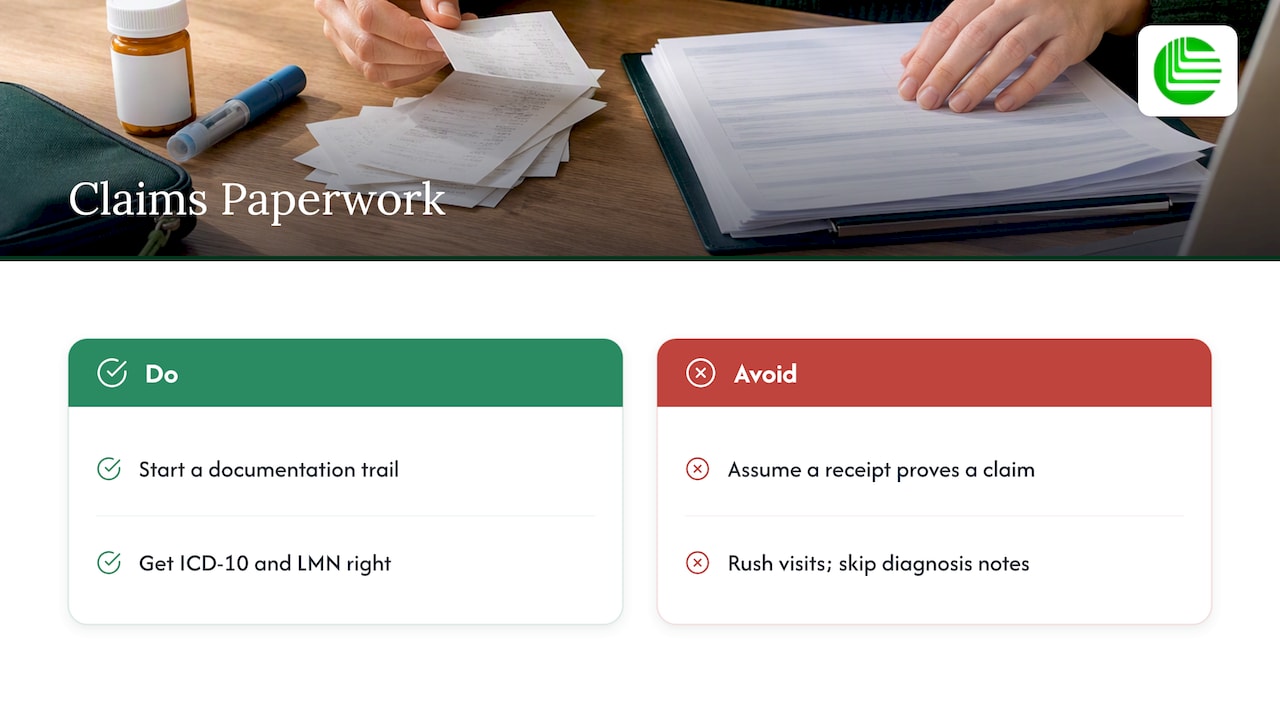
Most coverage of this topic treats HSA and FSA eligibility as a yes or no question about GLP-1 drugs. The more honest framing is that eligibility was never really in doubt for these medications. The friction sits entirely in the paperwork, and specifically in the gap between what a patient assumes a receipt proves and what an administrator’s substantiation system actually requires.
The accounts reward patients who treat the prescription process as the start of a documentation trail, not an afterthought. A rushed telehealth visit that skips a clear diagnosis note will cost you more in appeals than the slower visit that gets the ICD-10 code and LMN right the first time. That is the detail that separates a smooth reimbursement from a frozen FSA card.
— Eric
Our online process is designed to address the documentation needs described above. You complete a health questionnaire, a licensed physician reviews it, and if GLP-1 or GIP treatment is clinically appropriate, a prescription is issued and medication is shipped directly to your door.
Clinicians can provide the prescription record, visit notes, and a letter of medical necessity when it fits your diagnosis, giving you the paperwork your HSA or FSA administrator will ask for.
| Step | What happens |
|---|---|
| Consult | Complete a health questionnaire online |
| Review | A licensed physician evaluates your case |
| Prescription | Medication and documentation issued if appropriate |
| Delivery | Your prescription ships directly to your door |
If you’re ready to start, explore our semaglutide plans or tirzepatide options, request an LMN during your consult if it applies to your case, and keep every receipt for your HSA or FSA file.
This article is general information, not a substitute for advice from a qualified doctor. Consult a qualified healthcare professional about your own circumstances before acting on anything here.
FDA-approved prescription weight loss drugs, including semaglutide and tirzepatide, are generally HSA-eligible when prescribed to treat a diagnosed condition like obesity or type 2 diabetes, under the standard set in IRS Publication 502. Compounded versions can also qualify but typically need a letter of medical necessity to support the claim.
Yes, as long as a licensed provider prescribes the drug for a diagnosed medical condition rather than general wellness. FSA administrators often require faster proof than HSAs, so have your letter of medical necessity and receipt ready at the time of purchase.
Ozempic is FDA-approved for type 2 diabetes, so it typically qualifies for HSA reimbursement when prescribed for that diagnosis. If it’s prescribed off-label for weight loss without a documented condition, your administrator may ask for additional clinical justification before approving the claim.
Zepbound is FDA-approved for chronic weight management, making it HSA-eligible when a provider prescribes it for a diagnosed condition such as obesity. Keep the prescription record and itemized pharmacy receipt on file in case your plan requests substantiation.
Compounded semaglutide and tirzepatide can qualify, but the FDA notes these products are not FDA-approved and skip premarket review, which often leads administrators to request more detailed documentation. A clear diagnosis, prescription, and letter of medical necessity help these claims move through review.