
Stacking GLP-1 medications with longevity protocols is a clinically supported method for improving metabolic health and slowing biological aging. The term “stacking” here refers to combining GLP-1 receptor agonists like semaglutide or tirzepatide with targeted lifestyle, supplement, and training interventions. Research shows semaglutide slowed biological aging by 9% using the DunedinPACE clock in adults with HIV, and improved aging rate in 42% of participants with metabolic liver disease. That finding signals GLP-1 therapy does more than reduce weight. It may alter the pace of aging itself, especially when paired with the right supporting protocols.
GLP-1 receptor agonists are metabolic modulators, not standalone anti-aging drugs. GLP-1 agonists modulate metabolism and reduce physiological decline, but lifestyle remains the foundation. Stacking means you are not relying on the medication alone. You are pairing it with resistance training, targeted nutrition, sleep quality, and specific supplements to create compounding benefits across multiple longevity pathways.
The practical goal is to preserve or build lean muscle, reduce chronic inflammation, improve cardiometabolic markers, and slow cellular aging simultaneously. Each layer of the stack addresses a different biological mechanism. GLP-1 handles appetite regulation and metabolic signaling. Resistance training preserves muscle mass and insulin sensitivity. Supplements like omega-3 fatty acids and NAD+ precursors target inflammation and cellular energy. Together, they produce outcomes no single intervention achieves alone.
Preparation determines whether your stack succeeds or stalls. Skipping baseline assessments is the most common mistake people make before starting GLP-1 therapy for longevity purposes.
Comprehensive monitoring should go beyond weight and include lipids, glucose, kidney markers, and body composition. Run these before your first dose:
These numbers give you a before-and-after picture that scale weight cannot provide. Without them, you cannot tell whether your results come from fat loss, muscle preservation, or metabolic improvement.
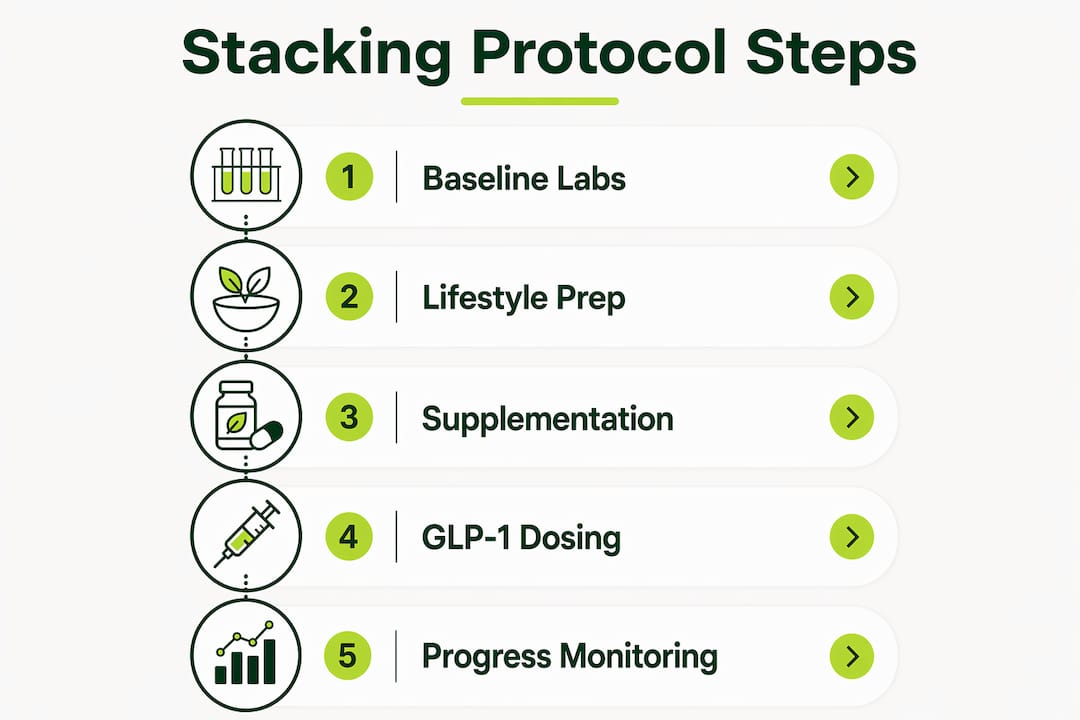
Muscle preservation must start before the first injection, not after weight loss occurs. Clinicians consistently stress this point. If you begin resistance training only after you notice muscle loss, you are already behind.
Target 2–3 resistance training sessions per week before starting GLP-1 therapy. Compound movements like squats, deadlifts, and rows recruit the most muscle tissue and create the strongest anabolic signal. Pair that training with 1.2–1.6 g/kg/day protein intake to offset the lean mass loss that GLP-1 therapy can cause.
| Supplement | Role in the stack | Notes |
|---|---|---|
| Omega-3 fatty acids | Reduces inflammation | Target a 4:1 or lower omega-6:3 ratio |
| Vitamin D3 with K2 | Bone and immune support | Pair with K2 for calcium regulation |
| NAD+ precursors (NMN or NR) | Cellular energy and repair | Dose varies by individual |
| Magnesium glycinate | Sleep quality and muscle function | Often depleted during calorie restriction |
| Creatine monohydrate | Muscle strength and preservation | 3–5 g daily, well-supported by evidence |
Supplement benefits vary by individual genetics and lifestyle, and marketing frequently overstates clinical evidence. Work with a clinician to prioritize based on your lab results, not a generic protocol.
Pro Tip: Get your omega-6:3 ratio tested alongside your lipid panel. Most people eating a standard American diet run ratios of 15:1 or higher, which directly undermines the anti-inflammatory goal of a longevity stack.
Execution separates people who see results from those who cycle on and off without progress. The three pillars are dosing, supplementation timing, and training structure.

Longevity-framed semaglutide dosing typically uses 0.1–0.5 mg weekly, which is lower than standard obesity treatment doses. Compounded preparations for this range cost approximately $50–$178 per month. This low-dose approach targets cardiometabolic benefits without the aggressive appetite suppression that can accelerate muscle loss.
Low-dose protocols show cardiometabolic benefits but lack definitive clinical trial validation. That means clinical supervision is not optional. You need a physician reviewing your labs and adjusting your dose based on response, not a fixed protocol you follow blindly.
Pro Tip: Take your GLP-1 injection on the same day each week, and schedule it two days before your heaviest training session. This timing keeps appetite suppression from interfering with your pre-workout nutrition.
Omega-3s absorb better with your largest meal of the day. Vitamin D3 is fat-soluble, so take it with a meal containing dietary fat. Magnesium glycinate works best taken 30–60 minutes before sleep. Creatine timing is flexible. Consistency matters more than the specific hour you take it.
Every effective protocol carries risks. Knowing them in advance lets you manage them rather than react to them.
The most common side effects of GLP-1 therapy are gastrointestinal: nausea, constipation, and reduced appetite. These typically peak during dose escalation and improve over weeks. Eating smaller, lower-fat meals and avoiding high-fiber foods immediately before injection reduces GI distress significantly.
The more serious risk is lean muscle loss. GLP-1 therapy causes 25–40% of total weight loss to come from lean mass when resistance training and protein intake are inadequate. Muscle is a longevity organ. It serves as a glucose sink, an endocrine regulator, and a reserve of functional capacity. Losing it defeats the core purpose of a longevity stack.
Pause or adjust your protocol if you experience any of the following: persistent nausea beyond 6 weeks, unexplained fatigue, declining strength in the gym, or lab markers moving in the wrong direction. These are signals to contact your prescribing physician, not signals to push through.
Long-term safety data on GLP-1 use in healthy, non-obese populations is incomplete. Pancreatic and thyroid risks remain under study. This is why clinical monitoring is non-negotiable, not a precaution you can skip once you feel comfortable with the medication. You can learn more about longevity medicine safety and what clinical oversight actually involves before committing to a protocol.
Weight alone is the worst metric for evaluating a longevity stack. The scale cannot distinguish between fat loss, muscle loss, and water shifts.
Tracking with lab and body composition metrics is the only way to confirm you are achieving metabolic benefit rather than a simple calorie deficit. Schedule a full panel at baseline, at 8–12 weeks, and every six months thereafter.
| Metric | What it tells you | Target direction |
|---|---|---|
| DEXA lean mass | Whether you are preserving muscle | Stable or increasing |
| HbA1c | Glucose regulation over 3 months | Decreasing or stable in normal range |
| ApoB / LDL-P | Cardiovascular risk | Decreasing |
| hsCRP | Systemic inflammation | Decreasing |
| eGFR | Kidney health under protein load | Stable |
| Grip strength | Functional muscle output | Stable or increasing |
Grip strength is an underused marker. Research consistently links it to all-cause mortality risk. Testing it monthly with a hand dynamometer costs nothing and gives you a real-time signal of whether your muscle preservation protocol is working.
Functional measures matter as much as lab values. Track your training performance, sleep quality, and energy levels weekly. If your lifts stall, your sleep deteriorates, or your energy crashes, something in the stack needs adjustment before your next lab panel confirms it.
Stacking GLP-1 medications with longevity protocols requires muscle preservation, individualized supplementation, and consistent lab monitoring to deliver metabolic and aging benefits beyond weight loss alone.
| Point | Details |
|---|---|
| Start muscle work early | Begin resistance training 2–4 weeks before your first GLP-1 dose to prevent lean mass loss. |
| Use low longevity doses | Semaglutide at 0.1–0.5 mg weekly targets cardiometabolic benefits with lower side effect burden. |
| Track beyond the scale | DEXA scans, ApoB, HbA1c, and grip strength reveal whether the stack is actually working. |
| Supplement with evidence | Omega-3s, vitamin D3/K2, and creatine have the strongest support; individualize the rest. |
| Clinical supervision is required | Long-term safety data in healthy adults is incomplete; physician oversight is non-negotiable. |
I have seen a lot of people approach GLP-1 therapy as a weight loss shortcut and then bolt on a few supplements and call it a longevity protocol. That framing gets the priorities backwards. The medication is the least important variable in a well-constructed stack. What actually determines whether you age better is whether you come out of the protocol with more functional muscle, better cardiometabolic markers, and a sustainable lifestyle structure.
The data on semaglutide and biological aging is genuinely exciting. A 9% reduction in aging pace is not a trivial finding. But that number comes from a clinical study with controlled conditions, not from someone taking a GLP-1 injection without adequate protein, skipping the gym, and adding a handful of supplements they read about online.
The protocols that work are boring. They involve consistent resistance training, hitting a protein target every single day, getting labs done on schedule, and adjusting based on what the data shows. The people who get the most out of stacking peptides for longevity are the ones who treat the lifestyle pillars as non-negotiable and the medication as a metabolic tool, not a solution.
My honest concern with the current enthusiasm around GLP-1s for longevity is that the long-term safety data in healthy, non-obese adults simply does not exist yet. That is not a reason to avoid these protocols. It is a reason to work with a clinician who tracks your labs, adjusts your dose, and knows when to pause. Anyone selling you a GLP-1 longevity protocol without that oversight is selling you incomplete medicine.
— Eric
Oaklovesyou combines physician-led GLP-1 prescribing with the lifestyle structure that makes a longevity stack actually work.

Oaklovesyou’s online telehealth platform connects you with licensed physicians who review your health history, prescribe compounded semaglutide or tirzepatide where appropriate, and deliver medication directly to your door. The program pairs medication with strength and lifestyle protocols designed to preserve lean muscle mass and support metabolic health over the long term. You also get 24/7 support and physician-led dosing guidance throughout. If you are ready to build a medically supervised stack, start with Oaklovesyou to get the clinical oversight your protocol requires.
Longevity-framed dosing typically uses 0.1–0.5 mg semaglutide weekly, lower than standard obesity doses. This range targets cardiometabolic benefits while reducing side-effect burden.
Research shows semaglutide reduced biological aging pace by 9% in one study using the DunedinPACE clock. Results are promising but require replication in broader, healthy populations.
Start resistance training before your first injection and consume 1.2–1.6 g/kg/day of protein to offset the lean mass loss that GLP-1 therapy can cause.
Omega-3 fatty acids, vitamin D3/K2, and NAD+ precursors are most commonly recommended. Individual response varies by genetics and nutritional status, so personalize based on lab results.
Long-term safety data in healthy, non-obese adults is incomplete. Clinical supervision and regular lab monitoring are required to manage risks responsibly.