For most adults, yes: a GLP-1 medicine such as semaglutide and metformin are commonly prescribed together, and the FDA prescribing information for semaglutide and tirzepatide describes studies in which each was used alongside metformin. That said, “commonly prescribed together” is not the same as “right for you.” Your kidney function, your other medications, your stomach and your goals all decide whether the combination makes sense, and a licensed clinician should make that call. This guide explains what the evidence shows, what to watch for, and what to ask before you start, change or stop either drug.
People often lump these two together because both show up in weight-loss conversations. They are not the same kind of drug.
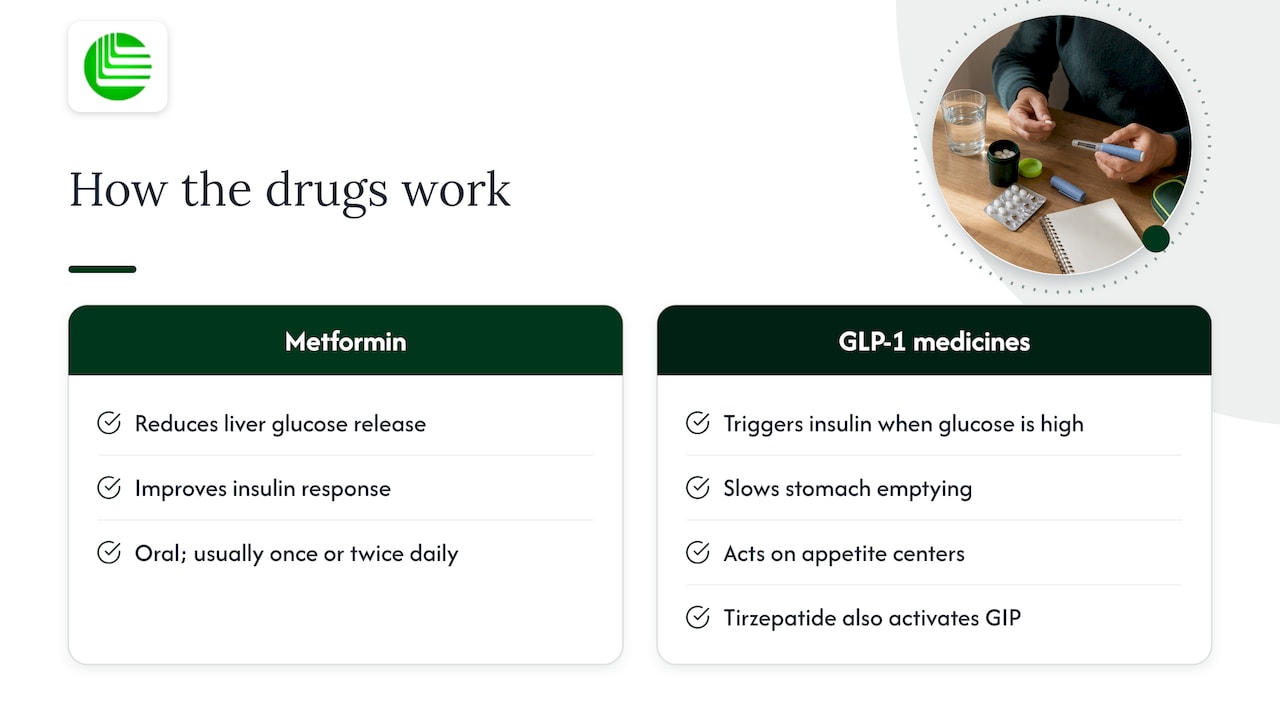
Metformin is an oral medication used for type 2 diabetes. It mainly lowers the amount of glucose your liver releases and improves how your body responds to insulin. It is taken by mouth, usually once or twice a day, and it is not a GLP-1.
GLP-1 receptor agonists, including semaglutide, copy a gut hormone that rises after you eat. They stimulate insulin release when glucose is high, slow how fast the stomach empties and act on appetite centers in the brain. Tirzepatide goes one step further: it activates both the GLP-1 and GIP receptors. If you want the basics first, our plain-language guide to GLP-1 receptor agonists covers how they work.
Because the mechanisms differ, the drugs can complement each other. That is the reason clinicians combine them, not a coincidence of marketing.
The best evidence comes from the prescribing information for Ozempic (semaglutide). In a 40-week trial, Ozempic 1 mg or 2 mg was added to metformin, with or without a sulfonylurea, and no new safety signals were identified. The same label describes Ozempic as an adjunct to diet and exercise to improve glycemic control in adults with type 2 diabetes. So the studied setting is type 2 diabetes, and the combination there is well established.
What does adding semaglutide to metformin actually do? A 2023 network meta-analysis of GLP-1 receptor agonists added to metformin in adults with type 2 diabetes found that semaglutide 1.0 mg reduced HbA1c by 1.57% and body weight by 5.99 kg compared with placebo. Those are averages across trials in people with diabetes, not a promise for any one person, and results differ for adults without diabetes.

Many of our readers take semaglutide for weight management and are wondering whether to add metformin, or whether they are already on it for prediabetes, PCOS or insulin resistance. The trial data above describe adults with type 2 diabetes, so we will not extrapolate numbers to you. What we can say is that a clinician who reviews your labs and history can decide whether metformin still has a role once a GLP-1 is on board. Some people stay on both; others find the GLP-1 alone covers their needs. Do not stop metformin on your own because you started a GLP-1.
The tirzepatide prescribing information states that tirzepatide was studied in combination with metformin in adults with type 2 diabetes. As with semaglutide, combination use is part of how the drug was developed and tested, not an off-label experiment.
One practical difference may be tolerability. A 2024 review by Drucker notes that gastrointestinal side effects with tirzepatide may be slightly lower than with semaglutide, possibly because the GIP receptor dampens the aversive response triggered by GLP-1 activation. That is a mechanism-based observation, and individual experience varies widely. If you are weighing the two drugs, see our guide on switching from semaglutide to tirzepatide.
When the two are used together, the benefits are generally complementary:
On guidelines, Diabetes Canada states that metformin is the initial agent of choice for most newly diagnosed adults, while people concerned about hypoglycemia and weight gain may prefer an incretin agent when access and affordability permit. That is a Canadian guideline, and U.S. recommendations are set by U.S. professional bodies, but the logic is similar: metformin is often the starting point, and a GLP-1 is the next step or an alternative for specific patients.
The overlap is mostly in the gut. Metformin commonly causes nausea, loose stools or an upset stomach, especially early on. GLP-1 medicines do too. Taking both can stack those effects, particularly in the first weeks and after each dose increase.
The 2025 advisory describes GI side effects as common but usually not severe, tending to decrease with a stable dose and rarely leading to discontinuation in trials. The semaglutide label tells prescribers to monitor for GI adverse reactions, pancreatitis symptoms and reactions that could lead to volume depletion, especially during dose initiation and escalation.
Practical ways people reduce the burden, to discuss with your clinician:
If alcohol is part of your life, read our note on the semaglutide and alcohol interaction. And if fatigue is a concern, our article on B12 with semaglutide is relevant, since long-term metformin use is something clinicians commonly check B12 levels for.
Semaglutide slows gastric emptying, so it is reasonable to ask whether your pill gets absorbed differently. The Ozempic label says the drug delays gastric emptying and may affect the absorption of oral medications, though trials found no clinically relevant effect on absorption. For most people that means no change to the metformin routine. Still, if you take other oral drugs where timing matters, such as thyroid medication or certain antibiotics, ask your pharmacist or prescriber about spacing them.
Metformin on its own rarely causes hypoglycemia, and GLP-1 medicines stimulate insulin only when glucose is elevated. So the pair alone carries a low risk. The risk climbs when another glucose-lowering drug joins them. The label states that Ozempic used with insulin or an insulin secretagogue, such as a sulfonylurea, may increase hypoglycemia risk, and reducing the dose of that medicine may be necessary.
If you take insulin or a sulfonylurea, do not adjust any dose yourself. Tell the prescriber you are starting a GLP-1 so they can plan the change, and ask what symptoms (shakiness, sweating, confusion, sudden hunger) should make you check your glucose and call the office. Skipping meals because your appetite is low makes this more important, not less.
Before you start, switch or stop, bring this list to the conversation. It reflects the items the semaglutide label tells patients to raise with a clinician:
Source for the list: the Ozempic prescribing information. Also share your kidney and liver history, whether you are pregnant or trying to become pregnant, and every supplement you take.
If you are asking about alternatives because metformin upsets your stomach or has not moved the scale, the options fall into types rather than brands:
Which of these fits depends on your diagnosis. Metformin is prescribed for blood sugar and insulin resistance; weight loss is often a side benefit rather than the goal.
At Oak, we see the same pattern in questions from members: people assume they must choose between metformin and a GLP-1, or that taking both is risky by default. Neither is accurate. The better question is what each drug is doing for you. If metformin is controlling your glucose and you tolerate it, a GLP-1 can add on top. If you are taking metformin only hoping for weight loss and it has not delivered, a GLP-1 may be the more direct tool.
We also think the medication is only half the plan. Fast weight loss can take lean muscle with it, so we pair treatment with strength and lifestyle protocols to preserve muscle and support metabolic health. We would rather a member move slowly through dose steps with stable digestion than rush and quit in week three.
Finally, we ask every member to list every drug and supplement on the intake questionnaire, because a physician reviews it before anything is prescribed. That review is where interactions, such as the insulin and sulfonylurea issue above, get caught. Our medical team can adjust the plan as your situation changes, and our support is available around the clock for questions about dosing and side effects.
— Eric
If you and your current prescriber agree a GLP-1 is appropriate, Oak makes access simple. You complete a health questionnaire online, a licensed physician reviews it, and if you are approved, your medication ships to your door, with no video call required. Published pricing starts at $119 per month for semaglutide and $185 per month for tirzepatide, with free shipping and free health coaching included.

Be sure to list metformin and any other medication on your questionnaire so the physician can factor it in. You can see current options on our semaglutide and tirzepatide page or learn what to expect in the first months in our semaglutide weight loss timeline. Our compounded products differ from the FDA-approved brand products that the studies above tested, so ask your physician how that difference applies to you.
For most adults, the combination has been studied and used widely. The semaglutide label reports no new safety signals when it was added to metformin in a 40-week trial. Safety still depends on your history, so a clinician should review your medications, kidney function and any pancreatitis or thyroid history first.
Rarely on their own. The risk rises mainly when insulin or a sulfonylurea is also part of your regimen, and the label says those doses may need to be reduced. Never change them yourself; ask your prescriber for a plan.
Not necessarily, but that decision belongs to your prescriber. Some people continue both because metformin addresses insulin resistance or diabetes, while others taper off with guidance. Stopping suddenly without advice can let your glucose climb.
Possibly. One 2024 review suggests GI effects may be slightly lower with tirzepatide, based on how the GIP receptor works. Many people experience nausea with either, particularly during dose increases, so the difference is not guaranteed for you.
Tell your prescriber instead of stopping on your own. Smaller meals, steady hydration, taking metformin with food and holding at a dose longer before increasing often help. Severe or persistent abdominal pain, repeated vomiting or signs of dehydration need prompt medical care.