
A prior authorization (PA) is your health plan’s check that a medication is medically necessary before it pays for it. For GLP-1 drugs used for weight loss, your prescriber submits your BMI, health conditions and treatment plan, and the plan decides whether you meet its criteria. Approval depends on your specific plan, so the first step is always to confirm whether your plan covers the drug at all. If it doesn’t, or you’d rather skip the paperwork, there are direct-pay routes, which we cover below.
A prior authorization is a clinical program health plans use to confirm safety and medical necessity. The physician has to explain why the prescription is appropriate, and the plan evaluates whether its criteria are met. Until that happens, the pharmacy may not be able to fill the prescription under your insurance.
For GLP-1s, the indication matters a great deal. KFF analysts point out that many plans cover semaglutide as Ozempic for diabetes, while the same drug sold as Wegovy for obesity faces much tougher coverage hurdles. The same active ingredient can sail through or stall depending on the diagnosis on the prescription.
So the PA is only one gate. There are really three questions, in this order:
Coverage for weight-loss GLP-1s is far from universal. In 2024, ACA Marketplace plans rarely covered obesity-only GLP-1s: Wegovy was covered by 1% of Marketplace prescription drug plans. Employer plans vary more, and weight-loss coverage often depends on supplemental plan riders, including in Medicare plans.
Because employers choose their own benefit designs, two people with identical-looking insurance cards may have different coverage. Don’t rely on a friend’s experience, or on the insurer’s brand name alone.
Here is the fastest way to check:
For a deeper look at plan types, our weight loss medication insurance coverage guide walks through what to ask.
There is no single national standard for commercial plans, but the criteria tend to rhyme. Kansas Medicaid offers a clear public example: adults need a BMI of 30 or higher, or 27 or higher with a listed comorbidity, along with a treatment plan that includes comprehensive lifestyle interventions.
Expect a plan to ask for some combination of the following:
| Requirement | What it usually means in practice |
|---|---|
| Weight and BMI | A recent measured height and weight, with the BMI calculated and dated |
| Comorbidities | Diagnoses such as hypertension, type 2 diabetes or sleep apnea when your BMI is in the 27 to 29.9 range |
| Lifestyle program | Documentation that you are in a diet, activity or behavioral program |
| Treatment plan | A weight-loss plan from the prescriber, in some cases covering the past 60 days |
| Safety attestation | The prescriber confirms no contraindications |
| Step therapy | In some plans, proof you tried a formulary alternative first |
The documentation point is real: required records often include proof of medical status, weight-loss treatment plans from the past 60 days, and attestations that there are no contraindications.
Some insurers keep checking. Highmark’s provider policies reflect a trend of requiring continuous documentation of diet and exercise, not only at the first authorization but for maintenance and reauthorization. Its policy for specified fully insured commercial and ACA plans also requires maintained weight loss of at least 7.5% from baseline for Saxenda, Wegovy and Zepbound.
Practical takeaway: keep a simple log from day one. Weight at each visit, activity, and nutrition notes. When the renewal comes, your prescriber will have what the plan wants.
Tirzepatide, sold for weight loss as Zepbound, follows the same pattern as semaglutide. The plan looks at your BMI, your conditions, your lifestyle program, and whether the drug is on its formulary for obesity. The criteria shown in the Kansas Medicaid and Highmark documents above name Zepbound alongside Wegovy in the same weight-loss policies, so expect similar paperwork for both.
Two things are worth asking your prescriber before the request goes in:
Timing depends on the plan. The one timeline we can cite from an official source is the Medicare GLP-1 Bridge, covered next.
Effective July 1, 2026, the Medicare GLP-1 Bridge gives eligible Part D beneficiaries a temporary, nationwide pathway to certain GLP-1 drugs for weight loss. It runs through December 31, 2027. The details:
The Bridge is a temporary demonstration outside the standard Part D payment flow, and it has no appeals process. That makes a complete first submission matter even more. For more on Medicare and weight-loss drugs, see our Medicare coverage overview.
A denial is a decision about paperwork and criteria, not about you. Reasons listed in Novo Nordisk’s Wegovy PA guidance include unmet clinical criteria, a non-formulary drug, no trial of a formulary alternative, an invalid diagnosis code, or missing or late information. Several of those are fixable.
Work through it in this order:
Some plans add their own steps. InScript, for example, requires members using GLP-1s for weight loss to complete a Medication Therapy Management visit with a designated weight loss clinic. Read your plan’s policy before assuming the process is only a form.
You can make the request stronger before it is submitted. Bring:
If you take metformin or other diabetes medicines, tell your prescriber, because the diagnosis and combination affect the request. Our piece on GLP-1 with metformin covers that overlap.
We see the same pattern again and again: people spend weeks waiting on a prior authorization that was never going to be approved, because their plan simply doesn’t cover weight-loss drugs. Every one of those weeks is a week without treatment.
Our view is that you should confirm coverage first, and if it isn’t there, you have options that don’t depend on an insurer’s schedule. Our program is built around a licensed physician reviewing your health questionnaire online, with no video call required, and medication shipped to your door. We publish our monthly prices and don’t charge hidden membership fees.
Weight loss is also not just about the scale. We pair treatment with strength and lifestyle guidance, aimed at preserving lean muscle and supporting metabolic health. Whether you go through insurance or pay directly, that support is what we think makes results last.
Eric
If the call to your insurer ends with “not a covered benefit,” or you don’t want to wait on a review, direct-pay telehealth is another way to start. Oak Longevity offers an online consultation reviewed by a licensed physician, with approved prescriptions delivered to your home, and our offer pages list what’s available:
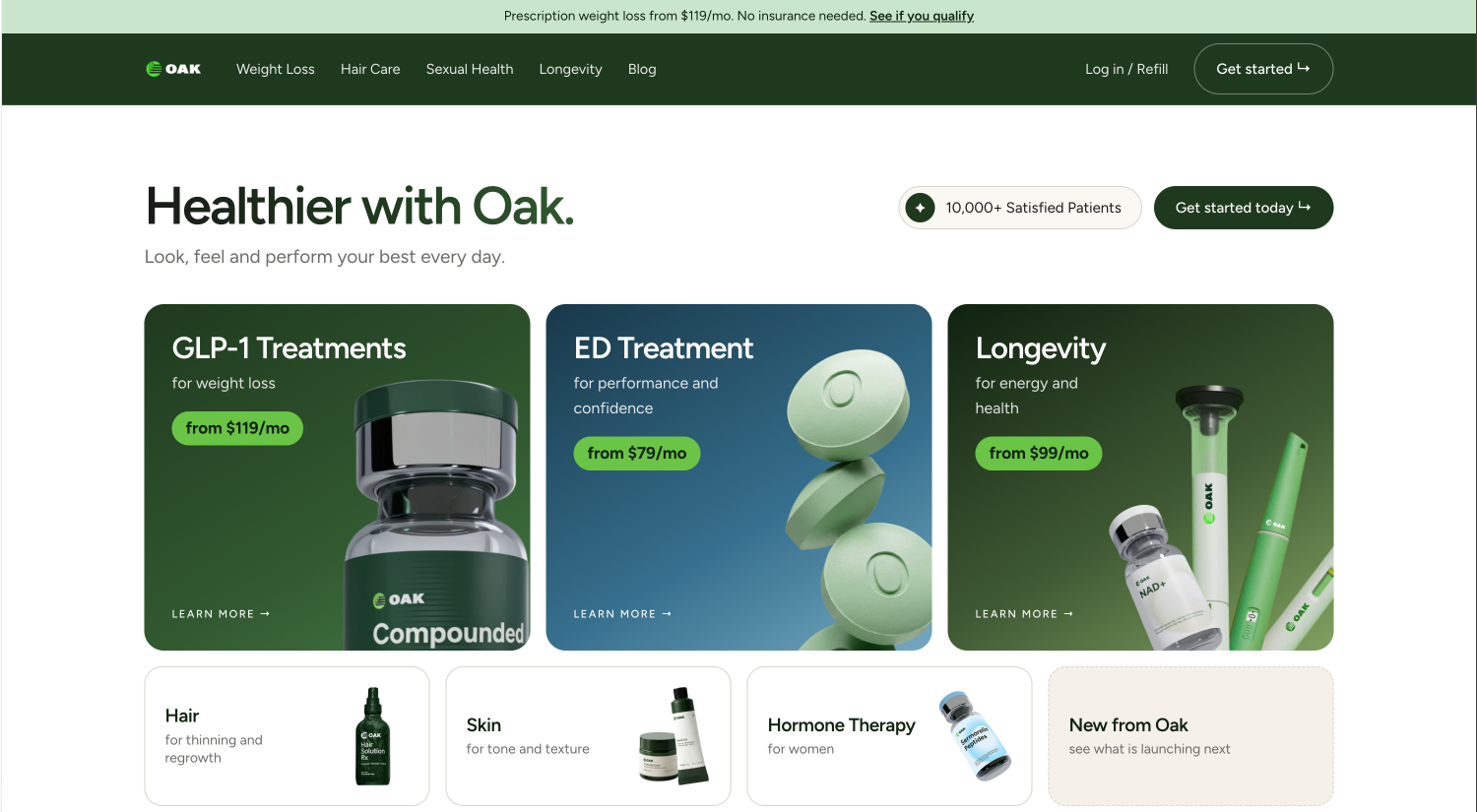
Payment is made directly by the patient, and our team describes the program as including free shipping and free health coaching. Prescriptions are issued only when a physician determines treatment is appropriate for you. For a full picture of what to expect, read how to get a GLP-1 prescription online and our GLP-1 telehealth cost breakdown. If your employer is exploring coverage, our employer GLP-1 program starts from $160 per month.
Your prescriber submits the request, not you. First confirm your plan covers the drug for weight loss by calling the pharmacy-benefit number on your card. Then give your prescriber your BMI history, conditions and lifestyle-program details so the submission is complete the first time.
For eligible Part D beneficiaries, the temporary Medicare GLP-1 Bridge has made certain GLP-1s available for weight loss since July 1, 2026. It requires a BMI of 35 or higher, or 30 or higher with specific conditions, and a prescriber-submitted PA. It runs through December 31, 2027.
It depends on the plan. Many use a BMI of 30 or higher, or 27 or higher with a weight-related condition, as in Kansas Medicaid’s criteria. The Medicare Bridge is stricter, starting at 35 or 30 with specific conditions. Ask your plan for its written policy.
Read the reason, have your prescriber correct missing information, and resubmit or appeal. Commercial plans may allow an appeal letter and a peer-to-peer discussion with a medical director. The Medicare Bridge has no appeals, only resubmission.
Many plans that cover tirzepatide for weight loss ask for one, with criteria similar to semaglutide’s. Check your formulary for the specific product. If you pay directly through a telehealth program, there is no insurance prior authorization step.