A GLP-1 maintenance plan is an ongoing telehealth subscription that pairs recurring prescription refills with physician oversight and home delivery, not a one-time script you fill and forget. Before you enroll anywhere, get three numbers in writing: total cost today, cost in month two, and cost at the highest realistic maintenance dose, plus the name of the pharmacy filling it. Clinician review typically runs 24 to 72 hours, and follow-up visits continue on a set schedule, commonly with checks every 4 weeks during titration and less frequent visits once stabilized. Some programs are built around that structure.
TL;DR:
- Most programs schedule check-ins every 4 weeks during titration and every 3 to 6 months once a stable dose is reached, depending on tolerance and progress.
- Billing cycles usually run every 28 days, which can lead to paying 13 times a year, and prices at the highest dose should be clarified and documented upfront.
- Enrolling requires a full medical history, recent labs, and medication list, with clinician review taking 24 to 72 hours before approval and shipment, which typically occurs within 2 to 7 days.
- Always confirm the medication type, pharmacy name, and total costs for current and maximum doses in writing before committing to a program.
- Prescription medication is generally non-refundable after shipment, so tracking the cancellation cutoff date is crucial to avoid unwanted charges.
Getting from “interested” to “first shipment” involves a handful of predictable steps. Knowing them ahead of time keeps you from getting stuck when a platform asks for something you weren’t expecting.
Before you start the intake form, gather:
With that in hand, the enrollment sequence usually looks like this:
Pro Tip: Screenshot or save the pharmacy name and prescription details the moment you receive them. If a platform ever changes fulfillment partners mid-subscription, you’ll want a clear record of what you originally agreed to.
Enrollment is the easy part. What separates a real maintenance plan from a one-off prescription is what happens over the following months, when your dose changes and your body adjusts.
During the escalation phase, most programs schedule check-ins approximately every 4 weeks, tracking tolerance and side effects as your dose increases. This mirrors the standard titration rhythm used for both semaglutide and tirzepatide, where each step up gets a few weeks of observation before the next increase.
Once you reach a stable maintenance dose, the visit schedule usually loosens. Follow-up commonly shifts to every 3 to 6 months, depending on how you’re tolerating the medication and whether your weight trajectory has plateaued or is still moving.
Those maintenance visits generally cover:
Lab monitoring depends on your individual profile, but common baseline and follow-up tests include A1c for patients with diabetes or prediabetes, a basic metabolic panel, and renal or hepatic function tests when clinically indicated. A licensed clinician, not an automated system, orders and reviews these.
A follow-up cadence that runs every 4 weeks during titration and every 3 to 6 months once you’re stable is the norm across reputable telehealth GLP-1 programs — a schedule far more structured than a single prescription refill.
If you report a side effect between visits, expect a messaging system for mild issues and a same-day consult option for anything urgent. Dose adjustments typically happen at scheduled visits, though a clinician can move faster if symptoms warrant it.
Billing confusion is the single biggest source of complaints in this category, and it’s almost always avoidable. Unclear highest-dose pricing, hidden consult fees, and 28-day billing cycles top the list of consumer frustrations, and the 28-day cycle deserves special attention: bill every 28 days instead of monthly, and you’re charged 13 times a year instead of 12.
Before you hand over a payment method, get these answers in writing:
Some providers bundle medication into one subscription price; others bill the consult and the medication separately. Both structures can be legitimate, but transparency on the highest-dose price is the detail that actually protects you, since most people end up titrating well past the starter dose.
On cancellation: prescription medication is typically non-refundable once it ships. That makes the cancellation cutoff date, not the cancellation policy in general, the number you actually need.
Pro Tip: Set a calendar reminder three days before your next billing date. It’s the simplest way to avoid getting charged for a shipment you meant to cancel.
One question does more work than any other. Ask it exactly this way: “What medication or formulation will I receive, which pharmacy fills it, and what’s my total monthly cost today versus at the highest dose I might need?” A program that answers all three parts clearly, in writing, has cleared the first real test.
From there, work through the rest of this list before you pay anything:
Treat these as red flags if you hit them: pricing that stays vague no matter how directly you ask, no named pharmacy anywhere in writing, no clear titration or follow-up schedule, a support team that can’t state a cancellation cutoff, or marketing language that doesn’t match what’s in the actual consent form. Any one of these is a reason to keep looking.
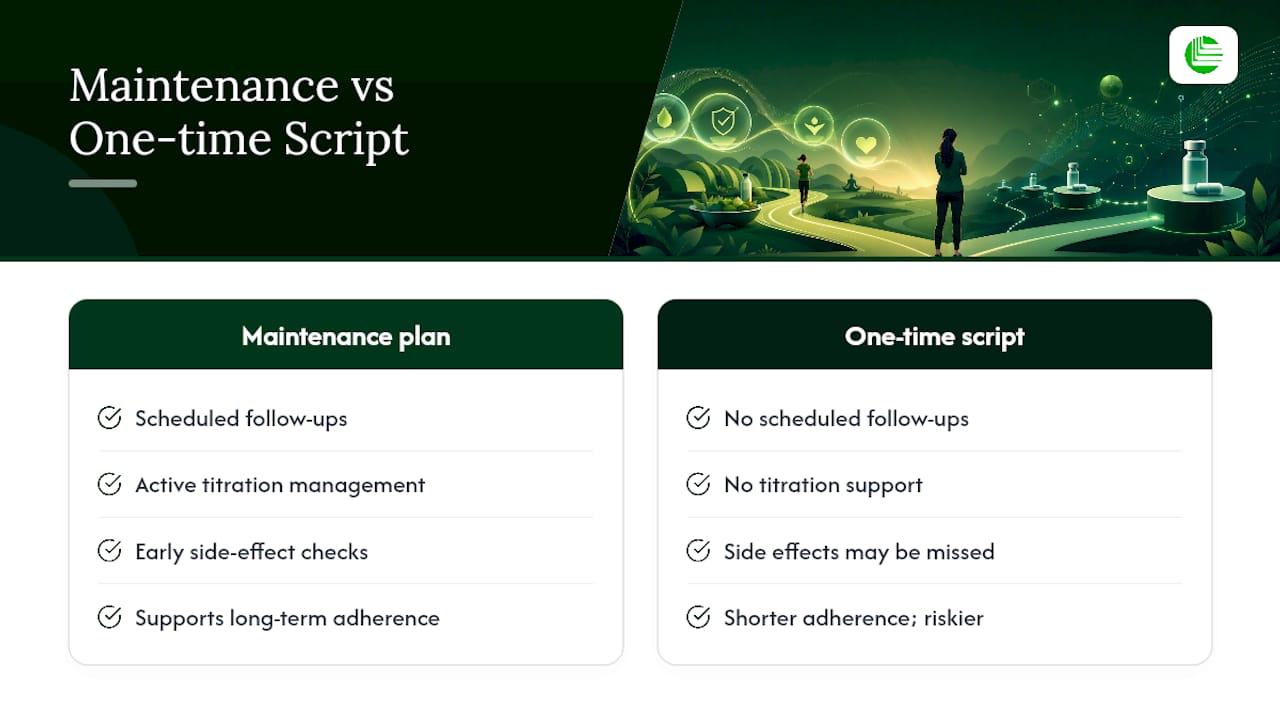
The conventional pitch around GLP-1 access focuses almost entirely on getting the prescription. That’s the wrong finish line. Structured follow-up is what actually manages titration, catches side effects early, and keeps people on therapy long enough to see results. An isolated prescription with no scheduled check-ins is a weaker, riskier version of the same medication.
A subscription model earns its price when you expect ongoing dosing and monitoring, not as some guarantee of approval. Prescribing authority always sits with the clinician, subscription or not. A model built around online intake, physician-led follow-up, and delivery reflects what a real maintenance structure looks like when it’s done right.
— Eric
Some programs follow a structure that includes an online intake reviewed by licensed physicians, medication delivered to your door, and physician-led follow-up rather than a single script and silence.

Some programs pair medication with strength and lifestyle protocols aimed at preserving lean muscle while losing weight. Before you commit to any plan, including this one, get the pricing, pharmacy name, and cancellation terms confirmed in writing. That’s not a formality. It’s the same standard this entire guide has been building toward. If you’re ready to see how the structure works for your situation, the Oak Longevity product page lays out the plan details, and you can start there when you’re ready to enroll.
For readers who want to verify timelines, pricing guidance, and follow-up norms directly: the Telehealth Ally guide to starting GLP-1 therapy covers review windows and shipping; the Weight Loss Provider Guide checklist breaks down billing questions; and the Peptide Dossier guide to telehealth visits details follow-up cadence.
This article is general information, not a substitute for advice from a qualified doctor. Consult a qualified healthcare professional about your own circumstances before acting on anything here.
A maintenance plan bundles recurring medication refills with scheduled clinician follow-up and home delivery, distinct from a single prescription with no ongoing support.
Clinician review typically takes 24 to 72 hours after intake, with shipment following in 2 to 7 business days for compounded medication and often faster for some branded paths.
Expect checks roughly every 4 weeks during dose titration, shifting to every 3 to 6 months once you reach a stable maintenance dose.
No. A subscription gives you access to clinician review and platform support, but prescribing remains the clinician’s independent decision based on your health profile.
Medication is generally non-refundable once it has shipped, so confirm your program’s exact cancellation cutoff date in writing before your next billing cycle.