
The essential labs for GLP-1 therapy are HbA1c, a basic metabolic panel with creatinine, liver tests, and a lipid panel, with lipase reserved for patients who develop symptoms. Monitoring frequency is individualized and often symptom-triggered rather than fixed. Anyone with a personal or family history of medullary thyroid carcinoma or MEN2 needs that history documented before starting treatment.
TL;DR:
- Baseline labs should include HbA1c, metabolic panel, liver tests, lipid panel, and pregnancy tests if relevant before starting GLP-1 therapy.
- Monitoring focuses on symptom-triggered tests like renal function during gastrointestinal side effects and regular HbA1c checks every three months initially.
- Immediate testing is required for severe abdominal pain, persistent gastrointestinal symptoms, signs of low blood sugar, or new vision changes, rather than routine schedules.
- Patients with medullary thyroid carcinoma or MEN2 histories should have that documented, but routine thyroid ultrasound or calcitonin testing has limited value.
- Abnormal results typically lead to symptomatic management and targeted testing rather than automatic discontinuation of therapy.
Clinicians order a specific set of tests for people on GLP-1 medications, and each one answers a different question about how the drug is affecting the body.
HbA1c reflects average blood glucose over the preceding two to three months, which is why it is the standard metric for tracking diabetes control on these medications. Because it measures a rolling average, checking it too soon after a dose change will not show meaningful movement. This is a widely used hemoglobin A1c test used across diabetes and metabolic care.
A basic metabolic panel, particularly creatinine and estimated glomerular filtration rate (eGFR), matters most when a patient reports nausea, vomiting, or diarrhea. These gastrointestinal effects can cause volume depletion, and the FDA prescribing information for semaglutide notes that postmarketing reports of acute kidney injury, some requiring hemodialysis, have occurred in this setting.
Liver tests (ALT, AST, and bilirubin) establish a baseline and are worth rechecking if a patient loses weight rapidly or develops symptoms suggesting liver or gallbladder trouble, since fast weight loss itself can affect liver enzymes and gallstone risk.
Pancreatic enzymes, lipase and amylase, are not a routine screening tool. The same FDA labeling recommends evaluation and possible discontinuation when a patient develops persistent or severe abdominal pain, sometimes radiating to the back, but does not call for lipase testing in the absence of symptoms. Ordering it as blanket reassurance tends to produce false positives that lead to unnecessary follow-up.
A lipid panel at baseline gives a starting point for cardiovascular risk, useful since weight loss on GLP-1 therapy often shifts cholesterol and triglyceride numbers over time.
Thyroid screening works differently than most people expect:
Timing matters as much as which tests get ordered, and the schedule should shift depending on where a patient sits in treatment.
The common thread across FDA labeling and ADA-aligned guidance is that monitoring is built around individual risk factors, not a single calendar that applies to everyone.
Some symptoms should send you to a clinician or urgent care before your next scheduled check-in, not after.
Pro Tip: Keep a simple symptom log with dates and severity. It turns a vague “I’ve felt off” into information a clinician can act on quickly.
Certain patient histories change the monitoring plan beyond the general framework above.
An abnormal lab rarely means an automatic stop to treatment, but it does usually trigger a specific next step.
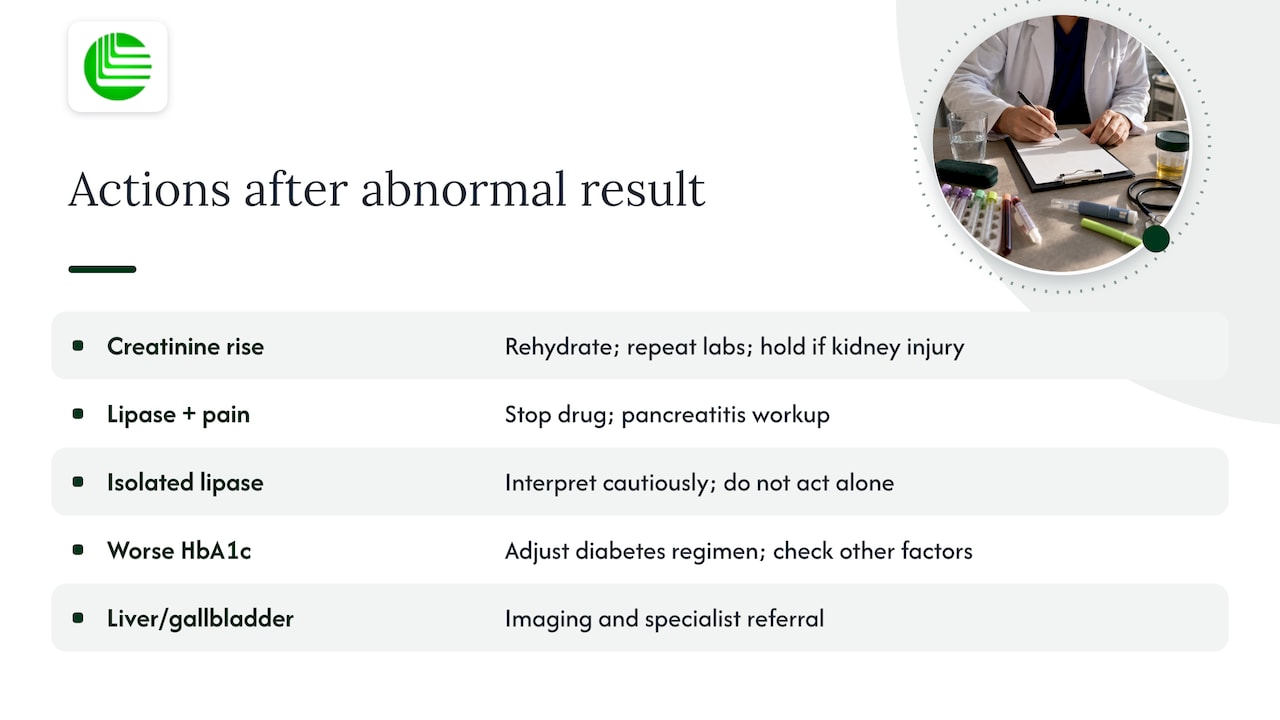
A creatinine rise following a stretch of vomiting or diarrhea typically leads to rehydration, a repeat lab, and a temporary hold on the medication if kidney injury looks likely. Elevated lipase in someone with matching abdominal pain usually means stopping the drug and getting a proper pancreatitis workup, while an isolated lipase elevation without symptoms is interpreted cautiously rather than acted on alone. Worsening HbA1c despite weight loss points to an adjustment in the broader diabetes regimen and a look at other contributing factors. Significant liver enzyme elevations or new gallbladder symptoms generally call for imaging and a specialist referral.
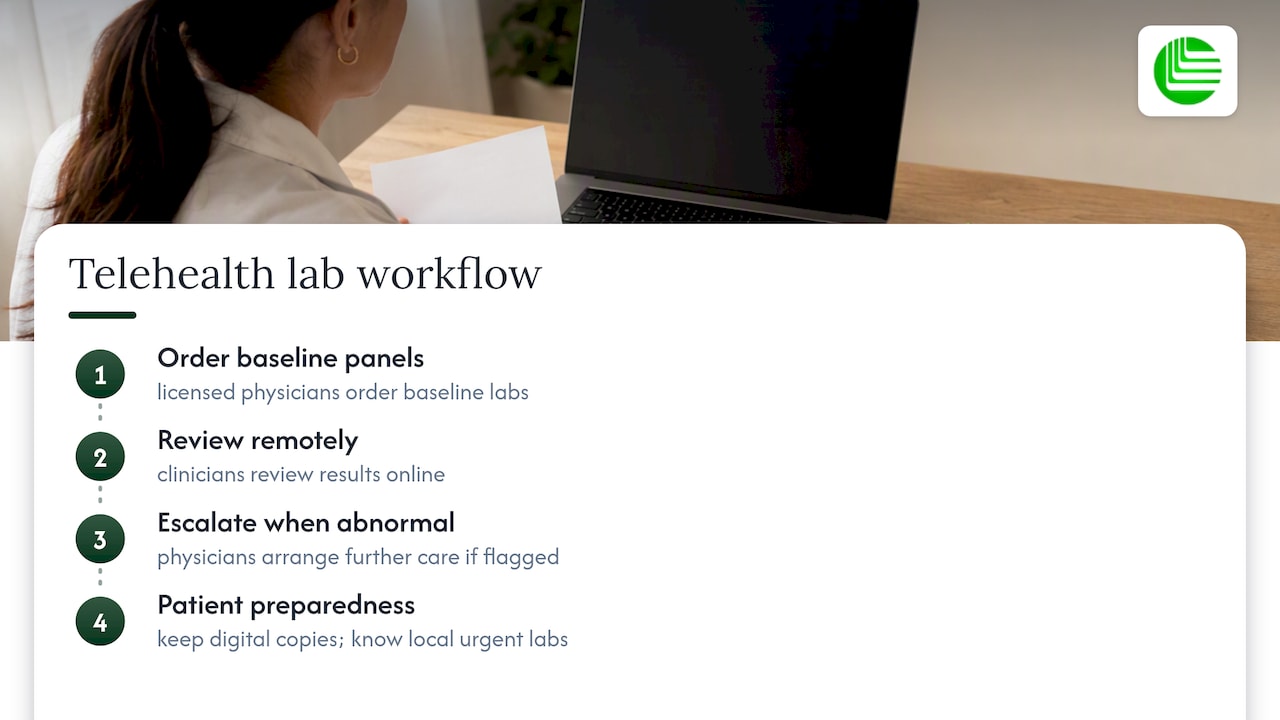
Some online telehealth platforms provide access to GLP-1 and GIP medications, coordinating baseline labs and follow-up through licensed physicians rather than in-person visits. Telehealth clinicians typically order baseline panels, review results remotely, and escalate care when something comes back abnormal. For patients using any telehealth program, it helps to keep digital copies of lab results and know where to get urgent labs drawn locally if a red flag symptom appears, as covered in more detail in our guide to managing gastrointestinal side effects.
Ordering every test on a fixed schedule sounds thorough, but it mostly generates false positives and anxiety without catching problems faster than a symptom-driven approach would. The FDA labeling and ADA-aligned guidance both point the same direction: watch for specific red flags, act on them quickly, and skip the blanket quarterly panel that adds cost without adding safety. Use this guide as a starting point for a conversation with your own clinician, not a replacement for one.
— Eric
Oak Longevity pairs GLP-1 and GIP prescriptions, including Semaglutide and Tirzepatide, with physician-led guidance and 24/7 support, so lab ordering and symptom follow-up happen alongside your prescription rather than as a separate errand.

If you want a program that keeps prescribing and follow-up in one place, you can start with Oak Longevity’s weight loss options.
For drug-specific warnings, read the full FDA prescribing information rather than relying on summaries alone.
This article is general information, not a substitute for advice from a qualified doctor. Consult a qualified healthcare professional about your own circumstances before acting on anything here.
Standard lab panels do not test for the GLP-1 drug itself. Bloodwork instead tracks its effects, primarily through HbA1c, kidney function, and liver enzymes.
Routine clinical labs are not designed to detect tirzepatide directly. Monitoring instead focuses on HbA1c, renal function, and symptom-triggered tests like lipase when pancreatitis is suspected.
There is no single mandatory panel, since monitoring is individualized. Clinicians commonly use baseline and follow-up HbA1c, a metabolic panel for kidney function, liver tests, and a lipid panel, with lipase added only if abdominal pain develops.
Weight loss itself is not measured by a blood test, but clinicians often track a lipid panel and liver enzymes to see how the metabolic changes from weight loss are progressing. HbA1c is also useful when a patient has diabetes or prediabetes alongside weight-loss treatment.