
Yes. Adults who meet FDA weight-management criteria can get GLP-1 and GIP prescriptions through legitimate telehealth programs, as long as a licensed clinician reviews the case and stays involved for follow-up. The FDA eligibility criteria require a BMI of 30 or higher, or 27 or higher with a weight-related condition like high blood pressure or type 2 diabetes. This guide covers the two most-prescribed options: Wegovy (semaglutide) and Zepbound (tirzepatide).
Before you start a consultation, do this:
Legitimate GLP-1 and GIP prescribing through telehealth requires FDA-based eligibility, licensed clinician review, and ongoing follow-up, not a form and a shipping label.
| Point | Details |
|---|---|
| Eligibility runs on BMI | You need a BMI of 30+, or 27+ with a weight-related condition like hypertension or type 2 diabetes. |
| Wegovy and Zepbound differ | Tirzepatide (Zepbound) works on two hormone pathways and often produces larger average weight loss in trials than semaglutide (Wegovy). |
| Red flags are specific | Guaranteed approval, unclear pharmacy names, and no follow-up plan all signal a program to avoid. |
| Appetite effects are real but medication has limits | These drugs can quiet food noise, but a formal binge eating disorder diagnosis needs specialist care, not weight-management telehealth alone. |
| Oak Longevity offers a clinician-led path | Its telehealth program pairs physician review and prescription access with titration support and lifestyle protocols. |
Eligibility for GLP-1 and GIP weight-loss medications runs on a specific numeric threshold, not a vague sense that you’d “like to lose weight.” The FDA’s standard sets the bar at a BMI of 30 or greater, or 27 or greater paired with at least one weight-related comorbidity such as hypertension, type 2 diabetes, dyslipidemia, obstructive sleep apnea, or fatty liver disease. That comorbidity clause matters. It’s the reason someone at a BMI of 28 with high blood pressure can qualify while someone at the same BMI with no other health issues might not.
A legitimate telehealth intake digs deeper than your weight, though. Expect questions about:
That last screening item isn’t a formality. A personal or family history of MTC or MEN2 is a hard stop for tirzepatide and semaglutide alike, tied directly to the boxed warning both drugs carry. Pregnancy is another automatic exclusion. Beyond these bright lines, the final call belongs to the reviewing clinician, who weighs your full history rather than checking boxes.
A real telehealth pathway for GLP-1 and GIP medications follows a fairly consistent sequence, and knowing the steps helps you spot a shortcut before you pay for one.
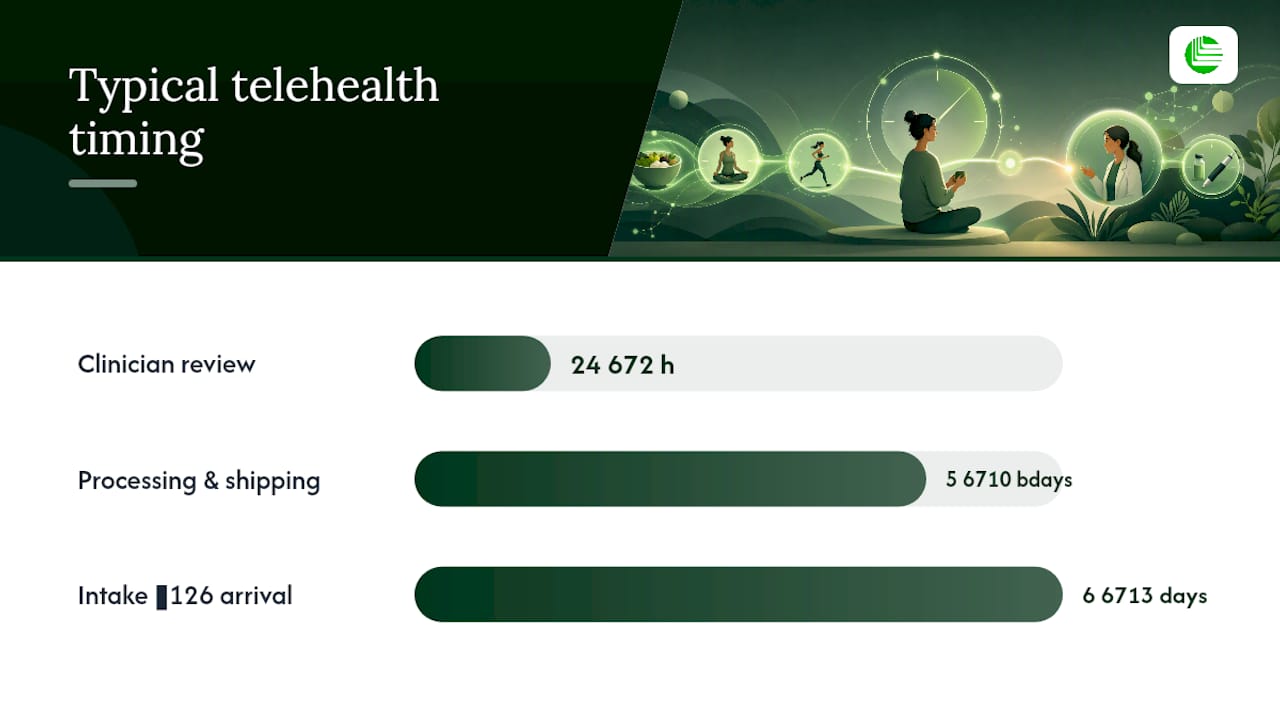
Timelines vary, but a typical path runs from intake to clinician review within 24 to 72 hours, then pharmacy processing and shipping that gets medication to your door in roughly 5 to 10 business days.
Pro Tip: Ask which pharmacy fills your prescription before you pay anything. A named, licensed pharmacy with a real address is a good sign. Vague language like “our compounding partner” with no license number is not.
Watch for these red flags: guaranteed approval before any clinical review, no mention of which state the prescriber is licensed in, no defined follow-up schedule, and pharmacy details that stay conveniently unclear until after you’ve paid.
Semaglutide and tirzepatide both work on appetite regulation, but they’re not interchangeable, and the differences shape what a telehealth clinician recommends.

| Factor | Wegovy (semaglutide) | Zepbound (tirzepatide) |
|---|---|---|
| Mechanism | GLP-1 receptor agonist | Dual GIP/GLP-1 receptor agonist |
| Administration | Weekly injection; oral tablet form also exists under the Wegovy label | Weekly injection only |
| Dose escalation | Gradual increase over several months to a maintenance dose | Gradual increase over several months to a maintenance dose |
| Boxed warning | Risk of thyroid C-cell tumors seen in rodent studies | Risk of thyroid C-cell tumors seen in rodent studies |
| Contraindications | Personal/family history of MTC or MEN2 | Personal/family history of MTC or MEN2 |
| Common side effects | Nausea, vomiting, diarrhea, constipation | Nausea, vomiting, diarrhea, constipation |
Both drugs carry the same boxed warning about thyroid tumors observed in animal studies, and both exclude patients with MTC or MEN2 history. The practical difference clinicians weigh most is magnitude of effect. Because tirzepatide acts on two hormone pathways instead of one, its prescribing information and clinical trial data tend to show larger average weight loss than semaglutide alone, which is one reason it’s often considered for patients who haven’t responded fully to a GLP-1-only medication.
Nausea, vomiting, diarrhea, and constipation are the side effects most people run into, especially during the first few weeks at a given dose. They’re common enough that a quality telehealth program should walk you through management strategies before you even start, not after you’re miserable.
Less common but more serious issues include acute pancreatitis, gallbladder disease, severe dehydration from persistent GI symptoms, and the thyroid tumor signal identified in rodent studies for both drug classes. A responsible program screens for these risks upfront and doesn’t just hand you a prescription and disappear.
Monitoring you should expect:
Contraindications aren’t a formality here. A personal or family history of medullary thyroid carcinoma or MEN2 rules out both semaglutide and tirzepatide, full stop. If pregnancy is discovered during treatment, the medication needs to stop immediately, and this rule applies with equal weight regardless of which drug you’re on or how far along in titration you are.
Dose titration usually follows a monthly schedule. You start on a low, tolerability-focused dose, and your clinician raises it in scheduled increments until you reach a therapeutic maintenance dose. That process typically stretches over several months rather than weeks.
Appetite changes are often the first thing patients notice, sometimes within the first few weeks even at a starting dose. Measurable weight change tends to build gradually, with most clinicians evaluating response over a period of months rather than days.
Individual response varies a good deal, and pairing medication with behavioral changes tends to produce steadier results than medication alone.
A short checklist saves you from a bad decision here. Before you enroll anywhere, verify these points directly with the program:
Red flags to walk away from: guaranteed approval before any review, a total absence of clinician licensing information, an unnamed or vaguely described compounding pharmacy, and no real plan for managing the GI side effects nearly everyone experiences early on.
Quality programs also don’t leave you to white-knuckle appetite changes alone. Some build in coaching or lifestyle support directly; others provide referrals when patients need more structured behavioral help. Either approach beats a program that ships medication and goes silent.
Weight loss isn’t the only thing patients notice on these medications. Semaglutide and tirzepatide act on appetite and satiety signaling in the brain and gut, and many patients report a real shift in how loud “food noise” feels, meaning the constant mental pull toward eating quiets down considerably. This effect on appetite control is part of why interest in GLP-1 agonists for overeating patterns has grown well beyond people chasing a number on the scale.
It’s worth being precise about what this article covers and what it doesn’t. Oak Longevity’s telehealth program is built around FDA-approved weight-management indications, meaning obesity or overweight with a qualifying health condition. It is not a specialized eating-disorder treatment program, and it doesn’t diagnose or treat binge eating disorder as a standalone psychiatric condition. If you have a clinically diagnosed eating disorder, that requires care from a specialist team trained in that area, not a weight-management telehealth visit alone.
That said, appetite regulation is a legitimate, well-documented effect of these medications, and it’s reasonable to mention changes in eating patterns, urges, or a sense of losing control around food during your intake. A good clinician wants that context. It helps them tailor titration pace and side-effect management, and it may prompt a referral if your history suggests you’d benefit from additional behavioral support alongside medication.
Standard weight-management telehealth intake forms are not diagnostic tools for binge eating disorder. They’re built to confirm BMI-based eligibility and screen out medical contraindications, not to conduct a structured psychiatric evaluation. If a program implies it can diagnose an eating disorder through a five-minute questionnaire, treat that claim with real skepticism.
Here’s the practical distinction that matters for your decision. If you already carry a formal binge eating disorder diagnosis from a mental health professional, that history belongs in your telehealth intake regardless. It gives the reviewing clinician a fuller picture and may shape how closely they monitor you or whether they recommend concurrent behavioral therapy alongside medication. But the telehealth visit itself isn’t where that diagnosis happens, and eligibility for Wegovy or Zepbound through a program like Oak Longevity still runs on the same FDA weight-management thresholds described earlier, not a separate binge eating disorder criterion.
If you suspect you have binge eating disorder but haven’t been formally evaluated, mention that during intake honestly. A responsible clinician will factor it into their recommendation, and may suggest you pursue a formal evaluation in parallel with or before starting medication, particularly if your relationship with food involves significant distress, secrecy, or loss of control that goes beyond typical overeating.
Medication alone rarely tells the whole story of sustainable change, and the stronger telehealth programs know it. Some build coaching directly into the platform: scheduled check-ins focused on habits, meal structure, and troubleshooting cravings as your dose increases. Others take a lighter-touch approach, offering resources or referrals to outside behavioral health providers when a patient’s history suggests they’d benefit.
Neither model is inherently wrong, but the difference matters for what you should ask before enrolling. A program that pairs GLP-1 or GIP prescribing with structured lifestyle guidance, including strength-focused protocols to help preserve lean muscle mass during weight loss, gives you more than a prescription. It gives you a framework for making the medication’s effects last.
Ask directly: does this program include coaching or behavioral check-ins, or is medication management the entire scope of service? If you know you struggle with structured eating patterns or emotional eating, a program with built-in behavioral touchpoints, or at minimum a clear referral pathway, is worth prioritizing over one that treats the prescription as the finish line.
Walking into your intake with the right information ready speeds up the review and helps the clinician make an accurate call the first time.
Gather these before you start:
Having this written out, rather than trying to recall it live, makes for a faster and more accurate review. It also reduces the odds that the clinician needs a second round of questions before they can make a decision.
Oak Longevity was built around the belief that physician-led prescribing, real dose titration, and 24/7 support aren’t optional extras. They’re the difference between a program that helps you and one that just ships a vial. Legitimate telehealth always includes clinical review, ongoing monitoring, and a plan for what happens after the first dose, not just before it.
If everything above sounds like what you want but you’re not sure where to begin, Oak Longevity runs exactly the kind of clinician-led pathway this article describes. You complete an online intake, a licensed physician reviews your history and approves your plan, and prescriptions for semaglutide or tirzepatide ship directly to your door.

The program pairs medication access with dose titration guidance and ongoing support, plus lifestyle protocols designed to protect lean muscle mass while you lose weight, so you’re not left managing side effects or plateaus alone. If you want a closer look at how the process works before committing, Oak Longevity’s product page walks through intake, pricing, and what happens after approval. Starting there takes a few minutes and gives you a clear next step instead of another open browser tab.
Always review full prescribing information for dosing details and boxed warnings before starting treatment.
This article is general information, not a substitute for advice from a qualified doctor. Consult a qualified healthcare professional about your own circumstances before acting on anything here.