
Start with consistent hydration, a moderate amount of soluble fiber taken with water, a daily walk after meals, and add polyethylene glycol if you see no improvement in a few days. Most constipation on semaglutide or tirzepatide resolves with these measures without stopping the medication. Seek urgent care for severe pain, vomiting, or no stool or gas for several days.
TL;DR:
- Hydration should be at least two liters daily, with warm drinks and water with fiber supplements to prevent fiber-related tightening.
- Increasing soluble fiber gradually and taking daily walks after meals can stimulate bowel movements during GLP-1 therapy.
- Polyethylene glycol is the preferred OTC laxative for long-term relief, with magnesium citrate as an alternative if kidney function allows, while stimulant laxatives are for breakthrough use.
- Starting lifestyle measures early, within the first three days, and escalating with medications if needed, improves long-term management and reduces dependency.
- Severe symptoms such as persistent vomiting, no stool for days, or worsening pain require immediate medical attention, not self-treatment.
GLP-1 receptor agonists work partly by slowing gastric emptying, which is exactly why they curb appetite. That same mechanism slows colonic transit, so stool moves through your gut at a crawl. Cleveland Clinic notes that constipation often outlasts nausea and can require ongoing management well past the first few weeks of treatment.
Eating and drinking less on these medications makes the problem worse. Less food and fluid intake means less bulk and less water moving through the colon, so the slowdown compounds itself.
Clinical trial data for the STEP and SURMOUNT programs put constipation rates roughly between 10% and 25%, depending on the specific drug and dose. People with a history of constipation, or those losing weight quickly, tend to land at the higher end of that range.
Timing matters too. Constipation on GLP-1 medications tends to peak during dose escalation, when your gut is adjusting to a new level of the drug. For some people it eases at maintenance dose. For others, it lingers, which is why having a plan ready before you start titrating up is smarter than waiting for a crisis.
The AAFP expert panel recommends starting with the basics before reaching for anything stronger, and this sequence is worth following in order rather than skipping straight to medication. Here’s what actually moves the needle, based on AAFP’s clinical guidance:
One detail trips people up constantly: adding fiber without enough water can backfire and tighten things up further, since fiber needs fluid to do its job in the colon.
Pro Tip: If you add a psyllium supplement, take it with a full glass of water, not just a sip, and space it one to two hours away from any other oral medication or supplement so absorption isn’t affected.
Where possible, minimize other OTC medications known to slow the gut, like certain antihistamines or opioid-containing pain relievers, while you’re working through this list.
When hydration, fiber, and movement aren’t cutting it, several over-the-counter options have real evidence behind them. This is where semaglutide constipation relief and tirzepatide constipation relief plans usually converge, since the medications work similarly enough that the same fixes apply to both.
Roughly 10% to 25% of people on GLP-1 therapy report constipation as an adverse effect, according to peer-reviewed trial data, which is exactly why having an OTC plan ready before symptoms start beats reacting after the fact.
Constipation relief works best as a timed plan, not a scramble the moment things stall. Here’s a sequence that matches how the AAFP panel recommends escalating care:
Pro Tip: Some clinicians now start PEG 3350 preemptively in patients they know are at higher risk for constipation, rather than waiting for symptoms to build. Ask your prescriber if that approach makes sense for you.
Most constipation on GLP-1 therapy is uncomfortable, not dangerous. But a small number of cases need immediate attention, and FDA prescribing information flags severe motility events like ileus as a rare but serious postmarketing concern.
Call your prescriber or seek emergency care if you notice:
When you reach out, be ready to describe your timeline, your current bowel regimen, any history of kidney disease, and every medication you’re taking, including over-the-counter products. A prescriber may respond with a temporary dose reduction, a slower titration schedule, or a referral for imaging if something more serious is suspected.
Oak Longevity’s telehealth model is built around ongoing physician-led support, not a one-time prescription and silence afterward. Patients complete an online consultation reviewed by a licensed physician, then receive medication delivery with continued access to guidance as they titrate.
That structure matters for something like constipation, which tends to surface during dose changes rather than at the start. Regular check-ins and coaching give patients a way to pace their titration schedule, adjust their bowel regimen in real time, and decide with a physician whether a temporary dose hold makes sense, rather than guessing alone.
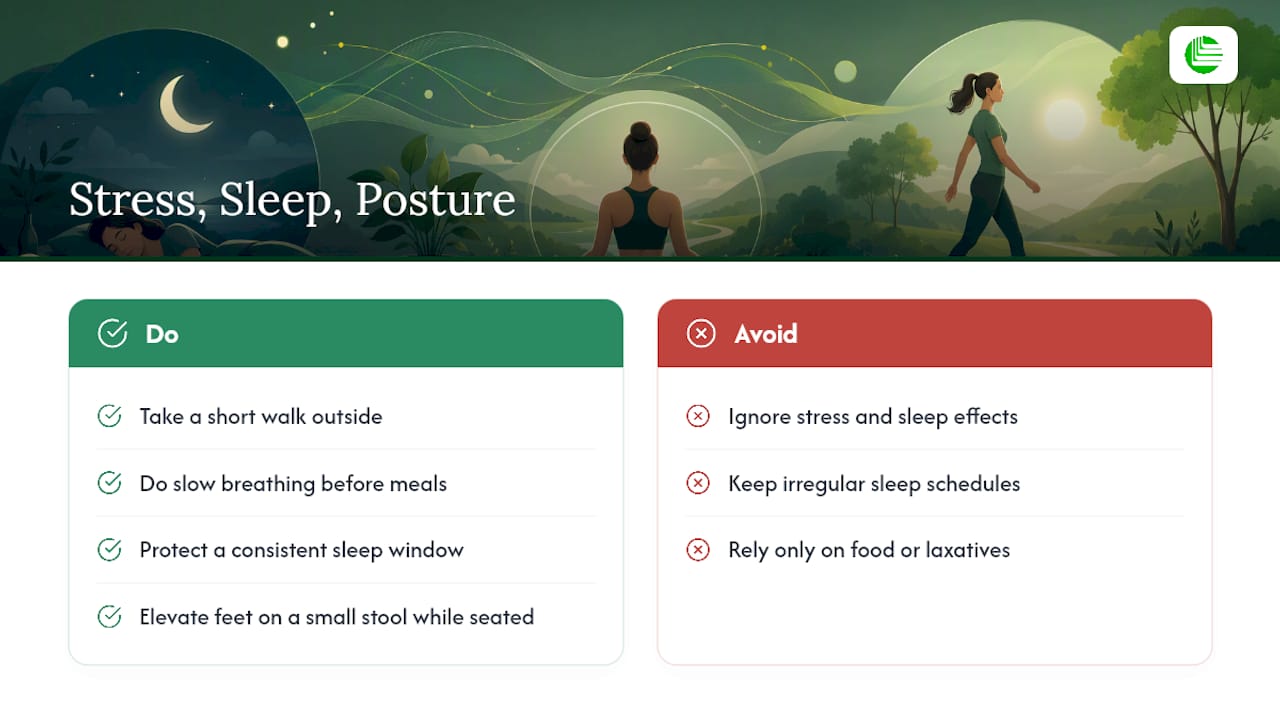
Diet and movement get most of the attention, but your nervous system runs the show behind the scenes. Chronic stress activates your body’s fight-or-flight response, which diverts blood flow and energy away from digestion, and that includes slowing colonic motility even further on top of what the medication is already doing.
Sleep quality plays a similar role. Poor sleep disrupts the hormones that regulate gut motility and appetite, and irregular sleep schedules can throw off the timing of your body’s natural urge to have a bowel movement, especially since that urge tends to peak in the morning after waking.
Simple practices help here: a short walk outside, a few minutes of slow breathing before meals, or just protecting a consistent sleep window can ease the load on a gut that’s already working harder than usual. None of this replaces hydration, fiber, or medication, but stress and sleep are the pieces people forget to manage while they’re focused on food and laxatives.
Bathroom posture is another overlooked factor. Elevating your feet on a small stool while seated changes the angle of your rectum and can make elimination noticeably easier, particularly for people dealing with harder stools from slowed transit.
Some people deal with a rough patch during dose escalation and then things settle. Others find that constipation sticks around at maintenance dose, and that calls for a different mindset than short-term rescue tactics.
Long-term management means treating your bowel routine as part of your medication regimen, not an afterthought. That means keeping fiber and hydration consistent even on days you feel fine, rather than only reacting once symptoms flare. Many patients find that a low, steady dose of PEG 3350, taken a few times a week rather than daily, keeps things moving without escalating to stimulant laxatives.
Periodic check-ins with your prescriber matter more here than in the first month of treatment. If constipation persists past eight to twelve weeks despite a solid regimen, that’s worth flagging directly. It might mean adjusting the titration pace, switching to a different formulation, or, in select cases, a referral for further evaluation to rule out an unrelated cause.
Tracking helps too. A simple log of bowel movements, fiber intake, and fluid intake for a couple of weeks can reveal patterns you’d otherwise miss, like a particular meal or medication timing that consistently makes things worse.
Constipation is one of the top reasons people quietly stop taking GLP-1 medications, even when the drug is doing exactly what it’s supposed to for weight or blood sugar. Discomfort adds up, and if nobody addresses it early, patients often assume the medication itself is the problem rather than a manageable side effect.
That has real consequences for glycemic control in patients using these drugs for diabetes management. Skipping doses or stopping altogether to avoid GI discomfort undoes the metabolic benefit the medication was providing, and blood sugar can drift back up as a result.
The fix isn’t complicated: treating constipation proactively, rather than waiting until it derails adherence, keeps patients on their regimen and keeps the treatment working the way it’s supposed to.
Most advice on this topic treats constipation as a footnote, something to mention briefly before moving on to weight loss numbers. That’s backwards. Constipation is one of the more common reasons people abandon a medication that’s otherwise working, and treating it as an afterthought does patients a disservice.
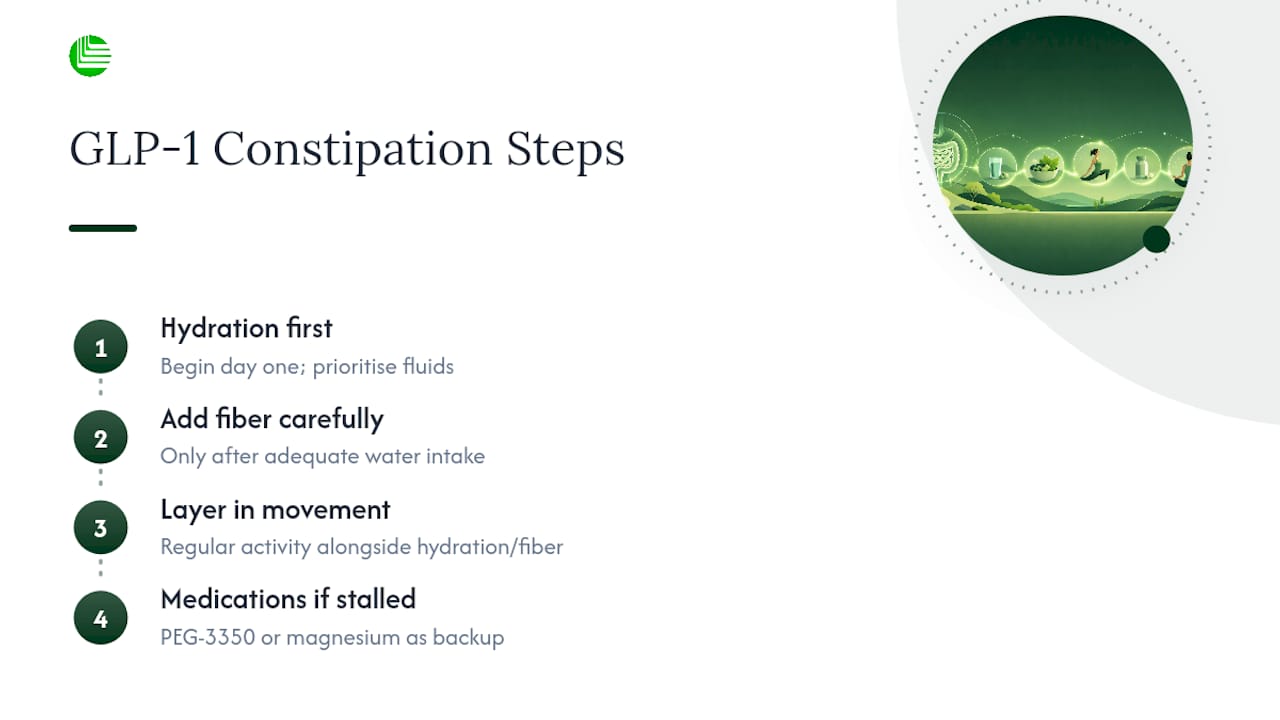
The conventional wisdom to just “add more fiber” also misses the mark. Fiber without adequate water can make things worse, not better, and the evidence supports a sequence, not a single fix: hydration first, fiber added carefully, movement layered in, and PEG 3350 or magnesium ready if lifestyle measures stall.
What the research actually supports is starting proactively rather than reactively. Waiting for severe symptoms before acting means playing catch-up during dose escalation, exactly when your gut is least equipped to handle it. Patients who treat bowel management as part of their titration plan, not a problem to solve later, tend to stay on their medication longer and see better results because of it.
If you take one thing from this: don’t wait for day ten of no bowel movements to start hydrating and moving. Start on day one.
— Eric
Managing constipation on your own with fiber and PEG works for most people, but knowing when to adjust your dose or pace your titration is where medical guidance actually pays off. Oak Longevity gives you access to physician-reviewed consultations, prescription delivery, and ongoing follow-up support so you’re not troubleshooting dose changes alone.

Patients can get help timing their titration schedule around side effects like constipation, rather than pushing through discomfort blind. If you’re starting or adjusting a GLP-1 medication, you can explore semaglutide and tirzepatide options or check compounded injectable semaglutide to see current pricing and next steps. For ongoing management, Oak Longevity’s weight loss and longevity programs include coaching support alongside your prescription.
None of this replaces emergency care. If you’re dealing with severe abdominal pain, persistent vomiting, or several days without a bowel movement or gas, go to urgent care or the emergency room first.
This article draws on the AAFP expert panel guidance on managing GLP-1 related constipation, along with FDA prescribing information and peer-reviewed evidence on PEG 3350 and magnesium-based laxatives.
This article is general information, not a substitute for advice from a qualified doctor. Consult a qualified healthcare professional about your own circumstances before acting on anything here.
Polyethylene glycol (PEG 3350) is generally considered the strongest first-line option, backed by randomized trial evidence for chronic constipation. Magnesium citrate at bedtime is a solid alternative if you don’t have kidney disease, and both can be used alongside fiber and hydration rather than instead of them.
GLP-1 medications slow gastric emptying and colonic transit as part of how they work, which is the same mechanism that curbs your appetite. Cleveland Clinic explains that this slowdown is common and often outlasts nausea, especially during dose escalation.
There’s no single standardized formula that goes by this name in clinical literature, and definitions circulating online vary widely. If you’ve heard of a specific mix from a healthcare provider, check with your own prescriber before trying it, since combining laxatives without guidance can cause dehydration or electrolyte issues.
Nothing works instantly, but a stimulant laxative like senna or bisacodyl, or a suppository, typically produces results within hours rather than days. These are meant for occasional rescue use, not nightly management, and PEG 3350 or magnesium citrate remain the better choice for ongoing relief.
Yes. Physician-reviewed consultations can include ongoing support to help patients adjust their titration pace and bowel regimen as side effects come up. Current pricing for semaglutide and tirzepatide plans is listed on the site.