
GLP-1 medicines can make some birth control less reliable, but not all of it, and not for every drug. The clearest signal is with tirzepatide (Zepbound, Mounjaro) and birth control pills. The FDA label for Zepbound tells people on the pill to switch to a non-oral method or add a barrier method for 4 weeks after starting and after every dose increase. Methods you don’t swallow, such as the IUD, implant, shot, patch and ring, are not expected to be affected. Semaglutide has not shown a meaningful effect on the pill in the studies we have.
This guide walks through what the evidence says, what to do if you vomit or have diarrhea, why weight loss can restore fertility, and what is known about breastfeeding. It is general information, not a substitute for your own prescriber.
GLP-1 medicines and the dual GLP-1/GIP drug tirzepatide slow the speed at which your stomach empties. That is part of why they make you feel full. It also means anything you swallow can reach your small intestine later than usual, and that is where most of a birth control pill is absorbed.
The FDA’s Zepbound label says tirzepatide delays gastric emptying and may reduce how well oral medicines are absorbed. It adds that hormonal contraceptives that are not taken by mouth should not be affected (FDA Zepbound label, revised January 2026). So the question is rarely “does a GLP-1 cancel birth control?” It is “which drug, which method, and at what point in treatment?”
The stomach-emptying effect is strongest early in treatment and right after a dose increase. For that reason, the Zepbound label advises people using oral hormonal contraception to switch to a non-oral method, or add a barrier method such as condoms, for 4 weeks after starting tirzepatide and for 4 weeks after each dose escalation (FDA Zepbound label).
A 2024 peer-reviewed literature review looked at the research. The one tirzepatide study it found showed a statistically significant drop in oral contraceptive exposure. Five studies of other GLP-1 receptor agonists did not show statistically or clinically significant effects (PubMed review, 2024). The authors attribute tirzepatide’s larger effect to a stronger early delay in gastric emptying and a rapid dose escalation compared with typical GLP-1 drugs.
Two practical points follow from this:
For semaglutide, the evidence is more reassuring. The UK’s Faculty of Sexual and Reproductive Healthcare (FSRH) states that no clinically relevant reduction in oral contraceptive bioavailability was seen with semaglutide, dulaglutide, exenatide, lixisenatide or liraglutide (FSRH statement). That is UK guidance, and US labels and clinicians may phrase their advice differently, but the underlying pharmacology studies are the same ones.
If you take semaglutide and a combined or progestin-only pill, the data do not point to a need for routine backup because of the drug itself. Your own situation can still change the picture, especially if you have side effects, which brings us to the real-world issue.
GLP-1 medicines commonly cause nausea, vomiting and loose stools, especially while the dose is rising. Those symptoms can affect a pill regardless of which GLP-1 you use, because a pill that is vomited or passes through quickly may not be absorbed.
The FSRH patient leaflet gives a simple rule of thumb. Treat it as a missed pill if you vomit within 3 hours of taking it, or if severe diarrhea lasts more than 24 hours. If vomiting or diarrhea keeps going, consider a non-oral method or use condoms consistently until it settles (FSRH patient information, February 2025). Your pill’s own leaflet explains exactly what a missed pill means for your brand, and a pharmacist can walk you through it.
If stomach symptoms are severe or you cannot keep fluids down, contact your prescriber. That is a medical issue in its own right, not only a contraception one.
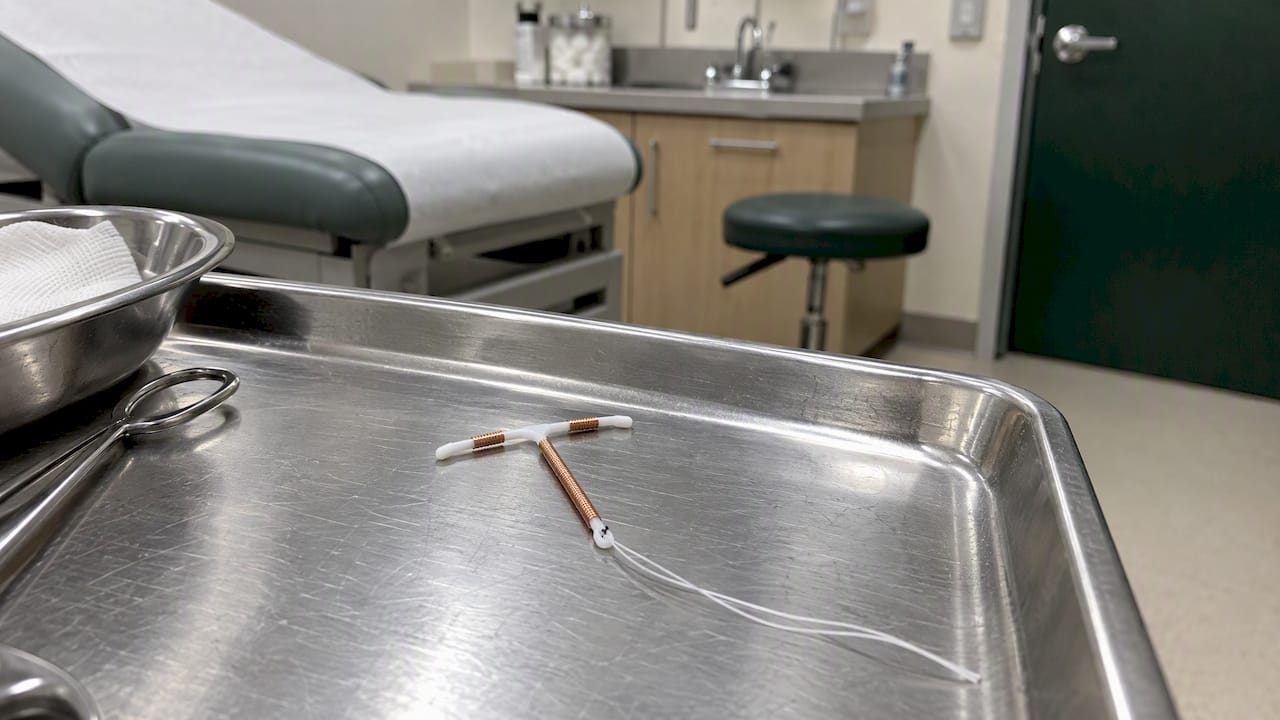
The same FSRH leaflet says non-oral contraception, including the coil, implant, injection, patch and ring, does not need extra precautions with GLP-1 drugs (FSRH patient information). The FDA’s tirzepatide label points the same way for non-oral hormonal methods.
Here is how the options line up. This table summarizes the sources above; it is not a ranking of which method is best for you.
| Method | Taken by mouth? | Expected effect from GLP-1 drugs |
|---|---|---|
| Combined or progestin-only pill | Yes | Tirzepatide: backup advised for 4 weeks after starting and each dose increase. Other GLP-1s: no clinically relevant reduction found. Vomiting or severe diarrhea can still reduce protection. |
| Implant, hormonal IUD, copper IUD | No | No extra precautions expected |
| Injection (shot) | No | No extra precautions expected |
| Patch or vaginal ring | No | No extra precautions expected |
| Condoms | No | Not affected; the label’s suggested add-on layer |
The American College of Obstetricians and Gynecologists (ACOG) recommends choosing or changing birth control through shared decision-making with an OB-GYN, rather than relying on generalized claims about hormonal contraception (ACOG). That advice fits this topic well: the right method depends on your health history, your drug, and how long you plan to be on treatment.
The evidence here is thinner. Pharmacy and clinical guidance published in 2025 describes the effect of GLP-1 drugs on oral emergency contraception as uncertain, and describes the copper IUD as the most effective option and unaffected by these medicines. If you need emergency contraception while on a GLP-1, ask a pharmacist or clinician which option fits your situation, and do it promptly rather than waiting.
This is the part people miss. Losing weight can restart regular ovulation in women whose cycles were irregular, including some with polycystic ovary syndrome (PCOS). You may have been relying on the idea that you were unlikely to conceive. As treatment works, that assumption can quietly stop being true.
If you are not planning a pregnancy, treat reliable contraception as part of your treatment plan from day one. We cover the connection between the two topics in more depth in our piece on semaglutide and pregnancy.
GLP-1 medicines are not meant to be used during pregnancy. The FDA’s Ozempic label says human pregnancy data are limited and that animal studies showed embryo-fetal death, structural abnormalities and altered growth. It advises using the drug in pregnancy only if the potential benefit justifies the potential risk to the fetus. Because semaglutide stays in the body a long time, the label advises discontinuing it at least 2 months before a planned pregnancy (FDA Ozempic label, revised October 2025).
In practice:
If you are in perimenopause and wondering whether pregnancy still applies to you, see our guide to GLP-1 medicines in perimenopause. Contraception can still be needed until a clinician confirms you are past the need for it.
Many new parents want to lose pregnancy weight, and this is where search interest is highest. The honest summary is that the data are small and the answer is individual.
ACOG’s 2026 practice advisory says human milk studies are limited and do not assess milk volume, milk composition, infant weight gain or long-term outcomes. One small study found no semaglutide in milk at 0, 12 or 24 hours after a subcutaneous dose. ACOG notes that preliminary findings and the large molecular size of GLP-1 drugs suggest presence in breast milk is unlikely, and that use while breastfeeding may be considered through shared decision-making (ACOG practice advisory).
Product labels are more cautious. The Ozempic label says there are no data on semaglutide in human milk, on effects on a breastfed infant, or on milk production. It notes semaglutide was found in rat milk at levels 3 to 12 times lower than in the mother’s blood (FDA Ozempic label). The January 2026 Wegovy tablet label goes further and says breastfeeding is not recommended during treatment with the tablets (FDA Wegovy tablet label).
So two respected sources frame it differently: a professional society open to a shared decision, and a product label that is conservative. Both are right about one thing, which is that long-term infant outcomes are not well studied.
The Zepbound label describes a study in 11 lactating adults who received a single 5 mg dose. Tirzepatide was undetectable in 164 of 171 milk samples, and in the others the amount was under 0.02% of the mother’s dose. The label still says the effects on the infant and on milk production are unknown, and it recommends weighing the benefits of breastfeeding against the mother’s need for the drug and any potential effect on the baby (FDA Zepbound label).
One caution on formulations. The labels quoted here describe brand-name products. If you are prescribed a compounded version, ask your physician how the guidance applies to the exact product you receive, rather than assuming it is identical.
We see this question constantly, and the pattern is consistent: people start treatment focused on the scale and forget that their body is about to change in ways that touch fertility and absorption. We think contraception should be part of the first conversation, not an afterthought.
Our view is simple. If you are on the pill and starting tirzepatide, take the label’s 4-week backup advice seriously, and consider whether a non-oral method makes life easier over a long titration. If you are on semaglutide, the data are reassuring, but a stomach bug or rough week of side effects is still reason to use backup. And if pregnancy is on your horizon, tell your physician early, so the stop date is planned instead of rushed.
That is why every intake at Oak asks about your medications, your contraception and your plans. A physician reviews your answers before anything is prescribed, and the program includes ongoing support so you can ask questions as your dose changes. Longevity, to us, means keeping you well through the whole process, not only getting the number down.
— Eric
If you are ready to start, Oak offers online physician-reviewed care with delivery to your door. Compounded semaglutide starts from $119 per month and compounded tirzepatide from $185 per month. Prices are as published on our site, and your physician decides which medication, if any, is right for you after reviewing your health questionnaire.
Tell us about your contraception and pregnancy plans when you fill in the form, so your care team can build them into your plan. If you are weighing semaglutide against tirzepatide, our guide to switching from semaglutide to tirzepatide explains how that transition usually works.
It can reduce how much of an oral contraceptive your body absorbs. The Zepbound label advises using a non-oral method or adding a barrier method for 4 weeks after starting and after each dose increase. Non-oral hormonal methods should not be affected.
Studies reviewed so far have not found a clinically meaningful effect of semaglutide on oral contraceptives. Vomiting or severe diarrhea can still reduce a pill’s effectiveness, so use your pill’s missed-pill instructions and add condoms if symptoms continue. Ask your prescriber about your own situation.
The evidence is limited. Small studies found little to no drug in milk, and ACOG says breastfeeding use may be considered through shared decision-making. The Wegovy tablet label, however, says breastfeeding is not recommended, so talk to your clinician and your baby’s pediatrician first.
Methods you don’t swallow, including IUDs, the implant, the shot, the patch and the ring, are not expected to be affected by GLP-1 drugs. The right choice still depends on your health history, so choose it with your OB-GYN.
The Ozempic label advises stopping at least 2 months before a planned pregnancy because the drug clears slowly. Keep using contraception during that washout and set the exact timeline with your prescriber.