GLP-1 medicines are not yet an approved anti-aging treatment, but they do lower the risks that shorten healthy life: excess weight, heart disease, kidney disease, fatty liver and type 2 diabetes. That is the practical link between GLP-1 and longevity today. The aging-specific research is promising and still early. The cardiometabolic benefits are established now, and you capture them by staying on a properly prescribed plan and protecting your muscle along the way. At Oak Longevity, our online program is built around that approach: physician-reviewed prescriptions, delivered to your door, with coaching and strength guidance alongside.
GLP-1 is a gut hormone that tells your brain you are full and helps your pancreas release insulin after meals. Medicines that mimic it are called GLP-1 receptor agonists. Semaglutide is one. Tirzepatide also mimics a second hormone, GIP, which is why it is called a dual agonist.
Longevity is a loose word, so it helps to split it in two:
GLP-1 medicines have the strongest case on healthspan. A 2026 review in The Lancet notes that these drugs are approved for obesity and that trials have established benefits including prevention of type 2 diabetes, fewer major cardiovascular events, heart failure benefits, improvement in fatty liver disease, and symptom relief in sleep apnea and knee osteoarthritis. Each of these conditions erodes healthy years. Reducing them is a direct, measurable route to a longer healthspan.
Two large trials of semaglutide stand out. In the SELECT trial, semaglutide 2.4 mg reduced major adverse cardiovascular events by 20% in people with obesity and existing cardiovascular disease but no diabetes. In the FLOW trial, semaglutide 1 mg reduced the primary kidney outcome by 24% and also reduced all-cause mortality in the same review’s summary.
Those results come from people at higher risk, so they are best read as evidence that treating obesity and its consequences with these medicines changes real outcomes, not just the number on the scale.
A January 2025 Nature Medicine analysis of US Department of Veterans Affairs records followed about 216,000 people with diabetes who started a GLP-1 medicine and compared them with 1.2 million people on usual care. Use was associated with lower risk of cardiometabolic disorders, neurocognitive disorders including Alzheimer’s disease and dementia, seizures, coagulation disorders, infections and several respiratory conditions. The same analysis also found higher risk of gastrointestinal problems, low blood pressure, fainting, kidney stones and drug-induced pancreatitis, which is why monitoring is part of any good program (more on that below).
This is observational data in people with diabetes. It shows association, not proof of cause, but it explains why researchers are looking at brain health and inflammation as well as weight.
This is where most of the longevity headlines come from, so it is worth being precise.
A 2026 NIH news release describes a UC Berkeley study led by Danica Chen. Female mice began semaglutide at 20 months of age, roughly the equivalent of late life. Treated mice showed better muscle and cognitive function and fewer hallmarks of aging such as inflammation. Mice treated until the end of life had a median lifespan nearly 100 days longer than untreated mice, and in some areas the effects surpassed a 24% calorie-restricted diet. NIH notes that additional clinical studies are needed before similar results can be expected in people.
In people, the early signals are encouraging and exploratory:
The honest summary: the biology is exciting, the cardiometabolic payoff is established, and dedicated human aging trials are the research frontier. No GLP-1 medicine carries an FDA indication for slowing aging. You are using it to treat weight and metabolic risk, and the longevity upside is the reason many people want to start early and stay consistent.
People searching for longevity usually want to know what the first year will look like. Mayo Clinic Press (November 2026) gives a useful range: GLP-1 medicines lead to an average 5% to 10% body-weight loss over three months and up to 22% over roughly a year. Weight loss often slows and plateaus after 6 to 12 months. About 10% to 15% of users lose less than 5% of starting weight, and results depend on genetics, starting weight, exercise and eating habits, dose and drug type.
A 5% to 10% loss sounds modest, but for a 300-pound person it is 15 to 30 pounds, and the same Mayo source describes substantial improvements in glucose control, kidney and liver health, mobility and joint pain at that level.
A simple way to set expectations:
| Timeframe | What many people notice | What drives it |
|---|---|---|
| First weeks | Smaller appetite, early digestive side effects | Starting dose and gradual increases |
| Around 3 months | An average 5% to 10% weight loss | Dose steps, protein intake, activity |
| 6 to 12 months | Largest losses, then a plateau | Maintenance dose, habits, individual biology |
| Beyond a year | Stable weight and lasting markers when treatment continues | Ongoing medical guidance |
The plateau is normal and not a sign the medicine has stopped working. It is the point where the plan shifts from losing to maintaining.
Muscle mass and strength predict physical function, falls, frailty and mortality as we age. A 2026 review points out that a variable share of weight lost on anti-obesity medications is lean mass, from roughly 15% or less up to 40% to 60% depending on the drug and the method. Its conclusion for healthspan: the net benefit depends on whether lean mass and function are protected.
That makes the habits around the medicine part of the treatment:
This is also why Oak pairs weight loss with strength and lifestyle protocols and includes health coaching, so the muscle side of the plan does not depend on willpower alone.
A longevity plan has to be one you can sustain safely. The American Diabetes Association’s 2026 Standards of Care list the common semaglutide effects: nausea, vomiting, diarrhea, constipation, dyspepsia, headache, fatigue and increased heart rate. They recommend monitoring heart rate, mood changes, symptoms of gallstones and electrolytes for kidney function changes. Severe gastrointestinal disease and a personal or family history of medullary thyroid carcinoma or multiple endocrine neoplasia type 2 are contraindications, meaning people with them should not use the medicine.
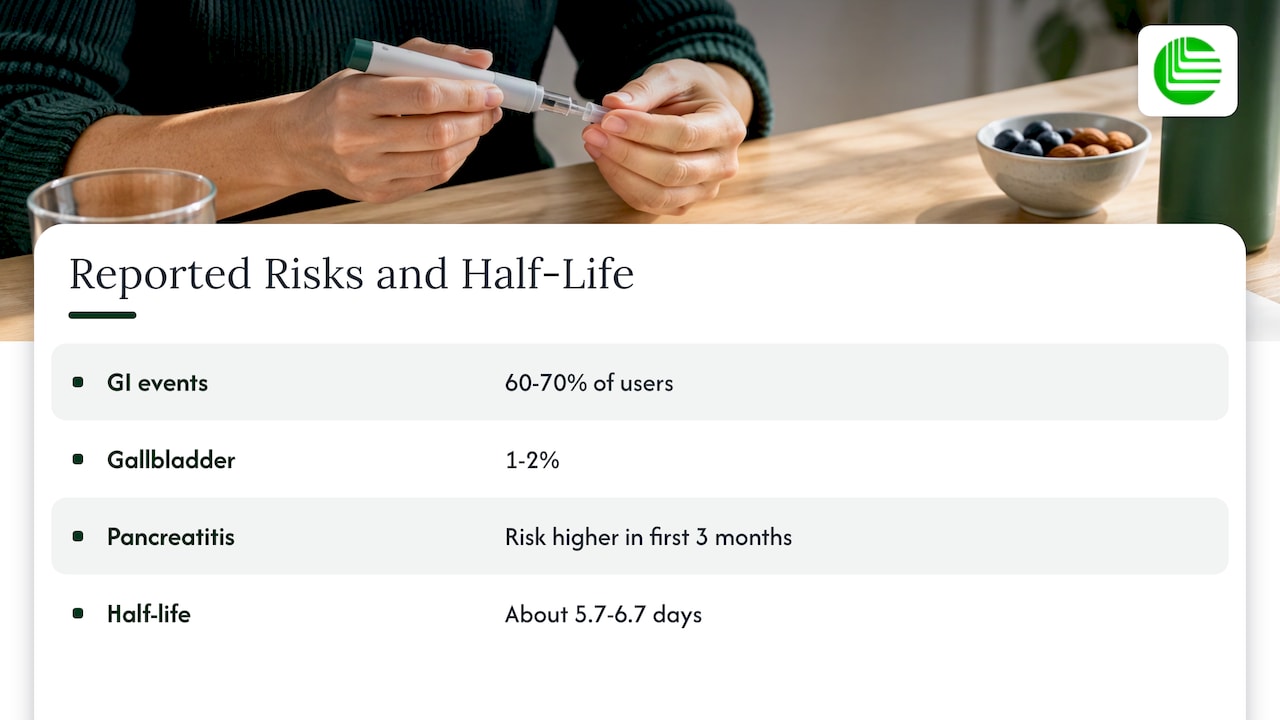
A 2026 British Columbia provincial prescribing document, which cites US FDA actions, reports that gastrointestinal events occur in 60% to 70% of users, gallbladder events in 1% to 2%, and drug-induced pancreatitis risk is higher in the first three months. Most digestive effects ease as the dose is increased gradually, which is a reason to let a physician set the titration schedule.
Know the warning signs. A 2026 clinical guide advises that severe upper-abdominal pain radiating to the back with vomiting may signal pancreatitis and calls for stopping the medicine and getting immediate medical evaluation. Gallstone-type symptoms lasting beyond several days, or with fever, also warrant an ultrasound. If you have these symptoms, contact your doctor or emergency services right away.
Taking too much is rare but possible. StatPearls describes nausea, vomiting and diarrhea that can lead to dehydration and kidney injury, with supportive treatment because there is no antidote. Semaglutide’s half-life is about 5.7 to 6.7 days, so effects fade slowly. If you took extra, call Poison Control at 1-800-222-1222 or seek emergency care if you are severely ill.
If you take other medicines, such as metformin, or have an upcoming procedure, plan those with your prescriber first. Our guides on GLP-1 with metformin and GLP-1 before surgery cover the questions to bring.
The ADA’s 2026 Standards of Care describe obesity as a chronic disease that calls for long-term treatment. They note that real-world evidence shows long-term use can maintain a weight reduction of 10% or more, and that stopping leads to recurrence of most lost weight within a year, along with reversal of earlier cardiometabolic gains. A clinical guide puts the regain at roughly two-thirds of lost weight within a year.
For healthspan, that means consistency is where the benefit sits. A plan you can afford, refill on time and adjust with a physician beats a short burst. If your goals or circumstances change, our guide on how to stop GLP-1 safely explains how to taper with guidance rather than quitting abruptly.
Oak Longevity is an online telehealth program for adults in the United States. You complete a health questionnaire, a licensed physician reviews it, and if you are approved your medication is delivered to your door. Support is available around the clock, along with physician-led guidance on dosing, free health coaching, free shipping and no hidden membership fees. Our doctors are obesity-certified, and no video call is required.
Published starting prices at the time of writing:
| Option | Starting price |
|---|---|
| Semaglutide | from $109 per month |
| Compounded injectable semaglutide | from $167 per month |
| Tirzepatide | from $185 per month |
| Longevity and metabolic support peptides | from $167 per month |
If you want to see how weight loss and longevity support fit together, start on our weight loss and longevity page.
Compounded medications are prepared by pharmacies to a prescriber’s order, so your physician decides which option suits your health history.
We built Oak around a simple idea: the longevity case for GLP-1 medicines rests first on what they already do for the body, lowering the weight, blood sugar and cardiovascular strain that wear down healthy years.
We see the muscle question as the center of any longevity plan. That is why our program pairs medication with strength and lifestyle protocols, physician-led guidance on dosing, and health coaching at no extra charge. Losing weight while keeping lean mass is the version of this treatment that supports a long, active life.
We also believe access should not depend on a clinic waiting room. An online questionnaire reviewed by a licensed physician, medication shipped free to your door, and support at any hour make it practical to stay on a plan for the long term, which is where the benefit builds.
Longevity research on GLP-1 medicines is moving quickly. We would rather you start on a well-supervised program now and benefit from each new finding than wait on the sidelines.
Oak Longevity
No GLP-1 medicine is approved to slow aging or extend lifespan. In older mice, semaglutide extended median lifespan by nearly 100 days, and in people the drugs reduce major cardiovascular events and kidney problems in high-risk groups. Trials designed around aging endpoints are still to come.
Semaglutide’s elimination half-life is about one week, and the Wegovy product information says it stays in circulation for roughly seven weeks after the last 2.4 mg dose. Tirzepatide’s half-life is about five to six days. This is one reason side effects and appetite changes fade gradually after a final dose.
Most people regain a large share. Trials show roughly two-thirds of lost weight returns within a year of stopping, and improvements in blood pressure and blood sugar reverse over time. Talk with your physician about a maintenance or tapering plan before changing your dose.
Eat enough protein, do resistance training two to three times a week and let your physician adjust the dose rather than pushing for the fastest loss. Our guides on protein targets and building muscle on GLP-1 give a practical starting point.