GLP-1 medications modestly raise the risk of gallbladder and biliary problems, with pooled trial data showing roughly a 32% to 37% relative increase in gallbladder events. The two main drivers are the medication’s effect on gallbladder emptying and the rapid weight loss these drugs produce. If you develop steady, severe upper-right abdominal pain, fever, or yellowing skin, seek same-day medical care rather than waiting it out.
TL;DR:
- Gallbladder risks with GLP-1 medications increase by about 32% to 37% relative to non-users, mainly affecting those on higher doses and longer treatments.
- Rapid weight loss and suppressed gallbladder emptying from GLP-1 drugs raise the likelihood of gallstones and biliary complications over time.
- Symptoms like severe upper right abdominal pain after fatty meals, fever, jaundice, or persistent vomiting require urgent medical evaluation within the first few months of therapy.
- Suggested strategies to reduce risk include gradual weight loss of 5% to 10% over six months, regular moderate activity, and avoiding prolonged fasting or extreme calorie restriction.
- Monitoring with ultrasound and blood tests during treatment, combined with individualized dose pacing, helps catch early gallbladder issues without unnecessary discontinuation.
A systematic review and meta-analysis of randomized trials found that people taking GLP-1 receptor agonists had a pooled relative risk around 1.32 to 1.37 for composite gallbladder and biliary disease compared with people not taking these drugs. That number sounds alarming until you put it in context: a relative increase of a third applied to a small baseline risk still leaves most people unaffected. The same analysis found the risk climbed higher in weight-loss trials than in diabetes trials, and it tracked with higher doses and longer treatment duration.
Several patterns showed up consistently across the data:
A pooled analysis of randomized trials found a relative risk of approximately 1.32 to 1.37 for gallbladder and biliary disease among GLP-1 users, a modest but real signal that clinicians now factor into prescribing decisions.
Prescribing information for several GLP-1 and GIP medications includes warnings about acute gallbladder disease, and postmarketing reports have documented cases of acute cholecystitis developing after treatment starts, in some instances within 90 days of initiation. Those case reports do not establish how common the problem is, but they reinforce why early symptom recognition matters during the first few months of therapy.

Your gallbladder relies on a hormone called cholecystokinin (CCK) to contract and empty bile after meals. GLP-1 receptor agonists appear to suppress that signal, which slows gallbladder emptying and lets bile sit longer than it should. Mechanistic research describes this as disrupted bile acid signaling and reduced gallbladder contraction, a combination that creates the conditions for stone formation over time, according to a review of the molecular pathways involved.
Rapid weight loss compounds the problem on its own, independent of the medication’s direct effects. When you lose weight quickly, your liver secretes more cholesterol into bile, shifting its chemical balance toward stone formation. The combination of a sluggish gallbladder and cholesterol-heavy bile is exactly what stone formation needs.
Pro Tip: If you are losing weight quickly on a GLP-1 medication, mention it to your prescriber early. Dose pacing and monitoring can often be adjusted before symptoms appear.
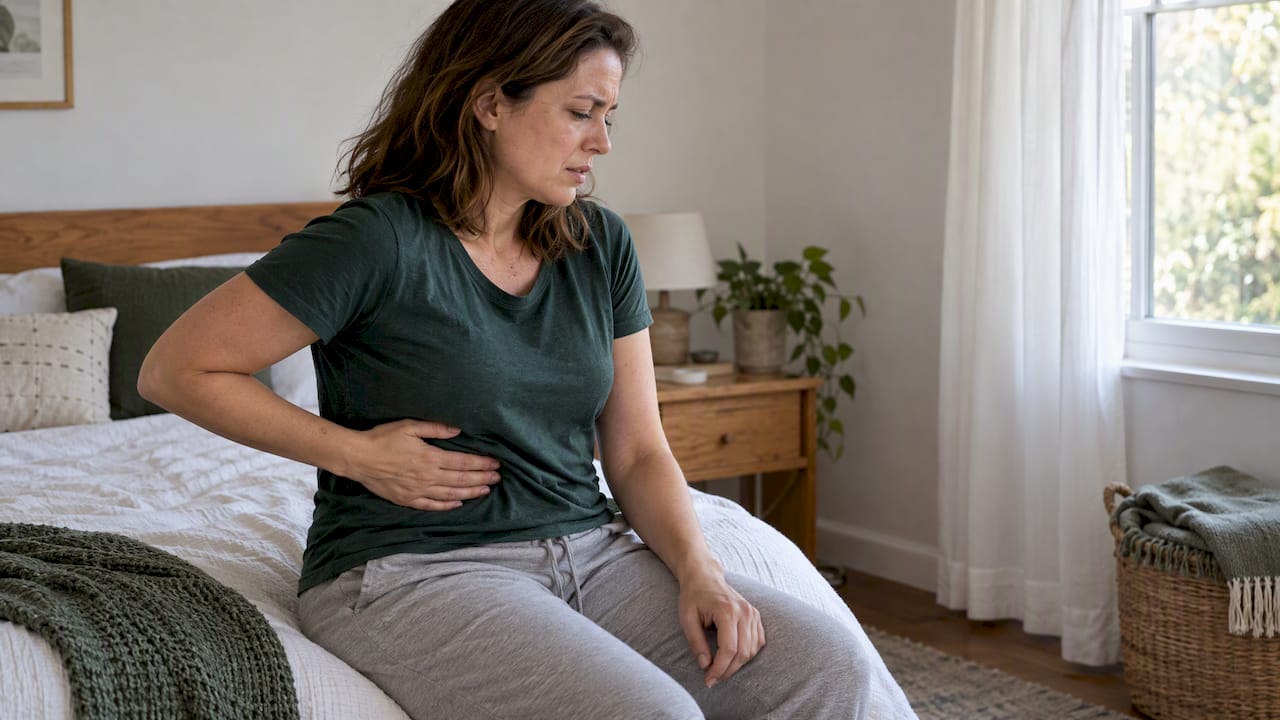
Routine GLP-1 side effects like nausea or bloating are common and usually temporary. Biliary colic feels different: it is a steady, often severe pain in the upper right abdomen that can radiate to your back or right shoulder blade, frequently triggered after a fatty meal and lasting anywhere from 30 minutes to several hours.
Certain symptoms signal a more serious problem and warrant same-day evaluation:
If any of these show up, go to an emergency department or same-day clinic for an ultrasound and blood work rather than waiting for a scheduled appointment. Never stop or adjust your medication on your own; make that decision with your prescriber once you have been evaluated.
Pace matters more than almost anything else you can control. NIDDK guidance recommends aiming for 5% to 10% weight loss over roughly six months when clinically appropriate, since losing weight faster than that raises gallstone risk independent of any medication involved.
A few habits support that pace and your gallbladder health more broadly:
Gradual weight loss of 5% to 10% over about six months is the benchmark clinicians use to limit gallstone risk during medically supervised weight loss.
When stones are found but cause no symptoms, most clinicians recommend no treatment at all. Symptomatic gallstones are usually managed with cholecystectomy, and ursodiol may be considered for smaller cholesterol stones in select patients, particularly those with elevated predicted risk going into rapid weight loss.
A thorough telehealth intake should screen for prior symptomatic gallstones, a history of cholecystectomy, and comorbidities like diabetes or metabolic syndrome that independently raise biliary risk.
Pro Tip: Ask your prescriber what their specific symptom checklist looks like during dose escalation, not just at your first visit.
The absolute gallbladder risk from GLP-1 therapy is small next to the metabolic and weight-related benefits many patients gain. Reflexively stopping treatment at the first sign of GI discomfort often does more harm than good, since most of those symptoms are not biliary at all. The better approach is individualized: assess baseline risk honestly, monitor proactively during the months of fastest weight loss, and keep the conversation between patient and prescriber open enough that a real symptom gets reported the day it starts, not weeks later.
— Eric
Starting a GLP-1 medication with a clear plan for monitoring makes the difference between catching a problem early and discovering it in an emergency room. Our telehealth platform pairs every prescription with physician review before approval and ongoing physician-led guidance through dose changes, so questions about symptoms get answered by someone qualified to act on them.
We deliver semaglutide and tirzepatide directly to your door and keep support available as you titrate, including guidance on pacing your weight loss to limit gallbladder strain. If you are considering GLP-1 therapy or already using it and want a supervised second look at your plan, you can start a consultation through our weight loss program today.
This article is general information, not a substitute for advice from a qualified doctor. Consult a qualified healthcare professional about your own circumstances before acting on anything here.
Gallbladder and biliary events are modestly more common with GLP-1 therapy, with pooled trial data showing a relative risk of about 1.32 to 1.37 compared with non-users. The absolute numbers remain small for most patients, and risk rises with higher doses and faster weight loss.
Aim for gradual weight loss, around 5% to 10% over six months, rather than the fastest pace possible. Regular moderate activity and a diet that avoids extreme calorie restriction also support a healthier gallbladder during treatment.
The hallmark sign is steady, severe pain in the upper right abdomen that can spread to your back or right shoulder blade, often starting after a fatty meal. Fever, jaundice, or vomiting that will not stop alongside that pain are red flags that need same-day medical evaluation.
Clinical trial and postmarketing data show small absolute increases in gallbladder events like cholelithiasis and cholecystitis with tirzepatide, and prescribing information for GLP-1/GIP agents includes warnings for acute gallbladder disease. Rates vary across studies but remain low in absolute terms for most patients.