Food noise is the constant mental chatter about food, and for many adults semaglutide turns it down sharply, often within the first weeks of treatment. It works on the appetite and reward centers in the brain, not only on the stomach, which is why people describe the change as quiet rather than just feeling full. This guide explains what is happening, what the research shows for semaglutide and tirzepatide, why cravings and low appetite can look odd along the way, and how to eat well while your appetite resets. At Oak Longevity, a physician reviews your health questionnaire online, and semaglutide plans start from $109 per month.
Most people know physical hunger: an empty stomach, low energy, a growl. Food noise is different. UW Medicine describes it as constant internal chatter about food: what to eat, how much, whether you ate too much, when the next meal is. It is more mental than physical, so your brain can keep food at the top of your mind all day whether or not your body needs fuel.
It is not a medical diagnosis, and it is not a lack of willpower. Think of the person who finishes breakfast and is already planning lunch, who walks past the pantry six times, or who cannot concentrate in a meeting because a snack keeps pulling at their attention. That loop is what people mean.
Because it lives in the brain’s reward and craving circuits, it responds to medicines that work there. That is the reason food noise is the first thing many people notice on semaglutide, often before the scale moves.
Semaglutide is a GLP-1 receptor agonist. It copies a gut hormone your body already makes after eating. Stanford Medicine’s 2026 explainer says GLP-1 medicines slow gastric emptying, so food leaves the stomach more slowly, and act on satiety centers in the brain to reduce hunger and what patients call food noise. Most patients end up eating less.
There are two layers to this:
The second layer is the one that matches the food noise experience. Researchers are still working out the full picture, but the reward-circuit action fits what people report: food stops feeling urgent, and the question “what’s next?” goes quiet.
In a 2023 review by Wadden and colleagues, semaglutide 2.4 mg reduced calorie intake at a laboratory lunch by 35% versus placebo at 20 weeks. The average drop from baseline was 377 kcal for semaglutide against 152 kcal for placebo. People on semaglutide also reported larger reductions in hunger and food cravings, more fullness, better control of eating and a lower preference for energy-dense foods.
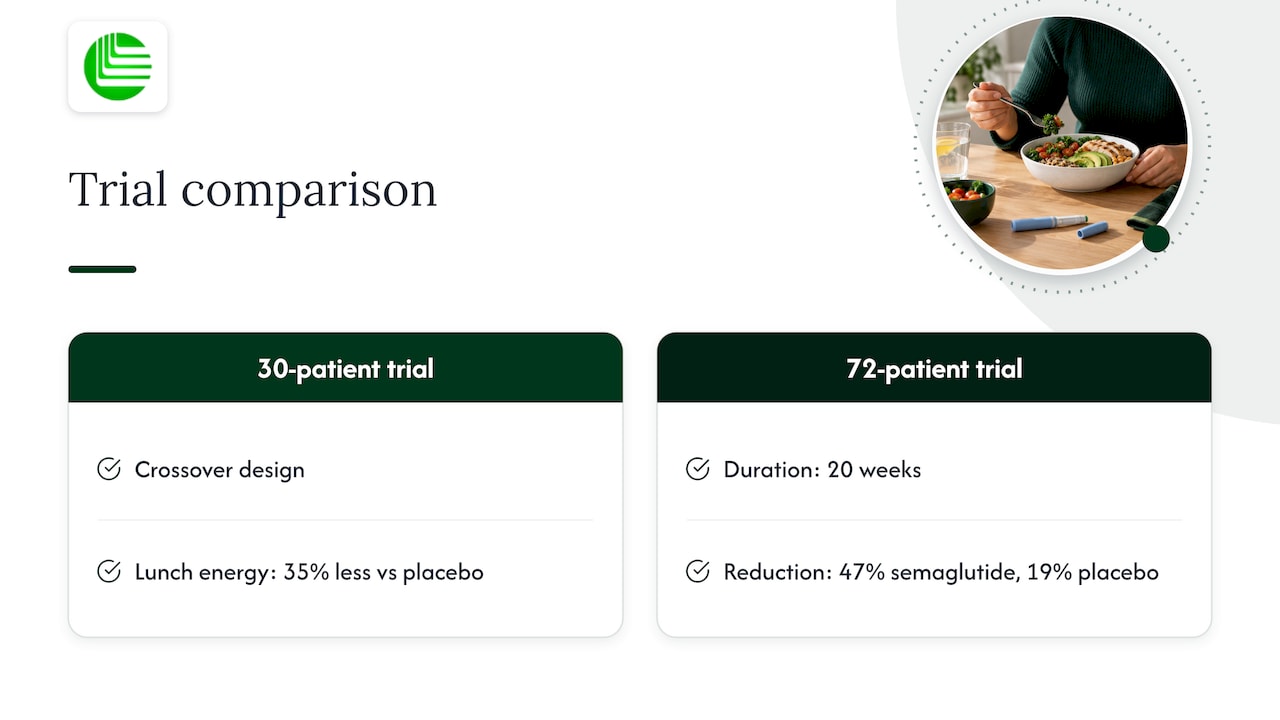
A 2026 review of gut-brain pathways reports the same pattern from two trials. One was a 30-patient crossover trial with 35% less energy eaten at lunch than on placebo. The other was a 72-patient trial with a 47% reduction from baseline after 20 weeks, against 19% for placebo.
A 2025 qualitative study interviewed 31 people on obesity medication. Participants consistently reported fewer and less intense thoughts about food. In the active weight-loss phase the change was often immediate and profound, and several described a near-total absence of food thoughts. Most in that phase reported little to no cravings, especially for sugar, fast food or habitual snacking.
If you searched for GLP-1 sugar cravings, here is the short version: they usually drop. A 2025 advisory from four U.S. nutrition and obesity societies states that multiple studies show GLP-1 benefits on food cravings and disordered eating. These include less food preoccupation, less emotional eating, less external eating (eating because of cues such as seeing food) and fewer binge episodes. The evidence also supports a general shift away from sweet, savory, starchy and high-fat foods.
The STEP 5 two-year semaglutide trial, summarized in an International Journal of Obesity review, found people reported lower cravings for dairy and starchy foods, less desire for salty or spicy foods, and less difficulty resisting cravings.
Tirzepatide acts on both GLP-1 and GIP receptors. In the 2026 gut-brain review, after three weeks it reduced fasting hunger, increased satiety and fullness, and reduced cravings for high-fat foods, sweets, carbohydrates and fast-food fats. Cravings for fruit and vegetables were not affected. In the Wadden review, tirzepatide 15 mg cut lunch intake from baseline by 348 kcal at week 28 in adults with type 2 diabetes, against 39 kcal for placebo, a reduction not significantly different from semaglutide 1 mg (284 kcal).
If food noise is your main complaint, both medicines address it. The choice between them usually comes down to your goals, history and how you respond, which is what the physician reviewing your questionnaire considers.
Timing varies. The International Journal of Obesity review describes improved control of eating, with less hunger, more fullness and weaker cravings, within the first 12 to 24 weeks of a 104-week trial. The effect eased between weeks 52 and 104, but control of eating stayed better than at baseline. The authors suggest the biological push to change eating behavior fades once the body settles at a new weight.
The 2025 interview study echoes this. Five people in the stable phase said hunger had returned over time, but stayed below their pre-treatment level.
So a realistic picture looks like this:
| Stage | What many people report | What helps |
|---|---|---|
| First weeks on a starting dose | Earlier fullness, quieter thoughts about food, smaller portions | Eat slowly, keep protein at each meal |
| Dose increases | Stronger appetite effect, sometimes nausea | Smaller meals, fluids, tell your care team |
| Active weight loss | Little to no cravings for many | Protein, strength training, regular meals |
| Maintenance | Some hunger returns, below the starting level | Meal structure, sleep, dose review |
For a month-by-month view of the weight side, see our semaglutide weight loss timeline. For how dosing steps up, read the semaglutide dosage guide.
Two of the most common questions from people on a GLP-1 sound contradictory: “Why am I hungry?” and “Why do I feel hungry but have no appetite?” Both have understandable answers.
Hunger that returns gradually. As above, in the interview study hunger crept back for some people in the stable phase, though less than before treatment. This is a normal adaptation to a lower body weight and a steady dose, and it is a signal to review your plan, not a sign that the medicine has stopped working.
Hungry in the head, not in the stomach. The four-society advisory explains that a limited interest in food, reduced hunger and increased fullness can let you go several hours without eating. Some people then end up under-fueled. Others wait until they are overly hungry and rebound toward sugars and refined carbohydrates. UW Medicine adds that some reduced appetite on semaglutide reflects nausea or stomach upset rather than true fullness.
Nausea-driven cravings. The same advisory notes that side effects such as nausea may trigger cravings for comfort foods with sugar or refined carbs. If you crave crackers or candy on injection day, that may be why.
Boredom, stress and habit. Medicine reduces the biological drive, but a lifetime of eating at 3 p.m. because the office is slow is a habit. Noticing the trigger is part of the work, and it is easier when the background noise has dropped.
A strongly reduced appetite is welcome until it becomes too little food. The four-society advisory reports that people using GLP-1s for obesity cut calories by 16% to 39%, which can lead to insufficient vitamins and minerals, especially when intake falls below 1,200 kcal a day for women or 1,800 kcal a day for men. If you are consistently under those levels, tell your care team.
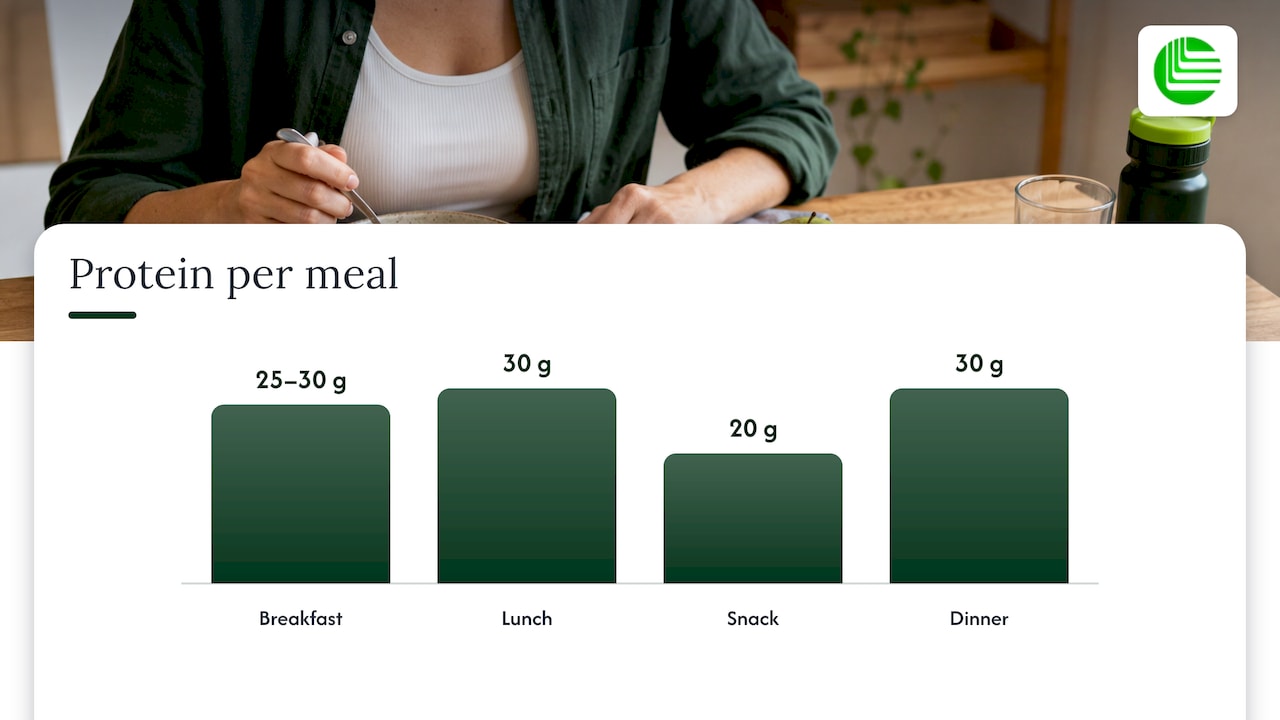
A 2025 JAMA Internal Medicine patient guide gives practical targets:
Say you weigh 200 lb (about 91 kg) and are moderately active. At 1.0 to 1.5 g per kg, your protein target is roughly 91 to 136 g a day. Spread over three meals and a snack, that looks like:
That lands near the low end of the range without forcing large portions. It also protects lean muscle, which is why strength training belongs in the plan. Our semaglutide diet plan and semaglutide workout plan go deeper on both.
If stomach side effects are what is limiting your meals, our guide to managing diarrhea on semaglutide covers the basics. Severe gastrointestinal reactions were reported more often with Wegovy than placebo in the joint 2026 TOS/OMA/OAC guidance, citing the label: 4.1% of injection patients against 0.9%. The most common reactions are nausea, diarrhea, vomiting, constipation, abdominal pain and hair loss. Persistent vomiting, severe abdominal pain or an inability to keep fluids down needs prompt medical attention.
Some people miss the enjoyment. The four-society advisory notes that frustration or loss of quality of life from reduced pleasure in food can lead people to stop treatment, and that a change in dose, agent or class, or referral to behavioral therapy, may be warranted. This is a reason to speak up early, not to quietly stop. A dose adjustment or a different medication can change how appetite feels, and a plan that includes meals you look forward to keeps the benefits in place.
Medication changes the starting conditions. What you do with them decides how well results hold. A few habits matter most:
If you are exploring a fasting routine alongside treatment, read fasting with semaglutide first, since long gaps between meals are exactly what low appetite makes too easy.
Food noise is the part of weight management that willpower never fixed. When a patient tells us the chatter about food finally stopped, the real work begins: using that quiet to build routines that last.
That is how we approach it. A licensed physician reviews your health questionnaire online, and approved prescriptions are delivered to your door. Our program includes 24/7 support and physician-led guidance to help manage dosage, which matters when appetite is changing week to week. Free health coaching is part of how we help you turn lower appetite into steady eating, protein targets and strength training, so you keep lean muscle while you lose fat.
We built Oak around the idea that weight loss should also support long-term metabolic health. Quieter food noise is a gift only if it comes with good nutrition, and we design our program around that.
Oak Longevity
If food noise is what drives your eating, a GLP-1 medicine may be the right tool. Oak’s semaglutide plans start from $109 per month, and tirzepatide from $185 per month. Compounded injectable semaglutide starts from $167 per month. You complete a health questionnaire online, a licensed physician reviews it, and approved medication ships to you. We offer free shipping and free health coaching, with no hidden membership fees and no video calls required.

See compounded semaglutide or compounded tirzepatide, or browse the full weight loss program.
Many people notice it within the first few weeks, and sometimes immediately. Studies describe the strongest craving and hunger changes in the first 12 to 24 weeks. Responses vary, and dose increases can deepen the effect.
Yes. In research summarized in a 2026 review, tirzepatide reduced fasting hunger, raised fullness and cut cravings for sweets, high-fat foods, carbohydrates and fast food within weeks. Your physician can help match the medicine to your goals.
Food noise is mental, so thoughts about food can continue even when the body is not truly hungry. Nausea can also mimic fullness or trigger comfort-food cravings. Eating small, protein-rich meals on a schedule helps, and persistent symptoms should go to your care team.
Yes, appetite can fall far enough to cause low intake of nutrients. Protein at each meal, regular snacks and 2 to 3 liters of fluid a day help. If you regularly eat below about 1,200 kcal (women) or 1,800 kcal (men), tell your care team.