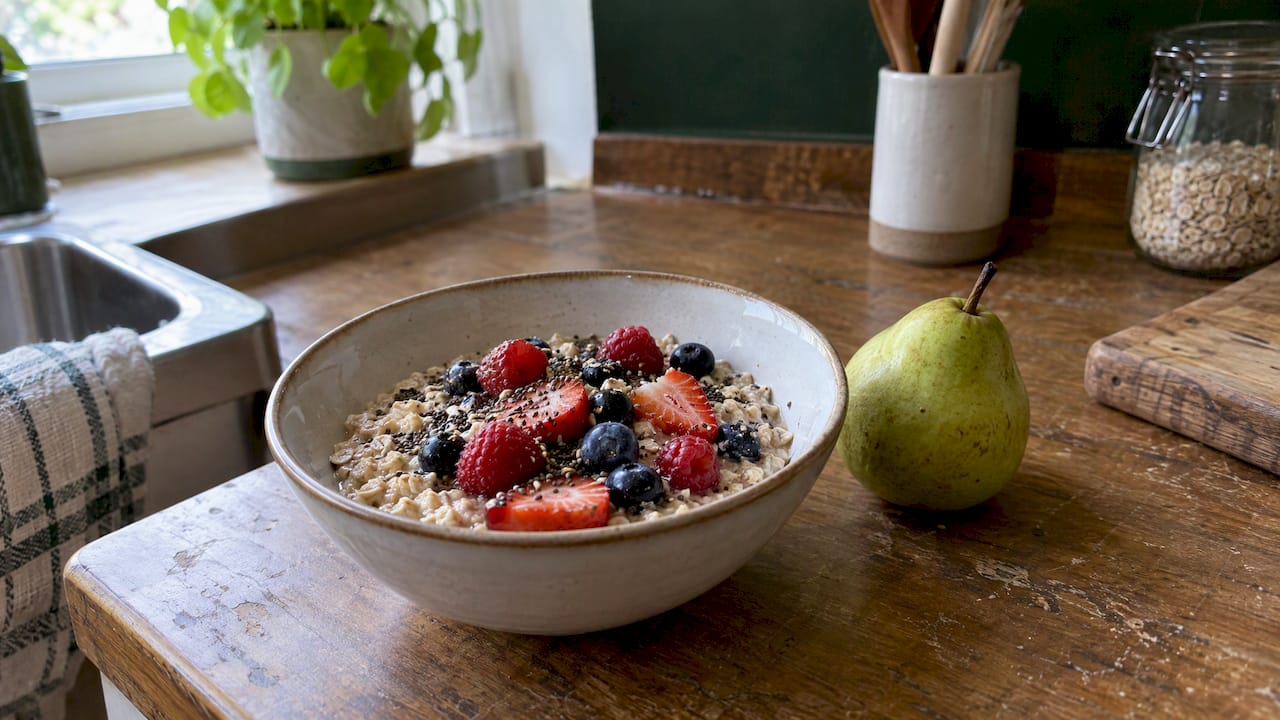
Most adults on a GLP-1 medication should aim for roughly 25 to 38 grams of fiber a day, raised slowly over a few weeks and paired with plenty of fluids. Fiber helps with constipation, one of the most common side effects of semaglutide and tirzepatide. It also helps you feel full on the smaller meals these medications lead to. Adding it too fast can backfire with gas, bloating and cramping, so the pace matters as much as the number.
This guide covers the daily targets that U.S. health systems give, the types of fiber and foods that tend to sit well, a step-by-step way to build up, and fiber-and-protein snacks for days when your appetite is low.
GLP-1 medications slow how quickly food leaves your stomach and turn down appetite. That is a large part of how they work, and we cover the mechanism in our piece on GLP-1 and gastric emptying. The side effect is that you eat less food, less fiber and often less water, while your gut moves more slowly. Constipation follows for many people, especially in the first weeks and after each dose increase.
Health systems say the same thing. Sentara notes that constipation is a common GLP-1 side effect and that adequate fiber can help ease it. Cleveland Clinic’s GLP-1 diet guidance puts protein and fiber at the top of the list of nutrients to keep up, with fiber there to help combat constipation. UCHealth adds that constipation and nausea are most common when you are starting out.
Fiber does a second job too. It adds bulk and slows digestion, so a small meal that includes beans, berries or oats keeps you satisfied longer than the same calories from refined foods. Stanford’s nutrition toolkit emphasizes pairing fiber with protein to get the most fullness from each bite.
If constipation is your main problem right now, our guide to GLP-1 constipation relief goes deeper on the full toolkit beyond fiber.
There is no single GLP-1-specific number. Most guidance lands on the general adult recommendation, sometimes trimmed at the low end. Here is what the sources give:
| Source | Daily fiber target |
|---|---|
| Stanford GLP-1 Nutrition Toolkit | 25 to 38 g, increased gradually |
| VA MOVE! program | 25 to 35 g, increased slowly |
| BSW Health | 25 to 38 g, increased gradually |
| Sentara | 25 to 35 g |
| Franciscan Health | 25 to 30 g |
| Healthwise patient education | 21 g for women, 30 g for men |
| Harvard Health (Dr. Goldowsky) | Around 30 g |
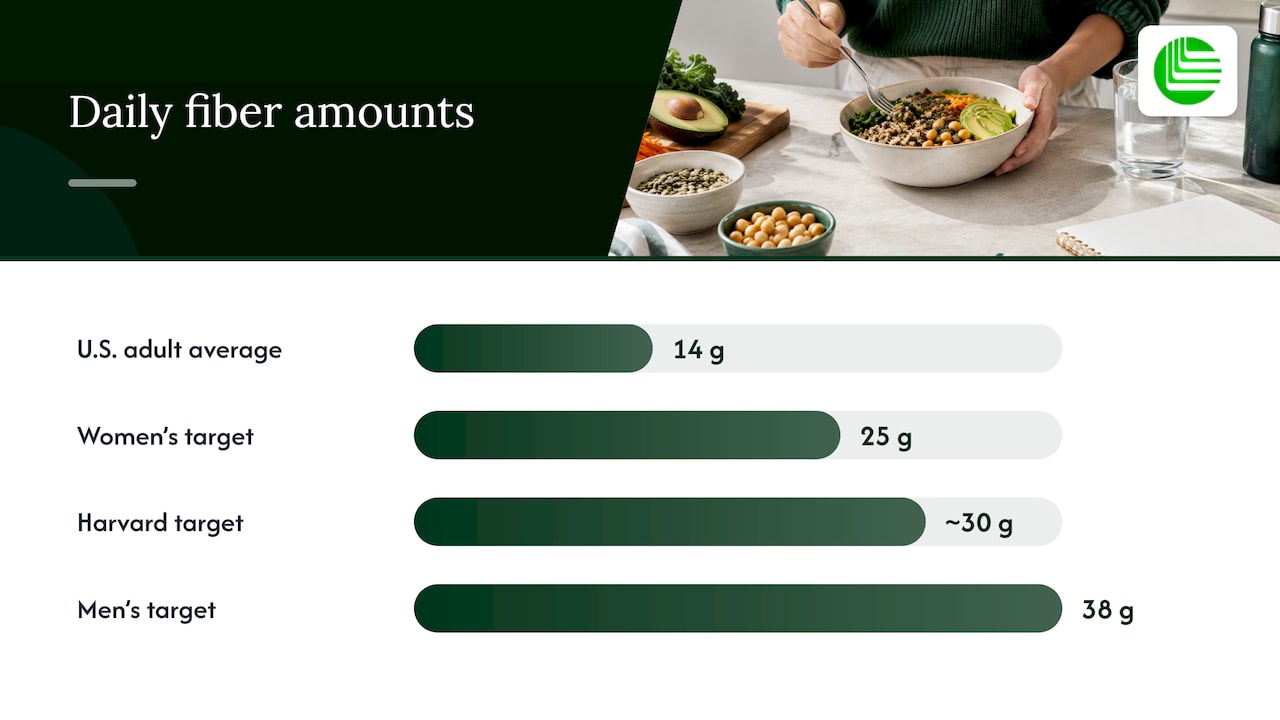
The general recommendation, as Medscape’s review puts it, is 38 grams a day for men and 25 grams for women. Those are targets, not a test you have to pass on day one.
The number worth noticing is where most people start. Franciscan Health points out that the average U.S. adult gets about 14 grams a day. If that sounds like you, going straight to 30 grams is a big leap for a gut that is already slowed down. Aim first for a few extra grams a day, then keep climbing.
Fiber comes in two broad types, and you want both.
Soluble fiber dissolves in water into a soft gel. It is found in oats, beans, lentils, peas, berries, apples, pears, chia and psyllium. Dietitian Samantha Cassetty says in EatingWell that soluble fiber may help with both constipation and diarrhea, which is useful when your digestion swings between the two.
Insoluble fiber adds bulk and helps move waste along. It is found in whole grains, wheat bran, nuts, seeds, and the skins of many vegetables and fruits.
Stanford’s toolkit recommends a mix of soluble and insoluble fiber rather than leaning on one type. Many people find that soluble sources feel gentler during dose increases, then add more roughage once the gut settles.

Harvard Health’s Dr. Goldowsky lists beans, lentils, peas, whole grains, berries, nuts, seeds, artichokes, pumpkin and Brussels sprouts as fiber-rich foods. UCHealth points to oats, berries, whole grains, leafy greens and lentils.
A practical way to spread them across a small-appetite day:
On labels, the VA suggests looking for whole grains such as 100% whole wheat, rye, oats or bran as the first or second ingredient.
Food comes first, but supplements have a place when your appetite is too small to reach your target. Dr. Goldowsky mentions powdered fiber products such as Metamucil, Benefiber or Citrucel, and UCHealth says psyllium-based supplements can help when dietary fiber is too low. Healthwise suggests talking to your provider about a fiber supplement if constipation shows up. Start with a half serving, take it with a full glass of water, and keep it separate in time from any other oral medication unless your prescriber says otherwise. For the wider picture, see our guide to supplements that complement GLP-1 therapy.
The most common mistake is doing it all at once. BSW Health warns that adding too much fiber too quickly can worsen bloating and gas. Cleveland Clinic says that if you do not normally eat much fiber, adding a lot suddenly could cause diarrhea. Mayo Clinic’s diet team recommends adding fiber gradually over a few weeks, drinking plenty of fluids (mostly water), eating regular small meals and exercising daily.
A simple build-up plan:
Fiber without water can make constipation worse. The VA MOVE! program advises at least 64 ounces of fluid per day alongside slowly rising fiber. Stanford’s toolkit also recommends staying hydrated, eating smaller meals and avoiding large fatty meals. If you rarely feel thirsty on your medication, sip on a schedule instead of waiting for thirst.
The VA also advises eating every 3 to 4 hours while awake, even if you are not hungry at mealtime. Small, regular meals are an easy way to fit fiber in without a heavy plate.
Fiber is not right for everyone. Medscape’s review says most patients benefit from more fiber for constipation, but a minority, for example people with irritable bowel syndrome, may get worse. If you have IBS or another digestive condition, ask your clinician what pace and types of fiber are right for you.
You are eating less, so every bite needs to count. Protein protects muscle while you lose weight, and fiber keeps you full and regular. The two work best together.
How much protein? The VA MOVE! program advises at least 60 grams a day, with a protein food at each meal and snack. Healthwise gives 60 to 120 grams and suggests eating protein first. A 2025 joint advisory from four U.S. nutrition and obesity organizations recommends 80 to 120 grams a day, or 1.2 to 1.6 g per kilogram, combined with strength training to preserve lean mass. Your own target depends on your size and health, so confirm it with your clinician or a registered dietitian. Our GLP-1 protein target guide walks through the math.
| Snack | Protein | Fiber |
|---|---|---|
| Greek yogurt with berries | About 16 g in a 5-ounce container | 3 g from the berries |
| Low-fat cottage cheese with pear | 12 g per half cup | From the pear |
| Roasted edamame snack pack | 11 g | 4 g |
| A 45 g packet of roasted edamame | 20 g | 8 g |
| Pistachios, quarter cup | 6 g | 3 g |
EatingWell’s dietitian also suggests walnuts with apple, rotisserie chicken with hummus and vegetables, and a smoothie made with fruit, vegetables and protein. Dietitian Christy Wilson notes in Food Network that pistachios supply fiber, plant protein and calcium, which is useful because slower gastric emptying can affect calcium absorption.
Other high-protein foods that sit well on a GLP-1 include eggs, fish, skinless poultry, tofu, tempeh, lentils and low-fat dairy. Beans and lentils are the overlap champions: they bring protein and fiber in one food. If building muscle is your goal, read our guides to building muscle on GLP-1 and muscle protein synthesis best practices.
We see the same pattern again and again: people focus on the dose and forget the plate. A GLP-1 lowers appetite, which is the point, but it also means every meal has a job to do. Protein protects muscle. Fiber and water keep your gut moving.
That is why our program pairs medication with physician-led guidance and free health coaching, and generally combines weight loss with strength and lifestyle protocols to preserve lean muscle and support metabolic health. Our coaches can help you turn a fiber target into a few repeatable meals instead of a spreadsheet.
Our advice is simple. Raise fiber a little each week, drink more water than feels natural, put protein first, and tell your prescriber early if your digestion is struggling. Small adjustments made early are what keep people comfortable enough to stay on a plan long enough to see results.
Oak Longevity
If you are still deciding on a medication, Oak Longevity is an online telehealth platform: you complete a health questionnaire, a licensed physician reviews it, and approved prescriptions are delivered to your door. There are no video calls, and support includes health coaching. Prices are published: compounded tirzepatide starts from $185 per month, and compounded injectable semaglutide starts from $167 per month. You can see every option on our weight loss page.
Whatever you start, bring your fiber and hydration questions to your first check-in. Our coaches and physicians can adjust the plan if constipation or bloating shows up.
Diet changes handle many mild cases, but not all. Harvard Health’s Dr. Goldowsky advises seeing your doctor if constipation does not go away after a week or two of home remedies. Call right away for bloody stools, fever, loss of bowel control, severe pain or severe dehydration.
UT Southwestern’s Dr. Tonia Vinton adds that you should contact your clinician if GI symptoms are severe or persistent, or if you cannot keep up with hydration. If you are heading to a procedure, see our note on GLP-1 before surgery. Persistent upper-abdominal pain deserves prompt attention as well, and our article on gallbladder risk with GLP-1 explains why.
Most health systems say yes, ideally from food first. Fiber helps with constipation and keeps small meals filling. Increase slowly and drink fluids. If food is not enough, ask your prescriber about a fiber powder.
Too much, too fast can cause gas, bloating, cramps or diarrhea, according to BSW Health and Cleveland Clinic. Build up over a few weeks and keep drinking water. People with IBS or other digestive conditions should check with their clinician first.
There is no single best type. Stanford recommends a mix of soluble and insoluble fiber. Oats, beans, berries and psyllium are common soluble choices, while whole grains and vegetables supply insoluble fiber. Your prescriber can help you pick a supplement if you need one.
The guidance cited here is written for GLP-1 medications as a group, and constipation is a common side effect across them. The same approach applies: gradual increases, fluids and protein at each meal. Your clinician can tailor it to your dose.
Most sources point to 25 to 38 grams for adults, with some giving lower figures of 21 grams for women. Start from where you are now and add a few grams per week.