
Yes, many adults on semaglutide can fast safely, but only after finishing dose titration and getting clinician sign-off first. Prioritize hydration, adequate protein during eating windows, and stop fasting immediately for severe vomiting, dizziness, or signs of low blood sugar. If you have surgery or a religious fast coming up, tell your clinician you use a GLP-1 and plan the timing together.
TL;DR:
- Combining fasting with semaglutide increases dehydration risk, especially if gastrointestinal side effects like nausea or vomiting occur and are not managed properly.
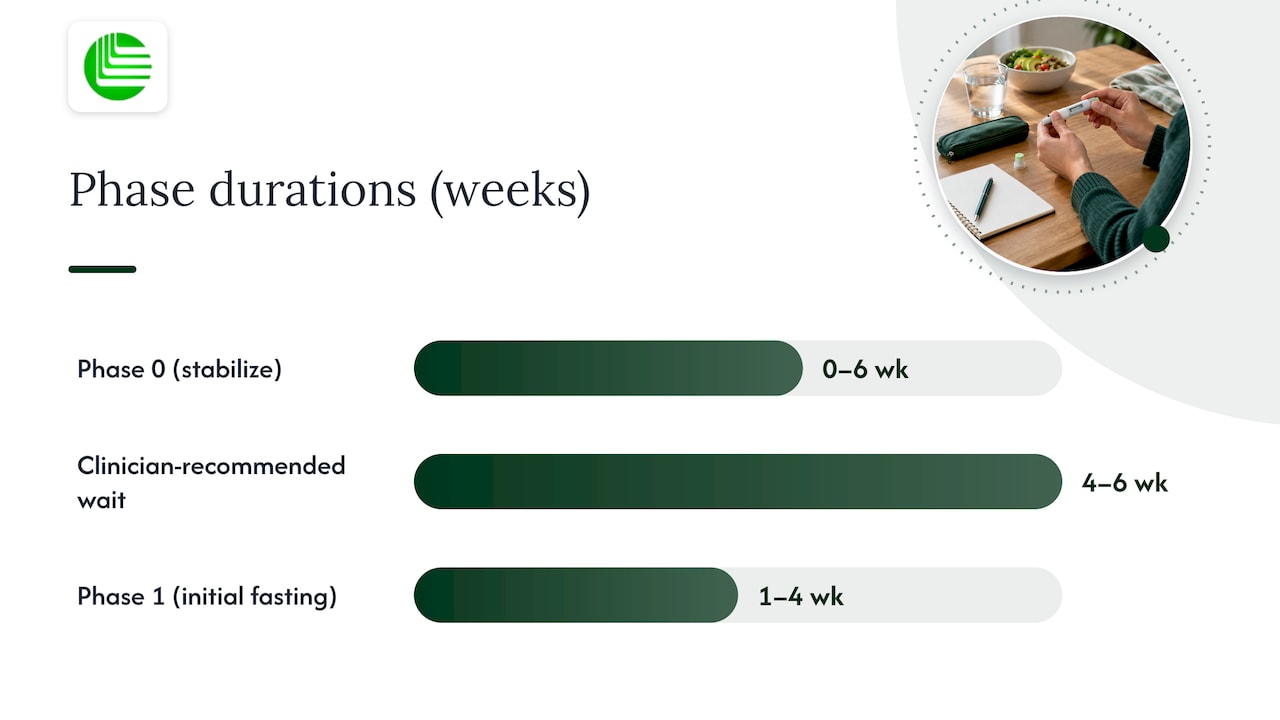
- Gradual fasting progression, starting with 12-hour overnight fasts after dose stabilization, reduces the risk of severe dehydration and other complications.
- Maintaining hydration, monitoring urine color, and adjusting medication timing around fasting are essential to prevent adverse events like kidney injury or ketoacidosis.
- Fasting should be paused or scaled back if severe symptoms such as dizziness, fainting, or persistent dehydration appear, and always under clinician guidance.
- Supervised programs can help tailor fasting schedules and medication doses safely, especially for individuals with additional health risks or complex needs.
Semaglutide reduces appetite and shrinks the amount of food you want at a sitting, which often makes skipping breakfast or stretching the overnight fast feel less like deprivation and more like following your body’s signals. People who already feel full faster on the medication sometimes find a 12-hour or 16:8 eating pattern fits naturally instead of feeling forced.
A few patterns show up often among people who combine the two:
None of this comes from a trial that tested semaglutide and fasting together. The benefits are plausible based on how the drug works and what people report, but no randomized trials have paired the two directly, so treat the combination as reasonable, not proven.
Semaglutide already slows digestion on its own, and stacking that with fasting changes the margin for error. The FDA prescribing information for WEGOVY warns about delayed gastric emptying, rare pulmonary aspiration during anesthesia, and acute kidney injury tied to volume depletion. These aren’t theoretical concerns tucked away in fine print: they’re the specific failure points clinicians watch for.
Post-marketing reports describe acute kidney injury tied to volume depletion from gastrointestinal side effects, with some cases requiring hemodialysis.
Post-marketing case reports have linked severe nausea, vomiting, and diarrhea on semaglutide to dehydration severe enough to cause acute kidney injury, occasionally requiring hospitalization. Fasting compounds the dehydration risk because you’re taking in less fluid overall during the eating window if you’re not deliberate about it.
There’s a rarer but more serious risk too: case reports describe euglycemic diabetic ketoacidosis when GLP-1 or GIP therapy was combined with prolonged fasting and very-low-carb eating. This condition can develop without the dramatic blood sugar spike people associate with ketoacidosis, which makes it easy to miss.
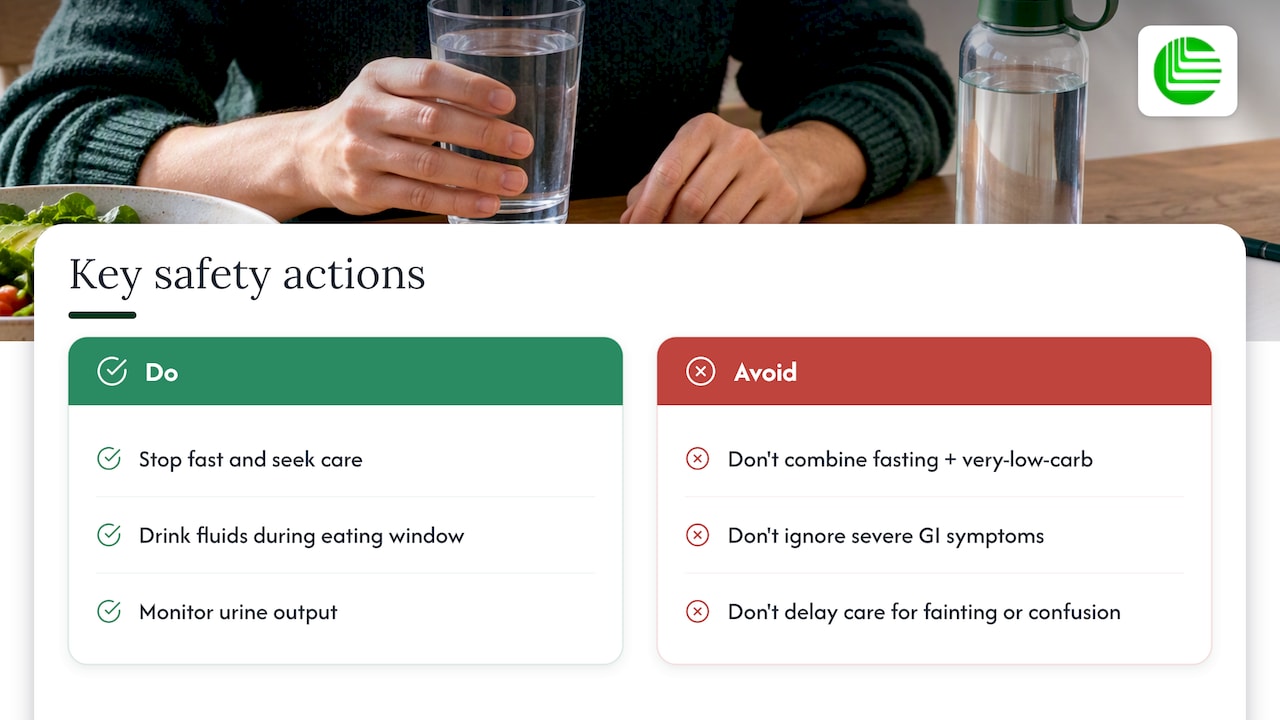
Know the red flags: reduced urine output, fainting or severe lightheadedness, intense abdominal pain, or confusion. Any of these means stopping the fast and seeking care, not waiting it out.
Jumping straight into 16:8 fasting the week you start semaglutide is how people end up in urgent care. A gradual approach gives your body (and your clinician) time to catch problems early.
Pro Tip: Keep a short daily log of fluid intake, urine color, and any lightheadedness; patterns show up faster on paper than in memory.
Track a simple checklist as you progress: daily fluid targets, urine color (pale yellow is the goal), any orthostatic symptoms when standing up quickly, and stool frequency. If any of these shift in the wrong direction, pause the progression or step back a phase rather than pushing through.
Mild nausea during an eating window is common and usually manageable without abandoning the fast entirely. Small, bland meals when you break the fast, ginger tea, and spacing your injection away from your largest meal (if your clinician advises it) can all help. For a deeper look at managing gastrointestinal side effects, it helps to know what’s normal versus what warrants a call to your provider.
If you take other oral medications, delayed gastric emptying from semaglutide can change how and when they’re absorbed. A pharmacist can tell you whether a drug you’re on needs to be taken on an empty stomach or with food, and how that interacts with your fasting window. If you’re on insulin or a sulfonylurea, increase your glucose checks during fasting periods and talk to your clinician about dose adjustments to avoid hypoglycemia.
Pro Tip: Ask your pharmacist specifically about timing for any medication labeled “take on an empty stomach,” since fasting windows and gastric slowing can both shift how it’s absorbed.
Surgery, religious fasting, illness, and very restrictive diets each add their own layer of risk on top of semaglutide. GLP-1 receptor agonists slow gastric emptying, which has been linked in rare cases to retained stomach contents during standard preoperative fasting, even when patients follow the usual rules.
Some online weight-loss providers offer clinician review, prescription management, and physician-led support to help manage challenges when combining fasting with a GLP-1 medication, such as how fast to titrate, side effects management, and timing changes in eating patterns. Some programs combine medication dosing with strength and lifestyle protocols aimed at preserving lean muscle during a calorie deficit, which can be beneficial when also compressing eating windows.
Supervised care is especially worth considering if you have other health conditions, take insulin or a sulfonylurea, or keep running into GI side effects that don’t settle on their own.
The biggest mistake isn’t fasting on semaglutide, it’s rushing it. Dropping straight into 16:8 the same week you escalate your dose, or layering a very-low-carb diet on top of both, turns two manageable tools into a stacked risk nobody is watching closely enough. Progress slowly, track objective signs like urine color and fluid intake instead of just how you feel, and treat check-ins with a clinician as part of the plan, not an afterthought.
— Eric
If you want to compress your eating window without guessing whether your dose and your fasting schedule actually fit together, a clinician-supervised program removes a lot of the uncertainty. Oak Longevity offers online consultations reviewed by licensed physicians, medication delivery, and ongoing support for dose adjustments and side-effect management, which means the titration and fasting questions in this guide get answered by someone looking at your specific case.

Oak’s semaglutide starts from $119 per month, and compounded injectable semaglutide is available from $167 per month for patients who want a supervised prescription rather than piecing together guidance on their own.
Pro Tip: If persistent GI side effects are the main thing stopping you from trying intermittent fasting, a dose adjustment from a prescribing clinician often solves that before any fasting schedule does.
Check availability and start a consultation through Oak Longevity’s weight loss program if you want dosing and fasting timing managed together instead of separately.
This article is general information, not a substitute for advice from a qualified doctor. Consult a qualified healthcare professional about your own circumstances before acting on anything here.
Weight loss timelines vary widely by starting weight, dose, and individual response, so there’s no fixed number of weeks that applies to everyone. A clinician who reviews your dosing and progress can give a more realistic estimate for your situation than a general timeline would.
Consistent dose titration, adequate protein intake, and regular movement tend to support steadier results more than aggressive calorie cutting. Adding structured fasting may help some people reduce overall intake, but it should follow the titration and monitoring steps covered earlier in this guide, not replace them.
Semaglutide reduces appetite and slows digestion, which often leads to eating less without consciously restricting food. How quickly this shows up varies by person, dose, and how closely eating patterns change alongside the medication.
Semaglutide doesn’t block sugar directly, but delayed gastric emptying can make sugary or heavy meals sit longer and feel more uncomfortable than before starting the medication. Occasional sugar isn’t dangerous on its own, but repeated high-sugar meals can work against the appetite control the medication is meant to support.
Stop fasting right away for severe vomiting, diarrhea lasting more than a day, dizziness, reduced urine output, or symptoms of low blood sugar. These can signal dehydration or, in rare cases, more serious complications like acute kidney injury or ketoacidosis, both of which need prompt medical attention.