Estrogen and GLP-1 medications act on overlapping systems: appetite, blood sugar and fat storage. Early research suggests women who use menopausal hormone therapy while taking a GLP-1 medicine may lose more weight than women on the GLP-1 alone. That finding comes from observational data, so it shows an association, not proof of cause. The practical points are about how the two are taken together, especially the form of estrogen (pill, patch or gel) and the progesterone that goes with it. This guide covers what the evidence says, what is still unknown and what to bring to your prescriber.
GLP-1 is a natural gut hormone that helps regulate blood sugar and appetite. GLP-1 medicines, called receptor agonists, mimic it. According to MedlinePlus, they signal fullness to the brain, slow the stomach’s emptying and increase insulin release. Those effects are used in managing type 2 diabetes and in chronic weight management.
Semaglutide and tirzepatide are the two names most women hear. Tirzepatide also acts on a second hormone pathway (GIP), which is why it is often called a GLP-1/GIP medicine. Both are taken as scheduled doses that rise gradually, with a prescriber adjusting the plan to how you respond.
Estrogen is a different kind of signal. It is a sex hormone, and it influences where the body stores fat, how it uses insulin and how it keeps muscle. The overlap in what the two affect is why researchers have started to look at them together.
Many women notice that the same habits stop working around their mid-40s to 50s. Johns Hopkins Medicine describes how declining estrogen during perimenopause and menopause contributes to a slower metabolism, loss of muscle mass and a shift of fat toward the abdomen.
This matters for two reasons.
If you are in this stage, the usual advice to eat less and move more is incomplete. A plan that protects muscle, such as resistance training and enough protein, matters as much as the number on the scale. We cover the stage-specific picture in more depth in our guide to GLP-1 use during perimenopause.
No. A clinical review of menopause hormone therapy and weight, drawing on evidence that includes Cochrane reviews, concludes that estrogen therapy is not an effective primary treatment for weight loss and does not prevent weight gain. The same review notes that it may help ease the shift toward central abdominal fat and improve body composition.
So the question “can estrogen help me lose weight?” has a narrow answer. Hormone therapy is prescribed mainly for menopausal symptoms such as hot flashes and sleep disruption, and sometimes for bone protection. Its effect on body composition is a possible extra, not the goal.
That framing explains why the interesting question is different: does estrogen change how well a GLP-1 works?
Three recent sources point in the same direction.
A Mayo Clinic-led study published in The Lancet Obstetrics, Gynaecology, & Women’s Health, reported in January 2026, reviewed 120 women with overweight or obesity who took tirzepatide for 12 months or more. Postmenopausal women who also used menopausal hormone therapy lost about 35% more weight than postmenopausal women taking tirzepatide alone.
The senior author, Maria Daniela Hurtado Andrade, M.D., Ph.D., noted that because this was not a randomized trial, hormone therapy cannot be said to have caused the extra loss.
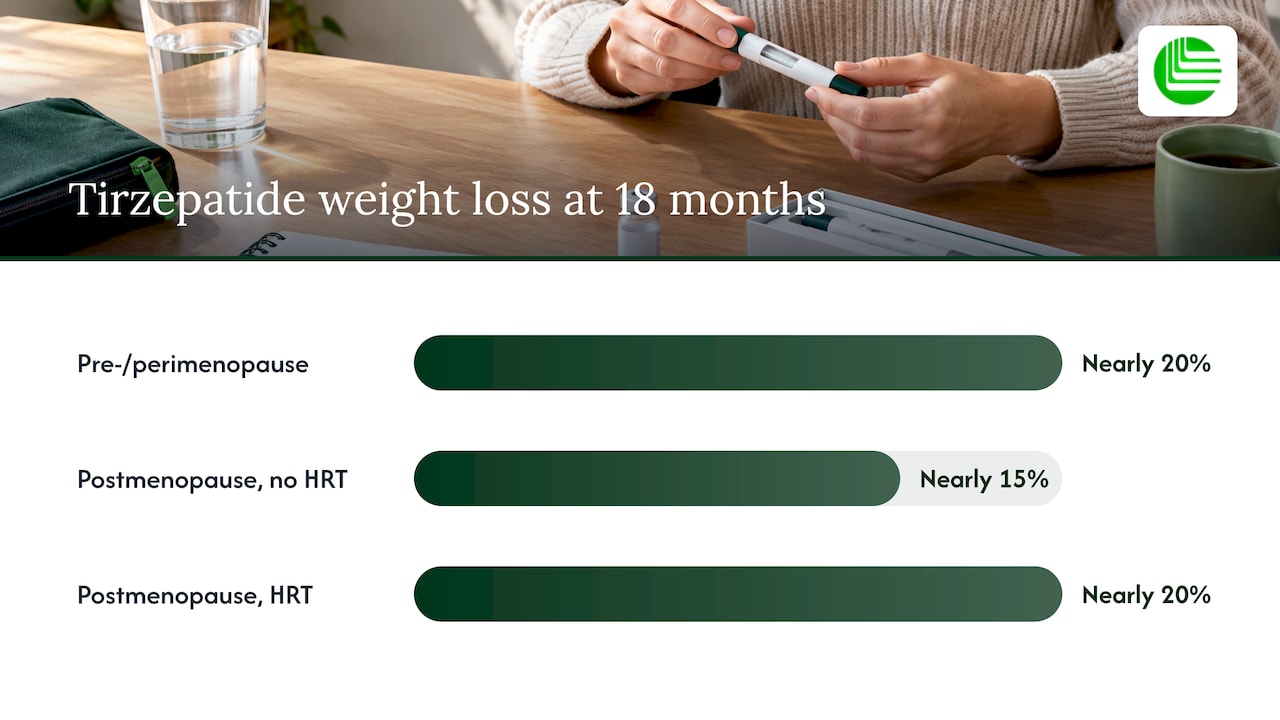
The AJMC report on the findings presented at The Menopause Society 2025 Annual Meeting gives the percentages after 18 months of tirzepatide:
| Group | Approximate total body weight loss |
|---|---|
| Premenopausal and perimenopausal women | Nearly 20% |
| Postmenopausal women, never used hormone therapy | Nearly 15% |
| Postmenopausal women using hormone therapy | Nearly 20% |
The pattern is what stands out. Postmenopausal women on hormone therapy ended up close to the younger groups, while those without it trailed behind.
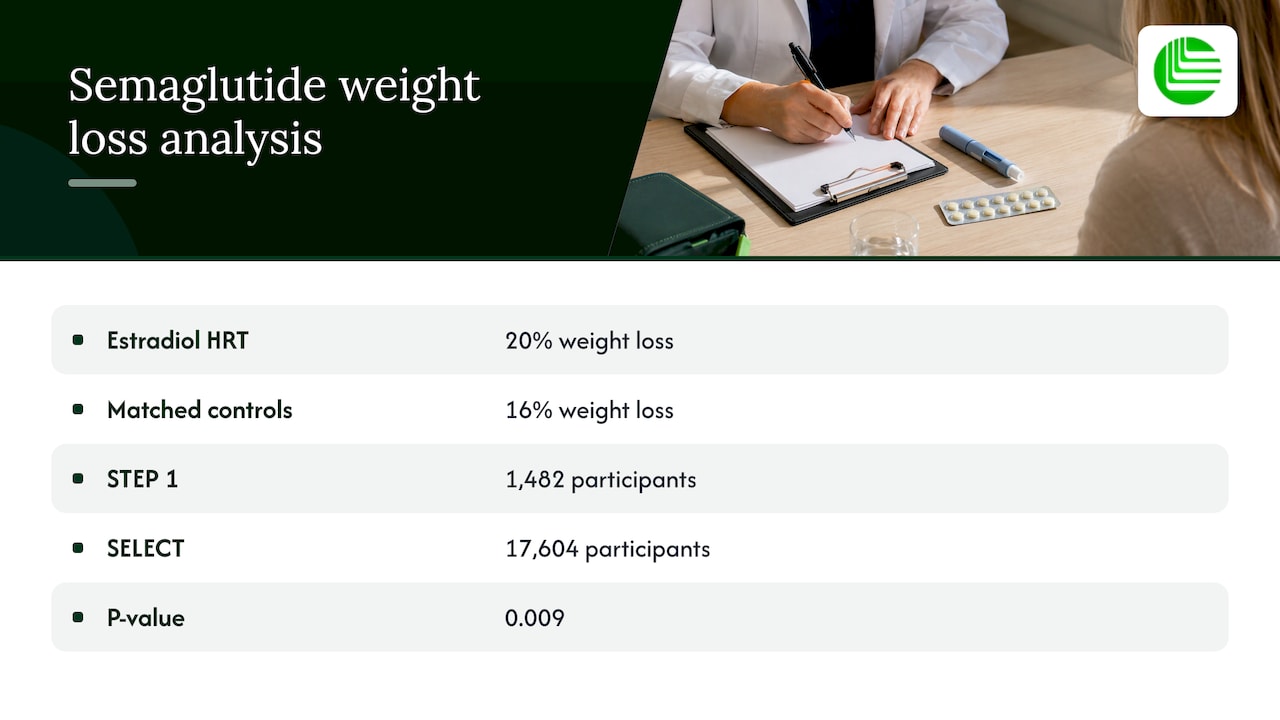
A post-hoc analysis of two large semaglutide trials, STEP 1 (1,482 participants) and SELECT (17,604 participants), was published in Diabetes. In women over 55, hormone replacement therapy with estradiol was linked to greater semaglutide-associated weight loss than in matched controls: 20% versus 16% (p=0.009). The analysis also found that the hormones FSH and LH, which mark menopausal status, predicted how much weight a woman lost, particularly during perimenopause.
Preclinical data, as the Mayo Clinic report explains, suggest a possible synergy: estrogen may amplify the appetite-suppressing effect of GLP-1 signaling. This still needs confirmation in rigorous prospective clinical trials.
These are associations. Women who choose hormone therapy may differ from women who do not in age, health, timing of menopause or how closely they follow up with a clinician. That is why researchers call for randomized trials.
What the studies do support is this: being postmenopausal is not a reason to expect a GLP-1 to fail, and hormone status is something worth discussing with the prescriber who sets your plan.
This is the other half of the search, and the documented issue is practical rather than hormonal: absorption.
GLP-1 medicines slow gastric emptying, and they can cause nausea, vomiting or diarrhea. According to Medscape’s multi-guideline expert summary (December 2025), this may reduce the absorption and bioavailability of oral hormonal contraceptives and oral HRT. The same summary says tirzepatide may reduce the effectiveness of oral contraceptives more than other GLP-1 medicines. It advises counseling patients to use a non-oral contraceptive method or added contraception when starting and at each dose increase.
For menopause care, the takeaway is about the form of estrogen:
The labeling picture for semaglutide is more reassuring. As summarized by a review of HRT and GLP-1 evidence, the Ozempic prescribing information reports that semaglutide did not affect absorption of oral medications to a clinically relevant degree in trials, including an oral contraceptive containing ethinyl estradiol. The Wegovy label notes a delay in gastric emptying with potential to affect oral medicines, and no specific warning for oral HRT is listed.
In short, different products and doses carry different considerations. That is a reason to ask, not a reason to stop either treatment on your own.
If you still have a uterus, estrogen therapy is paired with a progestogen to protect the uterine lining. Here the Medscape guidance flags a real open question. It notes that reduced absorption of oral progestogens in women using transdermal estrogen could leave the endometrium inadequately protected, raising the risk of hyperplasia and cancer. It also states there is currently no guidance on how to adjust progestogen dose for women taking incretin-based therapies.
What that means for you:
A short list makes the conversation faster and safer. Bring:
Then ask three things: Is my current estrogen form a good fit alongside a GLP-1? Should I use backup contraception while the dose rises? Which symptoms should prompt me to call you?
Both menopause and rapid weight loss put muscle at risk, so the plan matters beyond the medication itself.
If you want a broader overview of medication options at this life stage, see our guide to weight-loss medications in menopause.
We see the estrogen and GLP-1 question most often from women in their 40s and 50s who did everything right and still watched their body change. The research now taking shape matches what they describe: hormone status shapes how the body responds to weight loss, and it deserves a place in the conversation.
Our program is built around that kind of individualized plan. A licensed physician reviews your health questionnaire, including the hormones and medicines you already take, and prescribes semaglutide or tirzepatide when appropriate. Support is available around the clock, and our approach pairs medication with strength and lifestyle protocols designed to help preserve lean muscle, which matters even more when estrogen is dropping.
We believe treatment should be reachable without a clinic waiting room. That is why our consults are asynchronous, shipping is free, health coaching is free and there are no hidden membership fees. If you use menopausal hormone therapy, tell us in your questionnaire so your physician can factor it into your plan.
Oak Longevity
If you are ready to talk to a physician about a GLP-1, Oak offers online consults with no video call required. Our semaglutide program starts from $109 per month, and tirzepatide starts from $185 per month. Prescription medication is delivered to your door, with free health coaching alongside.

You will fill out a health questionnaire that asks about your medications, including hormones. A licensed physician reviews it and decides whether a prescription is appropriate for you. You can see all options on our weight loss page.
Many women do, and a physician can prescribe both when it is appropriate. The main points to settle are the form of estrogen, since pills may be absorbed less predictably when stomach emptying slows, and your progestogen if you have a uterus. Always disclose both medications to every prescriber.
Not as a standalone treatment. A clinical review found estrogen therapy does not effectively cause weight loss or prevent gain, though it may reduce the shift toward belly fat. Some observational data show greater weight loss when hormone therapy is combined with a GLP-1.
The documented concern is not lower hormone production but absorption of oral hormones when digestion slows. Weight loss itself can also change hormone levels, since fat tissue produces some estrogen. Ask your prescriber whether any hormone testing makes sense for your situation.
It is commonly done, but it deserves a conversation. Current expert guidance says there is no established dose adjustment of progestogen for women on incretin-based therapies, so report any unscheduled vaginal bleeding to your clinician quickly and do not adjust doses yourself.