You do not need an electrolyte product every day just because you take a GLP-1 medicine. You do need to stay hydrated, and electrolytes become useful when you are losing fluid through vomiting, diarrhea, heavy sweating or very low food intake. The FDA prescribing information for Wegovy and Zepbound tells prescribers to counsel patients on avoiding fluid depletion. It does not list a required electrolyte supplement. This guide shows how to tell which situation you are in, what to do, and when to call your prescriber.
GLP-1 medicines such as semaglutide and tirzepatide reduce appetite. You eat less, and you often drink less too. Food supplies a real share of your daily water, sodium, potassium and magnesium, so a smaller plate means a smaller intake of all of them.
A 2025 review of obesity pharmacotherapy states that reduced appetite, gastrointestinal side effects and lower fluid intake can contribute to dehydration. Rarely, this leads to clinically meaningful dehydration or electrolyte disturbances such as low sodium (hyponatremia) or low potassium (hypokalemia).
An electrolyte is a mineral that carries an electric charge in your body fluids. Sodium, potassium and magnesium are the ones that matter most here. They help nerves fire, muscles contract and fluid stay where it belongs. When you lose a lot of fluid, you lose them with it.
The University of Arizona’s Veronica Mullins, RD, noted in 2025 that some medications can dull thirst. That means waiting until you feel thirsty may not be enough for some people. On a medicine that already lowers your urge to eat and drink, a simple schedule works better than relying on thirst.
This is the part that gives the hydration advice its weight. The Wegovy label, revised 2025, reports acute kidney injury in people taking semaglutide, sometimes requiring dialysis. Most of those cases happened in people who had nausea, vomiting or diarrhea that led to dehydration. The label asks clinicians to monitor kidney function, especially when you start and when the dose goes up.
The same pattern appears across the class:
The numbers help keep this in proportion. In Wegovy weight-loss trials, acute kidney injury occurred in 7 adults (0.4 cases per 100 patient years) on Wegovy and 4 (0.2 per 100 patient years) on placebo, per the prescribing information. The risk was higher in people with a history of kidney impairment and showed up more often during dose titration. So the practical message is about the weeks when you start or step up a dose, and about any day when your stomach is not cooperating.
For most adults on a stable dose who are eating reasonably and drinking enough, plain water and ordinary meals cover it. A joint 2025 advisory from the American College of Lifestyle Medicine, the American Society for Nutrition, the Obesity Medicine Association and The Obesity Society recommends ensuring adequate fluids and tailoring any supplements to each person’s needs. It does not call for a daily electrolyte product (Obesity, 2025).
Here is a quick way to sort yourself.
| Your situation | What usually makes sense |
|---|---|
| Stable dose, eating normally, no GI symptoms | Water and regular meals with some salt and potassium-rich foods |
| Starting or raising a dose, mild nausea, small appetite | Steady fluids all day, small frequent meals, consider an electrolyte drink if you are drinking little |
| Vomiting or diarrhea for a day or so | Fluids plus electrolytes, and let your prescriber know |
| Heavy sweating from exercise or heat | Fluids plus electrolytes, since sweat carries sodium |
| Vomiting or diarrhea that will not stop, dizziness, confusion | Contact your healthcare provider promptly |
Electrolytes become more relevant when you are losing fluid or eating very little. In those windows, short-term electrolyte support alongside fluids can be reasonable, and symptoms that persist call for medical advice.
The 2025 JAMA Internal Medicine patient guide, I Am Taking a GLP-1 Weight-Loss Medication, What Should I Eat?, advises 2 to 3 liters (8 to 12 cups) of fluid daily, mainly water. It counts water-rich fruits, vegetables and soups, and suggests limiting alcohol, caffeine and sweetened drinks.
For context, the Dietary Reference Intakes cited by the University of Arizona are 3.7 liters of total water per day for men and 2.7 liters for women. That total includes water from food, and it does not include extra fluid for exercise.
A few habits make the target realistic when your appetite is low:
The same JAMA Internal Medicine guide warns that extreme calorie restriction can worsen dehydration, fatigue and kidney problems and limit essential nutrients. Pairing a very restrictive diet with a GLP-1 medicine can also lead to excessive weight loss (JAMA Internal Medicine, 2025).
The 2025 joint advisory notes that GI side effects are most likely at initiation or dose escalation, with nausea the most common. Smaller, more frequent meals, and avoiding fatty or high-fiber foods in the first few days, can help (Obesity, 2025).
If you want a protein plan that fits a smaller appetite, our guide to a GLP-1 protein target covers it. Protein, fluids and minerals work together to protect how you feel and how you keep muscle.
If you decide to use one, read the label like this:
Keep in mind that dietary supplements do not go through an FDA approval process the way medicines do, as the Obesity Medicine Association’s 2022 clinical practice statement points out. The JAMA Internal Medicine guide adds that a well-balanced, nutrient-dense diet is usually better than supplements. It suggests asking your doctor about vitamin D, calcium or a multivitamin if you are at risk of falling short.
Our guide to supplements that complement GLP-1 therapy walks through the wider picture beyond electrolytes.
Constipation is common on GLP-1 medicines. The 2025 joint advisory recommends adequate fluids and food fiber first. If that is not enough, it names daily magnesium titrated to keep bowel movements regular, with magnesium citrate effective and well tolerated (Obesity, 2025). Our constipation relief guide goes step by step.
More is not better with minerals. Potassium is the one to respect.
A 2016 case report and literature review found that salt substitutes and dietary supplements can cause hyperkalemia (too much potassium in the blood) in people with chronic kidney disease. It stresses that a careful history, supplements included, matters when electrolyte problems appear.
A peer-reviewed case report adds that people with impaired potassium excretion from kidney disease should be warned about potassium-containing salt substitutes. This applies especially to people taking ACE inhibitors, angiotensin receptor blockers, potassium-sparing diuretics or NSAIDs.
In practice:
The American Association of Clinical Endocrinology advises maintaining hydration throughout treatment and keeping up electrolyte intake and hydration during diarrhea. It also says lab monitoring should be individualized, based on risk factors such as older age, long stretches of low calorie intake, restrictive diets and significant weight loss. Blood work is how a clinician actually sees your potassium, sodium and kidney function, which is why our GLP-1 lab monitoring guide is worth a read.
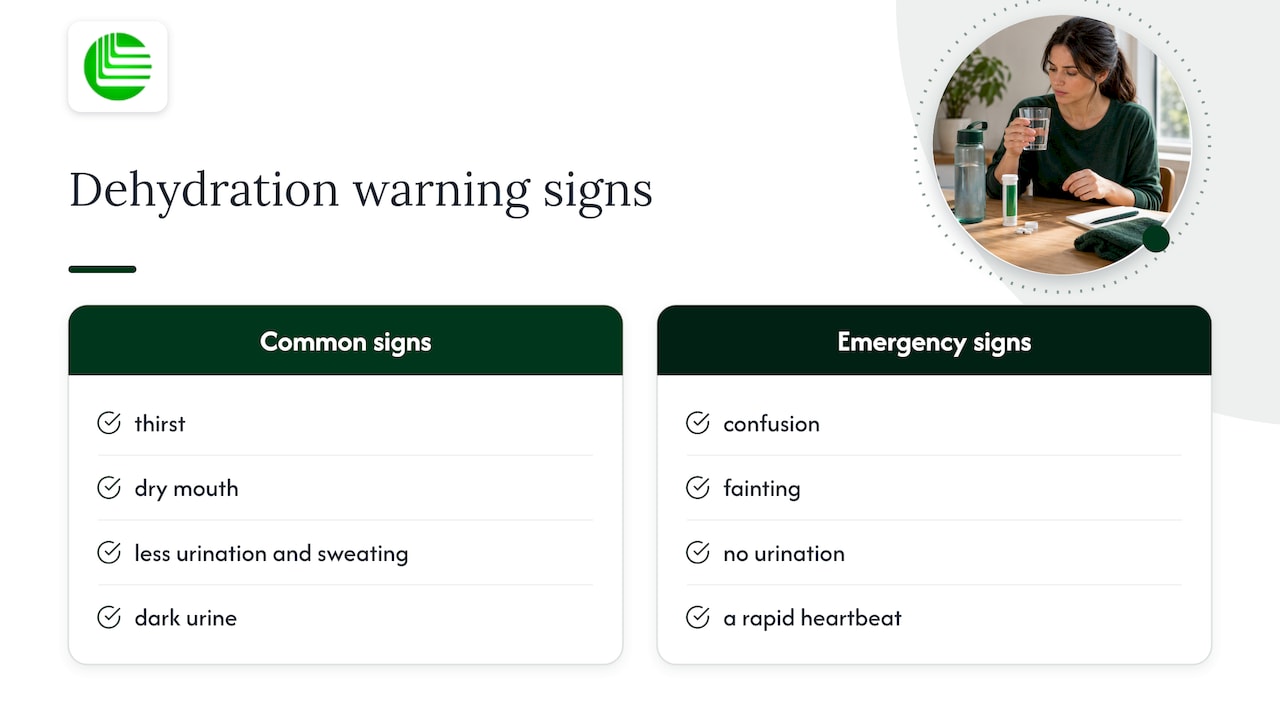
MedlinePlus lists the adult signs of dehydration: thirst, dry mouth, less urination and sweating, dark urine, dry skin, tiredness and dizziness. Confusion, fainting, no urination, a rapid heartbeat, rapid breathing or shock need immediate medical help.
On the medicine itself, the Wegovy Medication Guide says it is important to drink fluids to reduce your chance of dehydration. It also says to tell your healthcare provider right away if you have nausea, vomiting or diarrhea that does not go away. The Zepbound label likewise tells prescribers to have patients promptly report signs of acute kidney injury or persistent nausea, vomiting and diarrhea.
A provider may order blood tests for sodium and potassium, kidney function tests, and urine tests, according to MedlinePlus. Do not try to fix a day of repeated vomiting with a drink mix alone.
Hydration questions tend to show up in the first weeks, right when the dose is changing. At Oak, you complete an online health questionnaire that a licensed physician reviews, and the program includes 24/7 support and physician-led guidance on dosing. Free health coaching is included as well, and approved prescriptions are delivered to your door, with no video call needed.
Plans start at $185 per month for compounded tirzepatide and at $167 per month for compounded injectable semaglutide.
If you are comparing options, you can see everything we offer on the Oak Longevity site. If you are already on a GLP-1 and want a plan for the next dose step, our guide to building muscle on GLP-1 pairs well with the hydration steps above.
Most hydration trouble on a GLP-1 is not about a missing product. It is about a smaller appetite, a dose change and a stomach that is adjusting. That is why we put the physician-led guidance and the support around the medicine first.
Our program pairs weight loss with strength and lifestyle protocols meant to preserve lean muscle and support metabolic health. Hydration, protein and minerals belong in that same plan, and they work best when someone qualified is watching your dose and your symptoms.
We built Oak so that you can reach a licensed physician-led team and get 24/7 support without a clinic visit. When you have a question at 9 p.m. in your first week, that access matters more than any single product.
Oak Longevity
Not for everyone. Neither the Wegovy nor the Zepbound prescribing information lists an electrolyte supplement as required. Fluids are the priority, and electrolytes help when you are losing fluid through vomiting, diarrhea or sweat, or eating very little.
The first weeks and every dose increase are when stomach side effects are most likely, per the 2025 joint advisory. If you are drinking little or feeling queasy, a low-sugar electrolyte drink alongside water is a reasonable step. If symptoms last, contact your prescriber.
A 2025 JAMA Internal Medicine guide advises 2 to 3 liters (8 to 12 cups) of fluid daily, mainly water. Soups and water-rich fruits and vegetables count toward it. Your own needs rise with heat, exercise and any vomiting or diarrhea.
They can be if you have kidney disease or take ACE inhibitors, angiotensin receptor blockers, potassium-sparing diuretics or NSAIDs, since extra potassium can build up. Salt substitutes are a common hidden source of potassium. Check with your prescriber or pharmacist first.
Confusion, fainting, no urination, a rapid heartbeat or rapid breathing need immediate medical help. Nausea, vomiting or diarrhea that does not go away should be reported to your healthcare provider right away.