To cycle weight loss medication strategically means using prescription drugs in carefully planned, physician-supervised phases that protect your metabolic health, prevent rebound weight gain, and build toward lasting results. This is not a hack or a shortcut. It is a clinical approach to managing obesity as the chronic disease it is, one that requires the same sustained commitment as managing hypertension or type 2 diabetes.
The medications at the center of most cycling conversations right now are semaglutide (Wegovy, Ozempic), tirzepatide (Zepbound, Mounjaro), phentermine, and orlistat. Each works differently, carries different risks, and demands a different approach when you adjust doses or transition off. Getting that wrong, specifically stopping abruptly without a plan, is where most people run into trouble. Research shows that two-thirds of weight lost is typically regained after abrupt discontinuation of GLP-1 medications, as confirmed by clinical trials such as STEP 1 extension and SURMOUNT-4.
Here is what a genuinely strategic approach looks like:
Understanding the drugs before discussing how to cycle them is the only way to make sense of the protocols. These are not interchangeable, and their mechanisms shape everything about how they should be managed.
Semaglutide is a GLP-1 receptor agonist that suppresses appetite and slows gastric emptying, which increases the feeling of fullness after meals. The STEP 1 trial showed 12.4% placebo-subtracted weight loss with the 2.4 mg weekly dose. It is FDA-approved under the brand name Wegovy for chronic weight management in adults with a BMI of 30 or higher, or 27 with at least one weight-related condition.
Tirzepatide acts on both GLP-1 and GIP receptors, making it a dual agonist with a stronger appetite-suppressing effect than semaglutide alone. Clinical trials have shown substantial weight loss at the highest doses, and it carries FDA approval as Zepbound for obesity treatment.
Phentermine is a stimulant-based appetite suppressant approved for short-term use, typically 12 weeks. It works by triggering norepinephrine release in the brain, reducing hunger signals. Because of its stimulant properties and potential for dependence, it is not suited for long-term continuous use, which makes cycling protocols especially relevant for this drug.
Orlistat (Xenical, Alli) works differently from the others. It inhibits pancreatic lipase, blocking roughly 30% of dietary fat from being absorbed. Weight loss outcomes are more modest and it requires a low-fat diet to avoid significant gastrointestinal side effects.
| Medication | Mechanism | FDA Approval | Typical Weight Loss |
|---|---|---|---|
| Semaglutide (Wegovy) | GLP-1 receptor agonist; appetite suppression, slowed gastric emptying | Yes — chronic weight management | significant body weight loss at 2.4 mg |
| Tirzepatide (Zepbound) | Dual GLP-1/GIP agonist; enhanced satiety | Yes — chronic weight management | substantial body weight loss |
| Phentermine | Norepinephrine release; appetite suppression | Yes — short-term only | moderate body weight loss |
| Orlistat (Xenical/Alli) | Pancreatic lipase inhibitor; fat absorption blocker | Yes — long-term use | modest body weight loss |
Obesity is classified as a chronic, progressive disease, and the clinical consensus is that pharmacotherapy should be prescribed with the intent of long-term use, similar to how you would treat high blood pressure. That framing matters when you think about cycling: the goal is not to get off medication as fast as possible, but to find the lowest effective dose that maintains your results while your lifestyle changes do more of the work over time.
The phrase “medication cycling” gets used loosely, and that looseness causes real harm. There is an important distinction between what most people mean when they say cycling and what clinicians actually recommend.

What cycling is NOT: Stopping your medication for a few weeks, restarting when weight creeps back, stopping again. This off-and-on pattern is not clinically recommended because it triggers repeated dose titration side effects, creates metabolic instability, and almost always results in significant weight regain. Every restart means going through the nausea and fatigue of the titration phase again, which most patients find harder the second time.
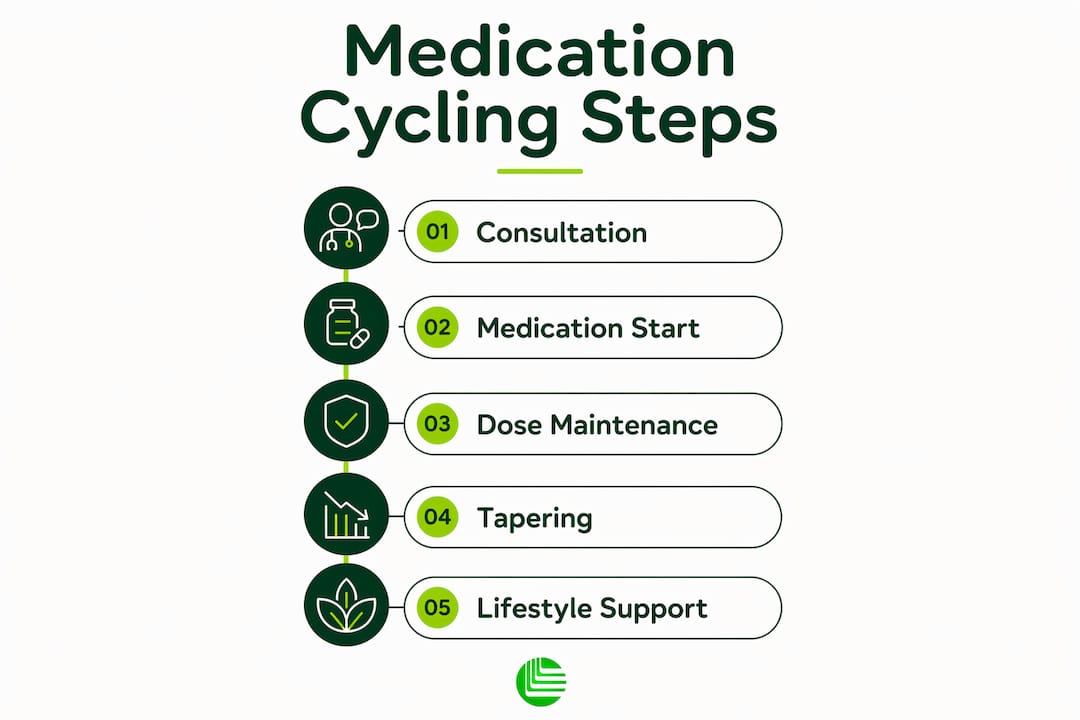
What strategic cycling actually looks like: A planned, gradual reduction in dose once specific clinical targets are met, with a maintenance dose rather than a full stop. Think of it less like turning a light switch off and more like dimming it slowly while you reinforce the habits that keep the room lit.
Here is how the process typically unfolds in a supervised setting:
The most clinically sound approach for GLP-1 and GIP medications is a long-term maintenance dose rather than full discontinuation. Some patients do successfully taper off entirely, but they are the exception, not the rule, and they typically have years of reinforced lifestyle habits behind them.
Medication does the heavy lifting early. Diet and exercise determine whether the results stick. That order matters, and so does understanding what each piece contributes.

GLP-1 medications reduce appetite significantly, which means patients naturally eat less. The risk is that “less” can become “not enough,” particularly in protein and total calories, leading to muscle loss rather than fat loss. Research on GLP-1 users found that inadequate protein intake and insufficient strength training increase the risk of muscle loss, which slows metabolism and makes weight maintenance harder after any dose reduction.
Nutrition priorities during a medication cycle:
Exercise priorities:
One practical note: if you work with a personal trainer or nutritionist, tell them you are on a GLP-1 medication. Some patients do not disclose this, which leads to misinterpretation of symptoms like fatigue or stalled performance. Your support team can only help you if they have the full picture.
Metabolic experts consistently emphasize that lifestyle changes are the foundation that prevents weight regain after medication ends. Medication opens the window; habits keep it open.
Side effects and risks fall into two categories: those from the medications themselves, and those created specifically by cycling or stopping them. Both matter.
Common side effects of the main medications:
Risks specific to cycling:
Abrupt discontinuation of GLP-1 medications triggers rapid weight regain. The STEP 1 extension trial and SURMOUNT-4 data both showed that two-thirds of lost weight returns after stopping, along with reversal of metabolic improvements like reduced blood pressure and better glycemic control. That is not just a cosmetic setback. It is a metabolic one.
Repeated cycling also means repeated dose titration, which means repeated nausea, fatigue, and GI disruption. Each restart puts the body through the same adjustment period, and the cumulative effect on quality of life and adherence is significant.
Managing risks safely:
No cycling protocol works without a physician who knows your full picture. This is where telehealth has genuinely changed access, because the barrier to getting that oversight used to be scheduling an in-person appointment every few weeks.
Before starting or adjusting any medication, a thorough baseline assessment should include:
During treatment, physician-led oversight including regular labs, body composition tracking, and dose adjustments is what separates a safe, effective protocol from a risky one. The clinical evidence is clear that physician-led programs integrating medication with behavioral changes and strength training produce better long-term metabolic outcomes than medication alone.
What to communicate with your provider:
Setting realistic expectations matters too. Most patients on semaglutide or tirzepatide see meaningful weight loss within the first 12–16 weeks, but the full benefit of lifestyle habit formation takes longer. A good provider will help you distinguish between a plateau that needs a dose adjustment and one that needs a behavioral change.
Pro Tip: Ask your provider specifically about a tapering timeline at your 6-month check-in, even if you are not planning to stop. Knowing the criteria for tapering in advance helps you work toward them intentionally rather than being caught off guard.
Most people who want to cycle weight loss medication strategically run into the same wall: getting consistent, personalized physician oversight is expensive, time-consuming, and often requires in-person visits that do not fit a real schedule.

Oak Longevity is built specifically for this gap. As an online telehealth platform, it gives you access to GLP-1 and GIP medications like semaglutide and tirzepatide, reviewed and prescribed by licensed physicians, with compounded prescriptions delivered directly to your door. The process starts with a health questionnaire reviewed by a physician, and from there you get 24/7 support and ongoing guidance on dose management, not a one-time prescription and a goodbye.
What sets Oak Longevity apart from simply getting a prescription is the pairing of medication with strength and lifestyle protocols designed to preserve lean muscle and support metabolic health long-term. That is the combination the clinical evidence points to. If you are ready to build a plan that actually holds, explore Oak Longevity’s weight loss program and see what supervised, structured care looks like without the waiting room.
Cycling weight loss medication strategically requires physician supervision, gradual tapering, and consistent lifestyle habits to prevent weight regain and protect metabolic health.
| Point | Details |
|---|---|
| Abrupt stops cause rapid regain | Clinical trials show that two-thirds of weight lost is typically regained after abrupt discontinuation of GLP-1 medications without a tapering plan. |
| Gradual tapering is the standard | Stepping down doses slowly over weeks to months preserves more weight loss than stopping outright. |
| Muscle preservation requires protein and strength training | Target at least 0.7–1 gram of protein per pound of body weight daily and train with resistance two to four times per week. |
| Obesity is a chronic disease | Long-term or maintenance-dose pharmacotherapy is often necessary, not a sign of treatment failure. |
| Oak Longevity | Provides physician-supervised GLP-1 and GIP medication access with lifestyle protocols via telehealth, no in-person visit required. |