Yes, most healthy adults can take creatine while on tirzepatide. A search of the research turns up no documented drug interaction between the two. Creatine has not been tested directly in people losing weight on a GLP-1 medication, so the case for it rests on what we know about creatine, resistance training and protein in other groups. If you want it to do something, take 3 to 5 grams a day, drink enough water, and pair it with strength training and enough protein. If you have kidney disease or take diabetes medication, check with your prescriber first.
That is the short version. The rest of this article covers why muscle matters on tirzepatide, what the evidence says, how to take creatine, how to handle the stomach and scale questions, and who should get clinical input first.
Tirzepatide works by cutting appetite, so you eat less and lose weight. The catch is that the scale does not tell you what you are losing. A 2024 consensus review on minimizing muscle loss during incretin-mimetic drug use, published in PMC, says that nutrition therapy should ensure enough high-quality protein, and that resistance training is a key strategy for protecting muscle during treatment.
A perspective in the Journal of Nutritional Physiology adds that incretin-based therapies can cause substantial fat-free mass loss, possibly more when weight loss exceeds 10% of body mass. Fat-free mass is everything that is not fat: muscle, organs, bone and water. Muscle is the part you want to keep, because it drives strength, daily function and how your body handles blood sugar and energy.
Creatine is the most-studied supplement for strength and muscle. It is a compound your body makes and also gets from food such as meat and fish. It helps muscles regenerate ATP, the fuel they burn during short, heavy efforts like lifting. That is why it is a natural question for anyone who is eating less and wants to keep lifting well.
Here is the honest picture, so you can set expectations.
What is established. The 2021 evidence review by Gualano, Jagim, Kreider, Rawson, Smith-Ryan and colleagues concludes that creatine increases muscle creatine stores and supports ATP production during heavy anaerobic exercise. A May 2026 PMC review by Šantić and colleagues states that two independent 2025 meta-analyses in older adults found modest but consistent gains in lean mass and strength when creatine was combined with resistance training. The same review describes creatine monohydrate as having one of the stronger indirect evidence bases among options for people on GLP-1 treatment.
What is plausible. Researchers have proposed a mechanism. Rapid weight loss often comes with lower calorie and protein intake and less mechanical loading on muscle. A November 2026 hypothesis paper by Ostojic and Galyean suggests this can create an energy vulnerability in muscle, which makes creatine a biologically plausible adjunct. The Šantić review lists creatine’s relevant actions: replenishing phosphocreatine, supporting satellite cells (the cells that repair muscle), lowering oxidative stress markers and supporting anabolic signaling. It supports considering creatine for patients who are doing resistance training.
What is not yet known. The Ostojic and Galyean paper states that no randomized clinical trial has directly evaluated creatine during GLP-1-based weight loss, and calls its proposal hypothesis-generating. The Journal of Nutritional Physiology authors say creatine’s role during incretin therapy remains unexplored and call for placebo-controlled trials. In practice, this means nobody can promise you a specific amount of muscle saved. It also means the tested building blocks, lifting and protein, matter most, and creatine is a low-cost add-on to them.

The research behind this article found no documented interaction between the two. The two work in different systems. Tirzepatide acts on gut and appetite hormones. Creatine is stored mostly in muscle and cleared by the kidneys as creatinine.
There are two places where you should still check in with a clinician, and both come from official sources rather than from any known tirzepatide clash:
Creatine monohydrate is the form behind most of the research. The Šantić review describes a maintenance dose of about 3 to 5 g a day, taken daily including rest days, as consistent with the aging and resistance-training literature. One level teaspoon of powder is roughly in that range, but check your label for grams per scoop.
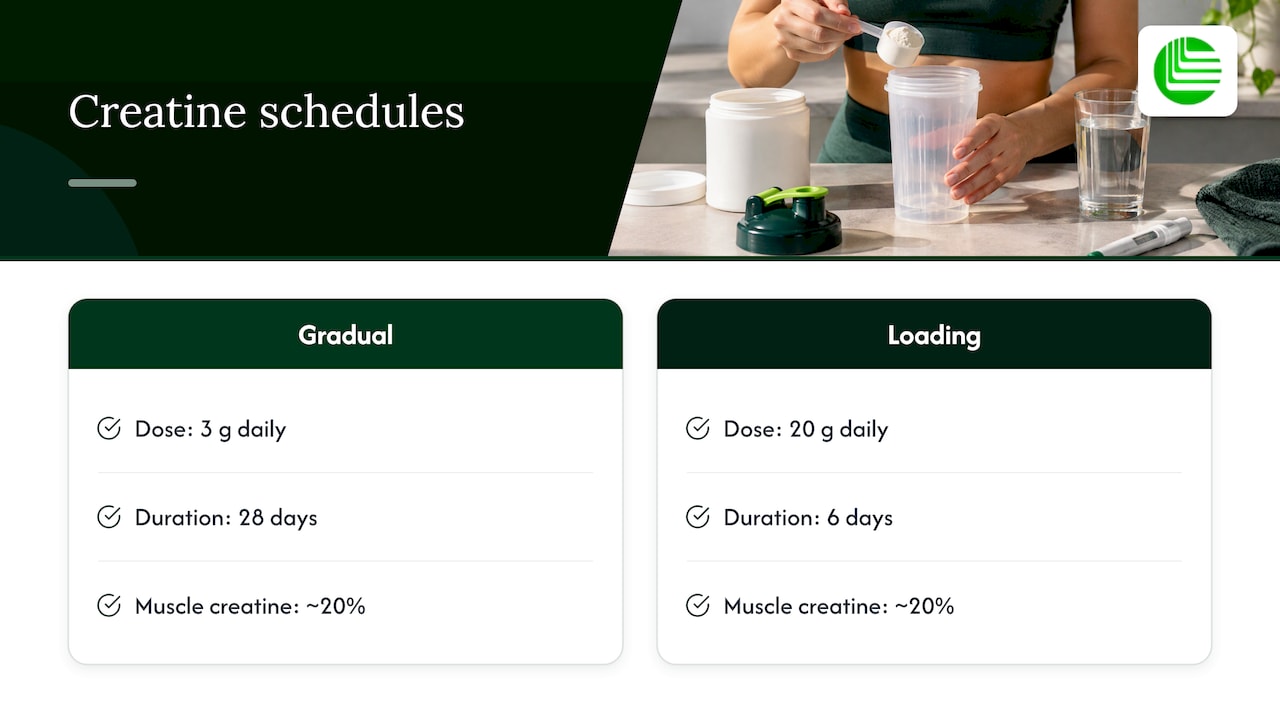
You may have seen advice to take 20 to 25 g a day for the first week. The Gualano review found that a loading phase is not required: 3 g a day for 28 days raised muscle creatine by about the same ~20% as 20 g a day for 6 days. On tirzepatide, where nausea and bloating are already common, a smaller daily dose is the gentler route. The trade-off is time: expect about four weeks for muscle stores to fill.
The research above sets a daily dose, not a clock time. What matters is taking it every day. Link it to something you already do, such as your morning coffee or protein shake. Since tirzepatide is injected weekly, you do not need to schedule creatine around the injection day, though if your appetite dips hard that day, mixing the powder into a drink you can tolerate is easier than swallowing capsules.
Creatine on its own does not replace training or food. The tested approach is the combination:
A worked example: you weigh in once a week, lift on Monday, Wednesday and Friday, have a protein shake with 3 to 5 g of creatine mixed in each morning, and aim for protein at every meal. That is one habit added to a routine you probably already have.
Tirzepatide already comes with its own list. The American Diabetes Association’s professional resource lists nausea, vomiting, diarrhea, constipation and pancreatitis among tirzepatide’s reported side effects. Our tirzepatide side effects guide explains what is typical and what to report.
Creatine can add to the stomach side. Poison Control lists nausea, diarrhea, bloating and mild weight gain from water shifting into muscle cells. If you notice this, a few adjustments usually help:
Tirzepatide reduces appetite and often thirst cues along with it, so people eat and drink less. That makes hydration worth tracking. Poison Control says creatine does not dehydrate the body, but the body may need more water, and taking creatine while dehydrated can put added stress on the kidneys. The Gualano review also found that recommended doses do not cause dehydration or muscle cramping in healthy people. The practical rule: sip water through the day and watch your urine color. If you are vomiting or have diarrhea and cannot keep fluids down, pause the creatine and contact your prescriber.
Creatine pulls water into muscle. That can show up as a small weight bump in the first weeks. It is not fat. If you are tracking progress on tirzepatide, use more than one signal: waist measurement, how clothes fit, strength in the gym, and photos. Our tirzepatide weight loss timeline explains what a typical trend looks like, so a small water bump does not read as a stall.
For most healthy adults, creatine at recommended doses is low risk. For a few groups, a conversation first is the right step:
One more point on products. Poison Control notes that the FDA does not review supplements for safety or effectiveness before sale and that products may contain ingredients not listed on the label. Choose a plain creatine monohydrate from a brand that publishes independent third-party testing, and avoid blends with long ingredient lists.
We see creatine as a sensible supporting habit, not the centerpiece. What protects you on tirzepatide is the plan around the medication: strength training, enough protein, good hydration and a prescriber who knows what you take.
That is how we build our program. Oak pairs weight loss with strength and lifestyle protocols meant to preserve lean muscle mass and support metabolic health. Your questionnaire is reviewed by a licensed physician, and you get physician-led guidance and 24/7 support to manage dosing and keep results going.
So if you are wondering about creatine, bring it into that conversation. It takes one line to tell your care team what supplements you use, and it keeps your whole plan consistent.
Oak Longevity
If you are not yet on a GLP-1 medication and want the muscle-first approach described above, Oak offers tirzepatide from $185 per month, with a health questionnaire reviewed by a licensed physician and delivery to your door, no video call required. Free health coaching is included, which helps with the protein and training habits that matter most.

You can see the plan and start the questionnaire on our compounded tirzepatide page. Prefer semaglutide? That is on our semaglutide page.
For healthy adults, yes. The research behind this article found no documented interaction between them. Take 3 to 5 g of creatine monohydrate daily, drink plenty of water, and tell your prescriber about it, especially if you have kidney issues or take diabetes medication.
It may support it, alongside lifting and protein. Creatine plus resistance training has produced modest, consistent gains in lean mass and strength in older adults in meta-analyses. Direct trials during GLP-1 weight loss have not been run yet, so treat creatine as a supporting habit and not a guarantee.
No. A loading phase of 20 to 25 g a day is not required, since 3 g a day for 28 days raised muscle creatine by about the same amount as loading. A smaller daily dose is also easier on a stomach already dealing with tirzepatide.
Possibly a little. Creatine draws water into muscle cells, which can raise scale weight by a small amount early on. This is water, not fat. Track your waist, strength and photos along with the scale.
Any time works, as long as you take it daily. Many people take it with a morning shake or a meal to keep their stomach settled. You do not need to time it around your weekly injection.